China to UAE Sea Freight: Cost, Transit Time & Shipping Options (2026)
Vantage Forwarding
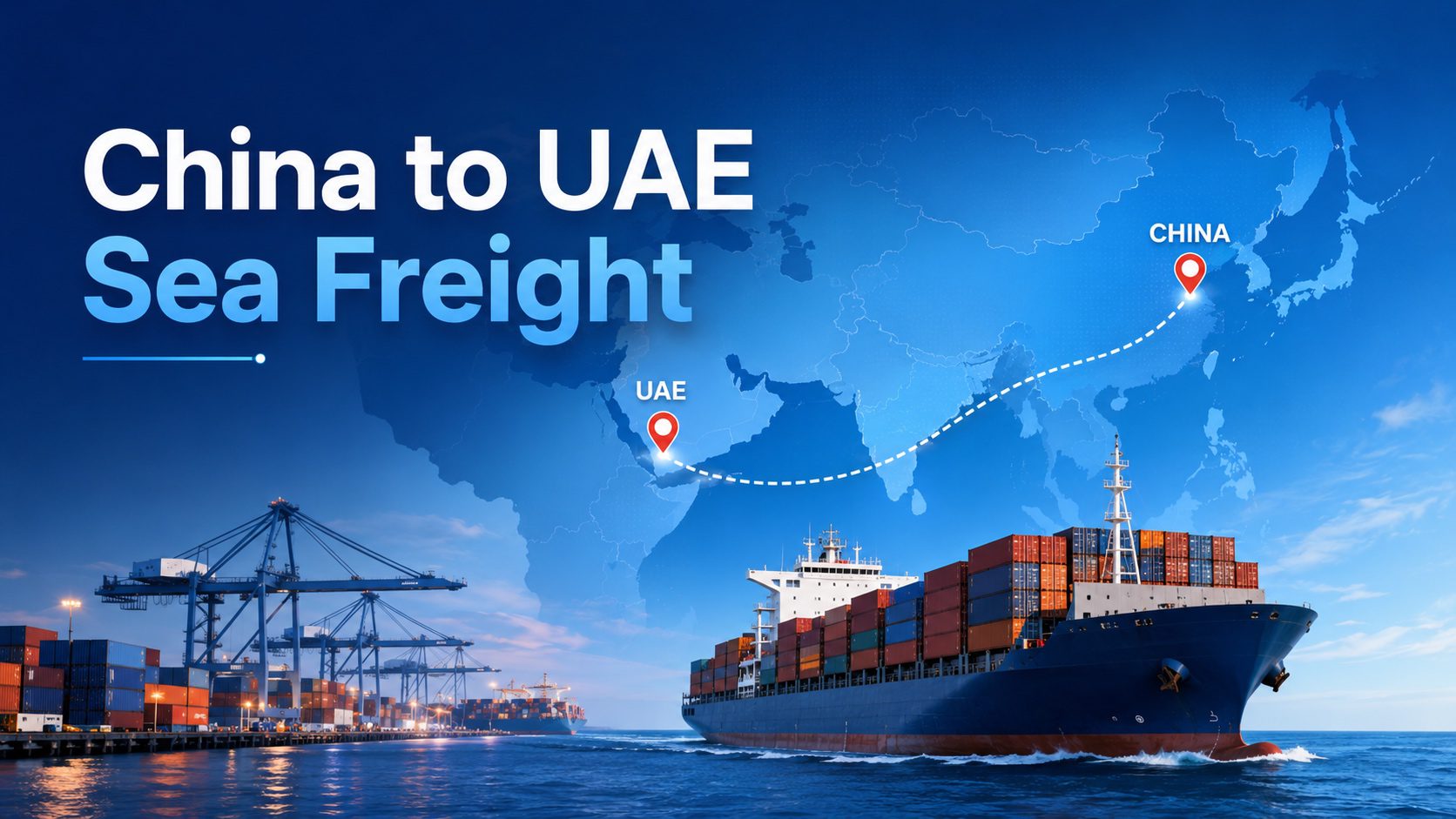
China to UAE sea freight in 2026 costs roughly $900–$6,800 per container (FCL) or $55–$130 per CBM (LCL), with 15–35
China to UAE sea freight in 2026 costs roughly $900–$6,800 per container (FCL) or $30–$200 per cubic meter (LCL), with port-to-port transit of 15–35 days depending on your origin port and whether the vessel sails direct or transships. But here is the uncomfortable truth most importers learn too late: if you budget only the ocean-freight line item, you will almost certainly overspend by 30–50%—sometimes far more—by the time your goods clear UAE customs and reach your warehouse.
The gap between a “cheap” freight quote and your real landed cost is where profit goes to die. We have watched it happen to savvy buyers.
Mini story #1 — the hidden 40%: In March 2026, a Shenzhen-based Amazon seller we’ll call “Mei” booked a 40HQ from Yantian to Jebel Ali for what looked like a bargain: $2,150 all-in ocean freight. She budgeted against that number. What she had not priced in was the BAF fuel surcharge ($310), destination THC ($185), MOFAIC invoice attestation (AED 150), 5% duty + 5% VAT on the CIF value, and last-mile trucking to her Dubai FBA prep center ($260). Her true cost landed at $4,980—132% above the figure she had promised her CFO. The shipment still profited, but her cash-flow planning for the next three SKUs collapsed.
You are reading this because you need to move cargo from China to the UAE—Jebel Ali, Khalifa, Sharjah, or Ajman—and you want the real numbers, not a teaser rate designed to win your inquiry.
Agree: You have probably opened three tabs of forwarder quotes that all look different, and you suspect none of them tell the full story. Promise: This guide gives you a complete 2026 picture—verified rate ranges by container and by lane, a landed-cost framework you can copy, UAE customs mechanics (duty, VAT, Mirsal 2, MOFAIC, free zones), the 2026 risk map (Hormuz, Red Sea, peak congestion), and a neutral decision framework so you can choose FCL vs LCL, the right Incoterm, and the right forwarder yourself. Preview: We start with a quick-glance table, then drill into costs, transit, customs, risks, and 10 concrete ways to cut your freight bill.
Key Takeaways
– A bare ocean-freight quote typically understates your true landed cost by 30–50%+ once BAF, THC, insurance, 5% duty, 5% VAT, MOFAIC attestation, and last-mile delivery are added.
– FCL 20GP / 40GP / 40HQ from China to Jebel Ali runs about $1,200–$2,100 / $1,650–$2,800 / $1,850–$3,100 in low season 2026; LCL costs $55–$130 per CBM.
– Port-to-port transit is 15–22 days from Shanghai/Shenzhen (direct) and 24–30 days from Qingdao; add 5–10 days for door-to-door clearance and delivery.
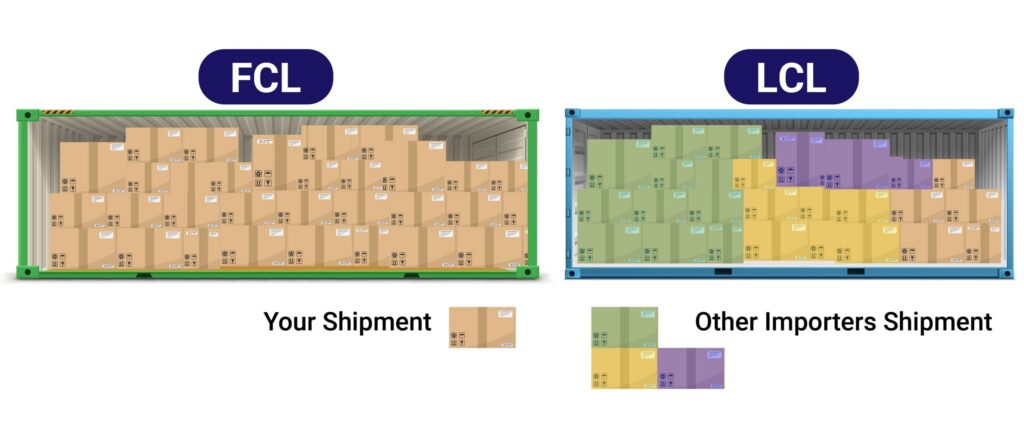
– The FCL-vs-LCL break-even is ~15 CBM; below that, LCL consolidation usually wins, above it, a full container does.
– UAE imports carry a flat 5% customs duty + 5% VAT on CIF value, but free zones (JAFZA, AFZA, KIZAD) let you defer or avoid duties entirely on re-export and in-zone use.
China to UAE Sea Freight at a Glance
Before the detail, here is the 30-second version. Use it to sanity-check any quote you receive.
Shipping mode
Transit time
2026 cost range (USD)
Best for
FCL 20GP
15–30 days port-to-port
$1,200–$2,300
Dense cargo 10–15 CBM, up to ~22 t
FCL 40GP
15–30 days
$1,650–$2,900
Standard volume, 25–28 CBM
FCL 40HQ
15–30 days
$1,850–$3,300
Bulky/light cargo, up to ~68 CBM
LCL (per CBM)
20–35 days
$55–$130 / CBM
Small loads 1–15 CBM
Air freight
3–7 days
$4–$9 / kg
Urgent, high-value, under ~500 kg
The UAE is the Middle East’s largest re-export hub. Jebel Ali alone handles more container volume than any port between Rotterdam and Singapore—over 14 million TEU a year—so most China–UAE cargo naturally flows through Dubai. That volume is why rates to Jebel Ali are usually the sharpest; secondary ports (Khalifa, Sharjah, Ajman) carry a small premium but save inland trucking if your destination is Abu Dhabi or the northern emirates.
Want numbers you can act on instead of a ballpark? Get a quote from Vantage Forwarding built for your exact lane — tell us your origin port + volume and we’ll send an itemized USD breakdown in 24h. Get My Quote
How Much Does Sea Freight from China to UAE Cost? (2026 Rates)
Your China to UAE shipping cost is set by box size, origin port, and season—not by a single published number. Headline rates move constantly. In 2026 they have been reset by two forces: carrier capacity discipline (GRI/Peak Season Surcharges) and the Red Sea diversions that pushed many vessels around the Cape of Good Hope. Rate volatility is tracked publicly by freight indices, but the ranges below reflect low-season 2026 estimates; expect the upper end (or higher) in Q3–Q4 and around Ramadan.
FCL Rates by Container (20GP / 40GP / 40HQ)
A standard dry container’s price is driven by three things: box size, origin port, and season. Southern ports (Shenzhen, Guangzhou) sit closest to the Gulf and usually price lower; northern ports (Qingdao) add transit days and a small premium.
40HQ (holds ~67–76 CBM, ~30 cm taller): $1,850–$3,300
The 40HQ is the value champion for lightweight, bulky goods—furniture, apparel, plastics—because you get the most CBM per dollar. If your cargo is heavy and dense (tiles, metals, machinery), a 20GP often prices better per ton. See our guide to container types for exact capacity specs.
LCL Rates (Per CBM)
With LCL (less than container load) you pay only for the space you use, consolidated with other shippers. Rates from China to Jebel Ali in 2026 run $55–$130 per CBM, depending on origin, volume, and route disruption. Carriers bill the greater of weight or volume (1 CBM ≈ 1,000 kg threshold), so dense cargo can be charged by weight. For a full breakdown of when LCL beats FCL, see LCL consolidation.
Origin port
LCL rate to Jebel Ali (USD/CBM)
Typical transit
Shenzhen (Yantian/Shekou)
$58–$110
19–27 days
Guangzhou (Nansha)
$60–$115
20–28 days
Shanghai
$65–$125
22–30 days
Ningbo
$68–$130
24–32 days
Qingdao
$75–$135
26–34 days
Full Origin × Destination Rate Matrix
This is the table most guides skip. Below are port-to-port FCL ranges (USD) for every major Chinese origin × every major UAE destination, low-season 2026. Figures are 20GP / 40GP / 40HQ.
Origin → Destination
Jebel Ali (Dubai)
Khalifa (Abu Dhabi)
Sharjah (Port Khalid)
Ajman
Shanghai
1,300–1,900 / 1,800–2,500 / 2,000–2,800
1,350–2,000 / 1,880–2,600 / 2,080–2,900
1,400–2,050 / 1,950–2,650 / 2,150–2,950
1,450–2,100 / 2,000–2,700 / 2,200–3,000
Ningbo
1,250–1,850 / 1,750–2,450 / 1,950–2,750
1,300–1,950 / 1,820–2,550 / 2,020–2,850
1,350–2,000 / 1,900–2,600 / 2,100–2,900
1,400–2,050 / 1,950–2,650 / 2,150–2,950
Shenzhen
1,200–1,750 / 1,650–2,350 / 1,850–2,600
1,250–1,850 / 1,720–2,450 / 1,920–2,700
1,300–1,900 / 1,800–2,500 / 2,000–2,750
1,350–1,950 / 1,850–2,550 / 2,050–2,800
Guangzhou
1,250–1,800 / 1,700–2,400 / 1,900–2,650
1,300–1,900 / 1,780–2,500 / 1,980–2,750
1,350–1,950 / 1,850–2,550 / 2,050–2,800
1,400–2,000 / 1,900–2,600 / 2,100–2,850
Qingdao
1,500–2,100 / 2,000–2,800 / 2,200–3,100
1,550–2,200 / 2,080–2,900 / 2,280–3,200
1,600–2,250 / 2,150–2,950 / 2,350–3,250
1,650–2,300 / 2,200–3,000 / 2,400–3,300
These are ocean freight only. They exclude BAF, THC, documentation, insurance, duties, VAT, and delivery—exactly the costs we unpack next.
What’s Included in the Price? Landing Cost Breakdown
This is the section that protects your margin. A freight quote is rarely your total cost. Build your budget from these layers.
Cost layer
What it is
Typical 2026 amount
Ocean freight
Base port-to-port carriage
Per matrix above
BAF (Bunker Adjustment Factor)
Fuel surcharge
$180–$320 / TEU to Middle East
THC (Terminal Handling)
Port loading/unloading
$100–$180 origin; $150–$220 destination
Documentation fees
B/L, filing, admin
$50–$150 / shipment
Cargo insurance
Protects goods in transit
0.2–0.5% of cargo value
5% Customs duty
On CIF value
5% × (goods + freight + insurance)
5% VAT
On CIF value
5% × CIF
MOFAIC attestation
Commercial invoice legalization (mandatory for invoices > AED 10,000 since Sep 2024)
AED 150 (~$41)
Last-mile delivery
Jebel Ali → your warehouse
$200–$400
Why the quote lies by 30–50%. Industry data shows that importers who budget only the ocean-freight line item typically discover their true landed cost runs 30–50% above that figure once surcharges, terminal fees, and insurance are counted, and that gap widens sharply once duty and VAT enter the math. Public rate indices such as Drewry’s World Container Index and Xeneta have tracked this pattern across 2024–2026.
The headline quote was $2,200. The real number was $5,457. If you only planned for the quote, you are 148% over—and the duty/VAT alone added 10% of CIF. The lesson: always request an all-in, DDP-style breakdown, and always insure your shipment—a damaged container can erase a year of margin for the price of a coffee.
Don’t let a $2,200 quote become a $5,457 surprise. Get your itemized UAE landed-cost quote from Vantage Forwarding — every surcharge shown before you commit.
How Long Is Sea Freight from China to UAE? (Transit Time)
China–UAE is one of the faster long-haul ocean lanes. It is roughly half the distance of China–North Europe, so sea freight stays viable for cargo that air would price out.
Port-to-Port vs Door-to-Door
Port-to-port = vessel sailing time only.
Door-to-door adds: 2–4 days inland trucking in China to the load port, 1–3 days UAE customs clearance at Jebel Ali (clean docs), and same-day to 2 days last-mile. Budget +5 to +10 days for door-to-door.
Transit Time by Route
Origin → Jebel Ali
Direct (days)
Via transshipment (days)
Shanghai
15–22
25–35
Ningbo
18–25
28–38
Shenzhen (Yantian/Shekou)
16–22
26–33
Guangzhou (Nansha)
18–24
28–36
Qingdao
24–30
30–38
Transshipment usually routes via Singapore, Colombo, or Port Klang. It is cheaper but slower. Direct services dominate the Shanghai/Shenzhen → Jebel Ali trade thanks to weekly sailings from COSCO, MSC, Maersk, and OOCL. You can compare carrier networks in our carriers overview.
One timing trap: carriers cut off cargo 3–5 days before sailing. A supplier who delivers “on departure day” misses the vessel. Plan to have goods at the port a full week before the published sailing date.
FCL vs LCL: Which Should You Choose?
This is a math problem, not a philosophy. The break-even is about 15 CBM.
Factor
Choose FCL when…
Choose LCL when…
Volume
≥ 15 CBM (or ~10+ t dense cargo)
1–15 CBM
Cost logic
Flat rate; per-CBM cost drops below LCL
Pay only for used space
Speed
Faster—sealed, no consolidation wait
Slower—consolidation + deconsolidation
Security
Single shipper, sealed container
Shared space with other cargo
Risk
Lower handling damage
More touches = slightly higher risk
If you are under 15 CBM, LCL consolidation almost always wins on price. Above 15 CBM, a full container’s per-CBM rate beats shared space, and you gain speed and security. A 40HQ at ~68 CBM can be cheaper per CBM than LCL even when you only half-fill it—run the numbers both ways before booking. See our container types guide for capacity specs.
The cheapest way to ship from China to the UAE is usually LCL consolidation for loads under 15 CBM (from $55/CBM) or a 20GP FCL for dense cargo, shipped off-peak from southern ports (Shenzhen/Guangzhou) on a transshipment route. To minimize total cost, book 3–4 weeks early, hit the 15 CBM FCL break-even, use a free zone to defer duty, and always compare all-in landed cost—not headline ocean rates.
Key UAE Ports Explained
Jebel Ali (Dubai) — The default entry point for 80%+ of China–UAE trade. If you are benchmarking the China to Dubai shipping cost specifically, the Jebel Ali rates in the matrix above are your Dubai baseline. Adjacent to JAFZA free zone (8,000+ companies), it enables duty-free storage, re-export, and light assembly without mainland customs. Goods clear here and truck to Dubai/Abu Dhabi/Sharjah in 1–2 days.
Khalifa Port (Abu Dhabi) — Highly automated, capital-region gateway beside KIZAD free zone. Choose it if your destination is Abu Dhabi; saves the Dubai→Abu Dhabi haul.
Sharjah (Port Khalid) — Serves the northern emirates. Slightly higher ocean rates than Jebel Ali but trims inland trucking if you are headed to Sharjah, Ajman, or Ras Al Khaimah.
Ajman — Smallest of the four, ideal for local northern-emirate delivery. Premium ocean rates, but minimal last-mile cost.
Shipping Routes & Major Carriers
Container shipping China to UAE is dominated by four carriers: COSCO, MSC, Maersk, and OOCL. Service types:
Direct sailings — Fastest, most frequent from Shanghai/Shenzhen. Weekly departures.
Transshipment — Cheaper, slower, via Singapore/Colombo/Port Klang.
Cape diversion — Since 2024, Red Sea risk has pushed a large share of vessels around the Cape of Good Hope, adding 7–14 days and significant cost (see Risks).
Booking tip: compare at least two carriers and one NVOCC. Carrier published rates exclude many surcharges; a good forwarder blends options to hit your cost-and-speed target.
UAE Customs Clearance: Documents & Duties
Understanding customs clearance in the UAE is non-negotiable. The framework is simpler than Western markets but strict on documentation.
Customs duty: flat 5% on CIF value for most goods (see the UAE government’s customs duty guide).
VAT:5% on CIF value.
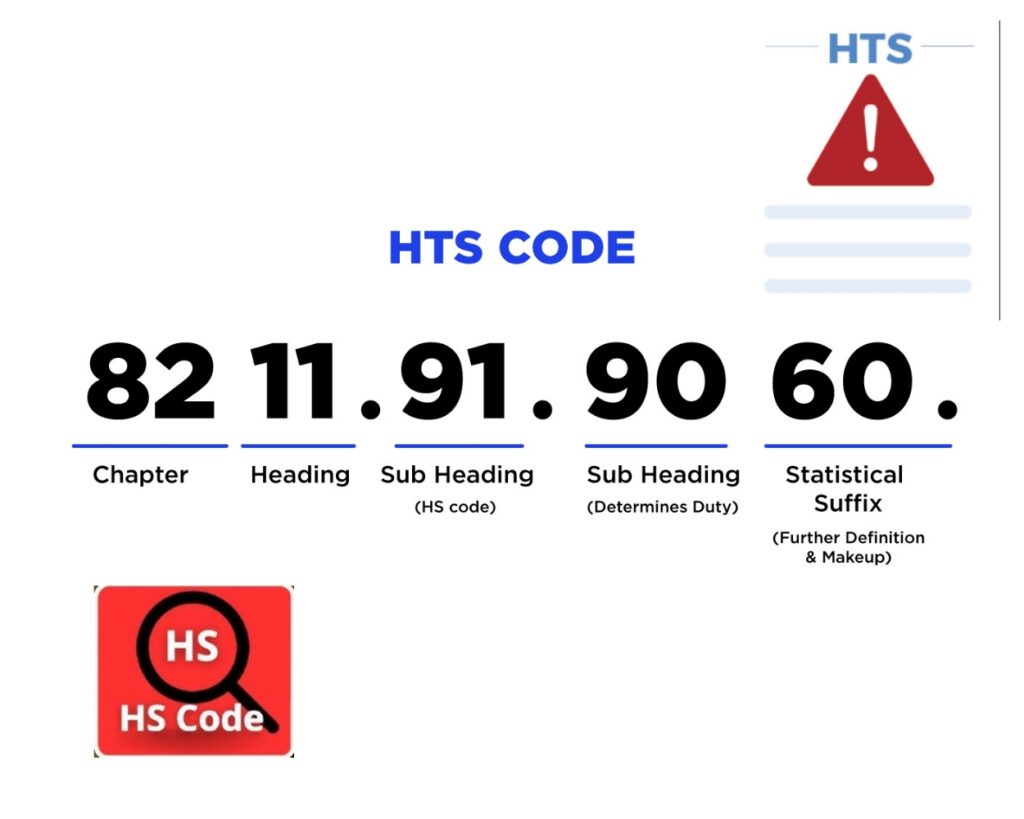
HS codes: a 12-digit HS code is being phased in, with full enforcement for imports from the rest of the world expected by August 2026—get it wrong and clearance stalls. The UAE’s Central Customs Tariff System lists the correct codes, and you can pre-check yours with our HS code lookup tool.
Mirsal 2: the UAE’s electronic customs platform; most declarations clear in 1–3 days with clean docs.
MOFAIC attestation: commercial invoices above AED 10,000 must be attested (since Sep 2024), ~AED 150.
Product certs:ESMA / ECAS / GCC conformity marks for regulated goods (electronics, toys, food contact, etc.).
Free zones: goods imported into JAFZA / AFZA / KIZAD for re-export or in-zone use avoid duty/VAT until they enter the mainland.
For the duty math itself, see our explainer on UAE customs duties.
Required Documents Checklist
Document
Purpose
Note
Bill of Lading (B/L)
Proof of ownership
Original usually required
Commercial Invoice
Value + HS code
MOFAIC-attested if > AED 10,000
Packing List
Contents, weight, dimensions
Must match invoice
Certificate of Origin
Prove manufacturing country
Needed for duty assessment
HS Code (12-digit)
Classification
Phased in from 2025; full enforcement by 2026
ESMA/ECAS/GCC certs
Conformity
Regulated products only
Delivery Order
Release from shipping agent
From carrier’s UAE agent
Prohibited & Restricted Goods
The UAE bans or restricts: narcotics, illicit drugs, weapons (without license), counterfeit goods, pornographic material, certain chemicals, and some religious/material items. Restricted goods (alcohol, pharmaceuticals, food, cosmetics, electronics with specific specs) need prior approval and conformity certs. When in doubt, declare—non-declaration triggers fines and seizure.
Incoterms for China–UAE Shipments
The Incoterm you sign decides who pays and who owns risk at each handoff.
Mini story #3 — the wrong Incoterm: A Dubai retailer (“Ahmed”) accepted a CIF quote because it looked cheapest. The Chinese seller booked the cheapest carrier, the container sat 9 days in Jebel Ali congestion, and Ahmed had no leverage to speed it up—plus the seller’s insurance covered only minimal value. He lost a Ramadan promotion window. Had he used FOB and booked his own forwarder, he’d have paid similar freight but gained tracking control and proper cargo insurance. The “savings” cost him a season.
For most controlled importers, FOB (you own the ocean leg) or DDP (you outsource everything) are the clean choices. Avoid CIF unless you explicitly accept the seller’s carrier and coverage.
Container Types & Special Cargo
Standard boxes cover most cargo, but know your options:
20GP — General purpose, ~28–33 CBM, dense cargo.
40GP — Standard volume, ~56–67 CBM.
40HQ — High cube, ~67–76 CBM, bulky/light.
Reefer — Temperature-controlled for food, pharma, chemicals.
OOG (Out of Gauge) — Flat-rack/open-top for machinery, oversized items.
Special cargo costs more (reefer plugs, OOG handling) and needs earlier booking. Full specs in our container types guide.
Risks & How to Mitigate Them in 2026
2026 is not a calm market. Plan for these:
Hormuz Strait tension — ~20% of global oil and major container flow passes here. Disruption spikes war-risk surcharges and reroutes.
Red Sea diversions — Cape-of-Good-Hope routing has added ~20% to freight and 7–14 days on affected sailings.
Peak-season congestion — At Jebel Ali, berth waits of 5–7 days plus +$250/TEU during Q3–Q4 and Ramadan.
Currency swing — AED is pegged to USD; if your home currency weakens, your landed cost rises.
Equipment shortage — Box deficits in peak periods inflate rates and delay sailings.
Mini story #2 — the Red Sea shock: A Guangzhou importer (“Sarah”) locked a $1,900 40HQ for a May shipment. Two weeks before sailing, her carrier announced a Cape diversion; the revised quote was $2,300 (+21%) and transit stretched from 22 to 34 days. Her mosque-interior fit-out deadline slipped, triggering penalty clauses. She now builds a 15% freight contingency and books cargo insurance on every shipment.
Mitigations: book 3–4 weeks early; hold a 10–15% freight contingency; use FOB so you can switch carriers; insure every shipment; and track containers in real time (below).
10 Ways to Reduce Your China–UAE Freight Cost
Book early — 3–4 weeks out avoids peak-space premiums.
Ship off-peak — Avoid Q3–Q4 and Ramadan windows when possible.
Pick the right origin port — Southern ports (Shenzhen/Guangzhou) price lower and sail faster.
Hit the FCL break-even — Consolidate suppliers to cross 15 CBM and reach full-container rates.
Use LCL smartly — Under 15 CBM, share space instead of paying for empty volume.
Negotiate BAF/THC — These surcharges are often flexible in contract rates.
Optimize packing — More CBM per box = lower per-unit freight; review carton dimensions.
Use free zones — Route re-export cargo through JAFZA/AFZA/KIZAD to defer duty.
Consolidate multiple suppliers — One container from several factories cuts handling.
Get itemized quotes — Compare all-in landed cost, not headline ocean rates.
How to Choose the Right Freight Forwarder
A good forwarder is your risk buffer. Vet them on:
Accreditations — IATA, FIATA, FMC, NVOCC. These signal compliance and financial standing.
Transparent quoting — They show every line (BAF, THC, duty, VAT, MOFAIC, delivery), not a single mystery number.
Tracking capability — You should be able to track your shipment in real time through your forwarder’s portal, not “we’ll email you.”
UAE footprint — Local clearance partners at Jebel Ali shorten delays.
Carrier mix — Direct contracts with COSCO/MSC/Maersk/OOCL plus NVOCC options.
Your RFP inquiry checklist (send this to every forwarder):
1. All-in USD quote: ocean + BAF + THC + docs + insurance + duty + VAT + MOFAIC + delivery
2. Transit time: direct or transshipment? Vessel and cut-off date
3. Surcharge policy: are GRI/PSS passed through? Cap?
4. Tracking: real-time link or portal?
5. Insurance: coverage limit and claims process
6. Free-zone handling: JAFZA/AFZA/KIZAD experience?
7. References: similar lane + volume shippers?
Ready to compare forwarders apples to apples? Grab our free 7-point RFP Checklist — and we’ll send a sample itemized quote for your lane so you can benchmark any offer.
China to UAE Sea Freight FAQ
How long does sea freight from China to UAE take?
Port-to-port is 15–30 days depending on origin and routing: Shanghai/Shenzhen direct sail in 15–22 days; Qingdao takes 24–30 days. Add 5–10 days for door-to-door clearance and last-mile delivery, so plan for 20–38 days total.
What documents do I need to ship from China to UAE? To ship from China to the UAE you need: a Bill of Lading, a commercial invoice (MOFAIC-attested if over AED 10,000), a packing list, a certificate of origin, a 12-digit HS code, and ESMA/ECAS/GCC conformity certificates for regulated goods. Declare everything; misdeclaration risks seizure.
Not sure your 12-digit HS code is right? Vantage Forwarding pre-checks your docs free.
What is the duty on imports to UAE from China? Most goods imported from China to the UAE carry a flat 5% customs duty plus 5% VAT, both calculated on the CIF value (cost + insurance + freight). Some goods are exempt; free-zone imports for re-export avoid duty until they enter the mainland.
What is the smallest shipment I can send by sea?
There is no minimum container—use LCL (less than container load) for loads from 1 CBM upward, priced at $55–$130 per CBM. Below ~2–3 CBM, air freight may actually be cheaper once consolidation and clearance time are counted.
Shipping under 15 CBM? Get an LCL quote for your exact lane in 24h.
How can I track my container to the UAE? Use the carrier’s bill-of-lading tracking plus your forwarder’s portal. A quality forwarder gives you real-time container tracking from departure to Jebel Ali gate-out, so you can plan customs and delivery instead of guessing.
Want real-time tracking from departure to Jebel Ali gate-out? Get your quote and we’ll set up tracking.
Conclusion
Shipping from China to the UAE in 2026 rewards buyers who plan for the full landed cost, not the headline quote. Recap the essentials:
Budget 30–50%+ above the ocean-freight quote once surcharges, duty, VAT, and delivery land.
Use the origin × destination rate matrix to benchmark any offer.
Cross the 15 CBM line to make FCL pay; stay under it with LCL.
Get your 12-digit HS code, Mirsal 2 docs, and MOFAIC attestation right to avoid clearance delays.
Build a 10–15% freight contingency for Hormuz/Red Sea/peak risk, and insure every shipment.
The buyers who win treat freight as a planned cost, not a surprise. Request a transparent quote from a FIATA-certified forwarder — no obligation, full all-in USD breakdown built around your lane and volume. Use our landed-cost calculator to model your numbers, or visit Shipping by Product Type for guidance on your specific cargo. Contact us to start.
Hello! How can we assist you with your special cargo shipping today?
Please share your cargo type (lithium batteries, branded goods, or liquids), destination, and any special requirements. We'll reply with a quote and process shortly.
Send Message
Vantage Forwarding • Usually replies within 2 hours
 English
  Chinese
  Arabic
  French
  German
  Portuguese
  Spanish