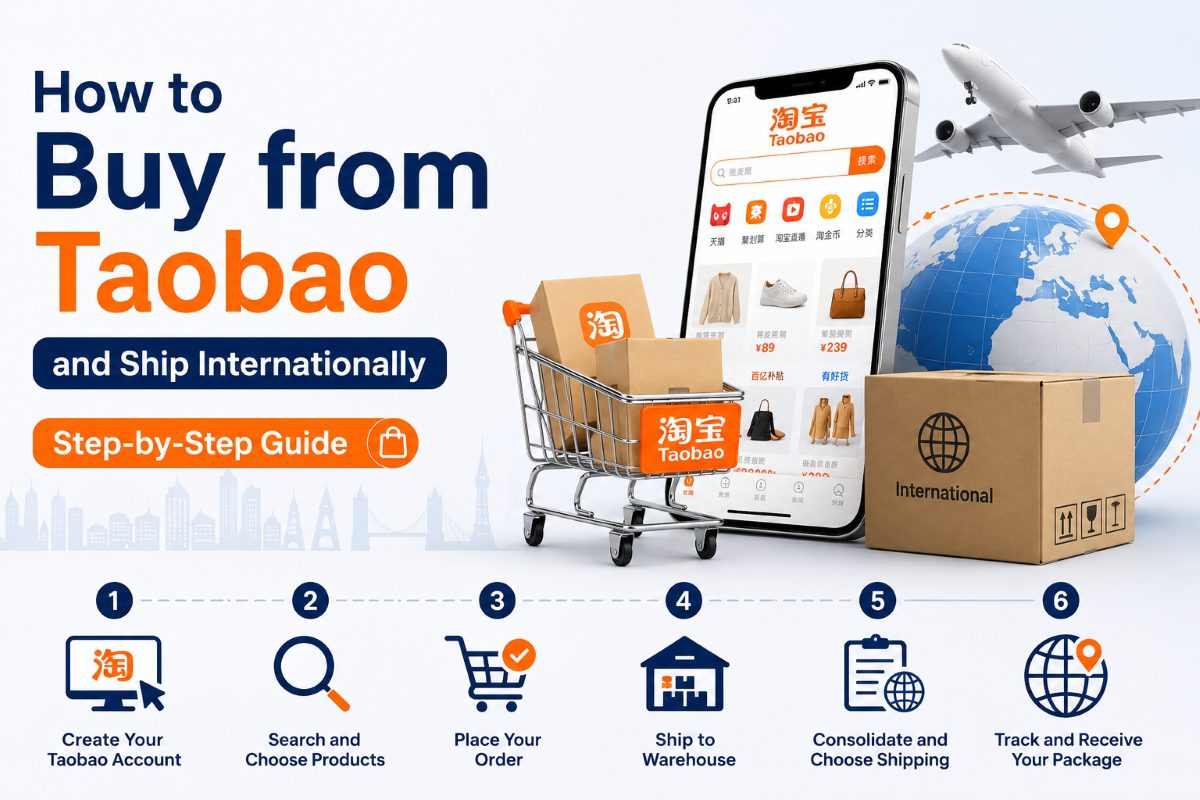
Taobao has tens of millions of products at Chinese domestic prices. The catch: the platform runs almost entirely in Chinese, most sellers only ship within China, and Alipay doesn’t love foreign cards.
I’ve spent years on the logistics side of this business, moving Taobao parcels out of Guangzhou warehouses every day. This taobao shipping guide covers what most articles skip: the real total cost, what customs actually does to your parcel, and what to do when an order goes sideways.
And if you’re reading this in June—618, China’s biggest mid-year sale, is underway. Presales started June 1, and the deepest discounts hit on June 18 itself. Worth getting your account and agent set up this week.
The 3 Ways to Buy from Taobao Internationally
There’s no single “right” method. Pick based on order size, destination, and how much hand-holding you want.
| Method | How It Works | Best For | Typical Extra Cost |
|---|---|---|---|
| Taobao direct (world.taobao.com) | Official international checkout, limited sellers ship abroad | Single items, supported countries (SEA, AU) | Built-in intl shipping fee |
| Taobao agent | Agent buys for you, holds at warehouse, ships consolidated | Multi-store hauls, US/EU buyers | 0–5% service fee + shipping |
| Freight forwarder | You buy yourself, ship to forwarder’s China address | Buyers who can pay on Taobao themselves (Alipay/Chinese cards); bulk orders | Consolidation fee + shipping |
Method 1: Buy Directly on Taobao
Taobao does not have an official English version of its site. That said, you can still set up an account overseas and navigate parts of the app in English by selecting a supported country like Singapore in your region settings. Some sellers offer cross-border shipping, and you can pay with foreign credit cards via Alipay (with a small fee).
It works, but it’s not a smooth out-of-the-box experience. Many listings are tagged “domestic shipping only,” and you cannot combine purchases from multiple stores into one consolidated box on Taobao’s own platform.
Method 2: Use a Taobao Agent
A taobao agent is a middleman service: you paste a product link, they purchase it with their Chinese account, receive it at their warehouse, photograph it for quality check, then ship internationally once all your items arrive.
The workflow takes about 15 minutes to learn:
- Copy the Taobao product link
- Paste it into the agent’s search bar, select size/color, pay the item price
- The agent buys it; the seller ships to the agent’s warehouse (3–7 days domestic transit)
- Review QC photos, approve or dispute
- When all items arrive, submit a consolidation request and pick a shipping line
- Pay international shipping; receive tracking
Agents solve the three big barriers at once—language, payment, and domestic-only sellers. Most charge 0–5% service fees and earn from shipping margins instead.
Method 3: Use a Freight Forwarder
If you can handle Taobao checkout yourself, a freight forwarder is the leaner option. Be clear about the prerequisite: this means having a working Alipay account or a Chinese-issued payment method. If you can’t pay on Taobao directly, this route isn’t available to you—that’s precisely the problem agents exist to solve.
For those who qualify (or buy through a Chinese-speaking partner), you set the forwarder’s Guangzhou or Shenzhen warehouse as your delivery address, buy normally, and the forwarder consolidates and ships. This is how most resellers and small-business buyers operate—it cuts out the agent’s markup and gives you direct control over shipping lines, declared values, and repacking instructions. For recurring volume, ask about DDP shipping, where duties and clearance are prepaid and your parcel arrives with zero surprise charges.
Taobao vs 1688: Know Where the Real Factory Prices Are
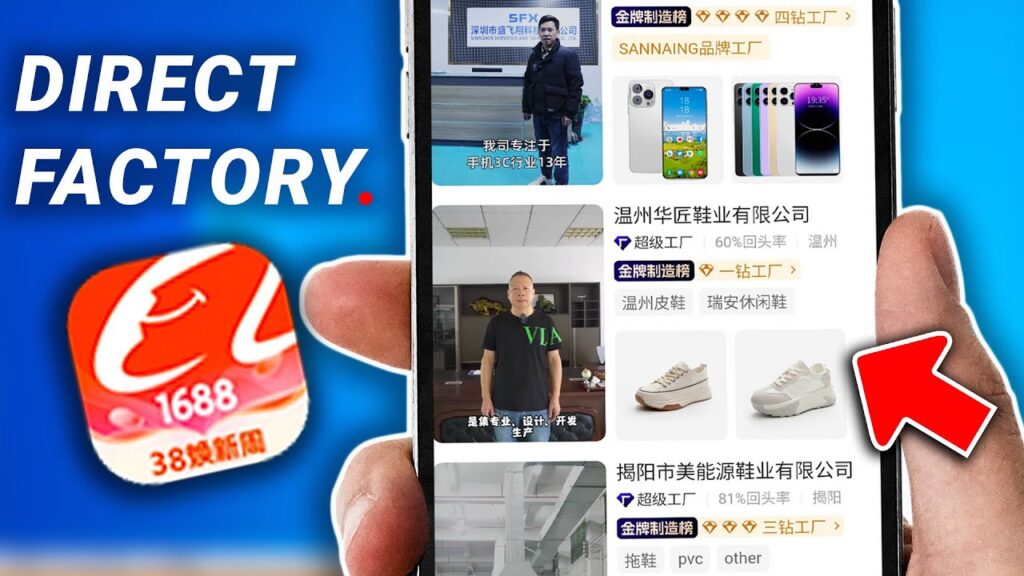
Here’s something most buyers discover only after a few hauls: Taobao itself carries a retail markup. The same product often sits on 1688.com—Alibaba’s domestic wholesale platform—at 30–50% less, because 1688 sellers are usually the factories supplying the Taobao shops.
The decision rule is simple:
- Buy on Taobao for single items, mixed personal hauls, and anything where you want buyer protection, reviews, and one-piece purchasing
- Move to 1688 once you’re buying 5+ units of the same item, reselling, or sourcing for a small business—minimum order quantities are low (often 2–3 pieces), but listings are Chinese-only and almost no seller ships abroad
The good news: nearly every Taobao agent and forwarder also handles 1688 links through the exact same workflow. If your haul is becoming a recurring business order, switching platforms is often the single biggest cost saving available—bigger than any shipping line optimization.
What It Actually Costs: A Real Breakdown
Here’s the part most guides skip. Say you buy 5 clothing items totaling ¥600 (~$84) and ship 4 kg to the United States:
| Cost Item | Typical Range | Notes |
|---|---|---|
| Product cost | $84 | Taobao domestic price |
| China domestic shipping | $0–$5 | Often free over ¥88 per store |
| Agent service fee | $0–$4 | 0–5% depending on agent |
| Consolidation & repack | $0–$3 | Free at most agents; tip: remove shoe boxes |
| International shipping (4 kg billable, economy air) | $35–$60 | Assumes compact items; see volumetric note below |
| Customs duty/tax | $0–$35 | Destination-dependent, see breakdown below |
Total: roughly $120–$195 delivered—still well under US retail for five items, but a far cry from the “¥600 haul” sticker price. Budget shipping plus tax at 50–80% of product cost for clothing, more for bulky items.
The volumetric weight trap: carriers charge by actual or dimensional weight, whichever is higher. A puffer jacket weighing 1 kg can bill as 3 kg. The table above assumes compact clothing—if your 5-item haul includes one or two puffy coats, billable weight can jump to 8–10 kg and shipping to $70–$120, nearly doubling the freight line. This is why vacuum packing and box removal at consolidation matter—on a 10-item haul, good repacking saves $20–$40. For a sense of courier pricing at the top end, see our DHL shipping rates per kg guide.
Choosing a Shipping Line: Speed vs Cost
Once your parcel is consolidated, you’ll pick from a menu of lines. They boil down to four tiers:
- Express courier (DHL/FedEx/UPS): 3–7 days, most expensive, strict on declared value. Use for urgent or high-value orders.
- Dedicated line: 8–15 days to US/EU, tax-inclusive options available, the workhorse for haul buyers. Best value for 2–20 kg.
- EMS / postal express: 7–15 days, gentler customs treatment, decent middle option.
- Economy postal (China Post small packet): 15–30+ days, cheapest for under 2 kg. Full breakdown in our China Post shipping guide.
A good agent dashboard shows price, estimated days, and restrictions per line. Check restrictions carefully—lines differ on batteries, liquids, cosmetics, and branded goods.
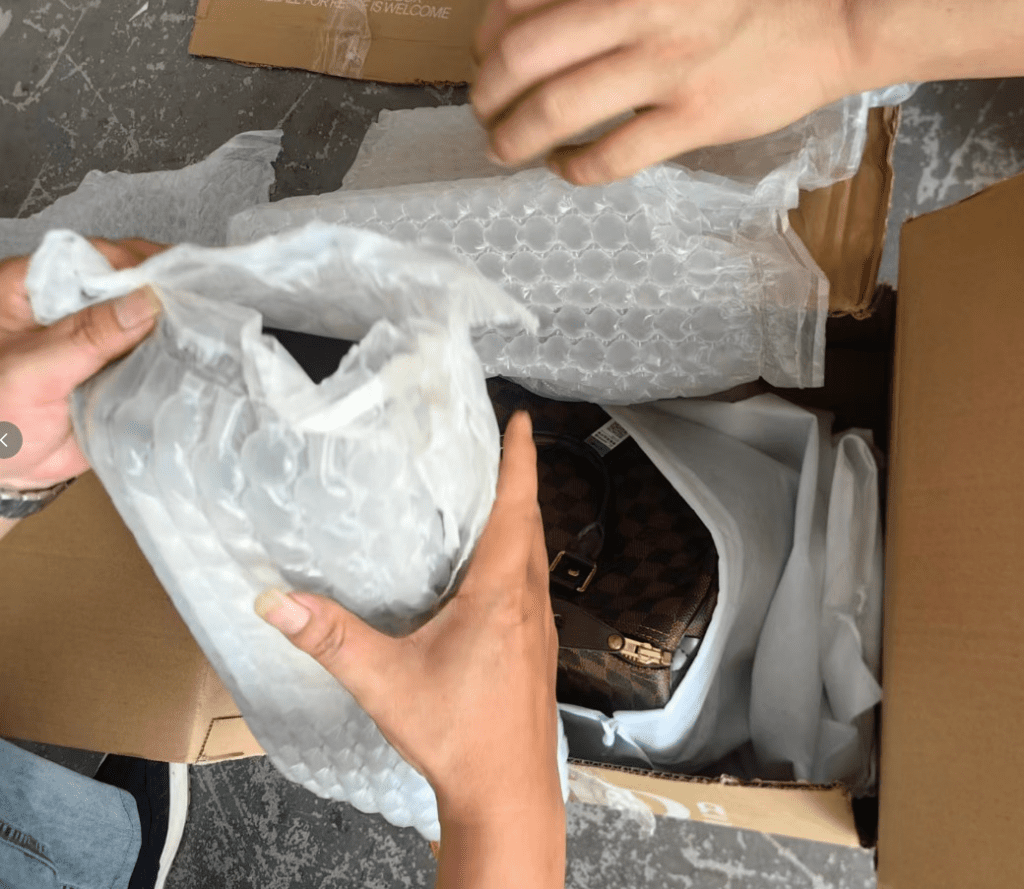
Sensitive goods warning—read before you order, not after. A large share of Taobao listings cannot travel on standard international lines at all: anything with a built-in lithium battery, liquids and creams (including most cosmetics), powders, food, supplements and medicine, magnets, and counterfeit branded goods. Standard economy lines will reject these at the warehouse, leaving you with an item stranded in China. Sensitive-goods lines exist for batteries and cosmetics at a 20–40% premium, but food, medicine, and fakes are effectively unshippable. Check the line’s restriction list before placing the Taobao order—this is the most expensive lesson first-time buyers learn.
Customs and Taxes by Destination
This is where most 2026 guides are silent, and where buyers get burned.
United States: the de minimis exemption that let sub-$800 parcels enter duty-free was eliminated for China-origin shipments in May 2025. Here’s what that means in dollars: shipments via commercial carriers face roughly 30% ad valorem duty, while postal-channel parcels are charged a flat $25–$50 per item. On our example $84 haul, that’s about $25 via a commercial line. Tax-inclusive dedicated lines and DDP services work by rolling this duty into your upfront shipping price—the forwarder clears the goods under their own bond and you receive the parcel with nothing left to pay. For US-bound hauls in 2026, tax-inclusive lines are no longer a nice-to-have; they’re the default sane choice.
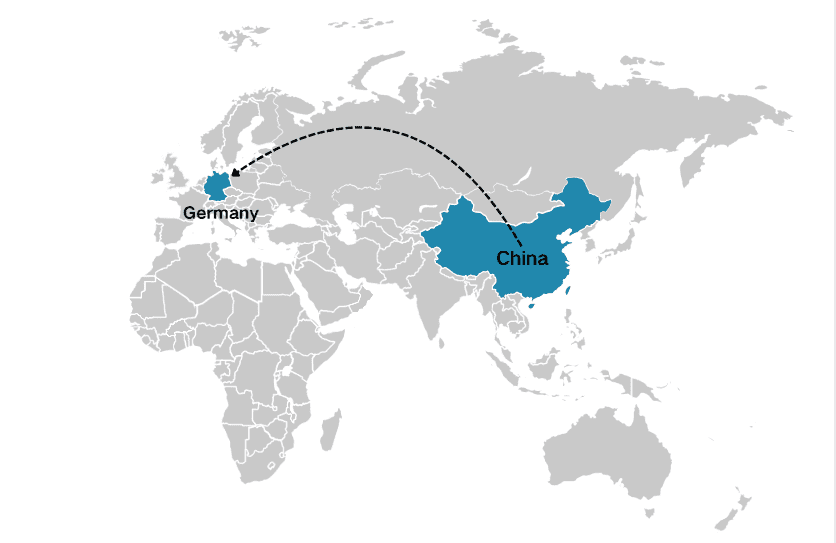
European Union: the old “no duty under €150” rule is ending. From July 1, 2026, the EU applies a flat €3 duty per declaration line on e-commerce parcels valued below €150—and since a 5-item clothing haul can easily span 3–5 HS codes, that’s potentially €9–€15 in duty alone. VAT (17–27% by country) continues to apply from €0 via the IOSS system, so our €78 example haul to Germany runs roughly €15 VAT + up to €15 line duty. If your shipping line collects via IOSS upfront, you’re done; if not, your local post collects on delivery plus a handling fee.
United Kingdom: 20% VAT from £0; duty kicks in above £135.
Australia: GST of 10% applies, and who collects it depends on the seller: GST-registered platforms charge it at checkout, otherwise the carrier collects on arrival. Taobao agents generally do not pre-collect Australian GST, so expect the carrier to bill it. Duty-free threshold remains AUD 1,000.
Two rules keep you out of trouble: declare honestly (under-declaring triggers inspections and fines, and caps your loss compensation), and avoid counterfeit branded goods entirely—they’re the number-one seizure category.
When Things Go Wrong
Real talk from the warehouse floor—here’s what actually fails and how to handle it:
Seller never ships to the warehouse. Happens in 2–5% of orders, especially during 618 stock-outs. Your agent auto-refunds after the platform deadline. Don’t panic before day 7.

QC photos show the wrong item or a defect. Dispute before international shipping—this is the entire point of the QC step. Here’s how a domestic return actually works: you raise the return in the agent’s dashboard, the agent negotiates with the seller and arranges the domestic courier pickup from their warehouse. Return shipping inside China runs ¥8–¥15 (~$1–$2)—who pays depends on fault: seller’s error (wrong item, defect), seller pays; change of mind, you pay, and some sellers deduct it from the refund. The refund lands in your agent account balance, not your card, in 3–7 days. Returns from overseas are not worth it for anything under $100.
Parcel stuck at customs. Usually a declaration or unpaid-tax issue. The fix process is the same as any carrier hold—we covered the playbook in our DHL shipment on hold guide, and the logic applies broadly.
Parcel lost in transit. Compensation depends on declared value and whether you bought insurance (typically 1–3% of value). Uninsured postal parcels cap at painfully low amounts—insure anything over $100.
FAQ: Buying from Taobao Internationally
Can I buy from Taobao without an agent?
Yes—Taobao’s international site (world.taobao.com) supports English and overseas payment in many regions, but seller coverage is limited and you can’t consolidate multi-store orders. Agents or forwarders remain the practical route for US/EU buyers with multi-item hauls.
How much does a Taobao agent cost?
Most agents charge 0–5% of the product price as a service fee, plus international shipping at their negotiated rates. The bigger cost lever is consolidation: combining ten parcels into one box saves far more than any fee difference between agents.
How long does Taobao international shipping take?
Add 3–7 days for the seller-to-warehouse leg, then 3–7 days by express courier, 8–15 days by dedicated line, or 15–30+ days by economy post. A typical agent order lands in 2–3 weeks door to door.
Do I have to pay customs tax on Taobao orders?
Usually yes. US buyers pay roughly 30% duty via commercial carriers (or $25–$50 flat via postal channels) on China-origin parcels regardless of value. EU buyers pay VAT from €0, plus a €3-per-declaration-line duty on sub-€150 parcels from July 1, 2026. UK buyers pay 20% VAT from £0. Tax-inclusive dedicated lines or DDP shipping roll these costs into the upfront price.
Is it safe to buy from Taobao?
The platform itself is safe—payment is escrowed until delivery is confirmed. Risk concentrates in product quality, which is exactly what agent QC photos exist for. Check seller ratings, read reviews via translation, and dispute at the QC stage rather than after international shipping.
 English
  Chinese
  Arabic
  French
  German
  Portuguese
  Spanish