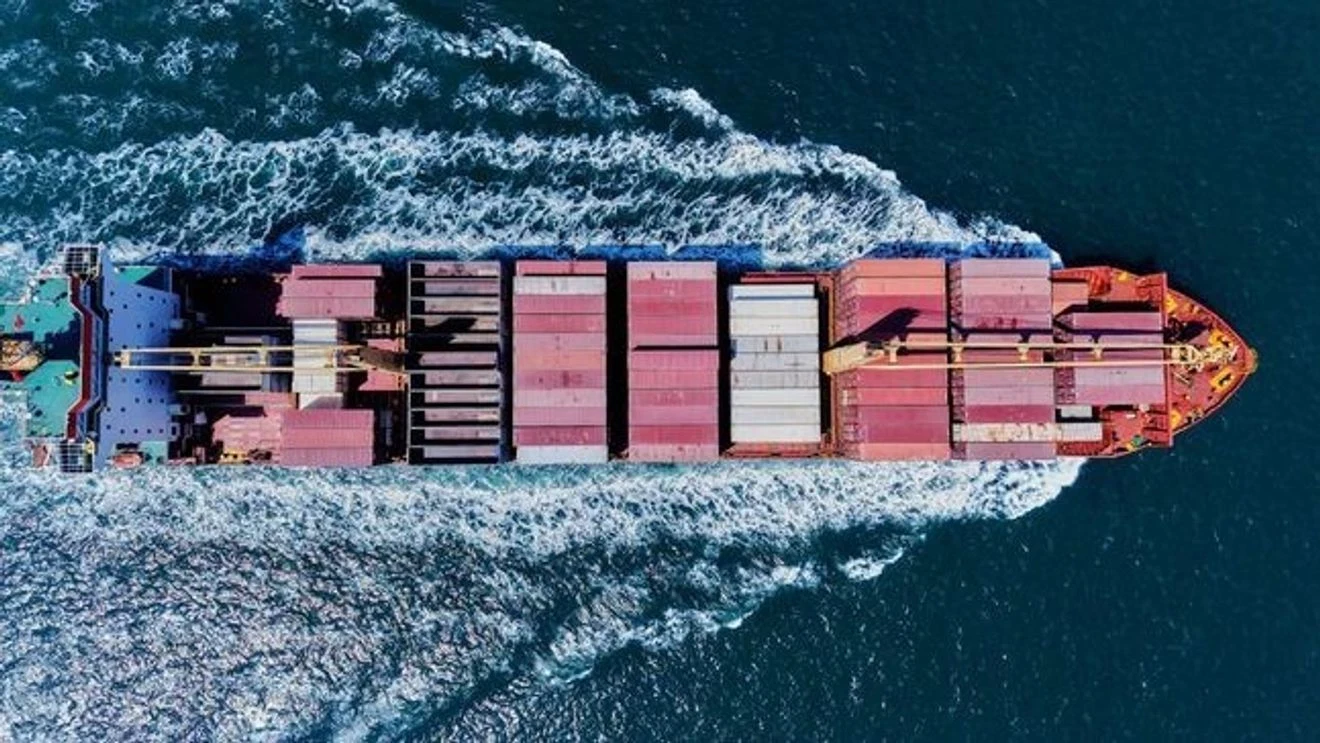
Choosing the right shipping container types is the first decision that shapes your China to UAE sea freight cost, transit time and cargo safety. The three standard dry boxes — 20GP, 40GP and 40HQ — cover most general cargo, while reefer and open-top units handle temperature-sensitive or oversized goods. This guide compares capacity, payload and pricing so you can book the exact box your shipment needs instead of paying for space you will not use. For the full lane overview, start with our main guide to China to UAE sea freight.
Standard Dry Containers: 20GP, 40GP and 40HQ
Standard dry containers are the backbone of China to UAE shipping. Three sizes handle almost every general cargo shipment: the 20-foot general purpose (20GP), the 40-foot general purpose (40GP) and the 40-foot high cube (40HQ). They are weatherproof steel boxes with a solid roof and floor, ventilated but not temperature-controlled, and they move sealed from the Chinese load port to Jebel Ali.
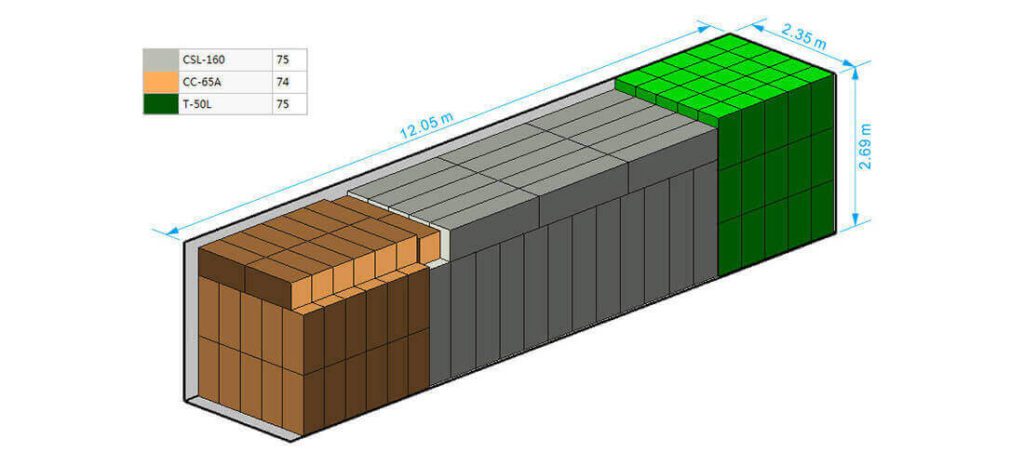
Here is how the three compare on the numbers that drive your booking and your cost:
| Container | Internal volume | Max payload | Best for |
|---|---|---|---|
| 20GP | ~33 CBM | ~28 t | Dense, heavy cargo; small batches |
| 40GP | ~67 CBM | ~26 t | Light, bulky cargo up to 26 t |
| 40HQ | ~76 CBM | ~27 t | Highest-volume cargo; most common FCL box |
The 20GP is the workhorse for heavy goods. With roughly 33 cubic metres of space and a 28-tonne payload, it suits machinery parts, metals, tiles and other dense products where weight fills the box before volume does. Shippers moving a few tonnes of components often find the 20GP is the only box that uses its payload without wasting cubic metres on air.
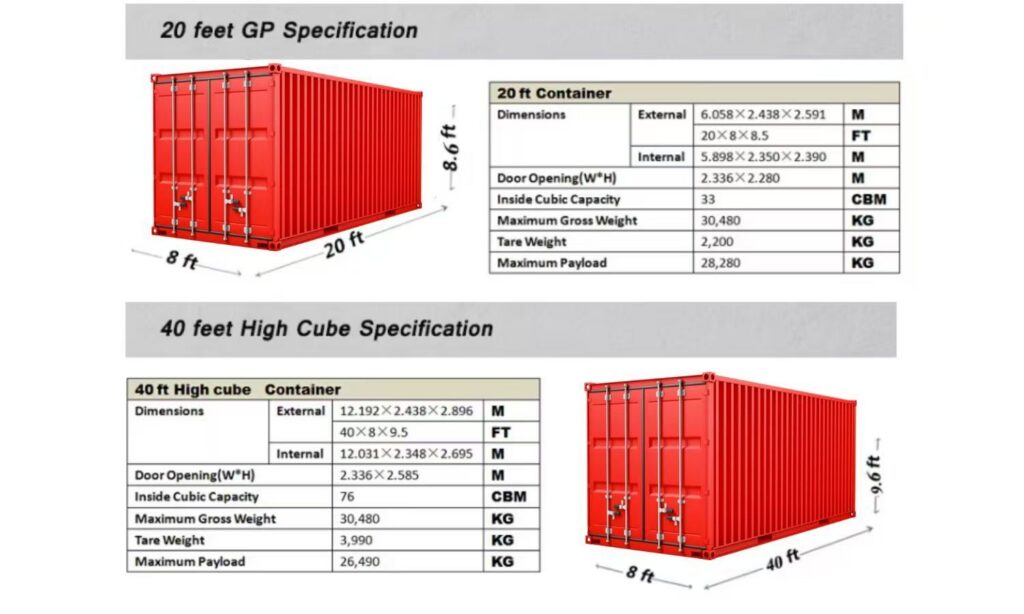
The 40GP nearly doubles the space to about 67 CBM but carries slightly less weight, because the longer structure is built lighter. The 40HQ adds about a metre of height, reaching around 76 CBM, which makes it the default choice for furniture, apparel, plastics and most consumer goods. For bulky but light cargo, the high cube is almost always the cheaper option per cubic metre.
When you request a quote, the box size you choose drives the base ocean rate. A 40HQ rarely costs twice a 20GP, which is why experienced shippers consolidate volume into high cubes wherever the cargo profile allows. Pick the smallest box that holds your goods with a little headroom: over-sizing wastes money, under-sizing forces a second shipment or crushes cartons.
A Dongguan furniture buyer we will call “Leo” booked a 40GP for a 58 CBM order, assuming the standard box was the safe choice. The cargo actually needed a 40HQ. The forwarder caught it, switched the booking, and Leo paid roughly the same freight for 76 CBM of capacity instead of cramming 58 CBM into a 67 CBM box with no margin for dunnage. The switch also prevented a damaged shipment from crushed cartons. One box-size check saved the order and the margin.
Reefer Containers for Temperature-Controlled Cargo
Reefer containers keep cargo within a set temperature band from the Chinese factory gate to the Jebel Ali terminal. They power a controlled climate for frozen and chilled food, pharmaceuticals, certain chemicals and other perishables that cannot tolerate ambient heat on a 15 to 22 day voyage. A reefer can hold anything from minus 25 degrees for seafood to a steady plus 8 degrees for fresh produce.
A reefer looks like a standard box from the outside but carries its own refrigeration unit and needs continuous power, both on the ship and during yard storage. That power requirement adds cost in three places: a higher ocean freight rate than a dry box, pre-trip inspection fees to confirm the unit holds its set temperature, and generator charges at transshipment ports if your routing stops in Singapore, Colombo or Port Klang.
For UAE importers, reefer cargo also means tighter planning. You need accurate temperature and ventilation settings agreed before loading, clean documentation, and a clearance plan that moves the box off the terminal quickly in Dubai’s summer heat. Protect the value of temperature-sensitive goods with cargo insurance, and confirm the reefer specification with your forwarder before you book so the equipment and the sailing slot match your product.
Out-of-Gauge and Open-Top Cargo: Flat Racks and Open Tops
Not every shipment fits a closed steel box. Out-of-gauge (OOG) cargo — industrial machinery, vehicles, pipes, generators, marble slabs — needs flat racks or open-top containers. A flat rack is a floor with end walls and no sides or roof, so oversized items load from the top or the side and secure with lashing. An open-top container keeps the four walls but removes the solid roof, replacing it with a tarpaulin, so tall cargo cranes in from above.
Both options cost more than standard boxes. You pay for specialist handling at both ports, stronger lashing materials, and often a flat-rate slot because the carrier cannot stack other cargo on top. Book OOG equipment early: carriers hold limited flat-rack and open-top inventory, and a missing unit can delay your sailing by a week at peak times.
Measure your cargo at the widest and tallest points, including packaging, before you ask for a quote. Carriers price OOG on the “slot footprint” the piece occupies on deck, so a few centimetres of overhang can move you into a higher charge band. Accurate dimensions keep the quote honest, the loading safe, and the cargo clear of damage claims on arrival at Jebel Ali.
How Container Choice Affects Your China to UAE Freight Cost
The box you choose changes cost in three ways: the base ocean rate, the surcharges, and whether you share the container at all. A full container (FCL) is priced per box, so a 20GP to Jebel Ali runs roughly $3,294 to $4,086 in 2026, while a 40GP or 40HQ runs about $4,688 to $6,563. The high cube rarely costs much more than the standard 40-foot box, which is why it wins for bulky goods on a per-cubic-metre basis.
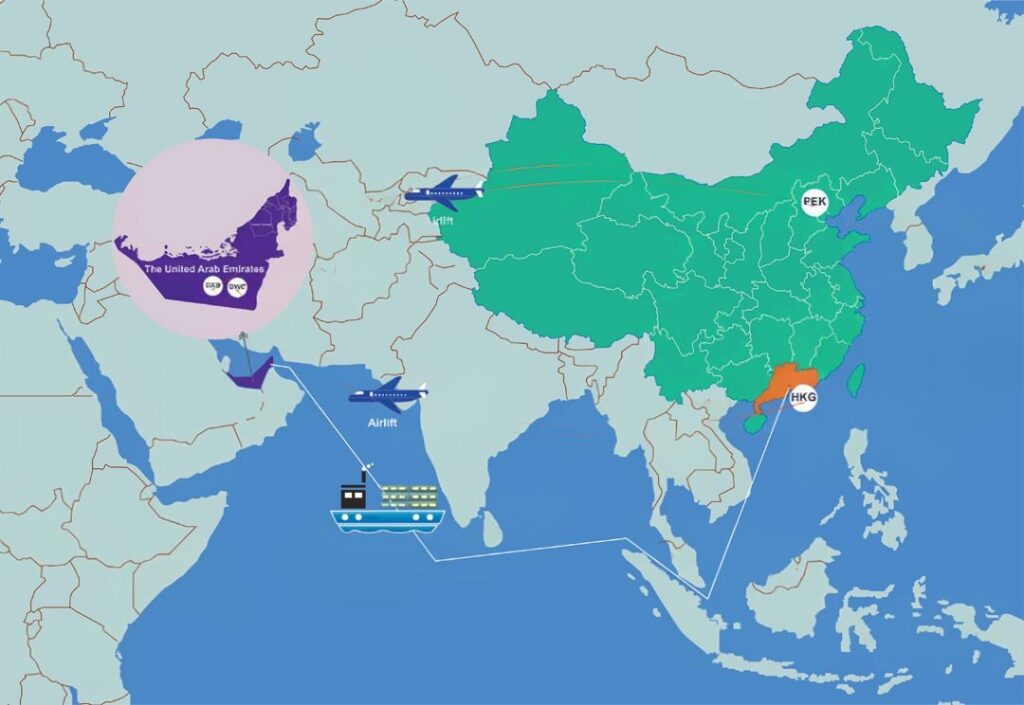
If your volume sits below about 15 CBM, a full container stops making sense. That is the FCL-versus-LCL breakeven: below 15 CBM, consolidating with other shippers through less than container load (LCL) almost always costs less, because you pay only for the space you use rather than an empty box. Above 15 CBM, the per-CBM rate of a full container drops below shared space and you also gain speed and security, since your goods are never opened until delivery.
Box size also drives surcharges. Terminal handling and the bunker adjustment factor scale with container count, not content, so one 40HQ beats two 20GPs on both freight and fees for the same volume. For current per-box pricing by lane, compare China to Dubai shipping rates before you commit, and run the FCL-versus-LCL math on your actual volume rather than guessing at the break-even.
Reefer and OOG equipment sit on top of the dry-box rate. Budget a meaningful premium for power and handling, and confirm cut-off dates early because these special boxes clear slower through both ports. The container decision is never just about capacity — it is about the total cost of getting your specific goods to the UAE door in good condition.
Which Container Fits Your Shipment
Use this short decision path when you brief your forwarder:
- Under 15 CBM, mixed or lower-value goods → book LCL and pay by the cubic metre.
- 15 to 33 CBM of dense cargo → a 20GP gives you the payload you need.
- 33 to 67 CBM, lighter goods → a 40GP covers it efficiently.
- Over 67 CBM, or bulky light cargo → a 40HQ is the efficient choice.
- Temperature-sensitive goods → a reefer with confirmed settings and pre-trip inspection.
- Oversized or tall items → flat rack or open top, booked well ahead.
The right box protects both your margin and your cargo. If your volume is close to a boundary, ask your forwarder to price both options — the difference is often larger than shippers expect, and the cheaper box is not always the smaller one. Once your container is on the water, you can track your container to Jebel Ali in real time so your warehouse and clearance broker are ready the moment it gates out.
Ready to book the right box for your lane? Tell Vantage Forwarding your cargo type, volume and destination, and we will recommend the container and send an itemized USD quote within 24 hours. Contact us to start.
FAQ
What size shipping container do I need for my cargo?
Match the box to your volume and weight. Under 15 CBM usually goes by LCL; 15 to 33 CBM of dense cargo fits a 20GP; 33 to 67 CBM suits a 40GP; over 67 CBM or bulky light cargo needs a 40HQ. Temperature-sensitive goods need a reefer, and oversized items need a flat rack or open top.
What is the difference between a 40GP and a 40HQ?
A 40GP holds about 67 CBM; a 40HQ is roughly a metre taller and holds about 76 CBM, with a similar 26 to 27 tonne payload. The high cube costs little more than the standard box, so it is usually the better choice for bulky, light cargo moving from China to the UAE.
How much does a shipping container from China to UAE cost in 2026?
A 20GP to Jebel Ali runs about $3,294 to $4,086, while a 40GP or 40HQ runs about $4,688 to $6,563. LCL consolidation costs roughly $55 to $110 per CBM. Rates rise with origin port, season and Red Sea or Hormuz disruptions, so confirm a current quote before booking.

 English
  Chinese
  Arabic
  French
  German
  Portuguese
  Spanish