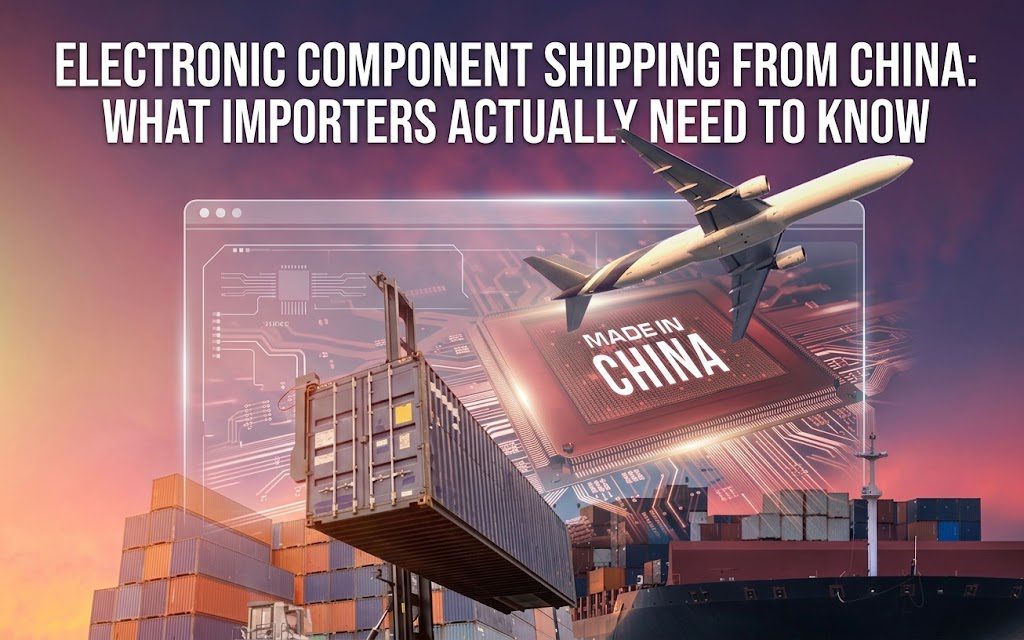
If you import electronic components from China, you might think shipping is the easy part – pick a few suppliers, book a courier, and wait for the box to show up. But anyone who’s done it knows that electronics are one of the most difficult types of cargo to move around the world. They’re tiny, they’re costly, and they’re easily ruined by things that don’t bother normal goods: static electricity, humidity, rough stacking, and sudden knocks during transit.
Most buyers only ask about freight rates and delivery times, and forget to mention these hidden dangers. Then they open the carton and find high failure rates, damaged parts, or a whole lot that has to be sent back. This guide is not a step‑by‑step manual. Instead, we’ll show you the real problems that can go wrong behind the scenes, and – more importantly – the exact questions you need to ask your forwarder before your shipment leaves the factory. Because with electronics, what you don’t know can cost you real money.
Why is electronic component shipping different from ordinary freight?
A reel of microcontrollers can be worth more than the carton and the pallet around it. Components also fail silently. A static discharge that leaves no visible mark can still kill a chip. Moisture that enters a package on a humid dock can crack a part during reflow soldering weeks later. Because the damage is invisible at receiving, the problem shows up only on your production line or in the field.
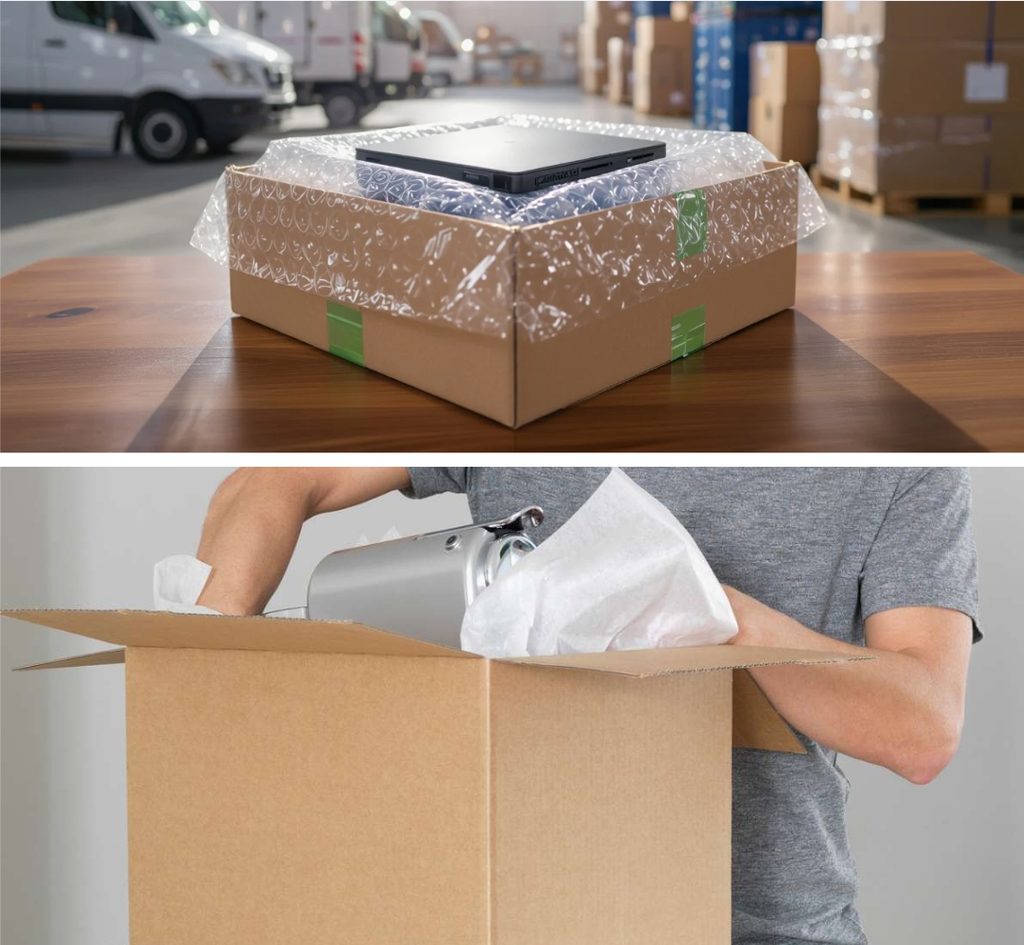
That changes three things: how you pack, how you document value, and how you insure. Standard freight rules assume the goods survive a rough ride. Electronic component shipping assumes the goods must survive a clean, controlled ride instead.
For the wider picture, see our guide to electronics freight forwarding from China.
Which components need the most care?
Most passive and active parts fall under Chapter 85 of the HS system. The risk level depends on sensitivity:
- Integrated circuits and microcontrollers (HS 8542)
- Discrete semiconductors, diodes, and transistors (HS 8541)
- Capacitors and resistors (HS 8532, HS 8533)
- Connectors and relays
- LEDs and optoelectronics
- Bare printed circuit boards (HS 8534)
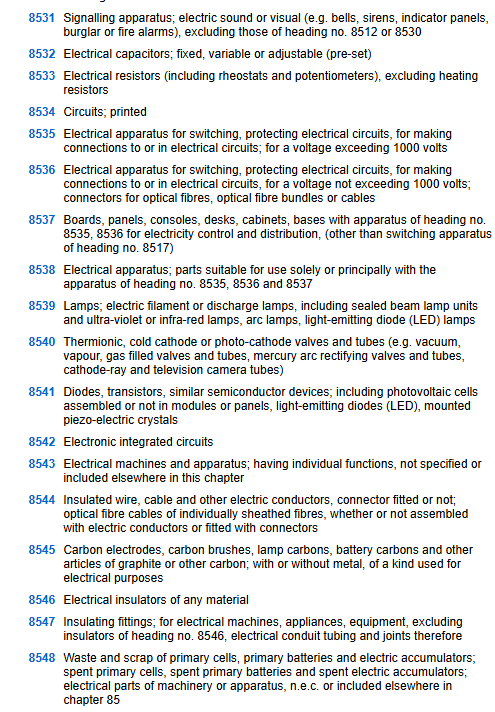
Any of these can carry a Moisture Sensitivity Level. The level tells you how long the part may sit exposed to room air before it must be baked or soldered. Treat every sealed bag as time sensitive. Our HS code guide for electronics explains how each code maps to a duty rate.
How do you protect parts from static and moisture?
Electronic components are unforgiving. A single static shock from a worker’s hand can fry a $50 IC without any visible trace. A few days of humidity can cause a reel of moisture-sensitive LEDs to swell internally—and fail during the reflow soldering process.
Two failure modes dominate electronics damage during storage and transit: electrostatic discharge and moisture absorption. Both are preventable at the packing stage—if you know what you’re protecting against.
Use ESD-safe materials from the start
Pack bare die, boards, and reels in static-shielding bags that meet ANSI/ESD S20.20. Ordinary plastic bags build charge and can discharge into the part. Warehouses that handle components should use grounded mats, wrist straps, and ionizers. Mark every static-sensitive carton with the standard ESD warning symbol so handlers treat it differently from general cargo.
Control moisture with dry packing
For moisture-sensitive parts, follow IPC/JEDEC J-STD-020. The supplier should place reels or trays in a moisture-barrier bag with desiccant and a humidity-indicator card, then heat seal it. The bag carries an MSL label and a seal date. Once opened, the part has a limited floor life, often 12 or 24 hours at factory humidity, before it needs baking. If your forwarder opens the bag for inspection, they must reseal it properly or the protection is lost.
Our packaging guide for ESD and moisture-safe component shipping goes deeper on the physical pack.
What documents do you need for component shipments?
The paperwork is similar to other electronics, with extra care on declared value. You need a commercial invoice, a packing list, the correct HS code, and a certificate of origin where required. Because component values are high and quantities are small, under-declaring to save duty is tempting but risky. Customs assesses value on the transaction, and a low declaration on a dense, valuable shipment draws scrutiny.
Start from our importer documents checklist so nothing is missing at departure.
Can you consolidate components from multiple suppliers?
Yes, and for buyers sourcing from many factories, consolidation is usually the right move. A China consolidation warehouse receives reels and boxes from each supplier, checks them against your packing list, and merges them into one shipment. This cuts cost and gives you one customs entry instead of ten.
The warehouse must be static safe. Components should not sit on open shelves in a humid room. Our overview of sensitive-goods shipping from China explains the compliance side. Choose a forwarder whose warehouse actually follows ESD and moisture procedures, not one that just claims to.

Which shipping mode fits electronic component shipping?
It depends on value, urgency, and volume.
| Factor | Air freight | Ocean freight |
|---|---|---|
| Speed | 5 to 12 days | 20 to 40 days |
| Best for | Urgent, high-value reels | Bulk, stable demand |
| Cost per kg | Higher | Lower |
| Risk profile | Less handling time | Longer humidity exposure |
For prototype builds and line-down emergencies, air wins. For steady production volume, ocean with proper dry packing is cheaper and safe when the seal holds.
How much does insurance cost and what does it cover?
Component shipments should be insured to declared value. A standard policy may exclude static or concealed damage, so confirm the wording. All-risk coverage that includes physical loss and damage in transit is the safer choice for high-value reels. Our guide to cargo insurance for DDP explains the options in plain terms and shows where buyers leave gaps.
Declare the real value. Under-insuring saves a little premium and costs the whole shipment if a claim arises. For electronic component shipping, the insurance step is where buyers most often cut corners, and it is the step that matters most when a single reel is worth a car.
What are the most common mistakes?
- Ignoring the MSL label and opening bags without a plan
- Using anti-static bags that are not actually shielding grade
- Under-declaring value to reduce duty
- Mixing HS codes between components and finished goods
- Skipping insurance on “small” high-value reels
- Letting components sit in a non-climate warehouse
Each of these is cheap to avoid and expensive to fix after a failure.
Frequently asked questions
Do components need a dangerous goods declaration?
Only if they contain lithium cells or batteries. Bare components usually do not, but modules with embedded cells do. Check our guide to shipping lithium batteries from China by air before booking.
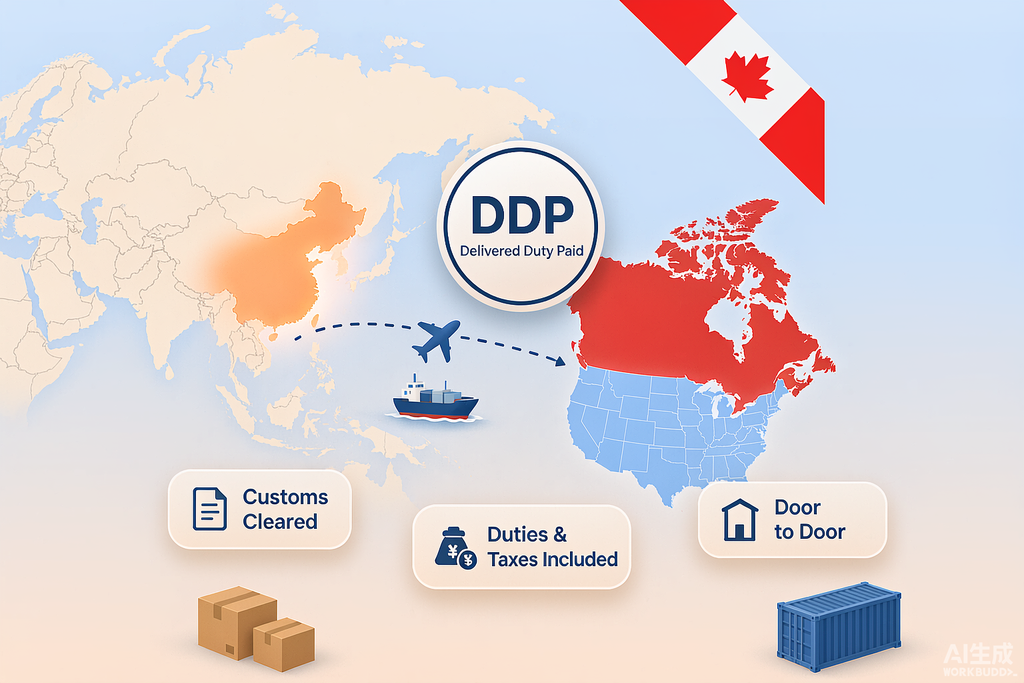
Can I ship components DDP?
Yes. Delivered Duty Paid works for components, but battery compliance must be solved first where applicable. Our DDP electronics guide covers the battery and documentation path.
How should I label a component carton?
Mark it with ESD sensitivity, orientation arrows, fragility, and the MSL where relevant. Clear labels turn careful handling from luck into procedure.
Conclusion
The real challenge in importing electronic components from China lies not in procurement, but in transportation. These components are small and high-value yet extremely fragile; static electricity, moisture, vibration, or even a single instance of mishandling can ruin an entire batch of chips without leaving visible traces—often with the damage only coming to light once the parts reach the production line or the final product is shipped.
Your cargo requires protection starting at the packaging stage: use compliant anti-static shielding bags; seal moisture-sensitive parts in moisture-barrier bags with desiccant; and strictly adhere to the time limits specified by MSL (Moisture Sensitivity Level) labels.
When consolidating goods from multiple suppliers, ensure you select a warehouse specifically equipped for anti-static and humidity control, rather than a standard warehouse. Air and sea freight each have their pros and cons: use air freight for urgent, high-value shipments and sea freight for steady, bulk orders—though sea freight requires ensuring the integrity of the sealed bags. Common pitfalls include carelessly opening moisture-barrier bags, mixing up HS codes, skipping insurance, and storing components in environments without temperature control; the cost of such preventive measures is minimal, whereas the cost of remediation is exorbitant.
 English
  Chinese
  Arabic
  French
  German
  Portuguese
  Spanish