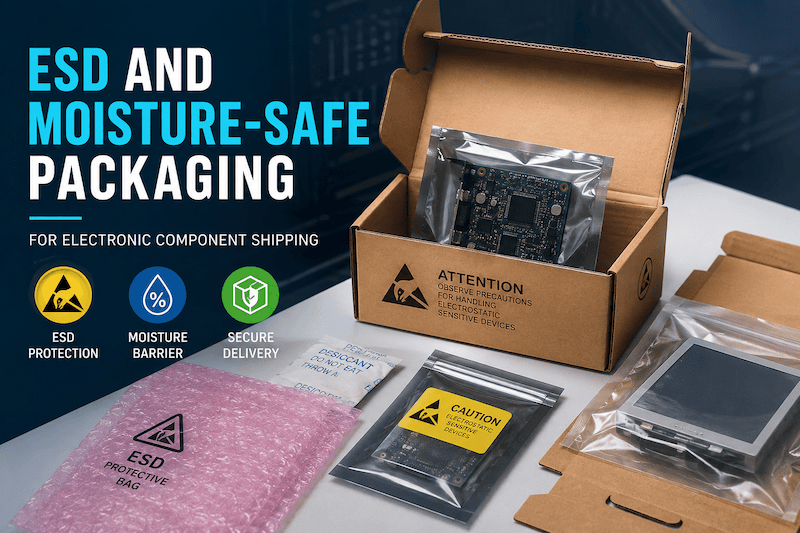
Most component damage doesn’t show on the outside—it happens before the box leaves China, at packing, on a humid dock, or in a warehouse that treats reels like shoes. In fact, static and moisture together account for an estimated 15% of all component failures, and the harm is often invisible: parts look flawless, but internal circuits are already stressed or broken, only to fail during assembly or end‑use.
That’s why proper ESD‑safe storage and packaging are not just quality basics—they are essential to cutting hidden losses. This guide covers the two failure modes that really matter, static and moisture, and the packing and storage steps that stop them.
Why is packaging the real control point?
A component does not complain when it is mishandled. A static hit leaves no mark. Moisture absorbed in a bag shows nothing until reflow, when the part cracks. By the time you see the failure, the shipment is closed and the cause is gone. Good electronic component packaging prevents the damage instead of trying to detect it later. Our electronic component shipping guide explains why this matters through the whole journey. Our broader electronics freight forwarding guide shows where packaging sits inside the full route from factory floor to destination dock.
How do you stop electrostatic discharge?
Static is the silent killer of semiconductors. The fix is material and procedure, not luck.
Use shielding-grade bags
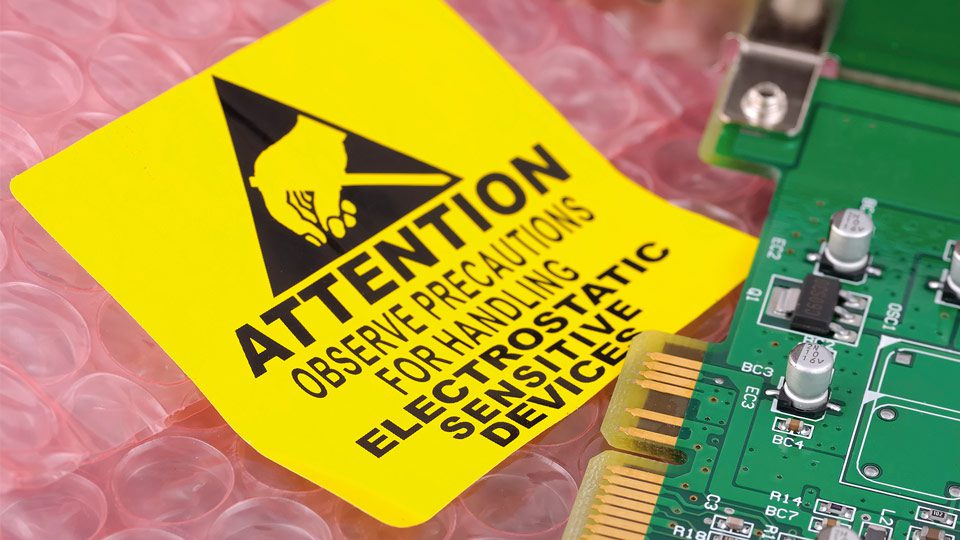
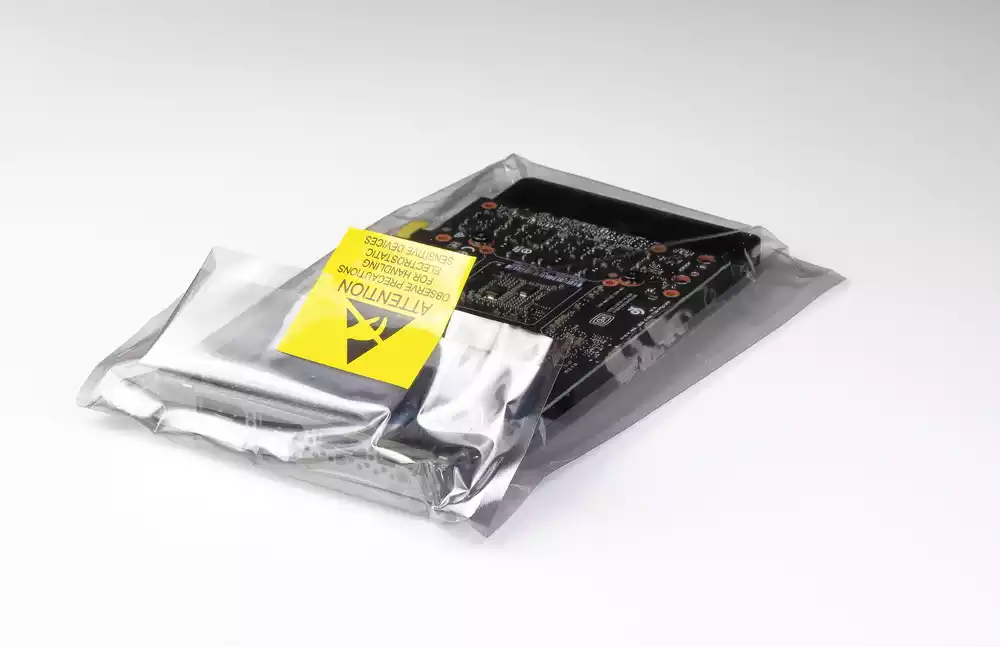
Pack bare die, boards, and reels in static-shielding bags that meet ANSI/ESD S20.20. Plain anti-static bags slow charge buildup but do not block an external field. Shielding bags do. Mark every carton with the ESD warning symbol so handlers know to keep it away from plastics and fleece.
Control the handling area
The warehouse should use grounded mats, wrist straps, and ionizers at pack stations. Anyone touching reels should be grounded. Our overview of sensitive-goods shipping covers the compliance side.
How do you stop moisture damage?
Moisture is the second silent failure. Absorbed water turns to steam inside a chip during soldering and cracks it. The defense is dry packing.
Follow the MSL and J-STD-020
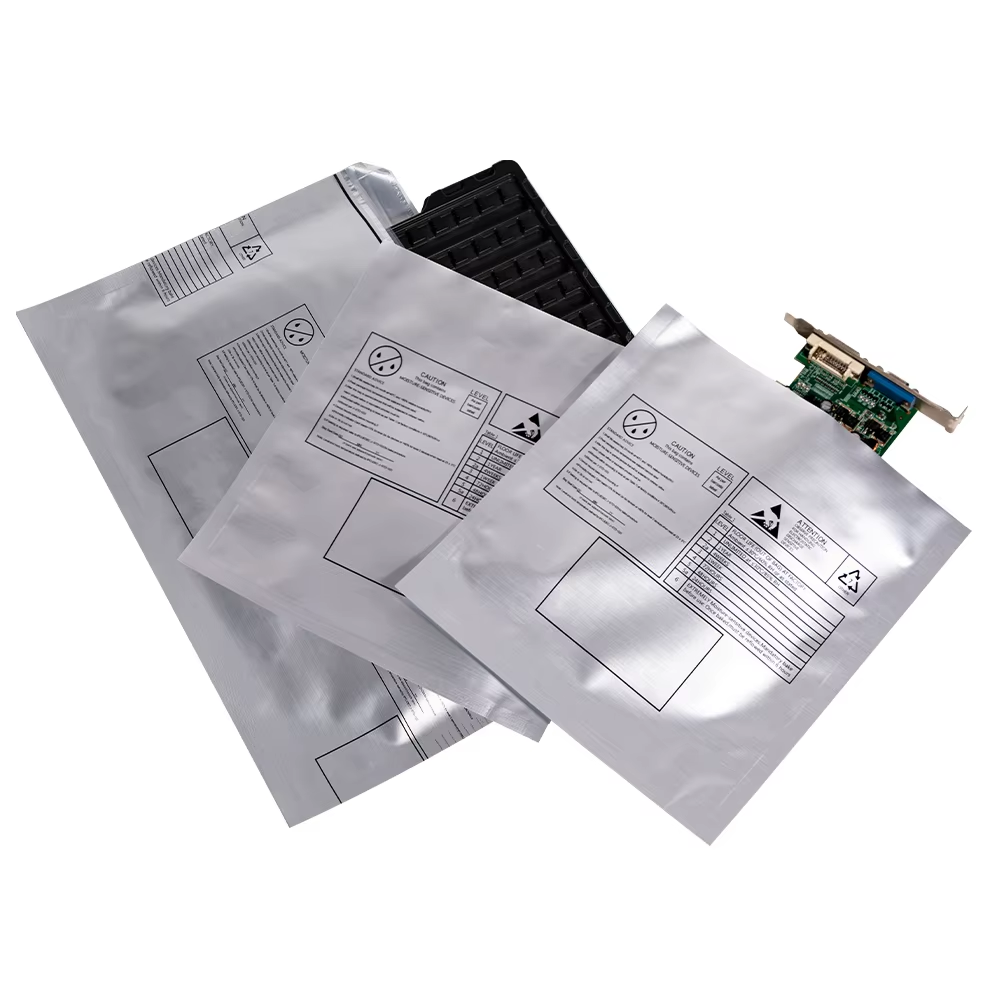
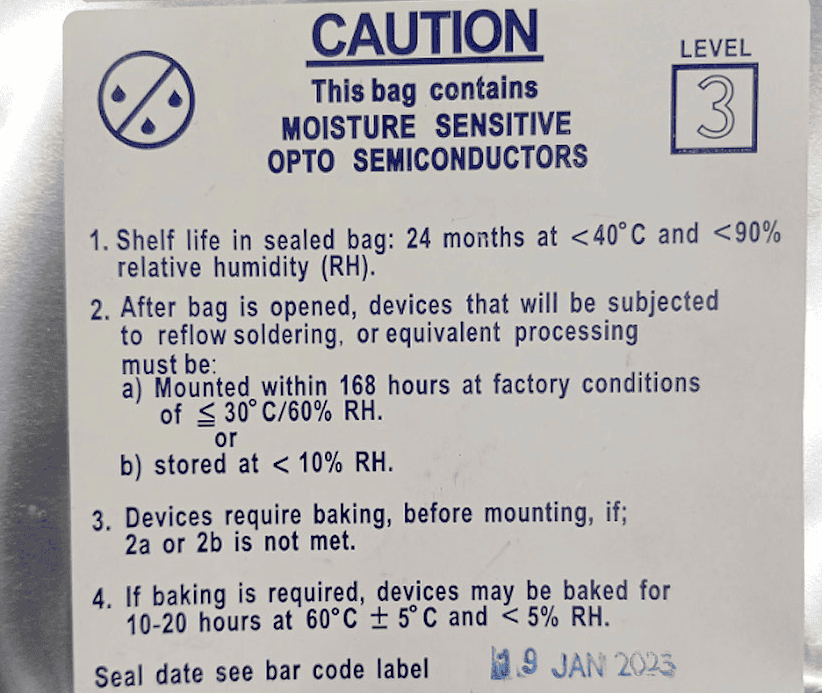
Every moisture-sensitive part carries a Moisture Sensitivity Level under IPC/JEDEC J-STD-020. The level sets how long the bag may stay open before the part must be baked. The supplier places reels or trays in a moisture-barrier bag with desiccant and a humidity-indicator card, then heat seals it and labels the seal date.
Respect floor life after opening
Once opened, the clock runs. Many parts allow only 12 or 24 hours at factory humidity. If your forwarder inspects the bag, they must reseal it to spec or the protection ends. Electronic component packaging fails the moment a sealed bag is opened and left unresealed.
What physical protection do reels and trays need?
Static and moisture are solved by the inner pack. The outer pack protects against impact and crushing.
- Use reel protectors or clamshells so the reel edge does not crack
- Use foam inserts and a tight carton fit with no void space
- Mark orientation arrows and fragility on every carton
- Stack within the carton rating and avoid overhang on pallets
A cracked reel wastes the whole shipment even if the parts survive.
ESD packaging checklist
Strong electronic component packaging starts at the bag. Before the box leaves the supplier, confirm:
- Static-shielding bags rated to ANSI/ESD S20.20
- ESD warning labels on every sensitive carton
- Grounded pack station with wrist straps
- No ordinary plastic touching bare parts
- Cartons marked fragile and orientation correct
Moisture packaging checklist
Before sealing, confirm:
- Correct MSL label per IPC/JEDEC J-STD-020
- Desiccant and humidity-indicator card inside the barrier bag
- Heat seal intact with a visible seal date
- Reseal procedure agreed with the forwarder for any inspection
How do you verify packing at receiving?
Check the humidity card on arrival. If it shows pink, the bag was compromised. Confirm the seal date and the MSL. Train your receiving team to reject a bag that looks resealed badly. Electronic component packaging is only as good as the seal you verify on arrival. The cost of one inspection is nothing next to a line-down event from dead parts. Our cargo insurance guide for DDP covers what to do if a batch is lost.
What does good packaging cost versus failure?
Dry packing and shielding bags add cents per reel. A failed batch costs the parts, the freight, the production stop, and the trust. Electronic component packaging is cheap insurance, not a luxury.
Frequently asked questions
Can I reuse a moisture-barrier bag?
Only if it still seals and the desiccant is fresh. Most suppliers use new bags because a weak seal ruins the protection.
Do all components need dry packing?
Only moisture-sensitive ones, but most active parts are sensitive. When in doubt, pack dry.
Who is responsible for the pack?
The supplier packs at origin. Your forwarder must not break the seal without resealing. The importer should specify the standard in the purchase order. Our HS code guide pairs the paper trail with the physical one.
Conclusion
To win at packaging, you must do three things simultaneously: shield against electrostatic discharge with ANSI/ESD S20.20‑rated bags and grounded handling; dry‑pack moisture‑sensitive devices per IPC/JEDEC J‑STD‑020 with fresh desiccant and a sealed barrier; and protect reels physically against crushing and vibration. But protection does not stop at the box—it extends to warehouse storage, where temperature, humidity, and ESD controls must be maintained, and to forwarder inspections, where every opened bag must be properly resealed.
Specify your packaging standards clearly in purchase orders, verify every shipment on arrival with humidity‑indicator cards and seal dates, and treat each sealed bag as a countdown timer. The components are small, but the cost of a silent failure—lost parts, halted production, and broken trust—is not. Good packaging is cheap insurance; bad packaging is an expensive gamble you do not need to take.


 English
  Chinese
  Arabic
  French
  German
  Portuguese
  Spanish