Transporte marítimo de China a los Emiratos Árabes Unidos: coste, tiempo de tránsito y opciones de envío (2026)
Reenvío Vantage
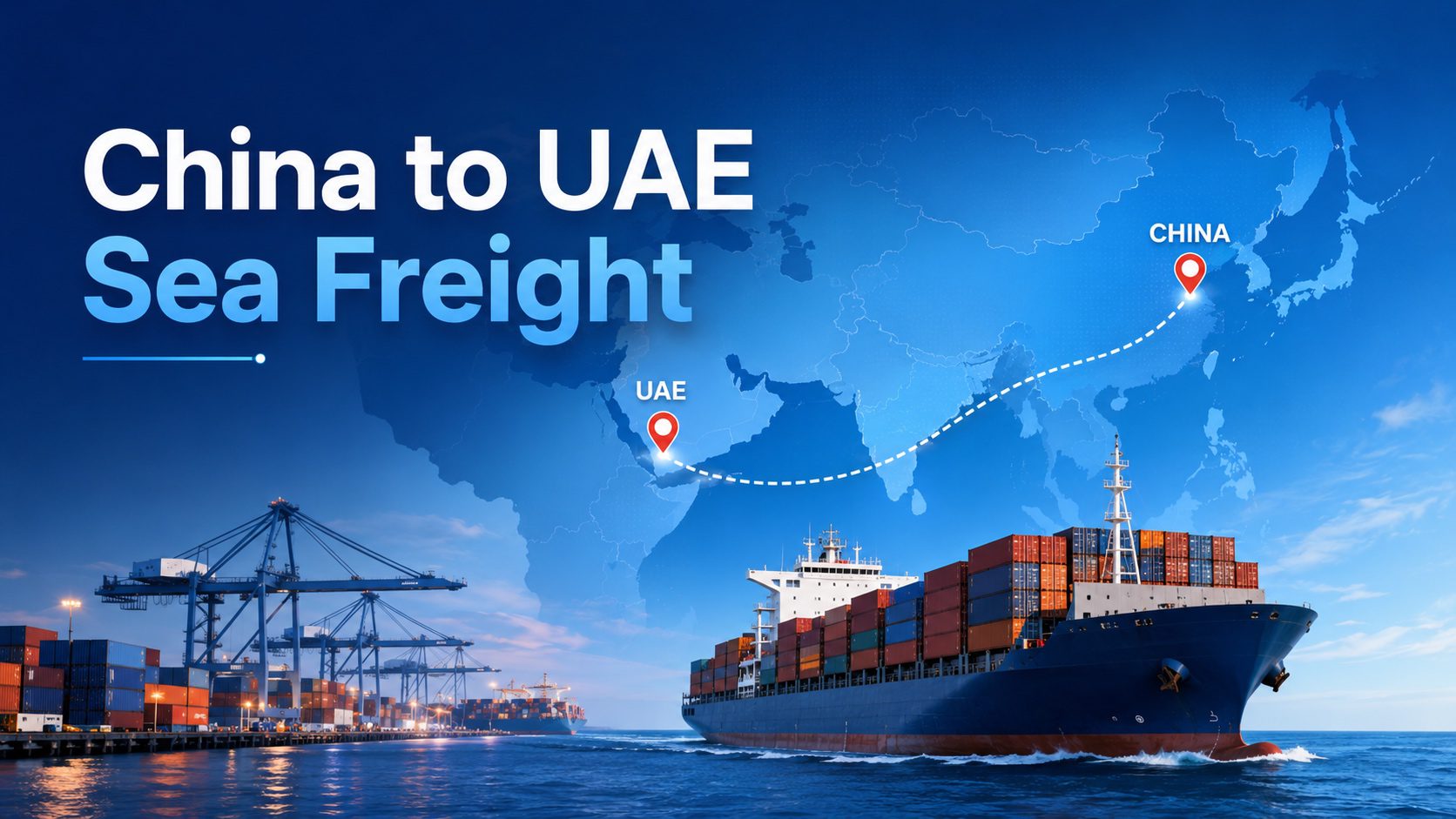
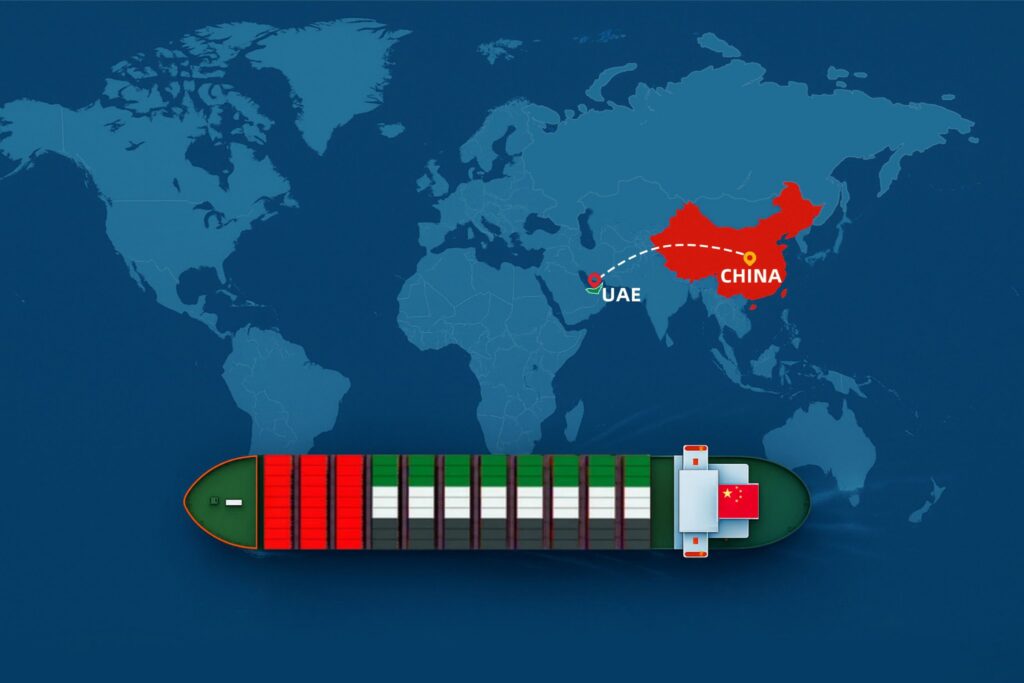
El transporte marítimo de China a los Emiratos Árabes Unidos en 2026 cuesta aproximadamente entre $900 y $6,800 por contenedor (FCL) o entre $55 y $130 por CBM (LCL), con un margen del 15 al 35
Transporte marítimo de China a los Emiratos Árabes Unidos en 2026 costará aproximadamente $900–$6.800 por contenedor (FCL) o $30–$200 por metro cúbico (LCL), con tránsito de puerto a puerto de Entre 15 y 35 días dependiendo del puerto de origen y de si el buque navega directamente o hace transbordo. Pero esta es la incómoda realidad que la mayoría de los importadores descubren demasiado tarde: si solo tienes en cuenta en tu presupuesto la partida correspondiente al flete marítimo, es casi seguro que te pasarás del presupuesto en 30–50%—a veces mucho más— para cuando tus mercancías pasen la aduana de los Emiratos Árabes Unidos y lleguen a tu almacén.
La diferencia entre un presupuesto de transporte “barato” y tu coste real coste en destino Es ahí donde se esfuman los beneficios. Hemos visto cómo les ha pasado a compradores con experiencia.
Mini historia #1 — el 40% oculto: En marzo de 2026, una vendedora de Amazon con sede en Shenzhen a la que llamaremos “Mei” reservó un contenedor de 40 HQ desde Yantian a Jebel Ali por lo que parecía una ganga: $2,150 el flete marítimo con todo incluido. Ella calculó su presupuesto basándose en esa cifra. Lo que no había tenido en cuenta era el Recargo por combustible de BAF ($310), Destino THC ($185), Certificación de facturas por parte del MOFAIC (150 AED), Derechos de aduana 5% + IVA 5% sobre el valor CIF, y transporte por carretera de última milla hasta su centro de preparación de FBA en Dubái ($260). Su coste real ascendió a $4,980—132% por encima de la cifra que le había prometido a su director financiero. El envío siguió siendo rentable, pero su planificación del flujo de caja para las tres referencias siguientes se vino abajo.
Estás leyendo esto porque necesitas transportar mercancía desde China a los Emiratos Árabes Unidos —Jebel Ali, Khalifa, Sharjah o Ajman— y quieres que la real cifras reales, no una tasa promocional pensada para atraer tu interés.
De acuerdo: Probablemente hayas abierto tres pestañas con presupuestos de transportistas que parecen todos diferentes, y sospechas que ninguno de ellos refleja la situación completa. Promesa: Esta guía te ofrece una visión completa de 2026: rangos de tarifas verificados por contenedor y por ruta, un marco de costes en destino que puedes aplicar, los mecanismos aduaneros de los Emiratos Árabes Unidos (aranceles, IVA, Mirsal 2, MOFAIC, zonas francas), el mapa de riesgos de 2026 (Hormuz, Mar Rojo, picos de congestión) y un marco de decisión imparcial para que puedas elegir por ti mismo entre FCL y LCL, el Incoterm adecuado y el transportista más adecuado. Vista previa: Empezamos con una tabla de resumen rápido y, a continuación, analizamos en profundidad los costes, el transporte, los trámites aduaneros, los riesgos y 10 formas concretas de reducir la factura de transporte.
Puntos clave
– Un presupuesto de transporte marítimo que solo incluye el flete suele subestimar el coste real en destino en 30–50%+ una vez sumados el BAF, el THC, el seguro, los aranceles 5%, el IVA 5%, la certificación del MOFAIC y la entrega de última milla.
- FCL 20GP / 40GP / 40HQ El trayecto de China a Jebel Ali dura aproximadamente $1.200–$2.100 / $1.650–$2.800 / $1.850–$3.100 en temporada baja de 2026; LCL costes $55–$130 para CBM.
– El tránsito de puerto a puerto es Entre 15 y 22 días desde Shanghái/Shenzhen (directo) y 24-30 días desde Qingdao; añadir 5-10 días para la recogida y entrega puerta a puerta.
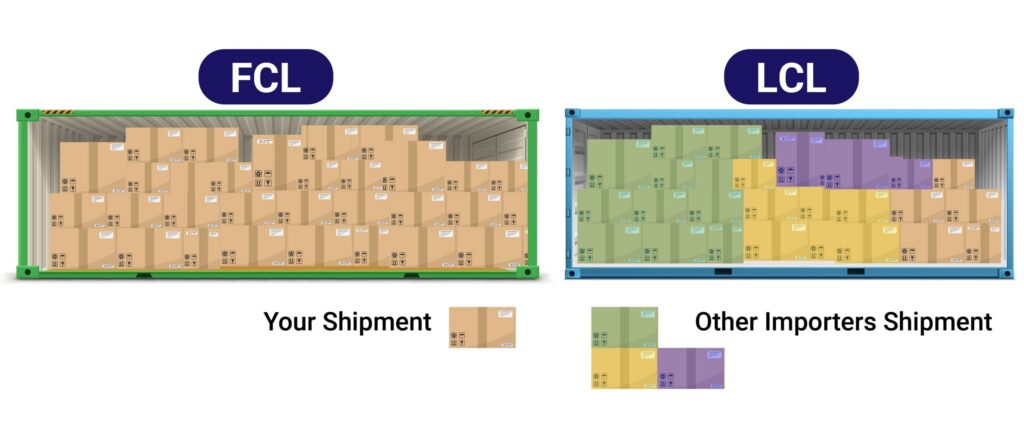
– El El umbral de rentabilidad entre FCL y LCL es de unos 15 m³.; por debajo de ese nivel, suele imponerse el transporte en contenedor de carga combinada (LCL); por encima, lo hace el contenedor completo.
– Las importaciones de los Emiratos Árabes Unidos se mantienen estables 5% de derechos de aduana + 5% de IVA sobre el valor CIF, pero zonas francas (JAFZA, AFZA, KIZAD) te permite aplazar o evitar por completo el pago de derechos de aduana en caso de reexportación o de uso dentro de la zona.
Resumen del transporte marítimo de China a los Emiratos Árabes Unidos
Antes de entrar en detalles, aquí tienes la versión de 30 segundos. Úsala para comprobar que cualquier presupuesto que recibas sea razonable.
Modalidad de envío
Tiempo de tránsito
Rango de costes para 2026 (USD)
Lo mejor para
Lista de la tripulación de vuelo: 20 pasajeros del grupo
Entre 15 y 30 días de puerto a puerto
$1.200–$2.300
Carga densa: 10-15 m³, hasta unas 22 t
Lista completa de la tripulación del 40 Grand Prix
15-30 días
$1.650–$2.900
Volumen estándar, 25–28 m³
Contenedor de cuarenta pies, de gran capacidad
15-30 días
$1.850–$3.300
Carga voluminosa o ligera, hasta unos 68 m³
LCL (por CBM)
Entre 20 y 35 días
$55–$130 / CBM
Cargas pequeñas: de 1 a 15 m³
Transporte aéreo
3-7 días
$4–$9 / kg
Urgente, de gran valor, menos de ~500 kg
Los Emiratos Árabes Unidos son el mayor centro de reexportación de Oriente Medio. Jebel Ali Por sí solo gestiona más volumen de contenedores que cualquier otro puerto entre Róterdam y Singapur —más de 14 millones de TEU al año—, por lo que la mayor parte de la carga entre China y los Emiratos Árabes Unidos pasa, como es lógico, por Dubái. Ese volumen es la razón por la que las tarifas a Jebel Ali suelen ser las más competitivas; los puertos secundarios (Khalifa, Sharjah, Ajman) tienen un pequeño recargo, pero permiten ahorrarse el transporte por carretera hacia el interior si el destino es Abu Dabi o los emiratos del norte.
¿Quieres cifras con las que puedas trabajar en lugar de una estimación aproximada? Solicita un presupuesto a Vantage Forwarding adaptado a tu ruta concreta — Indícanos el puerto de origen y el volumen, y te enviaremos un desglose detallado en dólares estadounidenses en un plazo de 24 horas. Solicitar mi presupuesto
¿Cuánto cuesta el transporte marítimo desde China a los Emiratos Árabes Unidos? (Tarifas de 2026)
Su Gastos de envío de China a los Emiratos Árabes Unidos viene determinada por el tamaño de la caja, el puerto de origen y la temporada, y no por una única cifra publicada. Las tarifas de referencia varían constantemente. En 2026 se han visto modificadas por dos factores: la disciplina en materia de capacidad de las navieras (GRI/recargos por temporada alta) y los desvíos por el Mar Rojo, que obligaron a muchos buques a rodear el Cabo de Buena Esperanza. La volatilidad de las tarifas se sigue públicamente a través de los índices de fletes, pero los rangos que se indican a continuación reflejan estimaciones para la temporada baja de 2026; se prevé que se alcance el límite superior (o más) en el tercer y cuarto trimestre y en torno al Ramadán.
Tarifas de contenedores de carga completa (20 GP / 40 GP / 40 HQ)
El precio de un contenedor seco estándar depende de tres factores: el tamaño del contenedor, el puerto de origen y la temporada. Los puertos del sur (Shenzhen, Guangzhou) son los más cercanos al Golfo y suelen ofrecer precios más bajos; los puertos del norte (Qingdao) añaden días de tránsito y un pequeño recargo.
20GP (capacidad de ~28–33 m³, carga útil de ~22 t): $1.200–$2.300
40GP (capacidad de ~56–67 m³, carga útil de ~26 t): $1.650–$2.900
40HQ (capacidad de ~67–76 m³, ~30 cm más alto): $1.850–$3.300
El 40HQ es la opción más rentable para mercancías ligeras y voluminosas —muebles, ropa, plásticos—, ya que ofrece el mayor número de CBM por dólar. Si tu carga es pesada y densa (azulejos, metales, maquinaria), un 20GP suele ofrecer un mejor precio por tonelada. Consulta nuestra guía sobre Tipos de contenedores para conocer las especificaciones exactas de capacidad.
Tarifas de LCL (por m³)
Con LCL (carga inferior a un contenedor) Solo pagas por el espacio que utilizas, compartido con otros expedidores. Las tarifas de China a Jebel Ali en 2026 ascienden a $55–$130 para CBM, dependiendo del origen, el volumen y las interrupciones en la ruta. Las empresas de transporte facturan el mayor de los dos valores entre el peso y el volumen (umbral de 1 m³ ≈ 1 000 kg), por lo que la mercancía densa puede facturarse por peso. Para obtener un desglose completo de cuándo es más ventajoso el transporte LCL que el FCL, consulta Consolidación de carga LCL.
Puerto de origen
Tarifa LCL a Jebel Ali (USD/CBM)
Transporte público habitual
Shenzhen (Yantian/Shekou)
de ciento cuarenta y cuatro a ciento cuarenta y cinco
19-27 días
Guangzhou (Nansha)
de uno a uno y medio
20-28 días
Shanghái
de una a cuatro veces, de cuarenta y cinco a ciento veinticinco
22-30 días
Descanso
de 1,68 a 1,30
24-32 días
Qingdao
De una a cuatro toneladas por tonelada de $75–$135
26-34 días
Matriz completa de tarifas de origen y destino
Esta es la tabla que la mayoría de las guías se saltan. A continuación se muestran Rangos de precios del FCL de puerto a puerto (USD) para cada origen principal en China × cada destino principal en los Emiratos Árabes Unidos, temporada baja de 2026. Las cifras son 20GP / 40GP / 40HQ.
Origen → Destino
Jebel Ali (Dubái)
Khalifa (Abu Dabi)
Sharjah (Puerto Khalid)
Ajman
Shanghái
1,300–1,900 / 1,800–2,500 / 2,000–2,800
1,350–2,000 / 1,880–2,600 / 2,080–2,900
1,400–2,050 / 1,950–2,650 / 2,150–2,950
1,450–2,100 / 2,000–2,700 / 2,200–3,000
Descanso
1,250–1,850 / 1,750–2,450 / 1,950–2,750
1,300–1,950 / 1,820–2,550 / 2,020–2,850
1,350–2,000 / 1,900–2,600 / 2,100–2,900
1,400–2,050 / 1,950–2,650 / 2,150–2,950
Shenzhen
1,200–1,750 / 1,650–2,350 / 1,850–2,600
1,250–1,850 / 1,720–2,450 / 1,920–2,700
1,300–1,900 / 1,800–2,500 / 2,000–2,750
1,350–1,950 / 1,850–2,550 / 2,050–2,800
Guangzhou
1,250–1,800 / 1,700–2,400 / 1,900–2,650
1,300–1,900 / 1,780–2,500 / 1,980–2,750
1,350–1,950 / 1,850–2,550 / 2,050–2,800
1,400–2,000 / 1,900–2,600 / 2,100–2,850
Qingdao
1,500–2,100 / 2,000–2,800 / 2,200–3,100
1,550–2,200 / 2,080–2,900 / 2,280–3,200
1,600–2,250 / 2,150–2,950 / 2,350–3,250
1,650–2,300 / 2,200–3,000 / 2,400–3,300
Estos son solo transporte marítimo. No incluyen el BAF, el THC, la documentación, el seguro, los aranceles, el IVA ni el transporte; precisamente los costes que vamos a detallar a continuación.
¿Qué incluye el precio? Desglose de los costes de aterrizaje
Esta es la sección que protege tu margen. El presupuesto de transporte rara vez representa el coste total. Elabora tu presupuesto teniendo en cuenta estos elementos.
Capa de costes
Qué es
Importe típico para 2026
Transporte marítimo
Transporte básico de puerto a puerto
Según la matriz anterior
BAF (Factor de ajuste del combustible de los búnkeres)
Recargo por combustible
$180–$320 / TEU con destino a Oriente Medio
THC (Manipulación en terminal)
Carga y descarga en el puerto
Origen: $100–$180; destino: $150–$220
Tasas de documentación
Conocimiento de embarque, tramitación, administración
$50–$150 / envío
Seguro de carga
Protege la mercancía durante el transporte
0,2–0,51 TP3T del valor de la carga
5% Derecho de aduana
Sobre el valor CIF
5% × (mercancías + flete + seguro)
5% IVA
Sobre el valor CIF
5% × CIF
Certificado del MOFAIC
Legalización de facturas comerciales (obligatoria para facturas superiores a 10 000 AED a partir de septiembre de 2024)
AED 150 (~$41)
Entrega de última milla
Jebel Ali → tu almacén
De uno a cuatro mil doscientos a uno a cuatro mil cuatrocientos
¿Por qué la cotización presenta un desfase de 30–50%?. Los datos del sector muestran que los importadores que solo presupuestan la partida correspondiente al flete marítimo suelen descubrir que su coste real en destino es 30–50% por encima de esa cifra una vez que se tienen en cuenta los recargos, las tasas de terminal y los seguros, y esa diferencia se acentúa considerablemente cuando se suman los aranceles y el IVA. Los índices públicos de tarifas, como el World Container Index de Drewry y Xeneta, han reflejado esta tendencia a lo largo del periodo 2024-2026.
Ejemplo práctico — De Shenzhen (40HQ) a Jebel Ali:
– Valor de la mercancía: $20,000
– Transporte marítimo (40HQ): $2,200
– BAF: $300 · Origen del THC: $120 · Destino THC: $180 · Documentos: $80
– Seguros (0,3%): $60
- Valor CIF = 20,000 + 2,200 + 60 = $22,260
– Duty 5% = $1,113 · IVA 5% = $1,113
– MOFAIC (150 AED ≈ $41) · Última milla = $260
- Coste total en destino = $5.457
La cita del titular era: $2,200. La cifra real era $5,457. Si solo habías previsto el presupuesto, estás 148%, fin—y solo los aranceles y el IVA supusieron 10% del CIF. La lección: pide siempre un «all-in», Desglose al estilo DDP, y siempre asegura tu envío—Un contenedor dañado puede acabar con el margen de todo un año por el precio de un café.
No dejes que una cotización de $2.200 se convierta en una sorpresa de $5.457. Solicita tu presupuesto detallado del coste total de importación en los EAU a Reenvío Vantage — todos los recargos se muestran antes de que confirmes la compra.
¿Cuánto tarda el transporte marítimo desde China hasta los Emiratos Árabes Unidos? (Tiempo de tránsito)
La ruta marítima entre China y los Emiratos Árabes Unidos es una de las más rápidas en lo que respecta a los trayectos de larga distancia. Su distancia es aproximadamente la mitad de la que separa China del norte de Europa, por lo que el transporte marítimo sigue siendo una opción viable para las mercancías cuyo coste de transporte aéreo resultaría prohibitivo.
De puerto a puerto frente a de puerta a puerta
De puerto a puerto = Solo el tiempo de navegación del buque.
De puerta a puerta Añade: entre 2 y 4 días de transporte por carretera por el interior de China hasta el puerto de carga; entre 1 y 3 días de despacho de aduanas en los Emiratos Árabes Unidos, en Jebel Ali (documentación en regla); y entre el mismo día y 2 días para la entrega final. Plazo de entrega: entre +5 y +10 días para el servicio puerta a puerta.
Tiempo de tránsito por ruta
Origen → Jebel Ali
Directo (días)
Vía transbordo (días)
Shanghái
15–22
25–35
Descanso
18–25
28–38
Shenzhen (Yantian/Shekou)
16–22
26–33
Guangzhou (Nansha)
18–24
28–36
Qingdao
24–30
30–38
El transbordo suele realizarse a través de Singapur, Colombo o Port Klang. Es más barato, pero más lento. Los servicios directos predominan en la ruta Shanghái/Shenzhen → Jebel Ali gracias a las salidas semanales de COSCO, MSC, Maersk y OOCL. Puedes comparar las redes de las navieras en nuestra Resumen de operadores.
Una trampa relacionada con los plazos: los transportistas Cierre de la recepción de carga entre 3 y 5 días antes de la salida. Un proveedor que realiza la entrega “el mismo día de la salida” no llega a tiempo para embarcar. Asegúrate de que la mercancía esté en el puerto una semana completa antes la fecha de salida publicada.
FCL o LCL: ¿cuál deberías elegir?
Esto es un problema matemático, no una cuestión filosófica. El umbral de rentabilidad se refiere a 15 metros cúbicos.
Factor
Elija FCL cuando…
Elija LCL cuando…
Volumen
≥ 15 m³ (o ~10+ t de carga densa)
de uno a quince metros cúbicos
Lógica de costes
Tarifa plana; el coste por CBM es inferior al del LCL
Paga solo por el espacio que utilices
Velocidad
Más rápido: sellado, sin tiempo de espera para la consolidación
Más lento: consolidación + desconsolidación
Seguridad
Un único remitente, contenedor precintado
Espacio compartido con otra mercancía
Riesgo
Menos daños por manipulación
Cuantas más interacciones, mayor es el riesgo
Si tienes menos de 15 m³, Consolidación de carga LCL casi siempre sale más a cuenta en cuanto al precio. A partir de 15 m³, la tarifa por m³ de un contenedor completo es más ventajosa que la del espacio compartido, y además se gana en rapidez y seguridad. Un contenedor de 40 pies de altura (40HQ), con una capacidad de unos 68 m³, puede resultar más barato por m³ que el transporte de carga fraccionada (LCL), incluso si solo se llena hasta la mitad; haz las cuentas en ambos casos antes de reservar. Consulta nuestra contenedor tipos Guía de especificaciones de capacidad.
La forma más económica de realizar envíos desde China a los Emiratos Árabes Unidos Normalmente se trata de un grupo de carga (LCL) para cargas de menos de 15 m³ (a partir de $55/m³) o un contenedor completo (FCL) de 20 pies para carga densa, que se envía fuera de temporada alta desde puertos del sur (Shenzhen/Guangzhou) mediante una ruta de transbordo. Para minimizar el coste total, reserve con 3-4 semanas de antelación, alcance el umbral de rentabilidad de un contenedor completo (FCL) de 15 m³, utilice una zona franca para aplazar el pago de derechos de aduana y compare siempre el coste total en destino, no las tarifas marítimas nominales.
Explicación de los principales puertos de los Emiratos Árabes Unidos
Jebel Ali (Dubái) — El punto de entrada predeterminado para el código 80%+ del comercio entre China y los Emiratos Árabes Unidos. Si estás realizando un análisis comparativo del Gastos de envío de China a Dubái En concreto, las tarifas de Jebel Ali que figuran en la matriz anterior constituyen tu referencia para Dubái. Junto a JAFZA Zona franca (más de 8.000 empresas): permite el almacenamiento libre de aranceles, la reexportación y el montaje sencillo sin pasar por la aduana del continente. Las mercancías se despachan aquí y se transportan en camión a Dubái, Abu Dabi o Sharjah en un plazo de 1 a 2 días.
Puerto de Khalifa (Abu Dabi) — Una puerta de entrada a la región de la capital, altamente automatizada, situada junto a KIZAD Zona franca. Elígelo si tu destino es Abu Dabi; así te ahorras el trayecto de Dubái a Abu Dabi.
Sharjah (Puerto Khalid) — Da servicio a los emiratos del norte. Las tarifas marítimas son ligeramente más altas que las de Jebel Ali, pero reduce el transporte por carretera hacia el interior si tu destino es Sharjah, Ajman o Ras Al Khaimah.
Ajman — Es el más pequeño de los cuatro, ideal para repartos locales en los emiratos del norte. Tarifas marítimas de primera categoría, pero con un coste mínimo en la última milla.
Rutas de envío y principales transportistas
Transporte marítimo de contenedores de China a los Emiratos Árabes Unidos está dominado por cuatro operadores: COSCO, MSC, Maersk y OOCL. Tipos de servicios:
Trayectos directos — El más rápido y con mayor frecuencia desde Shanghái/Shenzhen. Salidas semanales.
Transbordo — Más barato, más lento, vía Singapur/Colombo/Port Klang.
Desvío de Cape — Desde 2024, los riesgos del Mar Rojo han obligado a una gran parte de los buques a rodear el Cabo de Buena Esperanza, lo que supone un retraso de entre 7 y 14 días y un coste considerable (véase «Riesgos»).
Consejo para la reserva: compara al menos dos transportistas y un NVOCC. Las tarifas publicadas por los transportistas no incluyen muchos recargos; un buen agente de transporte combina diferentes opciones para alcanzar tus objetivos de coste y rapidez.
Despacho de aduanas en los Emiratos Árabes Unidos: documentos y aranceles
Comprensión despacho de aduanas en los Emiratos Árabes Unidos No es negociable. El marco normativo es más sencillo que el de los mercados occidentales, pero muy estricto en cuanto a la documentación.
Derechos de aduana: plano 5% sobre el valor CIF de la mayoría de las mercancías (véase el documento del Gobierno de los EAU Guía sobre derechos de aduana).
IVA:5% sobre el valor CIF.
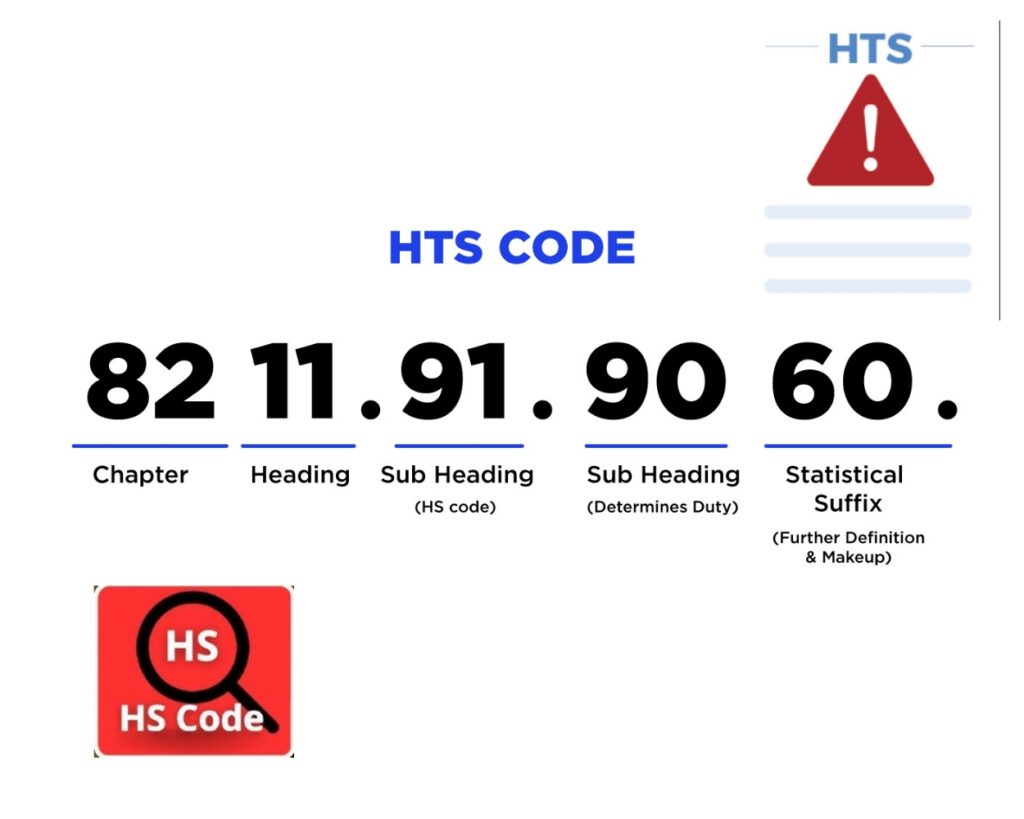
Códigos del SA: a Código HS de 12 dígitos Se está implantando gradualmente, y se prevé que su aplicación plena para las importaciones procedentes del resto del mundo entre en vigor en agosto de 2026; si se comete un error, el despacho de aduana se paraliza. Los Emiratos Árabes Unidos Sistema Central de Aranceles Aduaneros enumera los códigos correctos, y puedes comprobar el tuyo de antemano con nuestro Herramienta de búsqueda de códigos HS.
Mirsal 2: la plataforma aduanera electrónica de los Emiratos Árabes Unidos; la mayoría de las declaraciones se tramitan en un plazo de 1 a 3 días si la documentación está en regla.
Certificado del MOFAIC: facturas comerciales anteriores 10 000 AED debe estar certificado (a partir de septiembre de 2024), ~150 AED.
Certificados de productos:ESMA / ECAS / GCC marcas de conformidad para productos regulados (electrónica, juguetes, productos en contacto con alimentos, etc.).
Zonas francas: mercancías importadas a JAFZA / AFZA / KIZAD Si se destinan a la reexportación o al uso dentro de la zona franca, se evitan los aranceles y el IVA hasta que entren en el territorio continental.
Para conocer los cálculos de los aranceles en sí, consulta nuestra guía explicativa en Derechos de aduana de los Emiratos Árabes Unidos.
Lista de comprobación de los documentos necesarios
Documento
Objetivo
Nota
Conocimiento de embarque (B/L)
Justificante de propiedad
Normalmente se exige el original
Factura comercial
Valor + código HS
Certificado por el MOFAIC si es superior a 10 000 AED
Lista de embalaje
Contenido, peso, dimensiones
Debe coincidir con la factura
Certificado de origen
Acreditar el país de fabricación
Datos necesarios para la evaluación de la prestación de servicios
Código del SA (12 dígitos)
Clasificación
Se introducirá gradualmente a partir de 2025; su aplicación plena tendrá lugar en 2026
Certificado por la ESMA, la ECAS y el GCC
Conformidad
Solo productos regulados
Orden de entrega
Documento de entrega del agente de transporte
Del agente de la compañía de transporte en los Emiratos Árabes Unidos
Mercancías prohibidas y restringidas
Los Emiratos Árabes Unidos prohíben o restringen: estupefacientes, drogas ilícitas, armas (sin licencia), productos falsificados, material pornográfico, determinados productos químicos y algunos artículos religiosos o materiales. Los productos sujetos a restricciones (alcohol, productos farmacéuticos, alimentos, cosméticos y aparatos electrónicos con características técnicas específicas) requieren autorización previa y certificados de conformidad. En caso de duda, decláralos: la falta de declaración conlleva multas y la incautación de los productos.
Incoterms para envíos entre China y los Emiratos Árabes Unidos
En Incoterm El contrato que firmes determina quién paga y quién asume el riesgo en cada traspaso.
Incoterm
Transferencias de riesgo en…
¿Quién paga los gastos de envío y los aranceles?
Ideal para cuando
EXW (Ex Works)
Almacén del vendedor (China)
El comprador se hace cargo de todos los gastos
Tienes tu propia red logística en China
FOB (Free On Board)
Cargado en un buque en un puerto chino
El comprador corre con los gastos de transporte marítimo y los gastos en los Emiratos Árabes Unidos
Quieres controlar la etapa marítima
CIF (Coste, seguro, transporte)
A bordo del buque; el vendedor contrata el seguro hasta el puerto
Los gastos de envío a Jebel Ali corren a cargo del vendedor
El vendedor se hace cargo de todos los gastos, incluidos los aranceles y el IVA.
Importación con la mínima intervención posible
Mini historia #3: el Incoterm incorrecto: Un comerciante de Dubái (“Ahmed”) aceptó un CIF ofreció ese presupuesto porque parecía el más barato. El vendedor chino contrató a la naviera más barata, el contenedor estuvo 9 días atascado en Jebel Ali y Ahmed no tenía ninguna influencia para acelerar el proceso; además, el seguro del vendedor solo cubría un valor mínimo. Perdió la oportunidad de aprovechar una promoción de Ramadán. Si hubiera utilizado FOB y hubiera contratado a su propio transportista, habría pagado unos gastos de transporte similares, pero habría obtenido control sobre el seguimiento y una gestión adecuada seguro de carga. Ese “ahorro” le costó una temporada.
Para la mayoría de los importadores sujetos a control, FOB (la etapa marítima es tuya) o DDP (que subcontratas todo) son las opciones más seguras. Evita el CIF a menos que aceptes explícitamente el transportista y la cobertura del vendedor.
Tipos de contenedores y mercancías especiales
Las cajas estándar sirven para la mayoría de las mercancías, pero es importante que conozcas las opciones disponibles:
20GP — Uso general, ~28–33 m³, carga densa.
40GP — Volumen estándar, ~56–67 m³.
40HQ — Contenedor de gran capacidad, ~67–76 m³, con carga voluminosa/ligera.
Camión frigorífico — Con control de temperatura para el sector alimentario, farmacéutico y químico.
OOG (Fuera de gálibo) — Contenedores de plataforma plana o de techo abierto para maquinaria y mercancías de gran tamaño.
La mercancía especial tiene un coste adicional (enchufes para contenedores frigoríficos, manipulación de carga fuera de gálib) y requiere una reserva con mayor antelación. Encontrarás todas las especificaciones en nuestro Tipos de contenedores guía.
Riesgos y cómo mitigarlos en 2026
El año 2026 no será un año tranquilo en el mercado. Prepárate para lo siguiente:
Tensión en el estrecho de Ormuz — Por aquí pasan unos 20% del tráfico mundial de petróleo y de los principales flujos de contenedores. Las interrupciones provocan picos en los recargos por riesgo de guerra y en los cambios de ruta.
Desvíos en el Mar Rojo — Se ha añadido la ruta del Cabo de Buena Esperanza ~20% para transporte de mercancías y de 7 a 14 días en los travesías afectadas.
Congestión en temporada alta — En Jebel Ali, los tiempos de espera para atracar son de 5-7 días y +$250/TEU durante el tercer y cuarto trimestre y el Ramadán.
Fluctuación del tipo de cambio — El AED está vinculado al dólar estadounidense; si tu moneda nacional se deprecia, el coste final aumenta.
Escasez de material — La escasez de contenedores en los periodos de mayor demanda hace que suban las tarifas y se retrasen las salidas.
Mini historia #2 — La sorpresa del Mar Rojo: Una importadora de Guangzhou (“Sarah”) reservó un contenedor 40HQ $1.900 para un envío en mayo. Dos semanas antes de la salida del barco, su transportista anunció un desvío por el Cabo; el presupuesto revisado fue de $2,300 (+21%) y el plazo de tránsito se alargó de 22 a 34 días. Se retrasó el plazo de finalización del acondicionamiento interior de su mezquita, lo que activó las cláusulas de penalización. Ahora está construyendo un Contingencia de transporte 15% y libros seguro de carga en cada envío.
Medidas de mitigación: Reserva con 3-4 semanas de antelación; mantén una reserva para imprevistos de transporte de 10-15%; utiliza la condición FOB para poder cambiar de transportista; asegura cada envío; y realiza el seguimiento de los contenedores en tiempo real (véase más abajo).
10 formas de reducir los costes de transporte entre China y los Emiratos Árabes Unidos
Reserva con antelación — Si se reserva con 3 o 4 semanas de antelación, se evitan los recargos por temporada alta.
Envío fuera de horas punta — Evita, en la medida de lo posible, los periodos del tercer y cuarto trimestre y el Ramadán.
Elige el puerto de origen adecuado — Los puertos del sur (Shenzhen/Guangzhou) ofrecen precios más bajos y salidas más frecuentes.
Alcanzar el umbral de rentabilidad de la FCL — Concentrar a los proveedores para superar los 15 m³ y alcanzar las tarifas de contenedor completo.
Utiliza LCL de forma inteligente — Si son menos de 15 m³, comparte espacio en lugar de pagar por volumen sin utilizar.
Negociar el BAF/THC — Estos recargos suelen ser flexibles en las tarifas contractuales.
Optimizar el embalaje — Cuanto mayor sea el volumen de CBM por caja, menor será el coste de transporte por unidad; comprueba las dimensiones de las cajas.
Utiliza las zonas libres — Desviar la carga de reexportación a través de JAFZA/AFZA/KIZAD para aplazar el pago de los derechos de aduana.
Agrupar a varios proveedores — Un contenedor procedente de varias fábricas reduce las operaciones de manipulación.
Solicita presupuestos detallados — Compara el coste total en destino, no las tarifas marítimas nominales.
Cómo elegir el agente de transporte adecuado
Un buen agente de transporte es tu colchón de seguridad. Evalúalos en función de:
Acreditaciones — IATA, FIATA, FMC, NVOCC. Estos indicadores reflejan el cumplimiento normativo y la situación financiera.
Presupuestos transparentes — Muestran todas las partidas (BAF, THC, derechos de aduana, IVA, MOFAIC, gastos de envío), sin ningún importe oculto.
Capacidad de seguimiento — Deberías ser capaz de Realiza el seguimiento de tu envío en tiempo real a través del portal de tu agente de transporte, no “te lo enviaremos por correo electrónico”.”
Presencia en los Emiratos Árabes Unidos — Los socios locales de despacho de aduanas en Jebel Ali reducen los retrasos.
Composición de la flota — Contratos directos con COSCO, MSC, Maersk y OOCL, además de opciones de NVOCC.
Lista de comprobación para tu solicitud de oferta (envíala a todos los transportistas):
1. Presupuesto «todo incluido» en USD: transporte marítimo + BAF + THC + trámites + seguro + aranceles + IVA + MOFAIC + entrega
2. Tiempo de tránsito: ¿directo o con transbordo? Buque y fecha límite
3. Política de recargos: ¿se repercuten los recargos GRI/PSS? ¿Hay algún límite máximo?
4. Seguimiento: ¿enlace en tiempo real o portal?
5. Seguro: límite de cobertura y tramitación de siniestros
6. Gestión de las zonas francas: ¿qué experiencia tienen JAFZA, AFZA y KIZAD?
7. Referencias: ¿transportistas con rutas y volúmenes similares?
¿Estás listo para comparar transportistas en igualdad de condiciones? Consigue nuestra lista de verificación gratuita de 7 puntos para solicitudes de presupuesto (RFP) y te enviaremos un presupuesto detallado de muestra para tu ruta, para que puedas comparar cualquier oferta.
Preguntas frecuentes sobre el transporte marítimo de China a los Emiratos Árabes Unidos
¿Cuánto tarda el transporte marítimo desde China hasta los Emiratos Árabes Unidos?
«De puerto a puerto» es 15-30 días dependiendo del origen y la ruta: travesía directa desde Shanghái/Shenzhen en 15-22 días; desde Qingdao se tarda entre 24 y 30 días. Añadir 5-10 días para el despacho puerta a puerta y la entrega de última milla, así que planifica 20-38 días total.
¿Qué documentos necesito para realizar un envío desde China a los Emiratos Árabes Unidos? Para realizar un envío desde China a los Emiratos Árabes Unidos necesitas: un conocimiento de embarque, una factura comercial (certificada por el MOFAIC si el importe supera los 10 000 AED), una lista de embalaje, un certificado de origen, un código HS de 12 dígitos y los certificados de conformidad ESMA/ECAS/GCC para las mercancías reguladas. Declare todo; una declaración incorrecta conlleva el riesgo de incautación.
¿No estás seguro de que tu código HS de 12 dígitos sea correcto? Reenvío Vantage Revisa tus documentos de forma gratuita.
¿Cuál es el arancel que se aplica a las importaciones procedentes de China a los Emiratos Árabes Unidos? La mayoría de las mercancías importadas de China a los Emiratos Árabes Unidos están sujetas a un arancel aduanero fijo del 5%, más un IVA del 5%, ambos calculados sobre el valor CIF. (coste + seguro + flete). Algunas mercancías están exentas; las importaciones a zonas francas destinadas a la reexportación quedan exentas de derechos de aduana hasta que entran en el territorio continental.
¿Cuál es el envío más pequeño que puedo enviar por mar?
No hay un tamaño mínimo de contenedor; utiliza LCL (carga inferior a un contenedor) para cargas a partir de 1 CBM al alza, con un precio de $55–$130 para CBM. Por debajo de unos 2-3 m³, el transporte aéreo puede resultar más barato si se tienen en cuenta los tiempos de agrupación y despacho de aduana.
¿El envío es inferior a 15 m³? Obtén un presupuesto de LCL para tu ruta concreta en 24 horas.
¿Cómo puedo hacer un seguimiento de mi contenedor hasta los Emiratos Árabes Unidos? Utiliza el sistema de seguimiento del conocimiento de embarque de la compañía naviera, además del portal de tu agente de transporte. Un agente de transporte de calidad te ofrece seguimiento de contenedores en tiempo real desde la salida hasta la salida de Jebel Ali, para que puedas planificar los trámites aduaneros y la entrega sin tener que ir a ciegas.
¿Quieres un seguimiento en tiempo real desde la salida hasta la salida de Jebel Ali? Solicita tu presupuesto y te activaremos el seguimiento.
Conclusión
Los envíos desde China a los Emiratos Árabes Unidos en 2026 benefician a los compradores que planifican con antelación el coste total en destino, no la cita del titular. Resume lo esencial:
Presupuesto 30–50%+ por encima del presupuesto de transporte marítimo una vez incluidos los recargos, los aranceles, el IVA y los gastos de entrega en destino.
Utiliza el Matriz de tarifas origen × destino para comparar cualquier oferta.
Supera la 15 metros cúbicos línea para que el FCL resulte rentable; mantente por debajo de ella con el LCL.
Consigue tu código HS de 12 dígitos, los documentos Mirsal 2 y la certificación del MOFAIC correctos para evitar retrasos en el despacho de aduana.
Establece una reserva para gastos de transporte de 10–15% para riesgos relacionados con Ormuz, el Mar Rojo o los picos de demanda, y asegura cada envío.
Los compradores que triunfan consideran el transporte como un coste planificado, no como una sorpresa. Solicita un presupuesto transparente a un transportista certificado por la FIATA — sin compromiso, con un desglose completo «todo incluido» en USD basado en tu ruta y volumen. Utiliza nuestra calculadora de coste en destino para simular tus cifras, o visita «Envíos por tipo de producto» para obtener orientación sobre tu carga específica. Póngase en contacto con nosotros Para empezar.
Hola, ¿cómo podemos ayudarle hoy con su envío de carga especial?
Indique el tipo de carga (baterías de litio, productos de marca o líquidos), el destino y cualquier requisito especial. Le responderemos con un presupuesto y el proceso en breve.
Enviar mensaje
Vantage Forwarding - Normalmente responde en 2 horas
 English
  Chinese
  Arabic
  French
  German
  Portuguese
  Spanish