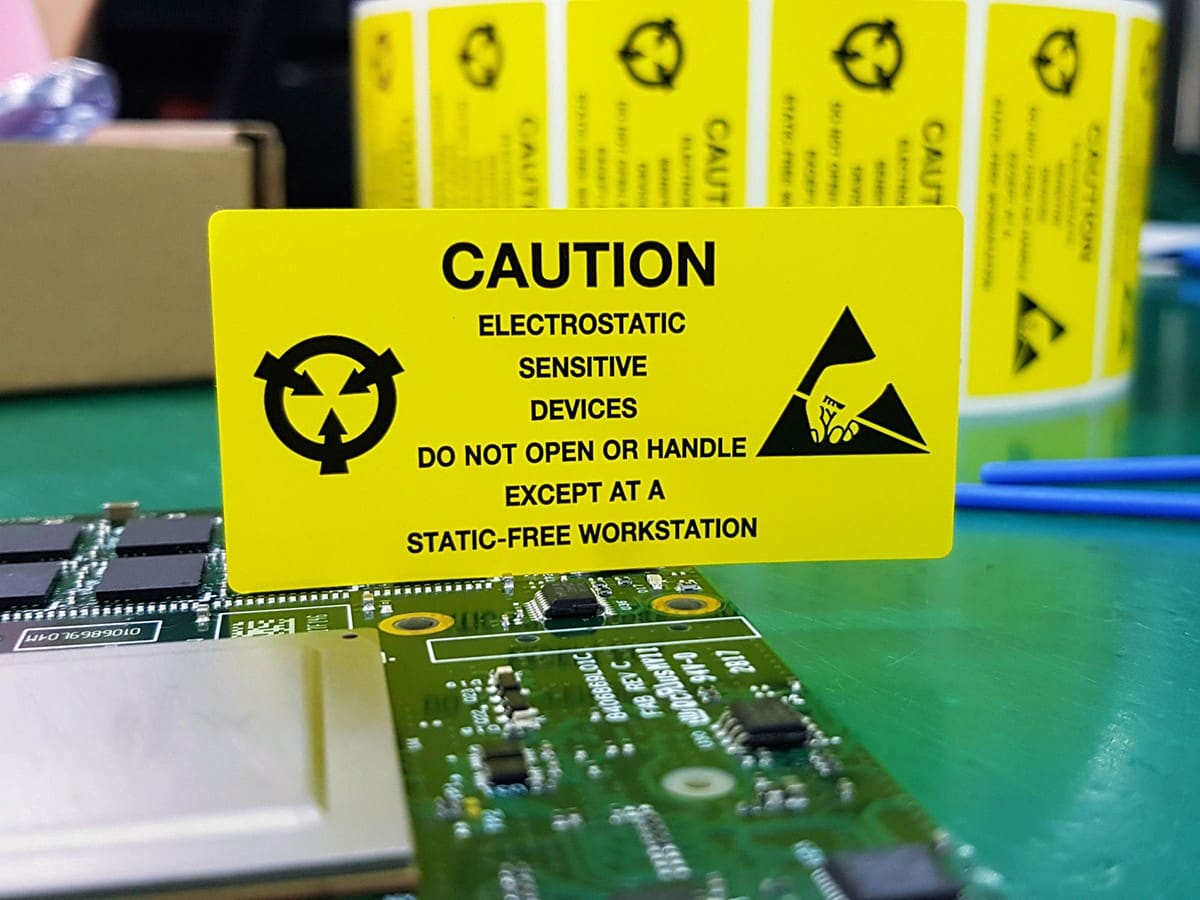
In the freight industry, two categories of goods are most commonly transported as sensitive cargo: lithium batteries and magnetic items. For these types of goods, such as power banks or speaker magnets, careful attention must be paid to the contents of the declaration documents, otherwise they may be rejected by the warehouse.
This guide will interpret the IATA Dangerous Goods Regulations (DGR) for lithium batteries and magnetic items, introduce the actual document requirements for air freight inspections, and guide you on how to successfully book such cargo and avoid unexpected situations.
What does IATA DGR cover for lithium batteries?
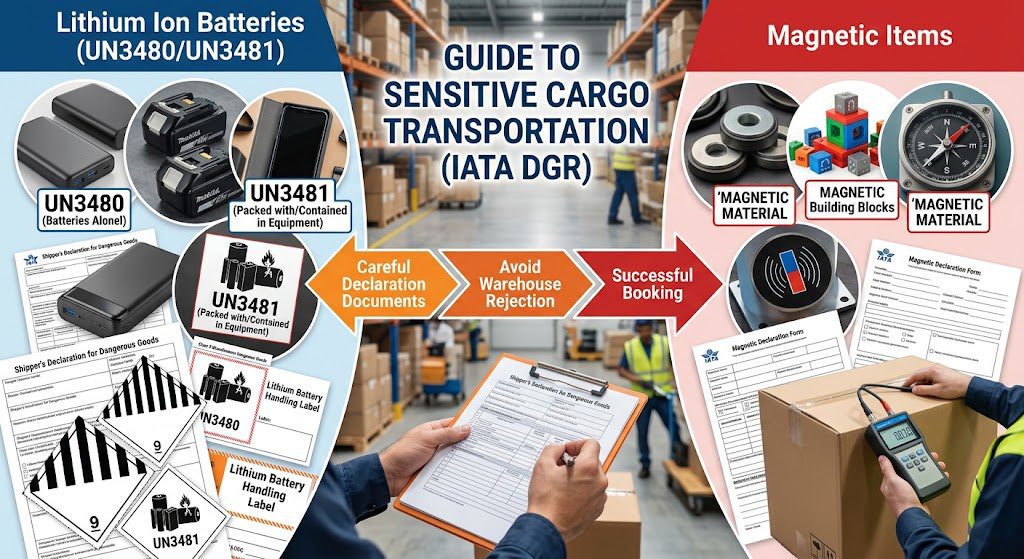
IATA DGR classifies lithium cells and batteries by whether they are installed, packed with equipment, or shipped alone, and by their energy content:
- UN3480: lithium ion batteries shipped alone
- UN3481: lithium ion batteries packed with or contained in equipment
- UN3090 / UN3091: the same split for lithium metal batteries
Each UN number has its own packing instruction (PI) and state of charge limits. Small cells under the capacity thresholds can still fly, but they must follow the PI rules exactly, including outer packaging, net quantity limits, and labels. Our Leitfaden zum Lufttransport von Lithium-Batterien covers the practical booking pathway; this guide focuses on the DGR document set.
What documents does a lithium battery shipment need?
Air freight handlers check four things, and each must be present and consistent:
- MSDS / SDS for the cell chemistry
- UN38.3 test summary for the cell model, issued by an accredited lab
- Transport document or dangerous goods declaration (DGD) where full DG rules apply
- Correct marks: battery handling label, and for larger cells, a lithium battery mark with the phone number
The UN38.3 summary is the one that trips most lithium battery shipments. It must match the exact cell model on the invoice, not a similar one. If the lab report names a different model, the shipment stops.
How do magnetized cargo rules work?
Magnetized cargo is tested, not declared by guesswork. IATA requires that any shipment producing a magnetic field above a set limit at a set distance be treated as dangerous goods. The practical test: if a compass at 2.1 meters from the package deflects more than a threshold, the cargo is magnetized for air transport and must be labeled and handled accordingly.
In practice, forwarders run a magnetometer check on the packed carton before accepting it. Speakers, motors, transformers, and some industrial parts routinely fail the test even though the item itself is harmless. The fix is not to skip the check, but to test early and shield or separate the magnets. Our sensitive goods overview explains how compliance screening fits into a normal booking.
What changes for express couriers?
Express networks run on simplified rules. Many accept small lithium cells under declared capacity limits without a full DGD, using the Shipper’s Declaration for lithium batteries form instead. But magnetized cargo has no such shortcut: couriers apply the same magnetic field test at their hub, and a failing item gets returned. Check the courier’s battery and magnet policy before promising a delivery date.
How do you book these shipments correctly?
The booking order matters. Provide the MSDS and UN38.3 summary with the booking request, not after the cargo arrives. The forwarder confirms the PI, the labels, and the airline’s acceptance, then the warehouse packs to the confirmed standard. Booking first and documenting later is the most common cause of same-day refusals.
Common mistakes
- Sending a UN38.3 summary for the wrong cell model
- Declaring a speaker as ordinary cargo and failing the magnet test at the hub
- Assuming express accepts anything because it took the parcel once
- Exceeding the state of charge limit for air
- Sealing the battery label inside the carton where nobody can see it
Häufig gestellte Fragen
Do all lithium batteries need a UN38.3 report?
All cell models need a UN38.3 test summary to be shipped by air. Small cells may follow simplified PI rules, but the test document is still the baseline.
Can I ship a power bank by air freight?
Yes, as UN3480 lithium ion batteries, with the PI rules for standalone cells. Many airlines restrict higher-capacity power banks, so confirm acceptance at booking.
How do I know if my cargo is magnetized?
Run a magnetometer test on the packed carton before booking. If you cannot test locally, ask the forwarder to test at the warehouse; that costs a few minutes, not a refusal.
What is the difference between MSDS and UN38.3?
The MSDS describes the chemistry and hazards. The UN38.3 summary proves the cell passed the transport safety tests. Air freight needs both, plus the declaration.
Schlussfolgerung
Lithium batteries and magnetized cargo are bookable, shippable, and routine for a forwarder that knows IATA DGR. The discipline is documentation first: MSDS, UN38.3 summary, correct PI, correct labels, and a magnet test for suspicious items. Get those right at booking and the cargo moves; get them wrong and the cargo sits. Start with the Checkliste für Importeurdokumente und die Versandleitfaden für elektronische Bauteile to keep the wider shipment consistent.

 English
  Chinese
  Arabic
  French
  German
  Portuguese
  Spanish