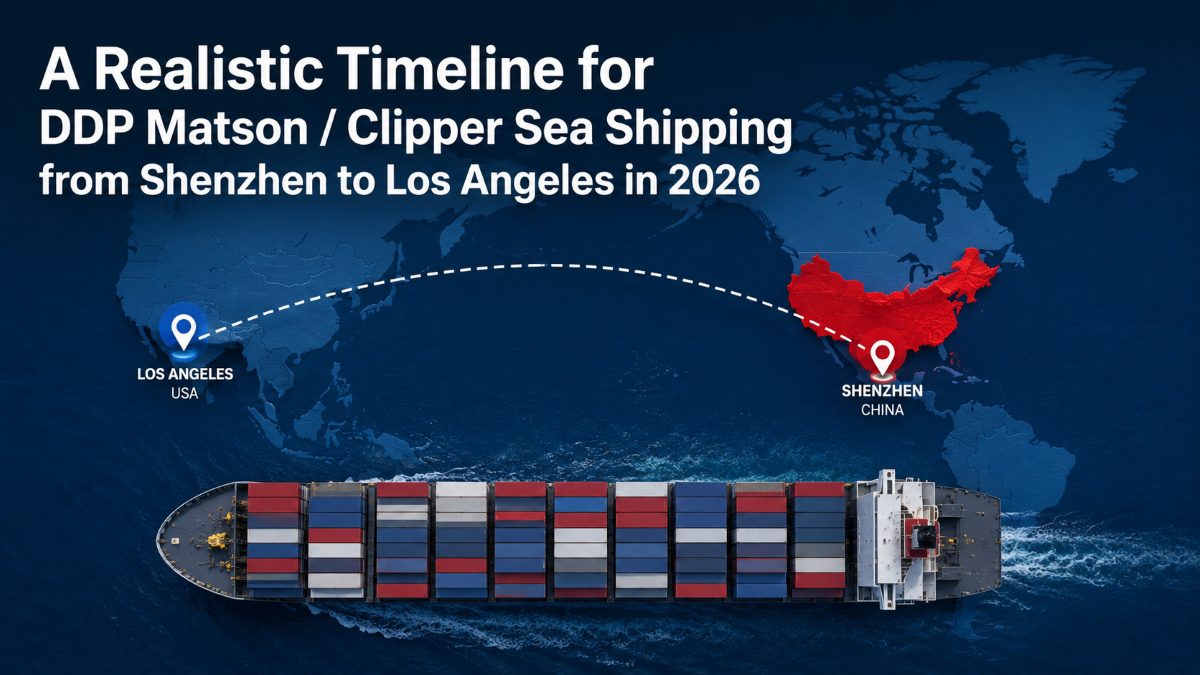
A Realistic Timeline for DDP Matson / Clipper Sea Shipping from Shenzhen to Los Angeles in 2026
Vantage Forwarding
Many freight forwarders promote Matson or Clipper Sea service with an “11-day transit time,” but this figure only covers the ocean leg from China to Southern California. For importers using DDP shipping from Shenzhen to Los Angeles, the actual delivery timeline includes much more than vessel sailing.
Before cargo reaches the final destination, it must move through origin consolidation, transpacific ocean transit, CBP clearance, container devanning, and final-mile delivery by UPS or truck. These steps create the real door-to-door lead time.
In practice, a realistic DDP Matson / Clipper Sea timeline is usually calculated across four phases:
Origin Hub → Ocean Transit → Port Extraction → Final Mile
Understanding these phases helps buyers plan inventory, manage replenishment cycles, and avoid relying on an overly optimistic ocean-only transit estimate.
Quick Definitions
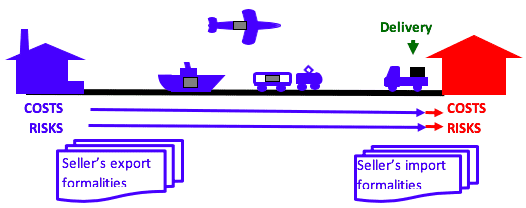
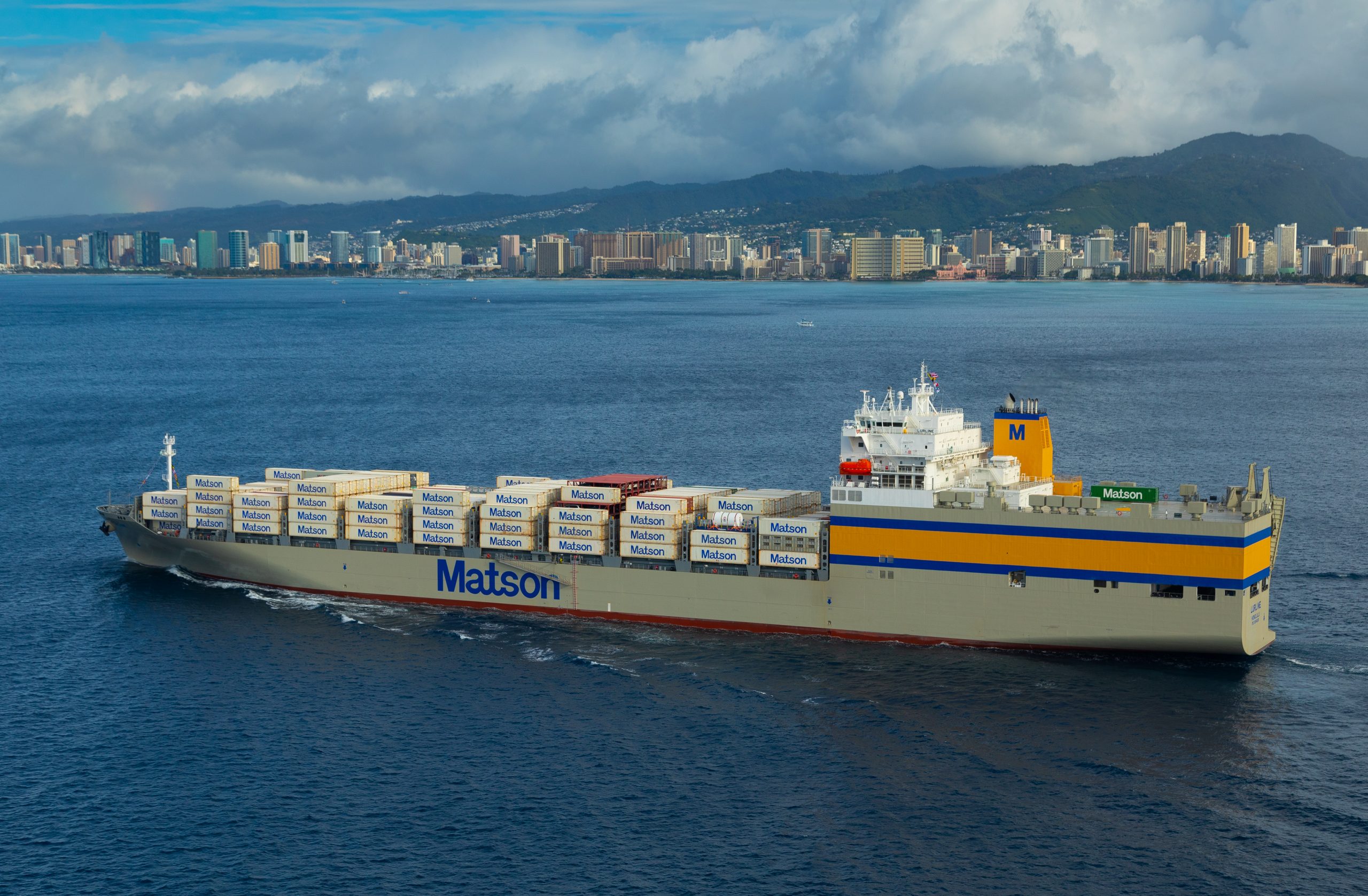
What is the DDP Matson / Clipper Shipping Model? The DDP Matson shipping model is an integrated logistics pipeline where a single logistics operator manages origin trucking, customs clearance documentation, high-speed transpacific ocean transport via premium vessels (like Matson CLX), and destination delivery, with all duties and taxes pre-paid.
What is Port Arrival to Container Extraction Time? It represents the chronological window between the physical docking of the maritime vessel at the Los Angeles terminal and the exact moment the consolidated container is discharged, cleared by CBP, and mounted onto a chassis at the off-dock container yard.
Granular Breakdown of the 2026 Transpacific Shipping Windows
A highly reliable transpacific ocean transit time is achieved by selecting specific vessel classifications. Depending on your profit margins and peak season distribution requirements, your cargo will follow one of three primary service loops routed from South China infrastructure hubs.
1. Express Premium Loop (Matson/ZIM Express)
This is the highest-tier ocean route available, engineered for high-value consumer electronics or time-sensitive apparel. According to the current 2026 service frameworks outlined in document, the average duration for this premier line stands at approximately 16 days from vessel departure to terminal extraction.
Contractual Service Guarantee: If container extraction exceeds an 18-day window from the day of sailing, compliant protocols mandate a late compensation penalty of 1 RMB per kilogram per day, capped at a maximum payout of 5 RMB per kilogram. (Note: Statutory exceptions apply for force majeure, customs exams, or carrier-wide terminal strikes).
2. Standard Primary Routing (ZIM Regular / Clipper Loops)
This functions as the workhorse channel for standard retail inventory and bulk B2B stock. The typical operational window targets approximately 19 days for standard cargo handling from the date of sailing to destination availability.
Contractual Service Guarantee: Late-delivery compensation triggers if extraction crosses a 21-day threshold, paying out at 1 RMB per kilogram per day up to a 5 RMB per kilogram ceiling.
Designed for low-margin commodity items that require baseline cost minimization over rapid velocity. The standard operational window spans 16 to 25 days.
Contractual Service Guarantee: Compensation structures trigger if extraction delays exceed 26 days, providing 0.5 RMB per kilogram per day up to a 3 RMB per kilogram maximum payout.
Milestone Mapping: From Factory Release to Final-Mile Delivery
To construct a realistic logistical forecasting model, your supply chain team must track the four distinct phases that constitute the total duration of a DDP shipment.
DDP Shipping Phase
Key Process
Typical Lead Time
Origin Hub
Shenzhen consolidation and export preparation
3–5 days
Ocean Transit
Transpacific ocean freight
11–15 days
Port Extraction
CBP clearance, container devanning, and handover
2–4 days
Final Mile
UPS or truck delivery to final destination
1–5 days
Total Forecast Window
End-to-end DDP shipment duration
16–29 days
Phase 1: Origin Gatehouse Consolidation (3 to 5 Days)
Cargo must arrive at the Shenzhen warehouse before the designated weekly cutoff (typically Friday or Saturday nights). The logistics operator executes export documentation reviews, measures volumetric weight parameters, and builds unified container consolidation manifests. Vessels typically depart the following Thursday.
Phase 2: Transpacific Ocean Transit Time (11 to 14 Days)
The physical maritime journey across the Pacific ocean. Premium Matson CLX vessels bypass standard slow-steaming loops, maintaining an average speed of 22-23 knots to ensure rapid terminal arrival at the Port of Los Angeles.
Phase 3: Port Arrival to Container Extraction Time (2 to 4 Days)
Upon vessel docking, premium lines utilize dedicated, off-dock container yards (such as Matson’s specialized terminal infrastructure). This allows containers to be discharged without chassis restrictions, enabling local drayage trucks to extract the consolidated blocks immediately after electronic CBP clearance is secured via the ACE portal.
Phase 4: Final-Mile Logistics Delivery (1 to 5 Days)
Once extracted, the container is moved to a regional deconsolidation warehouse in the Los Angeles basin to be split into individual shipments. Final delivery is executed via two primary methods based on regional destination zip codes:
Express Courier Networks (UPS / FedEx): Zip codes beginning with 8 and 9 (West Coast) average 1 to 2 days; zip codes beginning with 0, 1, 2, 3, and 4 (East Coast) require 4 to 5 days to complete delivery.
Contract Trucking (LTL / FTL): Local West Coast zip codes (90-92) are typically dispatched and delivered within 24 to 48 hours of warehouse devanning.
Managing Transit Expectations
In summary, a realistic DDP Matson shipping timeline requires a total allocation of 22 to 26 days from warehouse drop-off in Shenzhen to final-mile door delivery on the US West Coast, extending to 28 to 33 days for East Coast delivery. Managing stock replenishment cycles based purely on port-to-port ocean sailing times introduces severe systemic risk to independent retail networks.
To further harden your international supply chain frameworks, consult our specialized operational guides:
Review your regulatory tax liabilities through our comprehensive guide on DDP shipping from China compliance.
Protect your capital from transit disruptions by establishing clear protocols for cargo insurance for DDP deductibles.
Frequently Asked Questions
Why does the final-mile zip code alter the total DDP delivery timeline?
The physical distance from the arrival infrastructure in Los Angeles to the final destination dictates the transit method. West Coast deliveries (Zip prefixes 8 and 9) are handled via rapid regional truck loops, whereas East Coast deliveries require cross-country intermodal rail or long-haul truck networks, adding several days to the final phase.
What happens to the shipping timeline if a container triggers an automated customs hold?
If a container triggers an intensive examination hold via the Automated Commercial Environment (ACE) system, it must be physically drayed to a licensed Customs Examination Station (CES). This administrative security protocol bypasses standard carrier timeline guarantees and typically adds 7 to 14 days to the total extraction window.
What is the logistical difference between a Matson CLX vessel and standard regular carriers?
Matson CLX operates on an unlinked, dedicated terminal loop in Los Angeles with an exclusive off-dock container yard. This means containers do not require standard port appointments for extraction, completely eliminating the terminal congestion bottlenecks that standard regular carriers face during peak shipping seasons.
Hello! How can we assist you with your special cargo shipping today?
Please share your cargo type (lithium batteries, branded goods, or liquids), destination, and any special requirements. We'll reply with a quote and process shortly.
Send Message
Vantage Forwarding • Usually replies within 2 hours

 English
  Chinese
  Arabic
  French
  German
  Portuguese
  Spanish