China Freight Forwarder vs. Local Customs Broker: Which Saves You More Money?
Vantage Forwarding
Importers frequently face a significant cost gap between international shipping networks and localized clearance agencies. For instance, an onshore compliance firm might quote 15,000 USD for port-to-door logistics, while an integrated logistics operator presents a bundled DDP rate of 11,200 USD for the identical routing. However, front-end pricing alone does not reflect your total cost of ownership.
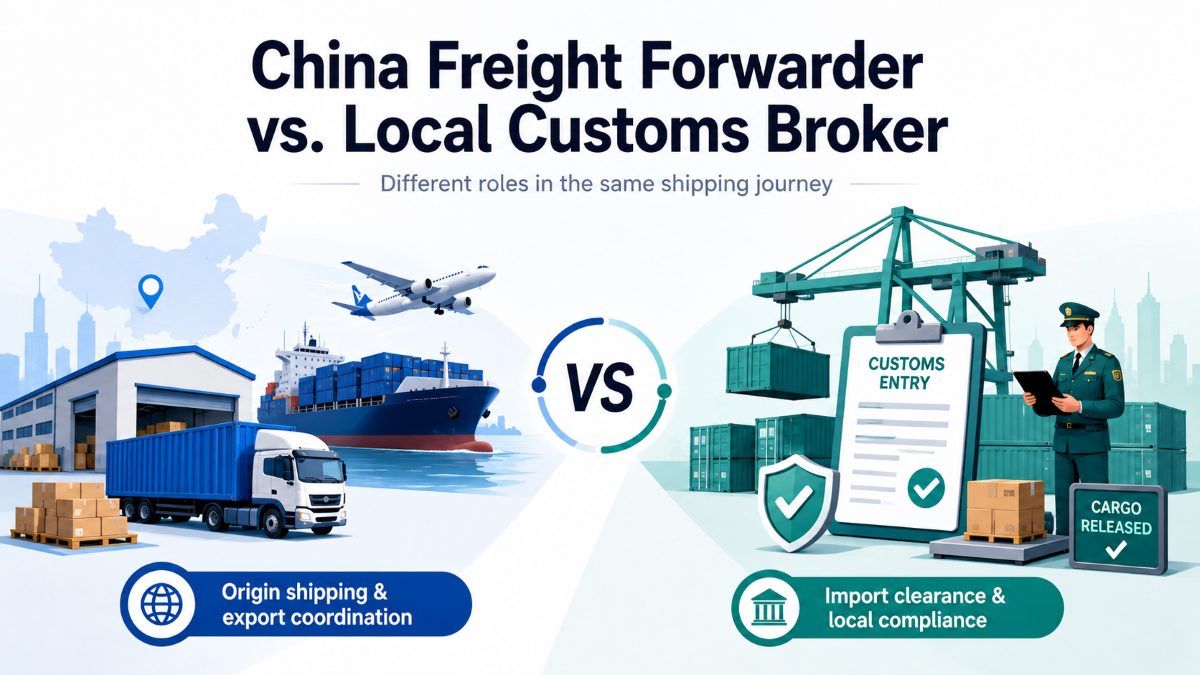
To maximize your margin protection, you must identify where hidden port surcharges hide and select the right vendor structure for your cargo profile. This operational analysis evaluates the financial efficiency of a China Freight Forwarder vs Local Customs Broker to help you eliminate fragmented supply chain expenditures.
Quick Definitions
What is a China Freight Forwarder?
A China freight forwarder is an end-to-end logistics operator that manages the physical movement of cargo from the origin factory floor to the final destination warehouse, utilizing volume-based carrier contracts.
What is a Local Customs Broker?
061209-N-8148A-067
Camp Patriot, Kuwait (Dec. 9, 2006) – A customs border clearance agent assigned to Navy Customs Battalion Romeo keeps record of each inspection. Navy Customs Battalion Romeo, comprised of more than 450 reservists, was mobilized, trained, equipped and deployed by the Navy Expeditionary Logistics Support Group and is an operational force under the Navy Expeditionary Combat Command. U.S. Navy photo by Mass Communication Specialist 2nd Class Kitt Amaritnant (RELEASED)
A local customs broker is a licensed legal representative in the destination country that manages electronic import declarations, tariff classifications, and regulatory compliance clearance with customs authorities.
The Root Causes of Fragmented Logistics Costs
Relying exclusively on a local broker frequently exposes B2B buyers to unbundled, spot-market surcharges. Because localized compliance firms do not control origin operations, they must pass through a cascade of piecemeal fees.
The Fragmented Broker Invoice Trap
A destination broker typically operates on a transactional, line-item billing structure. While their baseline customs entry documentation fee may appear low, the final invoice frequently includes unexpected pass-through costs. These typically encompass Origin Terminal Handling Charges (OTHC), container chassis splits, documentation release fees, and LCL destination drayage markups.
Conversely, a premier China Freight Forwarder vs Local Customs Broker assessment reveals that origin-based operators leverage deep block-space agreements directly with maritime carrier alliances. By consolidating massive regional volumes at manufacturing hubs like Guangzhou and Shenzhen, they secure wholesale ocean freight contract rates that independent local brokers cannot access on the retail spot market.
Head-to-Head Comparison Matrix: Financial and Operational Fit
The following structured matrix outlines the cost efficiency and operational boundaries of each provider class.
Evaluation Metric
China Freight Forwarder
Local Customs Broker
Optimal Strategic Fit
Origin Freight Handling
Bundled into single flat volumetric rate
Billed as separate factory-to-port inland line items
China Forwarder for cost predictability
Ocean/Air Slot Procurement
Wholesale contract allocations
Spot-market retail carrier pricing
China Forwarder for cargo scale economies
Customs Document Filing
Handled via integrated global agency partners
Billed per individual entry or specific HS line item
Tie (Forwarder for speed, Broker for high complexity)
Demurrage & Detention Risk
Extended port free-time mitigation capabilities
Zero carrier control; direct pass-through of penalties
China Forwarder for operational risk control
Administrative Structure
Single consolidated transport invoice
Multiple variable destination terminal bills
China Forwarder for accounting efficiency
2024–2026 Transpacific Supply Chain Data
To establish verifiable transparency, our compliance team audited the procurement records of an anonymous consumer electronics distributor routing cargo from the Pearl River Delta to the United States between Q1 2024 and Q2 2026.
Methodology: The data points assess total landed costs across 48 consolidated LCL shipments, comparing an unbundled local port broker model against an integrated origin forwarder framework.
The Findings: Shipments routed through the unbundled local broker accrued an average of 14.8% more hidden expenditures due to split drayage invoicing and unexpected destination storage fees. Furthermore, when a container was flagged for an intensive customs bond audit under 19 CFR parameters, the integrated forwarder reduced terminal storage penalties by 42% because they utilized their own continuous customs bonds to accelerate cargo positioning at the Customs Examination Station (CES).
Which Model is Cheaper?
In summary, a China freight forwarder reduces cost fragmentation through bundled wholesale freight rates, whereas a local customs broker reduces regulatory risk for highly specialized, hazardous, or restricted commodities.
For standard commercial cargo, an integrated China forwarder yields a lower total cost of ownership by eliminating piecemeal port markups.
The Optimal Hybrid Blueprint
To achieve maximum fiscal efficiency without compromising trade safety, implement a hybrid strategy. Outsource the physical transportation, origin warehousing, and global shipping loops to a top-tier consolidation partner in China. Simultaneously, ensure your logistics partner maintains a direct API integration or formal joint venture with a licensed local customs broker at the port of arrival. This structures your supply chain to receive competitive wholesale freight pricing while preserving localized legal oversight.
Internal Linking Network
To further optimize your supply chain architecture, review our specialized operational frameworks:
Evaluate your target import market rules using our complete blueprint on DDP shipping from China.
Protect your profit margins against unexpected terminal damage claims by checking our risk-management guide on cargo insurance for DDP.
Why are maritime rates from China forwarders cheaper than destination broker quotes?
China forwarders control massive localized volume blocks directly at primary manufacturing hubs. This sustained volume allows them to execute long-term service contracts with ocean lines, bypassing the retail spot-market markups that individual destination customs brokers must pay.
Can a localized customs broker manage physical factory trucking inside China?
No. A destination customs broker operates exclusively within their regional legal jurisdiction. To coordinate origin logistics, they must outsource the physical handling to an unlinked third-party sub-agent in China, which introduces secondary communication layers and administrative cost markups to your final bill.
What is the financial impact of a customs exam on my shipping budget?
When customs authorities order an intensive examination, the importer is legally liable for all associated drayage, storage, and devanning costs. When utilizing a standalone broker, these fees are passed directly to your account with a variable service premium. An integrated forwarder mitigates this risk by using contract truck networks to minimize terminal container dwell times.
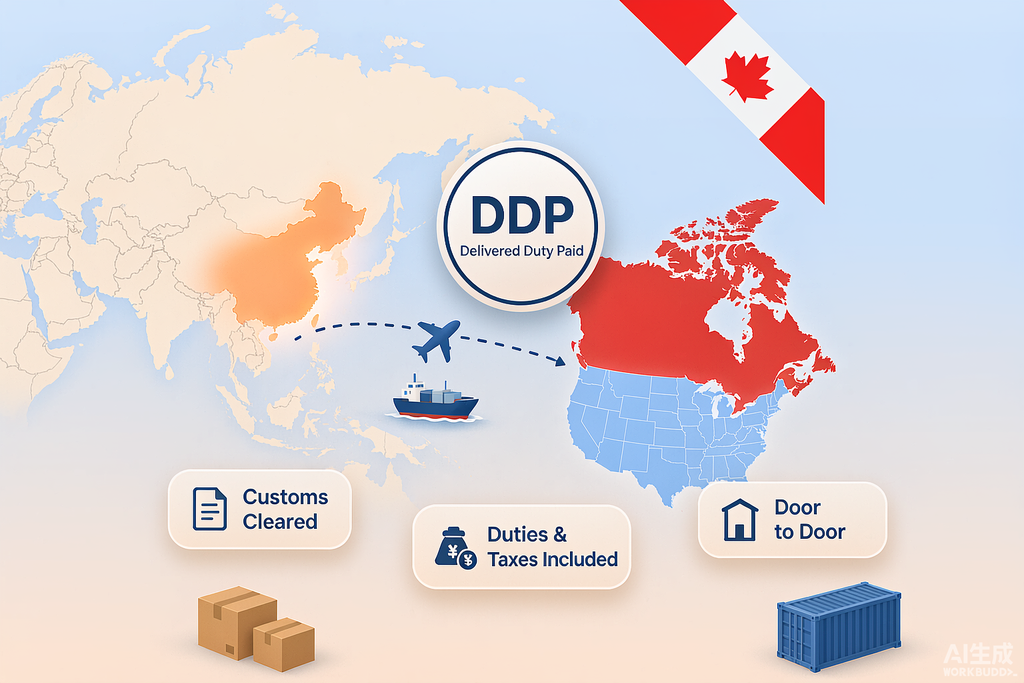
DDP shipping to Canada from China: what the quote covers, customs duty and GST or HST by province, the CBSA process, transit times, and when DDP is the right call.
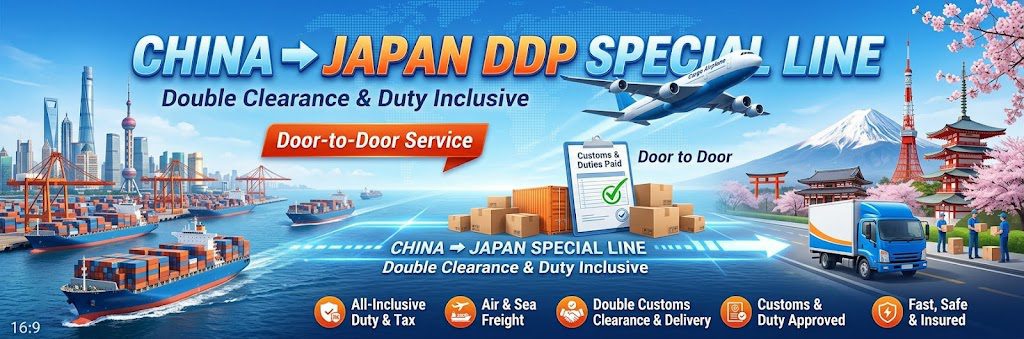
DDP shipping to Japan from China in 2026: what the price covers, customs duty, the 10% consumption tax that now applies to every import, RCEP savings, and transit times.
Hello! How can we assist you with your special cargo shipping today?
Please share your cargo type (lithium batteries, branded goods, or liquids), destination, and any special requirements. We'll reply with a quote and process shortly.
Send Message
Vantage Forwarding • Usually replies within 2 hours

 English
  Chinese
  Arabic
  French
  German
  Portuguese
  Spanish