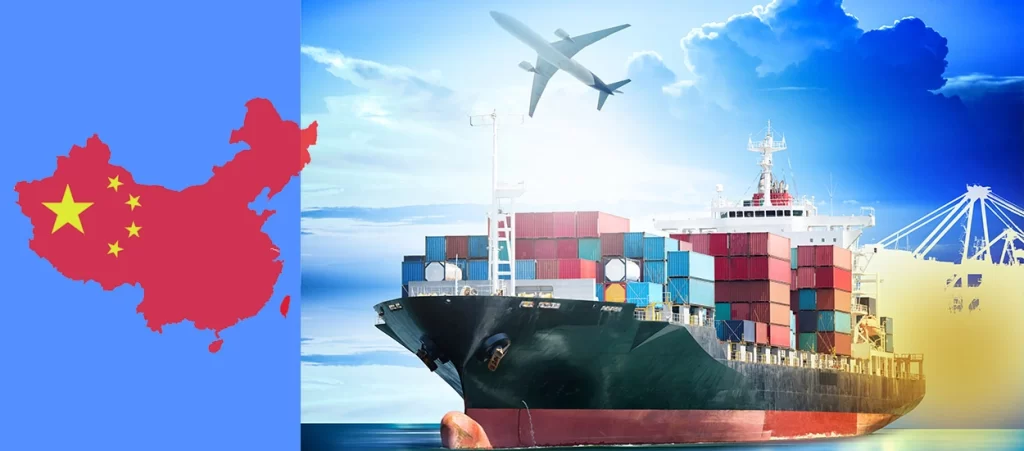
Every importer hits the same wall after the first factory order: “Now how do I actually get this to my customer?”
China offers more shipping options than almost any origin market, and the “right” choice shifts with order size, urgency, destination, and how much customs risk you want to own. This guide is the hub for that decision. It gives you a reusable framework, then points to deep-dives on each option.
Start with three numbers
Before comparing methods, pin down:
- Chargeable weight or volume — air prices on volumetric weight, sea on cubic meters. Know both.
- Ready date and need-by date — the gap decides whether air is justified.
- Delivered-landed budget — what the goods must cost at the door, duties included.
These three numbers narrow the field fast. Everything below is a trade-off between them.
The five decisions that matter
| Decision | You are choosing… | Main trade-off |
|---|---|---|
| Incoterm | Who clears customs & pays duty | Risk vs control |
| Transport mode | Air / sea / express | Speed vs cost |
| Container | FCL / LCL | Fixed cost vs flexibility |
| Booking party | Forwarder / carrier | Service vs price |
| Channel | Direct / FBA / 3PL | Handling vs reach |
We cover each in its own article.
DDP vs DDU: who owns customs?
DDP (Delivered Duty Paid) means your supplier or forwarder handles clearance and duty, and you receive goods cleared at your door. DDU / DAP means you, the importer, handle customs and pay duty on arrival.
For first-time importers, DDP shifts the compliance burden off your shoulders — at a price. DDU can be cheaper if you already have a broker. Full breakdown →
Air vs sea vs express: speed vs cost
- Express (DHL / UPS / FedEx) — fastest, door-to-door, best under ~100 kg; expensive per kg.
- Air freight — 3–7 days, good for 100–500 kg urgent shipments.
- Sea freight — 25–45 days, the only economic option for full or large partial containers.
The break-even is usually around 150–300 kg and a 3+ week delivery tolerance. Cost & time detail →
FCL vs LCL: full or shared container?
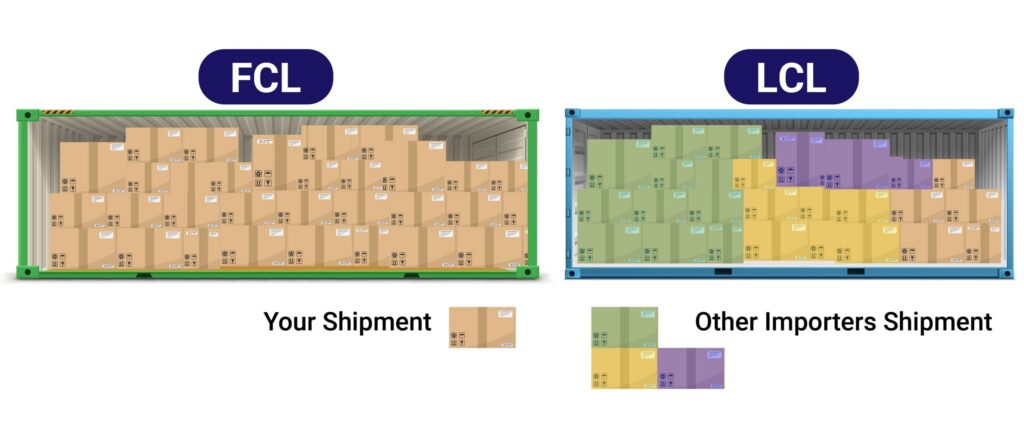
If your goods fill ~15+ CBM (roughly half a 20ft container), FCL wins on per-unit cost and lower handling risk. Below that, LCL (shared container) avoids paying for empty space. Break-even math →
Freight forwarder vs carrier: who do you book with?
A carrier (MSK, COSCO, Emirates SkyCargo) owns the vessel or plane. A freight forwarder (like Vantage) bundles carrier space, customs, trucking, and insurance into one shipment you manage through one desk. For complex China-origin moves, a forwarder usually saves more time than the carrier’s headline rate saves money. When to use each →
Amazon FBA: the special case
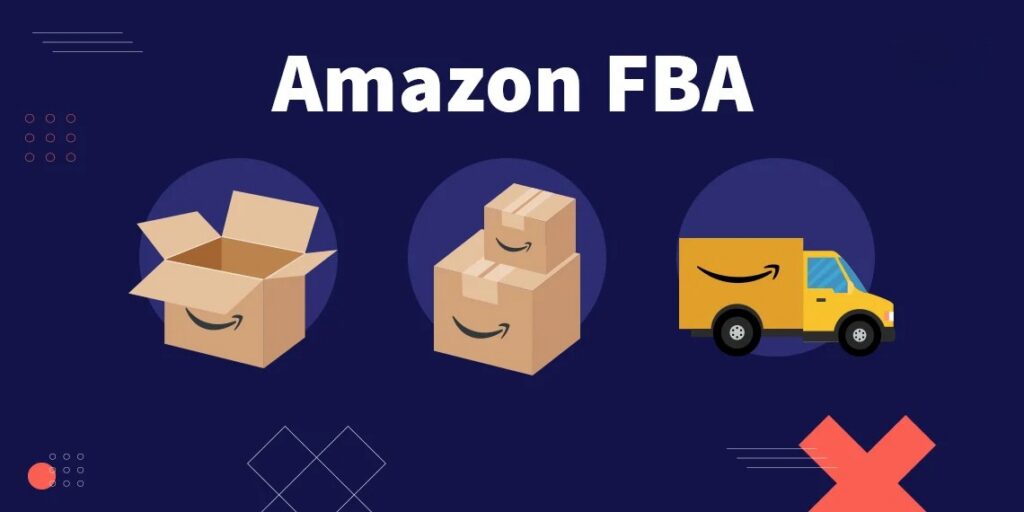
Shipping to Amazon warehouses has its own rulebook: FBA labels, carrier appointments, and strict rejection criteria. DDP delivery into FBA is common but unforgiving. Avoid the rejection traps →
A simple decision flow
- Need it in under 7 days and under 300 kg? → Express or air, DDP.
- Over ~15 CBM or a full container? → FCL sea, DDP or DDU.
- Smaller sea volume? → LCL sea.
- Selling on Amazon? → follow the FBA checklist.
- Unsure about customs? → lean DDP and use a forwarder.
FAQ
Can I mix methods?
Yes — many importers ship air for replenishment and sea for base stock.
Is DDP always more expensive than DDU?
Usually, because the forwarder prices in duty and clearance risk. But DDU surprises (storage, broker fees, delays) can erase the gap.
Which is safest for a first order?
DDP with a seasoned forwarder. You trade a little margin for a predictable door delivery.
 English
  Chinese
  Arabic
  French
  German
  Portuguese
  Spanish