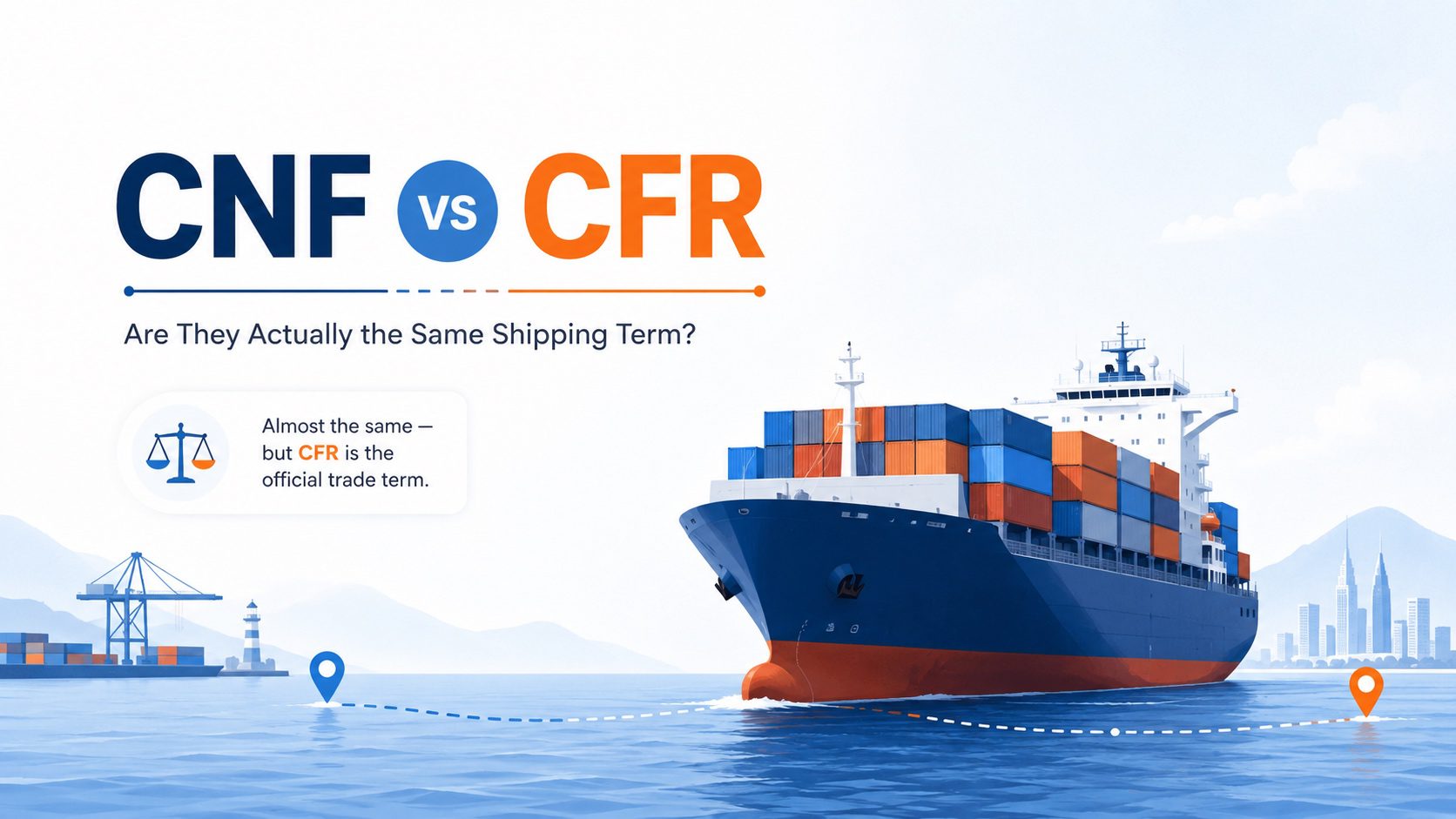
CNF vs CFR: serão, afinal, o mesmo termo de transporte?
Vantage Forwarding
Pela equipa de operações da Vantage Forwarding — Coordenação de transporte de mercadorias com sede em Guangzhou para remessas em condições CFR, FOB e DDP da China para os EUA, o Reino Unido, a UE e outros mercados importantes. Última atualização em julho de 2026.
Resumo
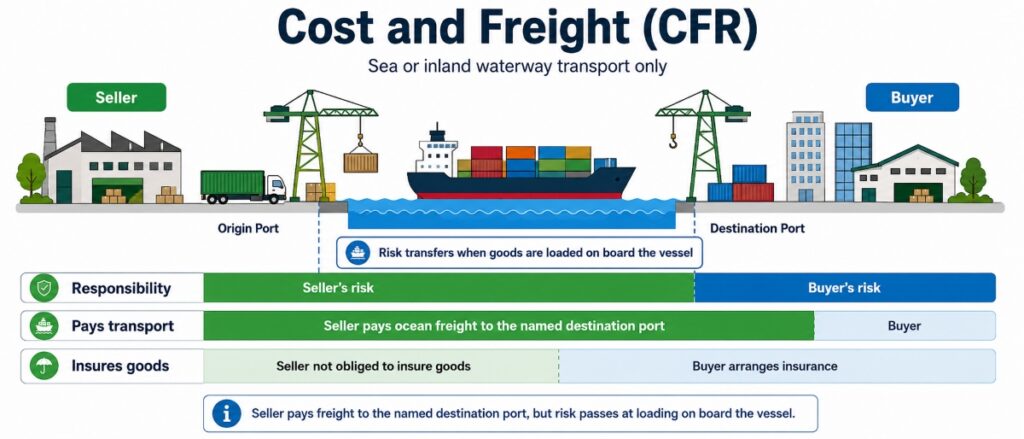
No comércio corrente, a sigla CNF refere-se normalmente ao mesmo acordo de «Custo e Frete» que o CFR. O vendedor organiza e paga o frete marítimo até ao porto de destino indicado, enquanto o risco é transferido para o comprador assim que as mercadorias forem a bordo do navio no porto de origem.
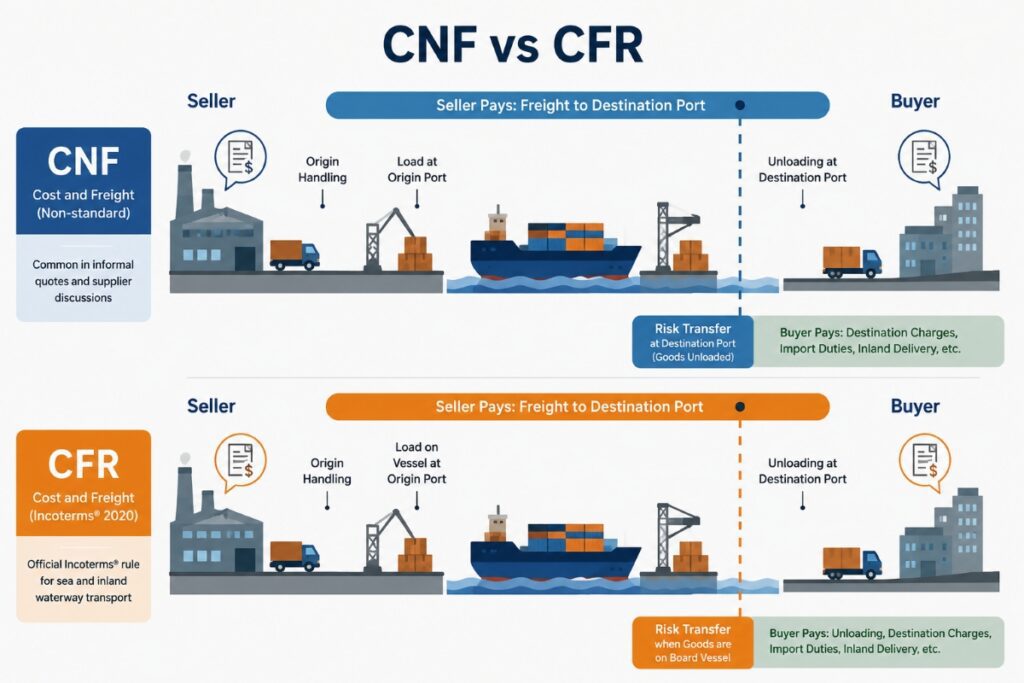
A distinção importante é que CFR é a regra oficial dos Incoterms® 2020, enquanto CNF é uma abreviatura informal utilizada no comércio.
No que diz respeito a contratos, ordens de compra, orçamentos formais e cartas de crédito, opte por uma formulação precisa, como, por exemplo:
CFR Roterdão, Incoterms® 2020
O maior equívoco é simples: O vendedor pode pagar o frete até ao porto de destino, enquanto o comprador já assume o risco de trânsito a partir do porto de origem.
O destino dos custos e o ponto de transferência de risco não são o mesmo local.
O que significa CNF na expedição?
Na prática comercial comum, CNF significa «Custo e Frete».
O vendedor organiza e paga o transporte marítimo principal até um porto de destino designado. No entanto, de acordo com a estrutura oficial CFR a que o CNF normalmente se refere, a entrega e a transferência de risco ocorrem mais cedo — quando as mercadorias são colocadas a bordo do navio no porto de embarque.
Por exemplo, uma proposta de um fornecedor com o seguinte texto:
CNF Los Angeles
normalmente significa que o vendedor incluiu o frete marítimo para Los Angeles no preço indicado.
Isso não significa automaticamente que o vendedor é responsável por:
Risco de carga até Los Angeles
Seguro de carga marítima
Desembaraço aduaneiro de importações dos EUA
Direitos aduaneiros e impostos
Taxas de manuseamento no destino
Entrega final no armazém do comprador
Um modelo mental útil é:
O vendedor paga o frete acordado até ao porto designado → O comprador assume o risco de transporte a partir do ponto de entrega a bordo → O comprador trata das formalidades de importação e da entrega posterior, salvo acordo em contrário
O CNF/CFR aplica-se a apenas transporte marítimo e por vias navegáveis interiores.
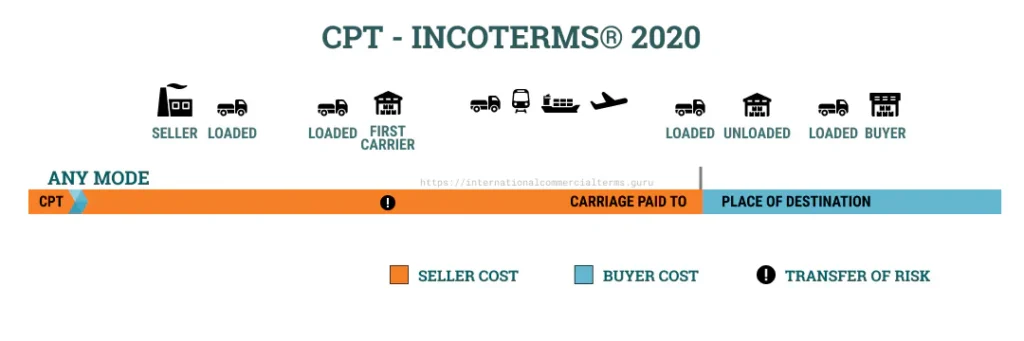
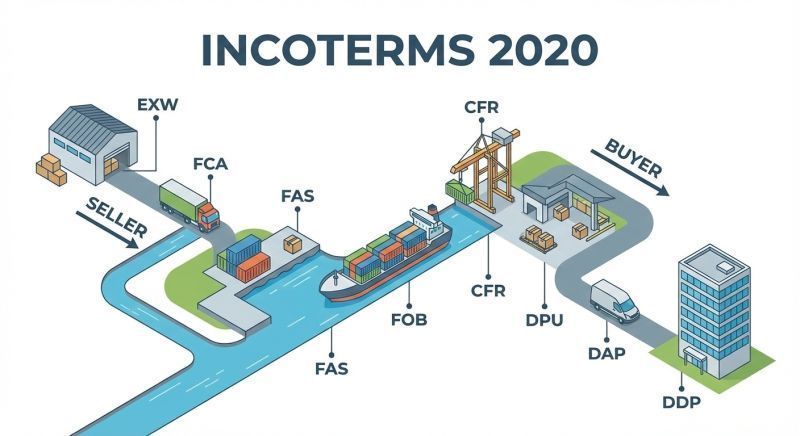
No caso de transportes aéreos, rodoviários ou multimodais em geral, em que o vendedor paga o transporte sem que lhe incumba a obrigação de subscrever um seguro, CPT — Frete pago até pode ser uma regra Incoterms® mais adequada.
CNF é o mesmo que CFR?
No comércio quotidiano, normalmente sim — mas não considere que os termos são formalmente idênticos.
CNF é amplamente utilizado como abreviatura informal para um acordo de «Custo e Frete».
CFR é a designação oficial dos Incoterms® 2020.
Esta distinção é importante na documentação formal. Uma frase vaga como:
CNF Europa
deixa margem para divergências.
Uma formulação contratual mais precisa é:
CFR Roterdão, Incoterms® 2020
Fator
CNF
CFR
Significado no uso comercial comum
Custo e frete
Custo e frete
Situação dos Incoterms® 2020
Abreviaturas não convencionais
Regra oficial
Melhor utilização
Conversas informais com fornecedores
Contratos, ordens de compra, cartas de crédito, propostas formais
Modo de transporte
Normalmente destinado ao transporte marítimo
Apenas mar e vias navegáveis interiores
Formulação recomendada
A evitar em documentos formais
CFR [nome do porto], Incoterms® 2020
Utilização documental formal
Pode ser necessário esclarecer
Formulação oficial preferida
Por que é que a CNF ainda existe?
Documentos comerciais mais antigos habitualmente utilizados C&F, enquanto CFR passou a ser a abreviatura oficial dos Incoterms a partir da edição de 1990.
A sigla CNF manteve-se como abreviatura comercial informal e continua a ser comum nas cotações dos fornecedores e na linguagem comercial do dia-a-dia, especialmente na Ásia.
A regra prática hoje em dia é simples:
Utilize o CFR quando a precisão for importante.
O que é o CFR nos Incoterms® 2020?
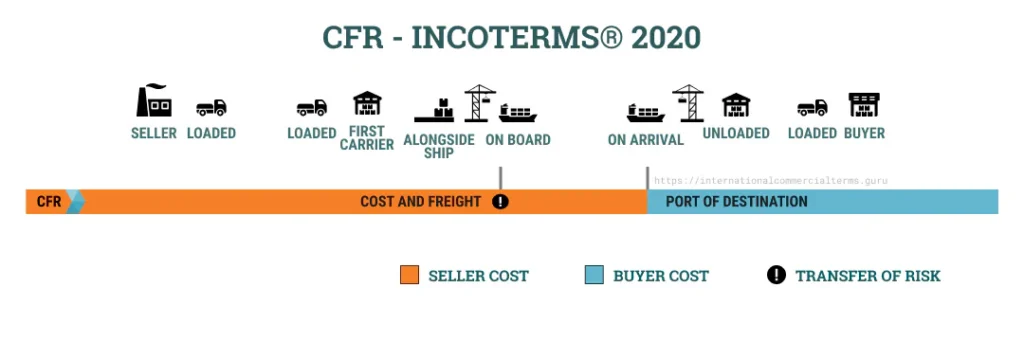
Nos termos do CFR, o vendedor contrata e paga o transporte até ao porta de destino especificada.
No entanto, a entrega e a transferência de risco ocorrem quando as mercadorias são a bordo do navio no porto de embarque.
Esta distinção é fundamental:
A transferência de riscos ocorre na origem. O custo do frete é suportado até ao destino.
Essa divisão é uma das características mais importantes do CFR — e a origem de muitos mal-entendidos por parte dos importadores.
Principais obrigações do vendedor ao abrigo do CFR
O vendedor deve, em geral:
Fornecer a mercadoria e os documentos comerciais exigidos pelo contrato de venda
Realizar os trâmites de desalfandegamento de exportação, quando aplicável
Organizar e pagar o transporte até ao porto de destino indicado
Entregar a mercadoria a bordo do navio no porto de embarque
Apresentar o documento de transporte acordado, como, por exemplo, um conhecimento de embarque
Principais obrigações do comprador ao abrigo do CFR
O comprador deve, em geral:
Assumir o risco após a carga ter sido embarcada no navio no porto de origem
Tratar do desembaraço aduaneiro e das formalidades de importação
Pagar os direitos aduaneiros e impostos de importação aplicáveis
Organizar o transporte a partir do porto de destino indicado
Decida se deve ou não segurar a carga e, em caso afirmativo, como o fazer
Aspecto importante relativo ao seguro
Nos termos das condições CFR, o vendedor não tem qualquer obrigação de subscrever um seguro de carga.
A regra dos Incoterms® em si também não obriga automaticamente o comprador a subscrever um seguro.
No entanto, uma vez que o comprador assume o risco de transporte após a entrega a bordo, é altamente recomendável que o comprador contrate um seguro de carga adequado para a maioria das remessas comerciais.
Como funciona o CNF/CFR: passo a passo
Passo 1 — Indique a porta de destino com precisão
O contrato deve indicar um porto de destino específico, tal como:
CFR Hamburgo
CFR Long Beach
CFR Felixstowe
CFR Roterdão
O porto de destino indicado determina onde termina a obrigação do vendedor relativamente aos custos de frete acordados.
É verdade não transferir o ponto de transferência de risco para esse porto de destino.
Passo 2 — O vendedor conclui as formalidades de exportação
O vendedor prepara a mercadoria para exportação, trata do desembaraço aduaneiro, quando necessário, e encaminha a carga através do processo a realizar no local de origem, necessário para o envio.
No caso da carga proveniente da China, isto inclui normalmente:
Documentação de exportação
Transporte terrestre a partir do local de origem
Declaração aduaneira
Coordenação portuária ou de terminais
Reserva de navio ao abrigo do acordo de transporte do vendedor
Passo 3 — As mercadorias estão a bordo do navio
Transferências de risco aqui.
Assim que as mercadorias forem embarcadas no navio no porto de origem, o comprador assume o risco de perda ou danos ao abrigo da cláusula CFR.
Isto é verdade, apesar de o vendedor continuar a ter a obrigação separada de pagar o frete contratado até ao porto de destino designado.
Passo 4 — O vendedor paga o frete previsto no contrato
O vendedor paga o frete principal até ao porto de destino indicado.
Isto dá origem à divisão principal do CFR:
Os custos continuam a ser suportados até ao destino, enquanto o risco já passou para o comprador.
Este é o ponto que muitos importadores inexperientes não têm em conta.
Passo 5 — O comprador gere o risco de transporte
O vendedor não tem qualquer obrigação, ao abrigo das condições CFR, de subscrever um seguro de carga marítima.
O comprador deve, por isso, analisar as suas necessidades de seguro antes da partida, especialmente no que diz respeito a:
Carga de elevado valor
Produtos frágeis
Mercadorias suscetíveis de roubo
Maquinaria
Eletrónica
Remessas com prazos críticos
Carga com prazos de reposição difíceis
Passo 6 — É necessário verificar as taxas de destino
Nem todas as taxas de destino se enquadram automaticamente numa única categoria simples.
Alguns custos relacionados com a descarga ou com o terminal podem já estar incluídos no contrato de transporte do vendedor. Outros encargos podem ser faturados diretamente ao comprador por:
A companhia marítima
Uma transportadora comum sem frota própria
Um co-carregador
Um terminal
Para o agente de destino
Um despachante aduaneiro
A abordagem mais segura consiste em solicitar um documento escrito discriminação dos custos pré-pagos/a cobrar antes da partida do navio.
Passo 7 — O comprador trata do desembaraço aduaneiro das mercadorias e organiza o transporte posterior
O comprador encarrega-se do desembaraço aduaneiro de importação, paga os direitos e impostos aplicáveis e organiza a entrega no interior a partir do porto de destino, a menos que um acordo comercial separado abranja esses serviços.
Quem paga o quê ao abrigo do CNF/CFR?
Custo / Responsabilidade
Vendedor ao abrigo do CFR
Comprador ao abrigo do CFR
Embalagem para exportação exigida pelo contrato
√
—
Transporte terrestre desde o local de origem até ao porto
√
—
Desembaraço aduaneiro de exportação
√
—
Entrega a bordo do navio no porto de origem
√
—
Frete marítimo principal para o porto de destino indicado
√
—
Seguro de carga em trânsito
Sem compromisso
O comprador decide
Risco após a entrega a bordo
—
√
Destino THC / descarga no terminal
Depende do contrato de transporte
Encargos não incluídos na conta do vendedor
Desembaraço aduaneiro de importação
—
√
Direitos aduaneiros e IVA / GST
—
√
Entrega final no interior a partir do porto
—
√ Salvo acordo em contrário
A questão do THC no destino é deliberadamente ambígua.
O atalho comum:
O vendedor paga os custos de origem e o comprador paga os custos de destino
pode induzir em erro quando o contrato de transporte do vendedor já inclui custos específicos do lado do destino.
Confirme sempre:
O que é o pré-pago?
O que é o «collect»?
Qual é o agente de destino envolvido?
Que taxas de terminal estão incluídas
Que taxas continuam a ser devidas à chegada
O risco oculto do CNF: as taxas de destino
Para muitos importadores, o maior problema comercial associado às condições CNF/CFR não é a própria regra dos Incoterms®.
É o falta de visibilidade sobre a cadeia de faturação do destino.
Um fornecedor apresenta um preço CNF aliciante. Posteriormente, o comprador recebe faturas adicionais de um:
Transportadora
Consolidador
Terminal
Agente de destino
Desembaraçador aduaneiro
Empresa local de transporte rodoviário
As categorias mais comuns de taxas de destino incluem:
Destino THC / manuseamento no terminal quando ainda não estiver incluído
Taxas de ordem de entrega — DO — ou de libertação de carga
O nome e os dados de contacto do agente de destino
O esperado com base no THC de destino / taxa de terminal
Qualquer Taxas de DO ou de libertação de carga
Qualquer Taxas de CFS, desconsolidação ou descarga de contentores
Qualquer taxas de documentação ou de agência
Contentor ou carga tempo livre
Aplicável tarifas de demurrage e de detenção
Quer a remessa seja FCL ou LCL
Quem controla o cadeia de consolidação
CNF / CFR vs CIF: A diferença em termos de seguro
A principal diferença estrutural entre o CFR e o CIF reside na obrigação do vendedor de subscrever um seguro.
A transferência de risco ocorre no mesmo ponto geral de entrega a bordo, ao abrigo de ambas as regras.
Fator
CNF / CFR
CIF
O vendedor paga o frete marítimo principal
√
√
O vendedor contrata um seguro de carga
Sem compromisso
√ Obrigatório
Contrato de seguro
O comprador providencia a sua própria cobertura, se assim o desejar
O vendedor providencia a cobertura necessária
Transferências de risco
A bordo do navio na origem
A bordo do navio na origem
O comprador encarrega-se do desembaraço aduaneiro
√
√
Aspectos fundamentais sobre o seguro CIF
A CIF faz não significa que o vendedor assume o risco da carga até ao porto de destino.
O vendedor contrata um seguro, tal como exigido pela cláusula CIF, mas o risco continua a ser transferido no ponto de entrega a bordo na origem.
Os compradores devem também evitar partir do princípio de que qualquer apólice CIF oferece automaticamente uma proteção abrangente para todos os tipos de perdas de carga.
No caso de carga valiosa ou sensível a danos, verifique o seguinte:
A apólice de seguro propriamente dita
Riscos cobertos
Exclusões
Franquias
Valor segurado
Procedimento de reclamação
Âmbito geográfico
A pergunta certa não é simplesmente:
A remessa está segurada?
É:
O que é que a apólice cobre exatamente?
CNF / CFR vs FOB: Quem controla o frete marítimo?
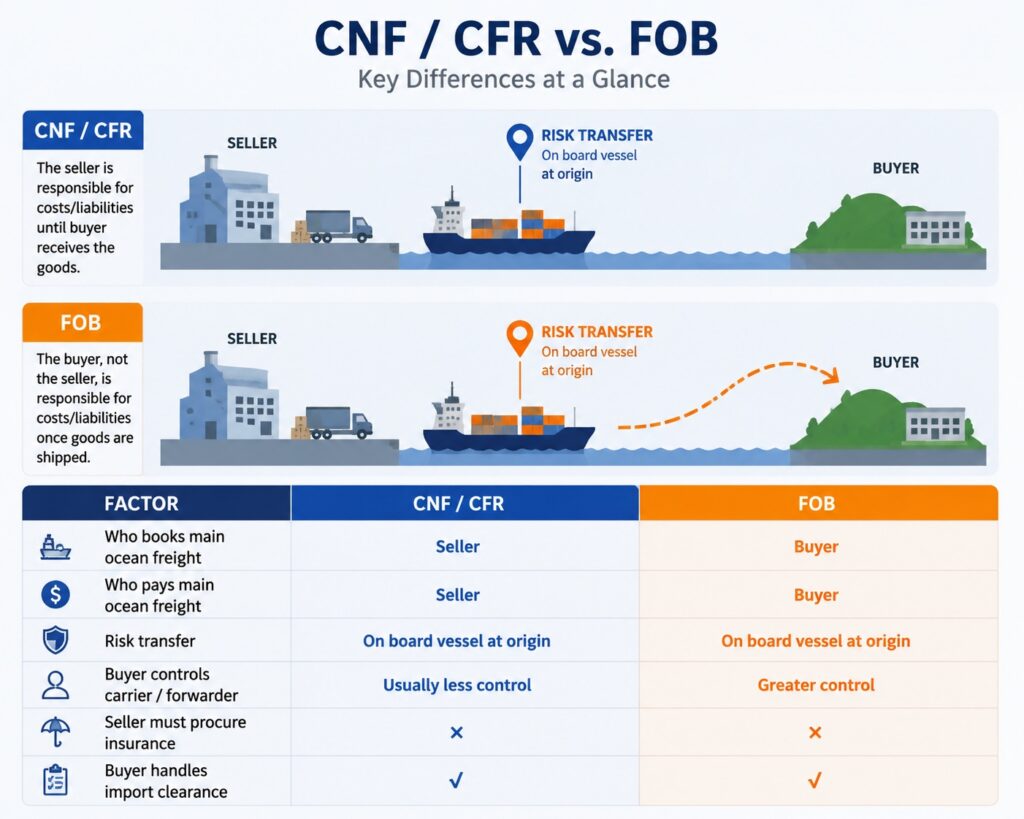
A principal diferença comercial entre o CFR e o FOB é quem reserva e paga o frete marítimo principal.
Fator
CNF / CFR
FOB
Quem contrata o transporte marítimo principal
Vendedor
Comprador
Quem paga o frete marítimo principal?
Vendedor
Comprador
Transferência de riscos
A bordo do navio na origem
A bordo do navio na origem
O comprador controla a transportadora/agente de transporte
Normalmente, menos controlo
Maior controlo
O vendedor deve contratar um seguro
×
×
O comprador encarrega-se do desembaraço aduaneiro
√
√
O termo FOB é frequentemente adequado para importadores que:
O seu próprio agente de transporte na China
Tarifas negociadas com as transportadoras
Requisitos específicos de encaminhamento
Companhias de navegação preferenciais
Controlos do agente de destino
Forte capacidade logística interna
O CFR pode ser adequado para compradores que pretendam que o vendedor organize o transporte marítimo principal e que já tenham analisado a estrutura de custos no destino.
CNF / CFR vs DDP: Transporte com porte pago no porto vs Entrega com direitos aduaneiros pagos
O CFR e o DDP resolvem problemas logísticos muito diferentes.
Nos termos do CFR, o vendedor paga o transporte principal até ao porto de destino designado, enquanto o comprador se encarrega do desembaraço aduaneiro e da entrega posterior.
No regime DDP, o vendedor assume uma responsabilidade muito maior até ao destino indicado.
Fator
CNF / CFR
DDP
O vendedor paga o frete internacional
√ Para a porta indicada
√ Para o local indicado
O vendedor encarrega-se do desembaraço aduaneiro
×
√
O vendedor paga os direitos aduaneiros e impostos de importação
×
√
O vendedor entrega à porta do comprador
×
√
O comprador precisa de configurar a importação
Normalmente, sim
Normalmente, menos tramitações por parte do comprador
Visibilidade dos custos
Requer a modelação dos custos de destino
Mais custos incluídos no preço final
Melhor ajuste
Importadores B2B experientes
Compradores que procuram uma estrutura entregue mais completa
A diferença na prática é substancial.
Nos termos do CFR, o comprador deve prever:
Despacho de importação
Direitos aduaneiros e impostos
Tratamento do destino
Taxas de despachante aduaneiro
Taxas portuárias ou de terminal
Entrega no interior do país
Possíveis opções de armazenamento
Risco de demurrage ou detenção
No âmbito do DDP, estas responsabilidades recaem, em geral, muito mais sobre o vendedor.
Consulte o nosso Guia de envio DDP no que diz respeito às diferenças mais gerais de afetação.
Risco aduaneiro ao abrigo do CFR
As regras de importação variam consoante o país, o produto, o valor aduaneiro, a estrutura da transação e as alterações nas políticas.
Isso é relevante no âmbito do CFR porque, em geral, é o comprador que se encarrega do desembaraço aduaneiro e do pagamento dos direitos e impostos aplicáveis.
Antes de efetuar a reserva, verifique:
Classificação HS ou pautal
Valor aduaneiro
País de origem
Direito de importação aplicável
Tratamento do IVA ou do GST
Medidas comerciais adicionais
Requisitos para despachantes aduaneiros
Configuração do importador registado
Requisitos de conformidade dos produtos
A lição operacional é simples:
Não utilize o preço CNF do fornecedor como base para o seu orçamento de custo total de importação.
Uma cotação CNF pode incluir as mercadorias e o frete principal, excluindo, no entanto, custos substanciais a cargo do destinatário.
O CFR é adequado para carga em contentores?
O CFR é uma regra marítima centrada na entrega a bordo do navio.
Na logística moderna de contentores, o processo físico pode ser diferente.
O vendedor pode entregar um contentor ou uma carga a:
Uma transportadora
Um terminal
Um parque de contentores
Um armazém de consolidação
antes de a mercadoria ser fisicamente carregada no navio.
Isto pode criar uma discrepância entre:
O ponto de transferência operacional
O ponto de transferência contratual do risco
No caso de transportes multimodais ou em contentores em que o vendedor paga o frete e não é necessário um seguro contratado pelo vendedor, CPT — Frete pago até pode, por vezes, corresponder melhor à transição operacional.
Nos casos em que também seja exigido um seguro contratado pelo vendedor, CIP — Frete e seguro pagos até pode ser relevante.
Conclusão prática
“A expressão ”contentor CFR» continua a ser comum no comércio real.
A questão não é que todas as remessas de contentores CFR sejam automaticamente erradas.
A melhor pergunta é:
O Incoterm escolhido reflete com precisão o local onde a carga é entregue e onde as partes pretendem que o risco seja transferido?
No caso de transações de elevado valor, suscetíveis de litígios ou com muitos contratos, essa distinção é importante.
Quando se deve utilizar o CNF / CFR?
O CFR funciona bem quando
É um importador B2B experiente
Tem o seu próprio despachante aduaneiro ou processo de desalfandegamento
Compreende o conceito de transferência de risco a bordo
O vendedor dispõe de um acordo de transporte fiável
Já verificou as taxas de destino
Quer que seja o vendedor a tratar da reserva principal do frete marítimo
Compreende a diferença entre o preço CFR e o custo total de importação
O CFR costuma ser uma opção menos adequada quando
Precisa de ter controlo total sobre a operadora
É necessário um encaminhamento específico
Precisa de um horário de navegação específico
Queres indicar o teu próprio agente de destino
Já conseguiu tarifas de frete mais vantajosas
Não tem uma configuração de desalfandegamento de importação
Vendem diretamente aos consumidores
Precisa de custos previsíveis no atendimento ao cliente, de porta a porta
O fornecedor recusa-se a divulgar os encargos de destino
Lista de verificação para a auditoria ao comprador CNF/CFR — Antes da partida do navio
Antes de aceitar um acordo CNF ou CFR, pergunte:
Qual é, exatamente, o nome da porta de destino que consta no contrato?
O termo formal escreve-se “CFR [porto], Incoterms® 2020”?
Qual é a companhia marítima utilizada?
Está envolvido algum NVOCC?
Está envolvido um co-carregador?
Qual é o transitário responsável pela reserva?
Quais são as taxas de destino que são pagas antecipadamente?
Quais são as taxas de destino cobradas ao destinatário?
Quem é o agente de destino?
Que tarifa irá o agente de destino aplicar?
Que tempo livre é que se aplica?
Quais são as taxas de demurrage?
Quais são as taxas de detenção?
O seguro de carga foi verificado antes da partida?
Quem será o importador registado?
Quem se encarregará do desembaraço aduaneiro?
Qual é o custo total estimado no destino, incluindo direitos aduaneiros, impostos, despacho aduaneiro e entrega no interior do país?
Se um fornecedor ou transitário não puder apresentar uma tabela de encargos de destino antes da partida, considere isso como um sinal de aviso comercial, não se trata de uma questão burocrática menor.
Como a Vantage Forwarding apoia as decisões relativas às condições CFR, FOB e DDP
A Vantage Forwarding coordena o transporte de mercadorias provenientes da China a partir de Guangzhou e de outros importantes centros de distribuição.
Para os compradores que estejam a comparar uma cotação CFR organizada pelo fornecedor com uma estrutura FOB ou DDP porta a porta, podemos analisar o perfil do envio e identificar os elementos de custo que devem ser confirmados antes da reserva.
O apoio habitual inclui:
Comparação entre as opções CFR, organizadas pelo fornecedor, e FOB, controladas pelo comprador
Análise da transparência das tarifas de origem
Análise da exposição às taxas de destino
Planeamento de percursos para FCL ou LCL
Avaliação das opções de transporte aéreo ou marítimo
Comparação entre estruturas baseadas no porto e porta a porta
Calcular o custo total no destino, em vez de apenas o frete marítimo nominal
Perguntas frequentes: Condições de envio CNF e CFR
CNF é o mesmo que CFR?
No uso comercial corrente, a sigla CNF refere-se normalmente à mesma estrutura de «Custo e Frete» que a sigla CFR.
A diferença é que CFR é a regra oficial dos Incoterms® 2020, enquanto «CNF» é uma abreviatura não padronizada.
Utilize o CFR em contratos formais, ordens de compra e cartas de crédito.
O que significa CNF na expedição?
Na prática comercial comum, CNF significa «Custo e Frete».
O vendedor organiza e paga o frete marítimo até ao porto de destino indicado.
De acordo com a estrutura CFR correspondente, o risco é transferido para o comprador quando as mercadorias se encontram a bordo do navio no porto de origem — e não quando chegam ao destino.
O CNF inclui seguro?
Não.
Nos termos das condições CFR, o vendedor não tem qualquer obrigação de subscrever um seguro de carga.
O comprador assume o risco após a entrega a bordo e deve decidir se é necessário um seguro de carga adequado.
Isto difere do CIF, em que o vendedor tem a obrigação de subscrever um seguro.
Quem paga o THC de destino ao abrigo do CFR?
Não existe uma resposta universal que se resuma a uma única frase.
Depende do contrato de transporte e das despesas que já estão incluídas no frete contratado pelo vendedor.
Alguns custos do terminal de destino podem já estar cobertos. Outras taxas podem ser cobradas ao comprador.
Peça sempre um detalhe por escrito das tarifas pré-pagas/a cobrar antes de zarpar.
Quem paga os direitos de importação nos termos das condições CNF / CFR?
No âmbito do CFR, o comprador encarrega-se, em geral, do desembaraço aduaneiro e paga os direitos aduaneiros e impostos aplicáveis.
Um acordo contratual distinto pode alterar a forma prática de gestão comercial, mas isso deve ser claramente documentado.
O CNF pode ser utilizado no transporte aéreo de mercadorias?
O CFR aplica-se apenas ao transporte marítimo e por vias navegáveis interiores.
No caso de transportes aéreos ou multimodais em que o vendedor paga o frete sem ter a obrigação de subscrever um seguro, a regra CPT pode ser a regra Incoterms® mais adequada.
Qual é a diferença entre CNF e CIF?
A principal diferença reside no seguro contratado pelo vendedor.
Nos termos do CFR, o vendedor não tem qualquer obrigação de subscrever um seguro.
No âmbito do CIF, o vendedor deve contratar o seguro exigido pela norma.
Transferências de risco no ponto de entrega a bordo na origem, em ambas as estruturas.
Qual é a diferença entre CNF e FOB?
Nos termos do CFR, o vendedor organiza e paga o frete marítimo principal até ao porto de destino designado.
No regime FOB, o comprador normalmente organiza e paga o frete marítimo principal.
Ambas as regras baseiam-se num conceito de entrega a bordo na origem.
O CFR é recomendado para remessas em contentores?
O CFR é amplamente utilizado na prática para o transporte de contentores.
No entanto, a carga em contentores é frequentemente entregue ao transportador antes do carregamento do navio.
Isso pode tornar o CPT uma opção contratual mais adequada nos casos em que as partes pretendem que a transferência do risco ocorra no ponto de entrega mais precoce da transportadora.
Como devo redigir as disposições do CFR num contrato?
Utilização:
CFR [nome exato do porto], Incoterms® 2020
Por exemplo:
CFR Hamburgo, Incoterms® 2020
Evite formulações vagas, tais como:
CNF Europa
CFR EUA
CNF Reino Unido
CFR porto de destino
É importante indicar o nome exato do porto.
Nota editorial: As regras dos Incoterms® distribuem obrigações específicas relativas à entrega, ao risco, aos custos e às formalidades entre o vendedor e o comprador. Não substituem o contrato de venda, o contrato de transporte, a apólice de seguro, a legislação aduaneira nem as regras fiscais locais. Para transações de elevado valor ou suscetíveis de litígio, procure aconselhamento profissional específico para o contrato.
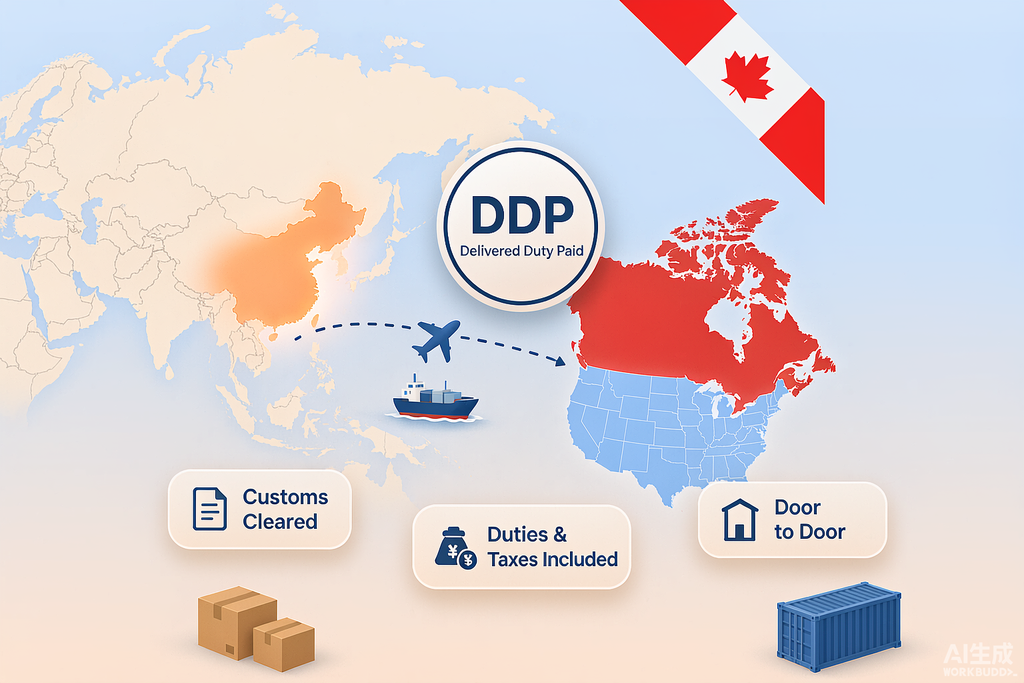
Envio DDP da China para o Canadá: o que a cotação inclui, direitos aduaneiros e GST ou HST por província, o processo da CBSA, tempos de trânsito e quando o DDP é a opção certa.
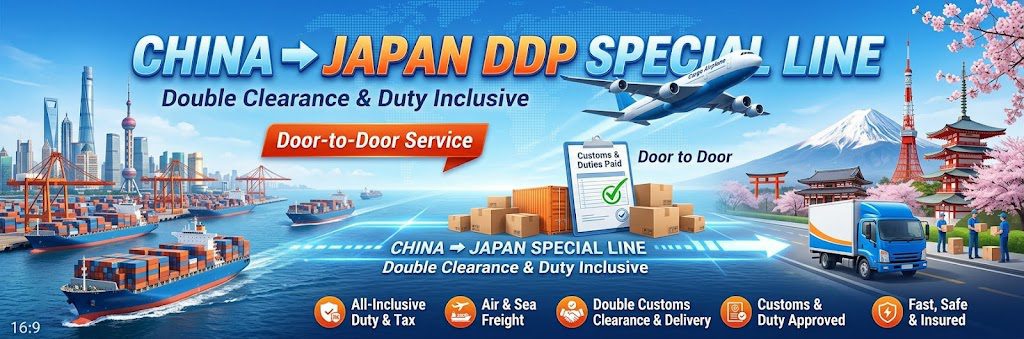
Envio DDP da China para o Japão em 2026: o que o preço inclui, direitos aduaneiros, o imposto sobre o consumo 10% que agora se aplica a todas as importações, poupanças ao abrigo do RCEP e tempos de trânsito.
Olá! Como podemos ajudá-lo com o seu transporte de carga especial hoje?
Partilhe o tipo de carga (baterias de lítio, produtos de marca ou líquidos), o destino e quaisquer requisitos especiais. Responderemos com uma cotação e um processo em breve.
Enviar mensagem
Vantage Forwarding - Responde normalmente no prazo de 2 horas
 English
  Chinese
  Arabic
  French
  German
  Portuguese
  Spanish