Every China shipper asks the same question after the de minimis era: “How do I bring my landed cost back down?”
The answer has two versions. One is fraud — under-declaring value, misclassifying HS codes, or routing through a third country to hide origin. That path ends in seizure, penalties, and debarment, and it will get your content delisted under Google’s YMYL rules.
The other version is fully compliant optimization — and it is more powerful than most sellers realize. This article covers six legal levers that genuinely reduce duty and clearance cost, and exactly where the red line sits.
The compliant mindset
Legal duty reduction is about structure and accuracy, not hiding information. Customs rewards:
- the correct code (which is often the lower legal rate),
- fewer, larger entries (less per-shipment overhead),
- and authorized relief programs (drawback, bonded storage).
Everything below uses one of those mechanics. None requires misstating value, origin, or classification.
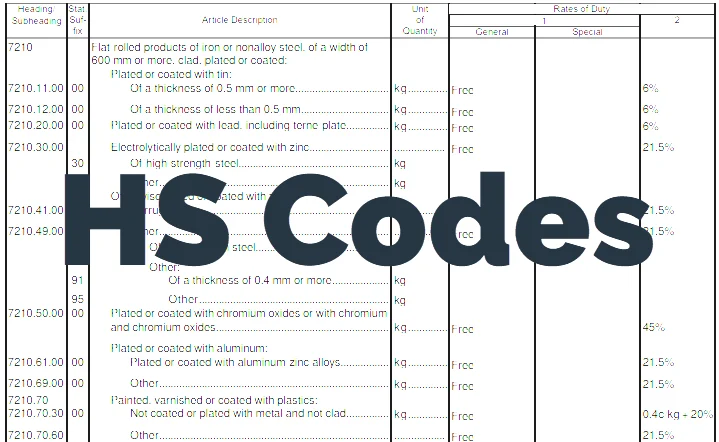
Lever 1: Accurate classification
The single biggest “savings” is often just classifying correctly.
- A wrong code used to avoid duty is fraud (see the red line). But many shippers over-pay because they guessed a higher-rate code.
- The correct HTS/HS code can reveal a genuinely lower rate, and it removes penalty exposure entirely.
- Keep a classification file per SKU and re-check annually.
This is the foundation of every other lever. Start here — see HS Code Mistakes for how to get it right.
Lever 2: Consolidated DDP shipping
Post-de minimis, every parcel is a customs entry with a fixed clearance cost. Shipping many units in one DDP consolidation means:
- one entry instead of dozens,
- one set of broker/handling fees spread across the volume,
- and a single, predictable duty calculation.
For high-SKU, low-value catalogs, consolidation is usually the largest compliant saving available. It pairs naturally with overseas warehousing (next lever).
Lever 3: Overseas / bonded warehousing
Instead of clearing each order at the border, land stock in a domestic or bonded warehouse and fulfill locally:
- Duty is paid once on the inbound batch, not per order.
- Domestic fulfillment avoids per-parcel customs entirely.
- Bonded status can defer duty until goods leave the warehouse (jurisdiction-dependent).
This suits steady-selling SKUs where you can forecast demand. It is a structural saving, not a declaration trick.
Lever 4: Duty drawback
Duty drawback lets you recover duties paid on imported goods that are later re-exported or destroyed in the destination country.
- Common for warranty replacements, returns processed abroad, or manufacturing where imported inputs become exported outputs.
- It requires disciplined record-keeping linking the import duty to the export.
- Many shippers leave this money on the table because the paperwork feels heavy — a broker or compliant forwarder can run it for you.
Drawback is explicitly authorized; it is the opposite of fraud.
Lever 5: Smarter product mix and AOV
Sometimes the win is commercial, not customs:
- Shift toward higher-margin SKUs where duty is a smaller share of price.
- Bundle to raise average order value, spreading fixed clearance cost over more revenue.
- Design packaging to reduce dimensional weight and freight (which indirectly lowers the dutiable-handling math).
This does not change the duty rate — it changes the math around it.
Lever 6: Trade-agreement awareness
Use preferences only where they genuinely apply:
- For China-origin goods into the US, there is no FTA preference (and GSP does not cover China) — so do not assume one exists.
- For the EU/UK, China also lacks preferential access; the compliant lever is classification and the structures above, not origin manipulation.
- Preferences matter most when your inputs come from a country with a real trade agreement and undergo substantial transformation — a separate, documentation-heavy compliance area best handled with a broker.
The rule: claim a preference only with valid origin proof. Inventing origin is fraud (red line).
Red line: what never to do
These are customs fraud and are never part of a compliant plan:
– Under-declaring value (undervaluation) to shrink the duty base.
– Misclassifying the HS code to land in a lower-rate heading.
– Transshipping through a third country to disguise country of origin and avoid tariffs (e.g., Section 301).Consequences include seizure, fines, debarment, and personal liability (including under the UFLPA). They also violate Google’s YMYL standards and will get content delisted. Vantage does not assist with any of these. The levers above deliver real savings without them.
FAQ
Is consolidation enough on its own?
Often yes for high-volume catalogs. Pair it with accurate classification (Lever 1) for the best compliant result.
Does drawback apply to destroyed defective goods?
Often yes — destruction in the destination country can qualify; keep the documentation. Confirm the exact rule with a broker.
Can I use a lower rate I found on a forum?
Only if it matches your actual product’s correct code. Applying someone else’s code to your goods is misclassification.
Where do the other duties fit?
Section 301 (US) and VAT/GST still apply on top; see Section 301 Tariffs and the Import Duties Guide. Forced-labor rules are covered in UFLPA Explained.

 English
  Chinese
  Arabic
  French
  German
  Portuguese
  Spanish