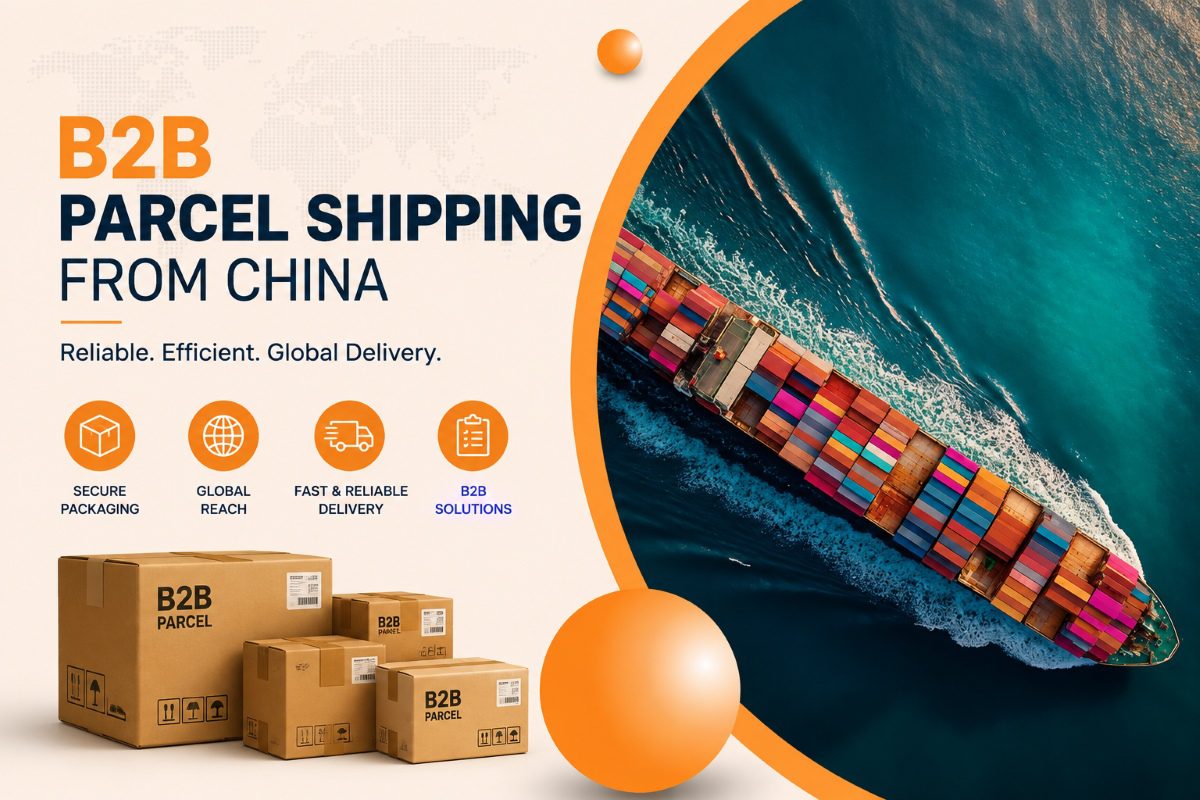
L'expédition de colis B2B depuis la Chine se situe à mi-chemin entre le transport express et le fret complet. C'est la solution idéale lorsque votre envoi est trop précieux ou trop urgent pour être confié à la poste, mais trop petit pour remplir un conteneur. Ce guide explique dans quels cas l'expédition de colis B2B est la solution la plus adaptée, en quoi elle diffère de l'expédition B2C et quelles informations préciser avant de réserver.
Qu'est-ce que l'expédition de colis B2B ?
L'expédition de colis B2B consiste à envoyer des marchandises commerciales sous forme de colis d'une entreprise à une autre, généralement par l'intermédiaire d'un transitaire ou d'un réseau de messagerie plutôt que par la poste. Le poids de ces colis varie généralement entre un kilogramme et une trentaine de kilogrammes environ ; ils sont acheminés par avion ou par train express plutôt que par voie maritime.
Ce concept se distingue du fret conteneurisé, où les marchandises remplissent un conteneur ou un envoi. Il se distingue également du modèle B2C, où le destinataire est un consommateur. Les colis B2B sont livrés à la zone de déchargement d'une entreprise, et non au domicile du destinataire.
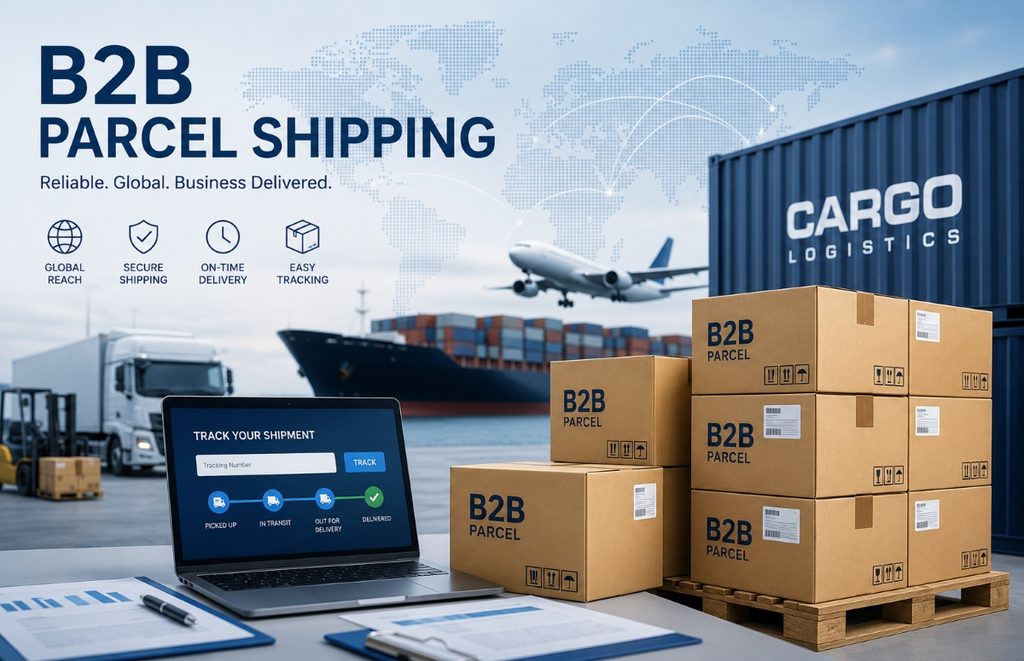
Colis B2B ou colis B2C : quels sont les changements ?
Les produits, les documents et les attentes varient.
- Les colis B2B sont accompagnés de factures commerciales et comportent souvent les codes SH par article
- Les colis B2C font souvent l'objet d'une déclaration simplifiée et relèvent du régime IOSS
- Les destinataires B2B s'attendent à ce que les livraisons soient enregistrées et à ce qu'elles correspondent aux bons de commande
- Les clients B2C s'attendent à bénéficier d'un suivi et d'une livraison rapide
Notre Guide comparatif : vente en gros B2B et livraison de colis B2C explique en détail les différences opérationnelles.
Quand faut-il recourir à l'expédition de colis B2B ? Cas de figure concernés :
- Les marchandises sont de faible volume (allant de 1 kg à plusieurs centaines de kilogrammes) et doivent être livrées dans des délais très courts.
- Vous envoyez des échantillons, des pièces de rechange ou un réapprovisionnement urgent à un client professionnel.
- Le fret maritime LCL (Less than Container Load) est trop lent pour respecter vos délais, tandis que le fret aérien en vrac (affrètement ou fret général) est soit trop coûteux, soit soumis à des exigences de volume minimum élevées pour les petits envois.
- Vous avez besoin d'un service de livraison avec suivi et signature obligatoire, et l'adresse de livraison est celle d'un siège social.
- Pour les expéditions stables et de grand volume, le fret maritime FCL (conteneur complet) ou LCL (groupage) est plus économique ; pour les envois ponctuels, de petite taille et urgents, l'expédition de colis B2B constitue le meilleur choix.
Pour les envois en volume régulier, le fret ou le groupage sont plus avantageux. Pour les petits envois ponctuels et urgents, ce sont les colis qui s'imposent. Notre Guide des entrepôts de regroupement en Chine couvre l'option à plus grand volume.
Quel transporteur ou transitaire choisir ?
Les transporteurs express proposent un service de livraison rapide, mais à un coût plus élevé. Les transitaires peuvent regrouper les colis dans des lots aériens moins onéreux tout en assurant le suivi. Le choix approprié dépend du volume et du niveau de service.
Suite à la fin de l'exonération « de minimis » pour les marchandises en provenance de Chine, les droits de douane sur les colis ont connu une forte augmentation aux États-Unis. Notre Guide sur la fin de l'application de la règle « de minimis » explique les répercussions. Pour l'UE, le Réforme douanière de l'UE concernant les petits colis C'est l'article à ne pas manquer.
Quels sont les documents requis pour les colis B2B ?
Même les petits colis doivent être accompagnés des documents nécessaires :
- Facture commerciale indiquant la valeur et le code SH
- Liste des articles à emporter
- Bordereau d'expédition avec la référence de la commande
- Marquage « CE » ou autres marquages de conformité pour les appareils électroniques
- Déclaration relative à la batterie en cas de présence de cellules
Notre Liste de contrôle des documents de l'importateur Cela vaut également pour les colis.
Erreurs courantes dans le domaine des colis B2B
- Déclarer une valeur inférieure à la réalité pour éviter de payer des droits de douane, puis se faire retenir
- Mélange de formulations à caractère personnel et commercial sur la facture
- Oublier la référence du bon de commande afin que le destinataire ne puisse pas l'identifier
- Expédition de batteries sans déclaration appropriée
- Choisir l'option non suivie la moins chère pour les marchandises de valeur
Foire aux questions
L'expédition de colis B2B est-elle moins chère que le transport de marchandises ?
Pour les petits envois urgents, oui. Pour les envois récurrents en gros, le fret ou le groupage revient moins cher au kilogramme.
Puis-je envoyer des appareils électroniques par colis ?
Oui, avec les marquages « CE » et les déclarations relatives aux batteries, le cas échéant. Nos Guide d'expédition des composants électroniques traite de la manutention.
Les colis passent-ils par les formalités douanières comme le fret ?
Elles passent par le même système douanier, mais les colis sont souvent acheminés par coursier ou via des procédures simplifiées. Les documents restent toutefois essentiels.
Conclusion
Le transport de colis B2B, c’est un peu comme les pompiers du commerce international. Il ne vous fait pas attendre indéfiniment comme le fret maritime, et n’impose pas non plus de poids minimums exorbitants comme le fret aérien affrété. Pourtant, lorsque vous en avez le plus besoin — échantillons urgents, pièces de rechange pour une chaîne de production, commande de dernière minute d’un client —, il intervient pour acheminer ces colis “ petits mais essentiels ” avec une fiabilité remarquable.
Je ne le répéterai jamais assez : les petits colis impliquent de grandes responsabilités. Chaque chiffre de la facture commerciale, chaque code SH, chaque déclaration relative aux batteries peut faire la différence entre un dédouanement réussi ou un échec. Choisir le bon transitaire, ce n’est pas seulement obtenir un numéro de suivi : c’est s’assurer d’avoir un partenaire sur qui compter lorsque les choses se compliquent.
 English
  Chinese
  Arabic
  French
  German
  Portuguese
  Spanish