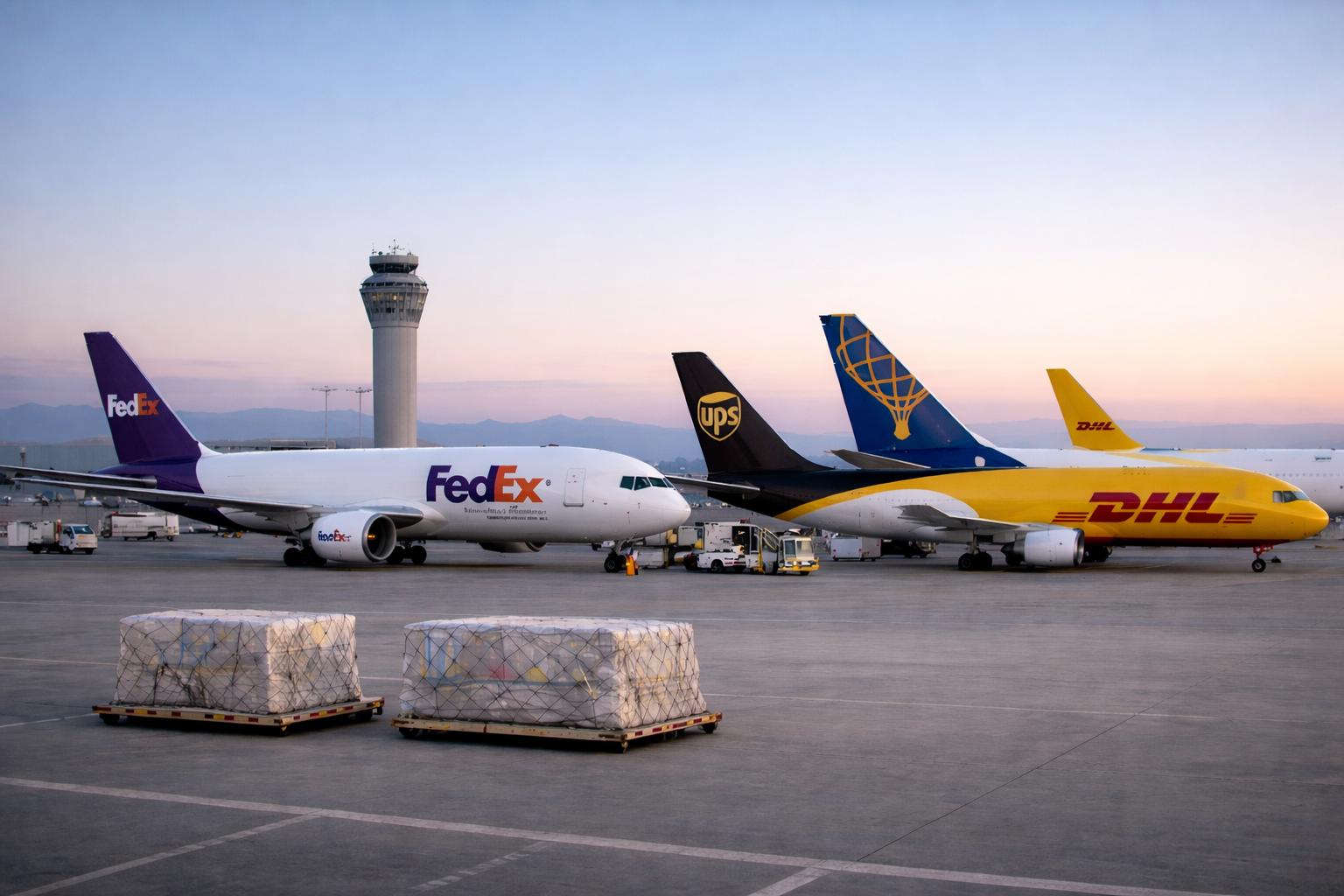
From July 1, 2026, low-value online orders shipped to the Canary Islands from outside the European Union may become more expensive.
The change will affect orders placed on platforms such as Shein, Temu, and AliExpress. It may also apply to independent online stores, TikTok Shop sellers, Shopify stores, and other non-EU retailers shipping directly to consumers.
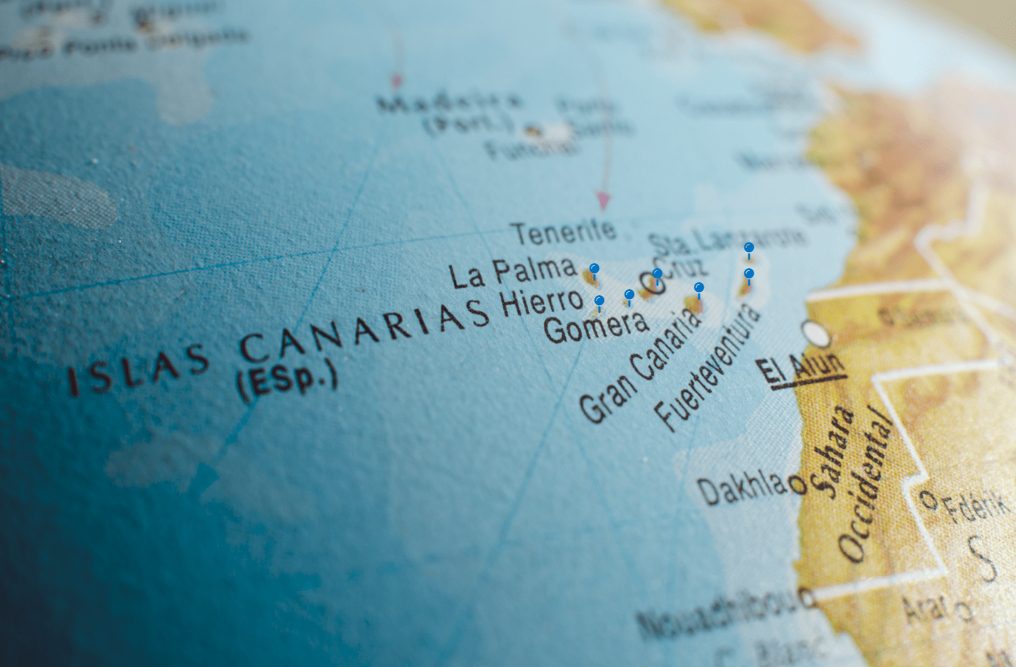
The increase is linked to a new EU customs charge on low-value e-commerce parcels. It is not a tax introduced only by the Canary Islands.
What Changes on July 1, 2026?
The EU plans to introduce a temporary customs duty on e-commerce goods valued at €150 or less.
The main details are:
- Effective date: July 1, 2026
- Covered goods: E-commerce shipments worth no more than €150
- Origin: Goods shipped from outside the EU
- Charge: €3 for each customs tariff category in the shipment
- Coverage: EU customs territory, including the Canary Islands
This means a parcel may cost more than €3 if it contains products under several customs classifications.
The Charge Is Not Always €3 Per Parcel
The new fee is often described as a €3 parcel tax, but that description is incomplete.
The duty is expected to be calculated according to the customs category or declaration line used for the goods.
For example:
- Three similar T-shirts under one tariff code may face one €3 charge
- A silk shirt and two wool shirts may fall under two tariff categories, leading to a €6 charge
- A parcel containing clothing, cosmetics, and phone accessories may involve three categories and a €9 charge
The final amount depends on how the products are classified during customs declaration.
For sellers, the number of HS codes in each order may become as important as the total parcel value.
Why Are the Canary Islands Affected?
The Canary Islands have a special tax system.
They do not use standard Spanish VAT. Instead, the region applies IGIC, or Canary Islands General Indirect Tax.
However, the islands are still part of the EU customs territory. This means EU customs rules can apply to goods entering the region from non-EU countries.
The new charge should therefore not be described as a local Canary Islands tax increase.
A more accurate explanation is:
The EU is changing the customs treatment of low-value e-commerce goods imported from outside the EU, and the Canary Islands are included in the affected customs territory.
IGIC, carrier handling fees, customs clearance fees, and the new €3 customs duty are separate costs.
Which Orders May Be Affected?
The new rule is not limited to Shein, Temu, or AliExpress.
It may affect any low-value consumer order that meets the following conditions:
- The goods are shipped from outside the EU
- The shipment is sold directly to a consumer
- The parcel value does not exceed €150
- The goods enter the EU customs territory
Affected orders may include:
- Shein orders shipped from China
- Temu cross-border parcels
- AliExpress direct shipments
- Shopify orders fulfilled from China
- TikTok Shop cross-border orders
- Independent store orders sent from non-EU warehouses
- Marketplace orders fulfilled outside the EU
Sellers using EU-based stock may face a different cost structure because the goods are imported in bulk before local delivery.
Will Consumers Pay the Fee Directly?
Not always.
The customs charge may be paid first by the platform, seller, carrier, customs broker, or importer.
The cost may then appear in several forms:
- Higher product prices
- Extra import charges at checkout
- Reduced discount offers
- Higher shipping fees
- Carrier collection fees
- Customs charges paid before delivery
Some platforms may absorb part of the cost. Others may pass it on to buyers.
For this reason, it is not accurate to say that every order will simply become €3 more expensive.
The final increase depends on the number of customs categories, the platform’s pricing model, and the shipping arrangement.
What This Means for Chinese Exporters
Low-Value Products Face More Pressure
The effect will be strongest on very cheap products.
A €3 charge on a €5 item is a major increase. The same €3 charge on a €100 item has a much smaller effect on the final selling price.
Low-priced accessories, fashion items, household products, and small gadgets may become less competitive.
Mixed-SKU Orders May Cost More
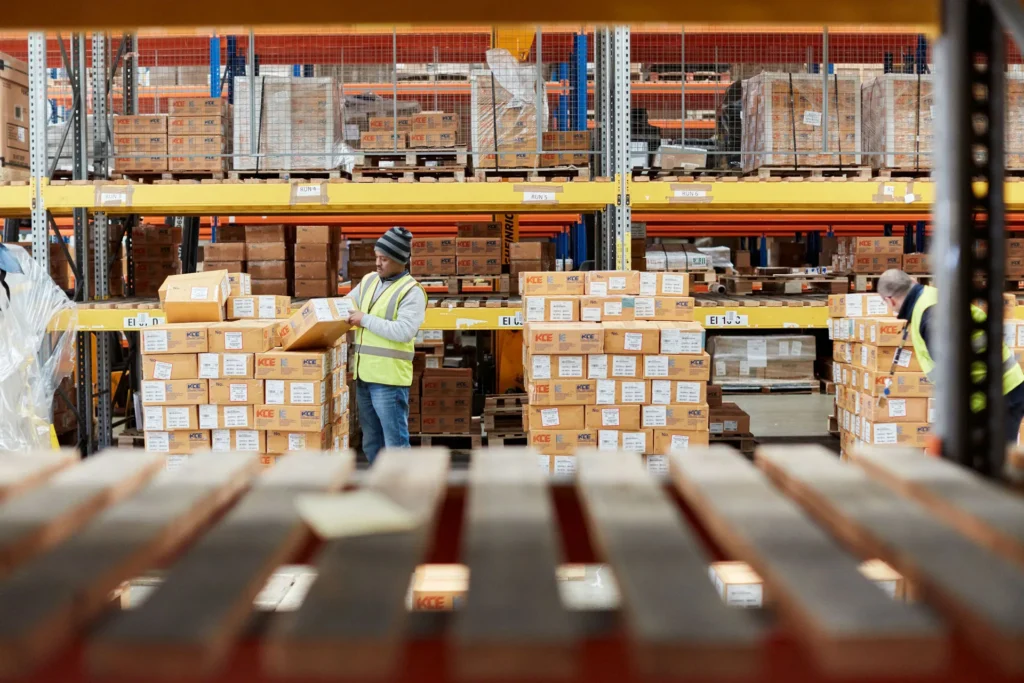
Orders containing several product types may generate several customs declaration lines.
A parcel with clothing, electronics, and cosmetics may face a higher total duty than a parcel containing only one product category.
Sellers should not calculate the new cost based only on parcel quantity.
They also need to review:
- HS codes
- Product categories
- Declaration lines
- Order composition
- Customs valuation
Splitting Parcels May Not Reduce Costs
Some sellers may consider sending products in separate parcels.
This may increase costs instead.
Each parcel may create new customs declarations, carrier handling fees, clearance charges, and delivery costs.
Parcel splitting should be tested against the full landed cost, not only the €3 duty.
EU Warehousing May Become More Attractive
Bulk shipping goods into an EU warehouse may reduce dependence on direct-to-consumer parcels from China.
After customs clearance, products can be delivered locally to customers.
However, EU warehousing is not automatically cheaper.
Sellers must also consider:
- Bulk import duties
- Warehouse rent
- Local fulfillment fees
- Inventory risk
- Return handling
- Last-mile delivery costs
- Unsold stock
The right model depends on order volume, product margin, and sales stability.
Accurate HS Codes Matter More
Incorrect customs classification may lead to extra charges, shipment delays, penalties, or customs inspections.
Sellers should not combine different product categories under one inaccurate code simply to reduce the number of €3 charges.
The compliance risk may be far greater than the money saved.
What Sellers Should Check Before July
Chinese exporters selling into the Canary Islands should review their current order structure before the rule takes effect.
Start with these areas:
- List the main products sold to the Canary Islands
- Confirm the correct HS code for each SKU
- Calculate the average number of customs categories per parcel
- Review the landed cost of low-value orders
- Compare direct shipping, DDP, and EU warehouse fulfillment
- Confirm who pays customs charges under the current shipping model
- Update product pricing where margins are too low
- Add clear import cost information to checkout and shipping policies
The main issue is not only the new fee.
The bigger issue is whether the current shipping model still works for low-margin products.
Direct Shipping, DDP, or EU Warehouse?
There is no single shipping model that fits every seller.
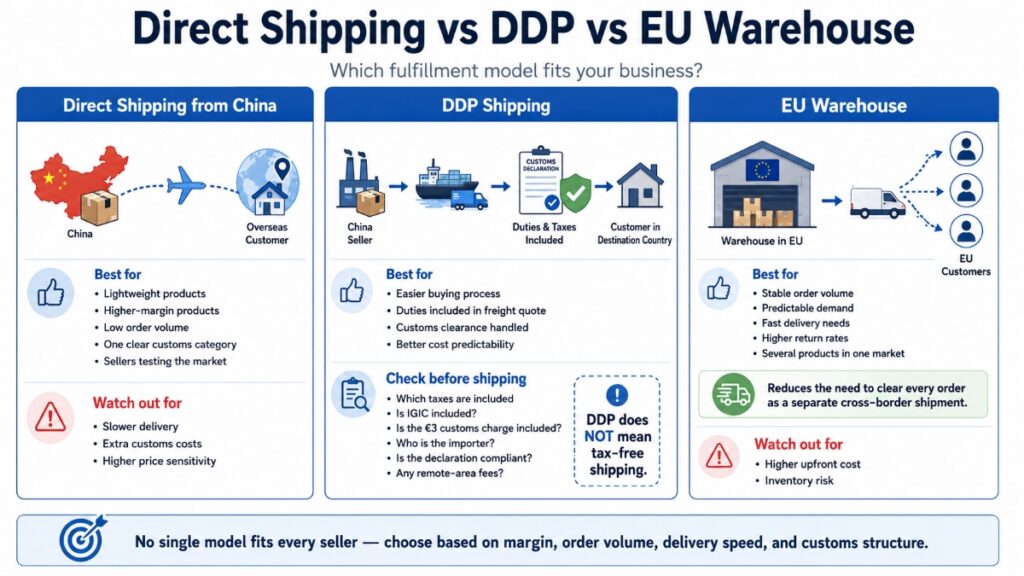
Direct Shipping from China
Direct shipping may still work for:
- Lightweight products
- Higher-margin products
- Low order volume
- Items with one clear customs category
- Sellers testing the market
The main risks are slower delivery, extra customs costs, and higher price sensitivity.
DDP Shipping
DDP can make the buying process easier because duties and customs clearance are included in the shipping arrangement.
However, DDP does not mean tax-free shipping.
The costs are included in the freight quote and paid as part of the delivery service.
Sellers should confirm:
- Which taxes are included
- Whether IGIC is included
- Whether the €3 customs charge is included
- Who acts as the importer
- Whether the shipment is declared compliantly
- Whether there are extra remote-area fees
EU-Based Fulfillment
EU warehousing may suit sellers with:
- Stable order volume
- Predictable demand
- Fast delivery requirements
- Higher return rates
- Several products sold in the same market
It reduces the need to clear every customer order as a separate cross-border shipment.
The downside is higher upfront cost and inventory risk.
The €3 Duty Is Not the Same as a €2 Handling Fee
The EU has also discussed a separate handling fee for low-value e-commerce parcels.
That proposal is different from the €3 customs duty.
Businesses should not automatically combine the two charges and claim that every parcel will face a fixed €5 fee.
The final cost depends on the rules in force, the number of declaration lines, the carrier, and the shipping method.
Sellers should confirm the latest customs and carrier requirements before changing prices.
How Vantage Forwarding Can Help
Vantage Forwarding supports Chinese exporters shipping to the Canary Islands and other European markets.
Our team can help review:
- HS code classification
- Customs declaration structure
- DDP shipping options
- Low-value parcel costs
- Direct shipping from China
- Multi-SKU order consolidation
- EU warehouse alternatives
- Customs clearance and last-mile delivery
We can also compare different shipping models based on product type, order value, weight, and destination.
The goal is not only to lower freight costs.
It is to reduce unexpected customs charges and build a shipping model that remains profitable after July 2026.
Final Takeaway
From July 1, 2026, low-value e-commerce shipments entering the Canary Islands from outside the EU may face a new €3 customs duty for each tariff category in the parcel.
The impact will be greatest on:
- Very low-priced goods
- Orders containing several product types
- Low-margin products
- Sellers relying on direct shipping from China
- Parcels with unclear customs classification
Chinese exporters should review HS codes, order structure, pricing, and fulfillment models before the rule takes effect.
A small change in customs fees can have a large effect on low-value orders.
 English
  Chinese
  Arabic
  French
  German
  Portuguese
  Spanish