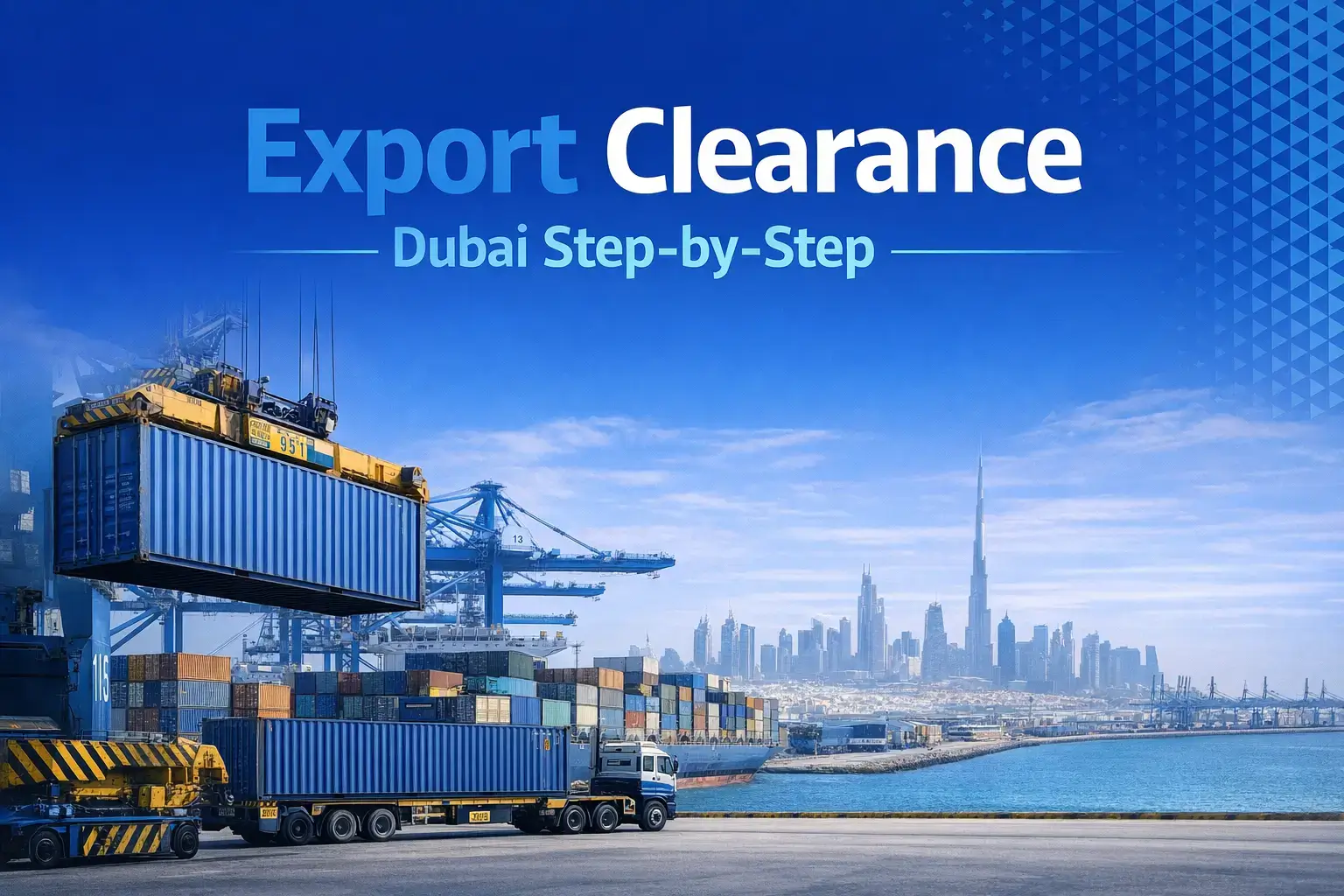
The Mirsal 2 clearance platform
UAE customs clearance runs on Mirsal 2, the federal electronic declaration platform shared by the Federal Customs Authority and the individual emirate customs administrations. Whether your container lands at Jebel Ali, Khalifa, Sharjah or Ajman, the broker files the entry through the same connected system, which cuts paper handling and gives you a trackable status at every step.
For a China importer, Mirsal 2 is the place where your shipment is formally accounted to the state: value declared, duty computed, VAT applied and release authorised. Most filings are straight-through when documents are clean. The problems start when paperwork is missing, mis-valued or mis-coded, which is why getting the submission right the first time matters more than speed.
Because Mirsal 2 is shared across emirates, a declaration filed for Jebel Ali uses the same logic as one for Khalifa or Ajman; only the port and customs centre differ. That consistency is useful for importers running multiple UAE destinations from one supplier — you learn the system once and reuse it. The platform also stores your history, so repeat shipments can be pre-populated from prior entries rather than rebuilt each time.
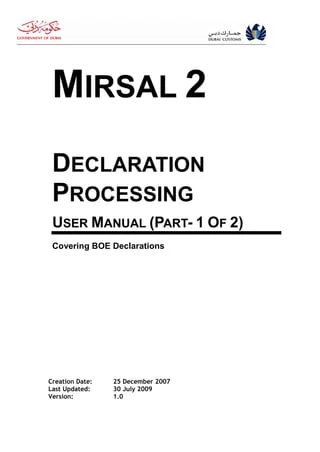
If you are building a repeat China to UAE sea freight programme, treat Mirsal 2 readiness as part of every booking, not a surprise at the port. The forwarder or licensed broker submits on your behalf, but the accuracy of the underlying documents is yours to own.
Documents you need
Clearance fails most often on documentation, not on the cargo itself. Assemble these before the vessel arrives:
- Commercial invoice — must show the true transaction value. Invoices above AED 10,000 require MOFAIC attestation (about AED 150 per invoice, mandatory since September 2024).
- Packing list — weights, dimensions and package counts per line.
- Bill of Lading — the original or telex-release aligned to the invoice and packing list.
- Certificate of Origin — confirms where the goods were made; relevant for preferential treatment.
- Valid trade licence — your UAE importer licence on file with customs.
- 12-digit HS code — the classification that drives duty and any restrictions (more below).
- Delivery Order (DO) — the terminal release document once charges are settled.
A common beginner error is under-declaring value to shave duty. UAE customs benchmarks values against global databases, and a mismatch triggers inspection, penalties and storage fees that dwarf any saving. Declare the real CIF value and let the math stand.
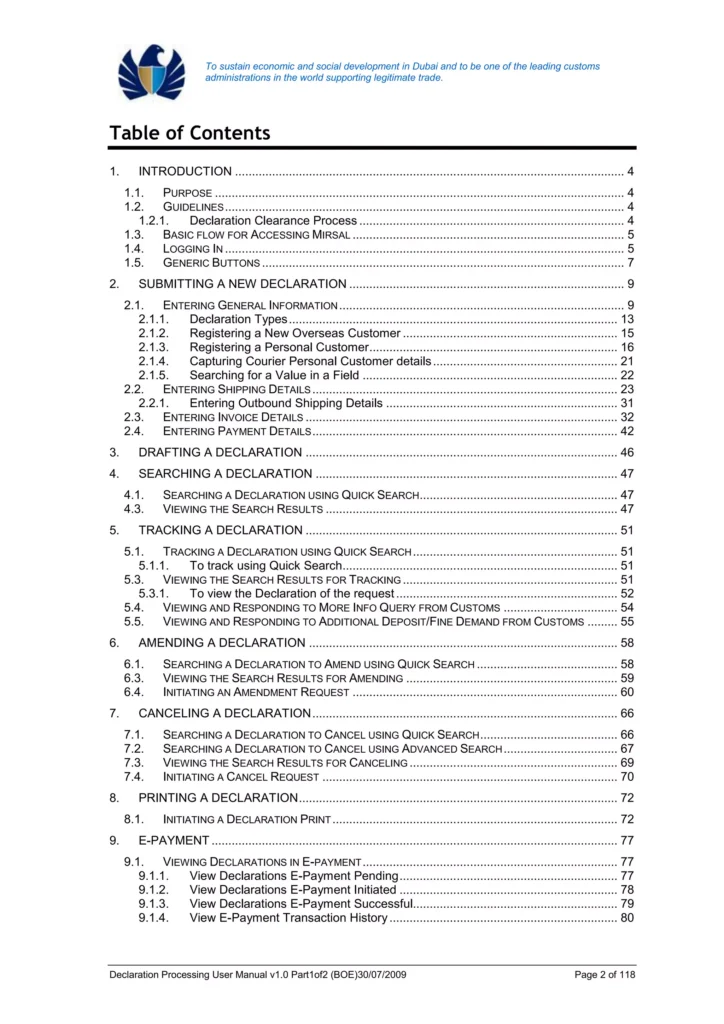
Two quiet killers of a clean filing are name mismatches and weight gaps. The importer name on the invoice must match the trade licence on file, and the gross weight on the packing list must match the verified weighing (VGM) the carrier submitted. A small discrepancy between the packing list and the actual stuffed weight can trigger a hold even when the value is correct. Line up every document to the same entity, the same shipment and the same numbers before the vessel sails.
The step-by-step clearance process
A typical mainland clearance from China follows six moves, usually completed in 1–3 working days when documents are in order:
- Register a customs code — your importer is set up in Mirsal 2 with a valid licence.
- Prepare documents — invoice, packing list, BL, origin certificate, HS code and DO collated.
- Submit the declaration — the broker files the entry and attaches the paperwork.
- Pay duty and VAT — the system calculates the UAE import duty and VAT owed on the CIF value; settlement is required before release.
- Inspection (if flagged) — a random or risk-based check confirms cargo matches the declaration.
- Release — the DO is endorsed and the container leaves the terminal.
The single biggest lever on speed is step 2. If the invoice is attested, the HS code is correct and the value is defensible, steps 3–6 move without drama. If any one is wrong, the clock starts ticking on terminal storage.
Inspections are not punishments. They are routine verification, and a well-prepared file usually passes in minutes. The delay appears when the physical cargo contradicts the paperwork — wrong quantity, undeclared items, or a HS code that does not match the product. Treat the pre-filing check as the insurance premium on your transit time.
Mini story: A Dubai trading company importing LED panels from Shenzhen once skipped MOFAIC attestation to save AED 150. Customs held the container, the buyer missed a fit-out deadline, and demurrage plus re-attestation cost them over AED 4,000. The cheapest step was the one they skipped.
Who actually files and pays depends on your contract. Under FOB or EXW the buyer usually clears; under DDP the seller does. Our guide to Incoterms and who clears customs maps this out by term so there are no surprises at the gate.
12-digit HS codes: the 2026 rule
HS (Harmonized System) codes classify your goods and decide the duty rate, any prohibitions and the documents required. The UAE is moving from the older 8-digit codes to 12-digit HS codes, rolled out in phases.
The key date: from August 2026, the 12-digit code becomes mandatory for imports into the UAE mainland from the rest of the world, including China. GCC-internal movements can still use 8-digit codes. If your 2026 shipments carry the old format, expect rejections or manual correction at filing.
You can look up the correct 12-digit classification on the UAE customs tariff portal: icp.gov.ae (Central Customs Tariff). Get the code right before the invoice is issued, because changing it after filing means a fresh declaration.
The move to 12 digits is the UAE aligning with a more granular global standard so that duty, restrictions and statistical tracking are precise. For the importer, the practical effect is fewer ambiguous classifications and fewer “close enough” codes that later draw a challenge. Spend the time once to map your top SKUs to their 12-digit codes, and every future filing becomes a copy-paste rather than a research project.
Build the 12-digit code into your commercial invoice template now. Importers who adapt in 2025 clear cleanly in 2026; those who wait inherit a backlog.
Free zone vs mainland clearance
The UAE’s free zones — JAFZA (Dubai), AFZA (Fujairah) and KIZAD (Abu Dhabi) — operate under duty-suspended status. Cargo admitted to a free zone for re-export or in-zone use does not pay the 5% duty or 5% VAT on entry. You only settle those taxes when the goods cross from the zone into the UAE mainland.
That distinction changes your clearance plan:
- Free zone admission — lighter formalities, duty suspended, ideal for re-export or in-zone assembly.
- Mainland import — full Mirsal 2 clearance, duty and VAT paid, goods free to move anywhere in the country.
For a China trader serving both the UAE and neighbouring markets, landing in a free zone and clearing only the mainland-bound portion is often the most tax-efficient path. The clearance platform is the same; the tax event is simply deferred until the goods truly enter the local economy.
Picture a 40HQ of ceramics worth USD 30,000. Landed in JAFZA for re-export, the importer pays no duty or VAT on admission. If they later move 20% of it into the mainland, only that USD 6,000 slice is assessed — about USD 300 in duty plus VAT, recoverable if registered. Had they cleared the whole box at Jebel Ali, the full USD 1,500 in duty and VAT would have been due upfront on goods that mostly left the country. The zone turns a lump tax into a pay-as-you-sell flow.
Avoid clearance delays
Most delays share the same root causes: unattested invoices over AED 10,000, wrong or missing HS codes, value disputes, and licence mismatches. Each one is preventable with a pre-arrival checklist.
Build the checklist once and reuse it: attested invoice if over AED 10,000, 12-digit HS code locked, licence active, value defensible, BL and packing list aligned. Run it at booking, not at arrival. A five-minute check at origin prevents a five-day wait at Jebel Ali.
If you would rather not own that checklist, DDP shipping handles clearance for you — the seller books, declares, pays duty and VAT and delivers cleared cargo to your door. For many first-time China importers, that single decision removes the steepest learning curve. Note that delays also cost opportunity: a held container is inventory you cannot sell, and during Q3–Q4 peak that stockout can mean a missed season.
You can also track your container through clearance on the China–UAE lane so you see exactly when the declaration is filed, when duty is paid and when the DO releases, instead of guessing from a courier’s email.
Send us your HS code, invoice value and destination emirate. We will flag the attestation, licensing and classification steps before your vessel sails, so your container clears in days, not weeks.
FAQ
How long does UAE customs clearance take?
For clean mainland imports from China, clearance typically completes in 1–3 working days after the vessel arrives and documents are filed through Mirsal 2.
Do I need MOFAIC attestation on my China invoice?
Yes, if the commercial invoice exceeds AED 10,000. Attestation costs about AED 150 per invoice and has been required since September 2024.
When are 12-digit HS codes mandatory in the UAE?
From August 2026, the 12-digit HS code is mandatory for imports into the UAE mainland from the rest of the world, including China. GCC-internal trade can still use 8-digit codes.
 English
  Chinese
  Arabic
  French
  German
  Portuguese
  Spanish