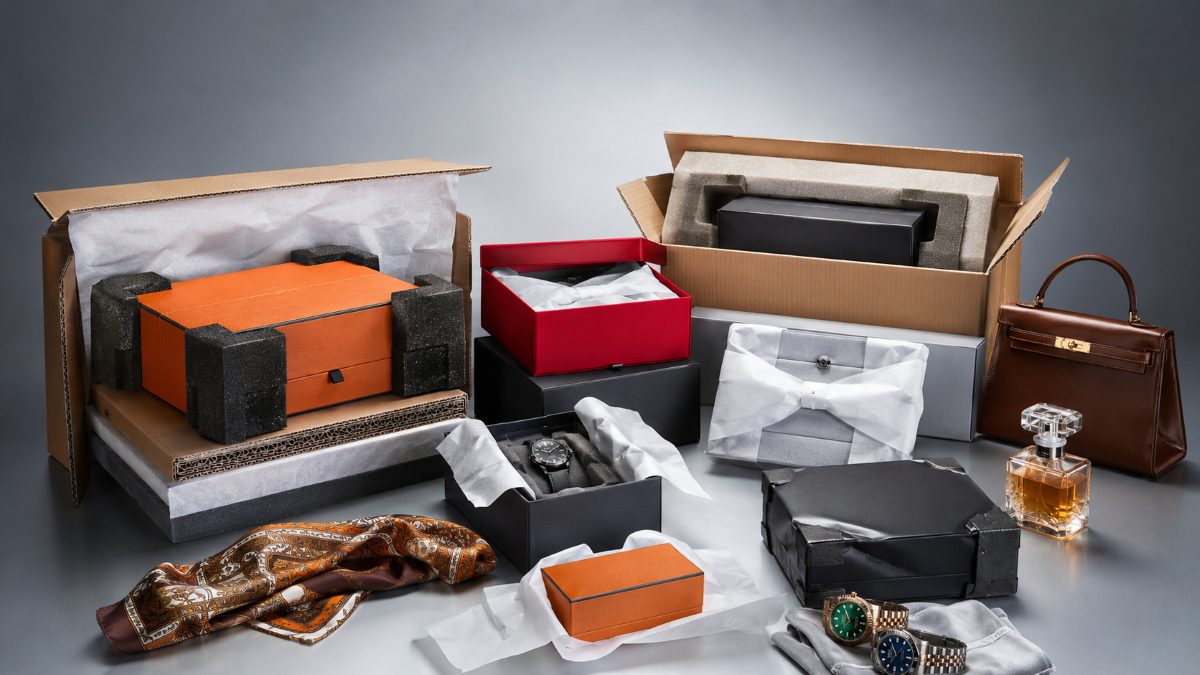
Under DDP, the seller carries risk until the goods reach the buyer’s door, so insurance is the seller’s cost to manage. For goods above about $5,000 per shipment, buy all-risk marine cargo cover equal to 110% of the CIF value. Use plain outer packaging and tamper-evident seals so the carton draws no attention in transit.
This guide covers coverage types, packing for security, and a theft claim example.
Coverage types
| Cover | What it pays for | Premium ballpark |
|---|---|---|
| Institute Cargo Clauses (C) / WA | Named perils: sinking, fire, collision | Lowest |
| Institute Cargo Clauses (A) / all-risk | Physical loss or damage, few exclusions | 0.3–0.6% of value |
| All-risk plus survey | High-value lots needing a pre-ship survey | 0.5–1%+ of value |
All-risk (Clauses A) is the standard for luxury goods because it pays for loss or damage from almost any cause, not just a listed peril. For most luxury loads the premium lands between 0.3% and 1% of the insured value, higher when a pre-ship survey is required.
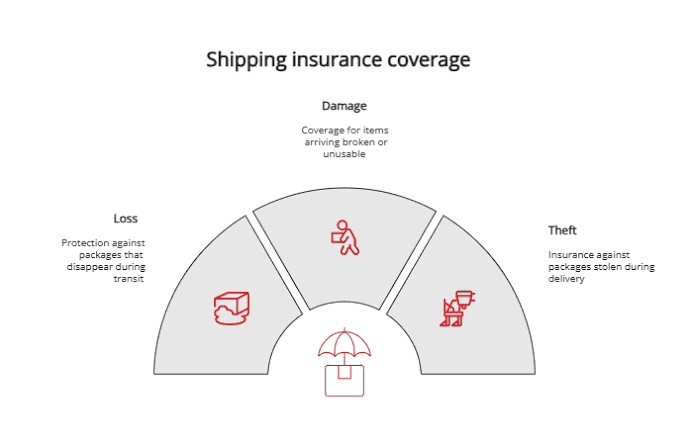
Set the declared value at 110% of CIF
Insure for the CIF value plus a margin, usually 10–20%, to cover freight and a small buffer. A watch shipment with a $180,000 CIF value should be insured for about $198,000.
Carrier liability is capped and low. Marine cargo insurance, not the carrier, is what pays a total-loss claim.
Plain packaging, not branded
Outer cartons should be plain and unbranded. A box printed with a watch or jewelry mark is an invitation at every hand-off. Neutral cartons, tamper-evident tape, and a non-descriptive waybill description reduce attention without hiding the contents from customs.
Note: customs still requires an accurate commercial description on the invoice. “Plain packaging” means the outside of the box, not the paperwork.
How we secure high-value lots
For any lot above about $5,000, we specify plain outer cartons and tamper-evident tape before the carton leaves the factory. For lots above roughly $50,000, we add a GPS tracker inside the carton or container, record a seal number at each leg, and use dual-custody hand-offs at transfer points. Those steps are what turns a theft from a total loss into a recoverable insurance claim.

Track and seal very high value
For lots above roughly $50,000, add:
- A GPS tracker inside the carton or container.
- Dual-custody hand-offs at transfer points.
- A seal number recorded at each leg.
One 2025 shipment of 20 watches, declared at $180,000 and insured at 110%, reached a European hub with a broken seal. GPS showed a three-hour unexplained stop. The all-risk policy paid the $180,000 minus a $500 deductible after the carrier liability cap was exhausted.
DDP changes who carries the risk
Under DDP, the seller bears cost and risk to the named place of destination, including import duty. That makes the insurance the seller’s problem until delivery. Under DDP vs DDU, the duty and the final-mile risk split differently, so confirm which term is on the quote.
Keep the paperwork tight
A smooth claim needs the commercial invoice, the insurance certificate, the bill of lading, and photos of any damage at delivery. File within the policy window, usually a few days after receipt.
Authoritative sources to verify against
- Incoterms 2020 (ICC): https://iccwbo.org/resources-for-business/incoterms-2020/
- U.S. Customs and Border Protection: https://www.cbp.gov/trade/basic-import-export
 English
  Chinese
  Arabic
  French
  German
  Portuguese
  Spanish