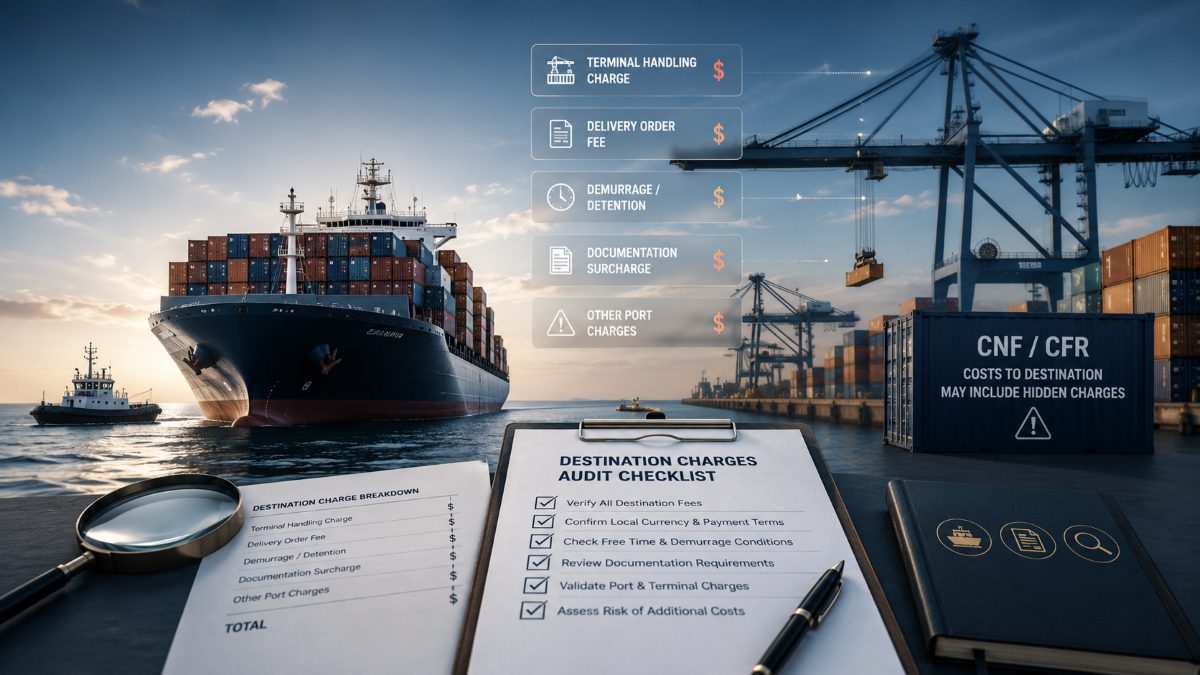
Cost and Freight (CNF, standardized as CFR under Incoterms 2020) remains a prevalent trade term for B2B procurement divisions sourcing manufactured goods from China. Under CNF terms, the seller assumes responsibility for origin handling, export customs clearance, and main ocean transit to the designated port of discharge.
While an initial CNF quotation may appear financially advantageous, the structural split between origin purchasing and destination handling frequently creates landed cost variance. Because the seller controls carrier selection based primarily on origin-side cost metrics, the buyer inherits a destination local charge architecture it never reviewed.
Executing a structured freight audit prior to vessel departure eliminates post-arrival invoice disputes and protects commercial margins. For enterprise supply chain leaders seeking a fully managed, door-to-door risk model, explore our complete operational manual on [DDP shipping from China: complete importer guide].
The Commercial Logic of CNF Freight: Carrier Selection vs. Destination Liability
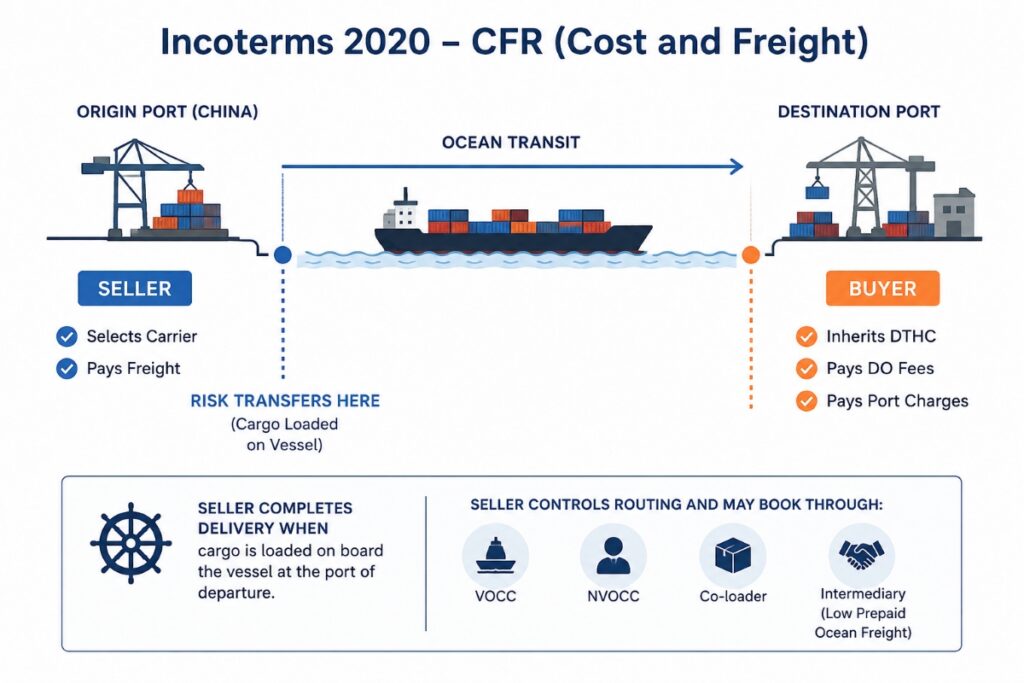
Under Incoterms 2020 CFR (Cost and Freight), the operational responsibilities and financial risks transfer at two distinct geographic points:
[ Origin Port (China) ] ------------ Ocean Transit ------------> [ Destination Port ]
  |-- Seller selects Carrier -|                                   |-- Buyer inherits DTHC ---|
  |-- Seller pays Freight ----|                                   |-- Buyer pays DO Fees ----|
  |-- RISK TRANSFERS HERE ----|                                   |-- Buyer pays Port Charges|
      (Cargo Loaded on Vessel)
The seller completes their delivery obligation when cargo is loaded on board the vessel at the port of departure. Crucially, the seller controls the routing decision and may book space through an ocean vessel-operating common carrier (VOCC), a non-vessel-operating common carrier (NVOCC), a co-loader, or an intermediary offering low prepaid ocean freight rates.
Under International Chamber of Commerce (ICC) rules, the cost allocation for discharge operations depends on whether these charges are explicitly included in the seller’s contract of carriage. When an origin routing relies on a low ocean freight / high destination local charge structure, destination handling fees are billed directly to the consignee upon arrival.
Structural Drivers of Destination Charge Variance in CNF Logistics
Understanding how origin booking choices influence destination billing enables procurement managers to identify cost drivers before cargo departs.
1. Seller-Controlled Ocean Carrier and NVOCC Selection
When origin suppliers negotiate CNF terms, their primary commercial objective is minimizing origin-side expenditure. Sourcing cargo through co-loaders or regional NVOCCs often secures low ocean freight rates, but these arrangements routinely transfer administrative and local handling surcharges to the destination agent’s invoice.
2. Destination Terminal Handling Charges (DTHC)
DTHC covers physical container handling, quay crane operations, and yard positioning executed at the port of discharge. Unless the seller’s contract of carriage explicitly includes discharge costs, the ocean carrier or destination agent bills DTHC directly to the importer prior to container release.
3. Delivery Order (DO) and Destination Agent Surcharges
To secure physical release of cargo at the destination terminal, the importer or their customs broker must exchange the original Bill of Lading for a Delivery Order (DO). Destination agents assess administrative fees, document processing surcharges, and manifest transmission costs that vary significantly depending on the selected carrier network.
4. Marine Cargo Insurance Gaps and Risk Allocation
Unlike CIF (Cost, Insurance, and Freight) terms, CNF imposes no legal obligation on the seller to procure marine cargo insurance. Because risk transfers to the buyer upon loading at the origin port, transit damage, vessel jettison, or General Average declarations fall entirely under the importer’s financial liability.
5. Demurrage, Detention, and Documentation Timing
Demurrage charges accrue when containers remain inside port terminals past the carrier’s allowed free time. Detention penalties apply when empty containers are returned late to designated depots. Delays in releasing original Bills of Lading or executing telex releases by origin forwarders directly trigger daily storage penalties.
Pre-Sailing Audit Framework: The Destination Charges Checklist
To maintain total cost transparency, procurement teams should mandate that Chinese suppliers and origin forwarders complete this standardized Pre-Sailing Destination Charges Audit Checklist prior to issuing shipping instructions:
| Audit Item | What Importer Must Request | Operational / Risk Objective |
| Carrier / NVOCC Identity | Exact legal name of VOCC / NVOCC | Verify destination agent network and carrier reputation |
| Port of Discharge & Terminal | Exact terminal name and port code | Confirm specific DTHC rates and terminal handling rules |
| Destination TH C (DTHC) | Itemized amount + designated payer | Ensure discharge handling is audited or prepaid |
| Delivery Order (DO) Fee | Exact fee structure from local agent | Prevent unquoted administrative surcharges at arrival |
| Documentation Fees | All destination processing fees | Itemize manifest filing and document release fees |
| Destination Agent Fees | Complete list of local agency charges | Eliminate unverified third-party handling surcharges |
| Port Free Time (Demurrage) | Guaranteed free days at terminal | Secure sufficient window for customs entry and clearance |
| Container Free Time (Detention) | Guaranteed free days for drayage | Avoid empty container return penalties |
| Telex / Electronic Release | Required release deadline & fee | Prevent physical paper B/L transit delays |
| Quote Validity Window | Expiration date relative to ETD | Protect against sudden Peak Season Surcharges (PSS) |
Commercial Landed Cost Comparison: CNF vs. FOB vs. DDP
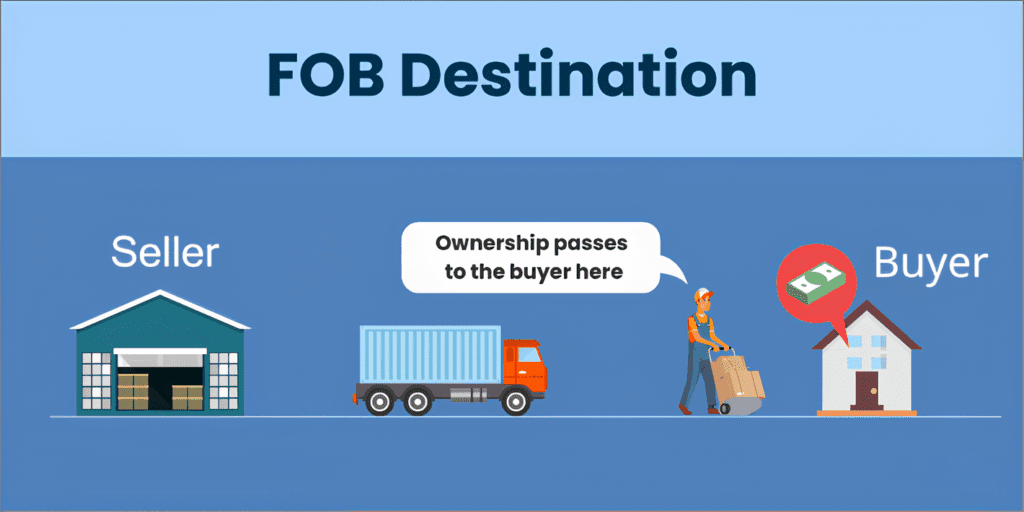
Evaluating cost predictability, routing control, and risk management across common Incoterms helps procurement divisions optimize international trade lanes:
| Logistics Feature | CNF (Cost & Freight) | FOB (Free on Board) | DDP (Delivered Duty Paid) |
| Carrier Selection Control | China Seller / Origin Agent | Importer / Nominated Forwarder | Logistics Partner |
| Destination Charge Visibility | Unreviewed Prior to Arrival | Pre-Negotiated by Importer | Inclusive Single-Rate Quote |
| Transit Risk Transfer Point | Loaded on Vessel at Origin | Loaded on Vessel at Origin | Final Delivery Address |
| Marine Insurance Procurement | Importer Must Procure | Importer Must Procure | Managed by Logistics Partner |
| Customs Clearance & Duties | Managed by Importer | Managed by Importer | Managed by Logistics Partner |
| Landed Cost Predictability | Moderate (Risk of Unquoted Fees) | High (Direct Freight Audit) | Maximum (Complete Cost Lock) |
Operational Workflow: Step-by-Step CNF Audit Process
Executing a disciplined pre-sailing freight audit ensures every destination surcharge is identified, validated, and accounted for before cargo departs origin ports:
- Request Origin Booking Confirmation: Obtain the draft Bill of Lading, master booking reference, and exact ocean carrier details from the supplier 72 hours prior to cargo loading.
- Issue Destination Audit Checklist: Transmit the standardized audit checklist to the origin forwarder or seller, requiring explicit confirmation of all destination fee structures.
- Verify Local Agent Schedule: Contact the carrier’s destination agent or your nominated customs broker to validate local DO, DTHC, and administrative fee schedules against the supplier’s declaration.
- Procure Primary Marine Cargo Insurance: Confirm active marine cargo insurance coverage (Institute Cargo Clauses A) effective from origin warehouse pickup through final destination arrival.
- Confirm Free Time Allowances: Ensure the ocean carrier confirms at least 7 to 14 days of combined demurrage and detention free time in writing on the Bill of Lading.
- Authorize Vessel Departure: Release payment or authorize vessel loading only after all destination charge line items are fully audited and accepted.
Common Sourcing Vulnerabilities in CNF Supply Chains
Failure to audit CNF freight structures before sailing introduces compounding operational risks across global trade lanes:
- Unbudgeted Landed Cost Variance: Unquoted destination agent fees reduce profit margins on imported inventory.
- Cargo Release Holds: Fee disputes between importers and destination agents halt Delivery Order issuance, stalling final-mile transportation.
- Storage and Demurrage Accumulation: Cargo held at port terminals due to documentation delays rapidly incurs daily storage fines.
- Uninsured Transit Capital: Cargo damage or loss during ocean transit without independent marine insurance leads to unrecoverable financial losses.
How Vantage Forwarding Supports Enterprise Sourcing
Vantage Forwarding provides B2B importers with 4PL logistics orchestration, transparent freight auditing, and end-to-end supply chain visibility.
Our logistics team reviews supplier-selected CNF arrangements prior to vessel loading, verifying carrier credentials, auditing destination fee structures, and securing marine insurance coverage. When destination charge structures present operational risk, we provide transparent FOB freight management or all-inclusive DDP solutions to guarantee landed cost stability.
Partner with a compliance-driven forwarder to eliminate destination port surprises and secure your international supply chain.
Frequently Asked Questions
What is the primary difference between CNF and CFR?
CNF (Cost and Freight) is an established trade acronym widely used in commercial contracting. CFR is the official standardized term defined under International Chamber of Commerce (Incoterms 2020) rules. Both terms represent identical operational and risk allocations.
Can an importer reject destination port charges under CNF terms?
No. Ocean carriers and local agents hold a legal lien over cargo. Importers must settle all mandatory terminal handling fees, delivery order surcharges, and administrative fees before the agent issues a Delivery Order for container release.
Why do sellers prefer CNF terms over FOB terms?
Sellers often prefer CNF terms because controlling ocean freight bookings allows them to leverage local volume rebates, manage origin consolidation, or utilize prepaid freight structures that lower their upfront export costs.
Who is responsible for buying cargo insurance under CNF terms?
Under CNF terms, neither party is legally required by the Incoterm to procure insurance. However, because risk transfers to the buyer upon loading at the origin port, the importer must purchase independent marine cargo insurance to protect against transit loss.
How does auditing CNF charges before sailing prevent demurrage?
Auditing charges before sailing ensures destination agents, terminal free time, and documentation requirements are verified early. This enables pre-clearance filings and eliminates documentation holds that cause port demurrage.

 English
  Chinese
  Arabic
  French
  German
  Portuguese
  Spanish