Table of Contents
On February 20, 2026, the US Supreme Court issued a 6-3 ruling that changed the duty structure on every China-US shipment. The Court struck down the IEEPA-based tariffs — ruling that emergency powers law does not authorize the president to impose tariffs unilaterally.
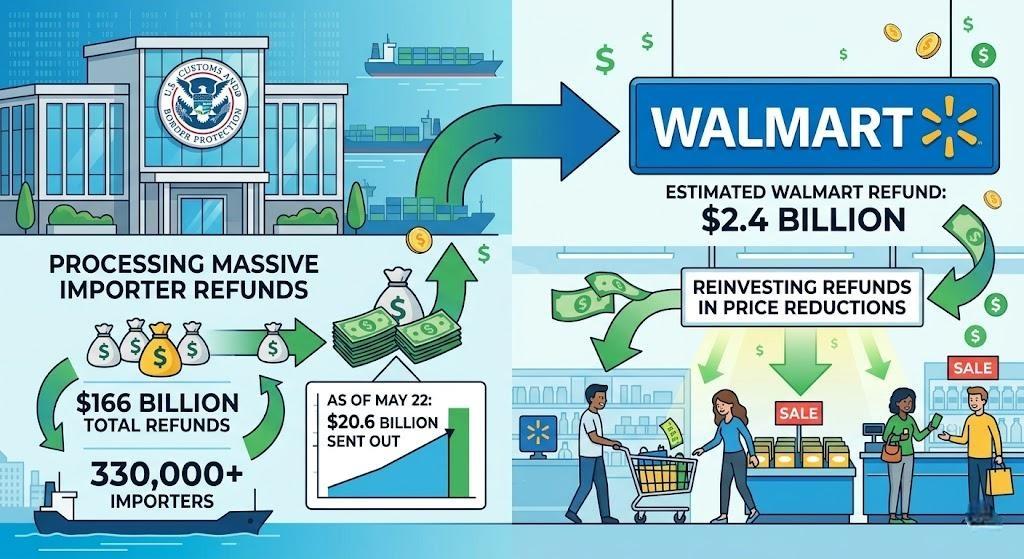
The result: US Customs and Border Protection is processing approximately $166 billion in refunds to 330,000+ importers. As of May 22, CBP had already sent out $20.6 billion.
Walmart — which stands to recover an estimated $2.4 billion — told investors it plans to invest those refunds in price reductions.
For Chinese exporters shipping to the US, this is not just financial news. It is a DDP landed cost, pricing, and freight planning problem that requires an immediate operational response.
What Was Struck Down — and What Stays in Effect
This is the most misunderstood part of the ruling. The Supreme Court did not eliminate all China tariffs. It struck down the IEEPA layers only.
| Tariff Type | Status | Typical Rate |
|---|---|---|
| Section 301 (Lists 1–4A) | ✅ Active | 7.5–25% by product |
| MFN base duties (HTS) | ✅ Active | Varies by HS code |
| Section 232 (steel, aluminum) | ✅ Active | 25% |
| IEEPA “reciprocal” tariffs | ❌ Struck down | Refund in process |
| IEEPA “fentanyl” tariffs on China | ❌ Struck down | Refund in process |
The net effect: total duty burden on China-origin goods has decreased — but Section 301 tariffs, which have been in place since 2018, remain fully active. The Federal Circuit upheld their legality in September 2025. They are not part of the current refund process.
The DDP landed cost on your China-US shipments is lower than it was in 2025. If your freight forwarder’s duty estimates haven’t been updated to reflect this, you are overstating your costs — and potentially losing deals on incorrect numbers.
Can Chinese Exporters Claim the Tariff Refund?
No. This is one of the most common questions — and the answer matters.
Under US federal trade law, only the importer of record can file for IEEPA tariff refunds. That is the US company that paid the duties at customs clearance. Chinese exporters are not importers of record and have no direct claim to these refunds.
What this means in practice:
- Your US buyers are receiving the refunds — not you
- The refund capital stays on the US side of the transaction
- How your buyers deploy that capital determines your order environment in H2 2026
If you’re shipping under DDP (Delivered Duty Paid) terms and your freight forwarder is the importer of record, they may be eligible for refunds on duties paid on your behalf. Confirm this with your logistics partner — and ensure the duty savings flow back into your updated landed cost quote, not into the forwarder’s margin.
Will Walmart’s Price Cuts Affect Your Factory Price?
Almost certainly, yes — indirectly.
Here is the supply chain logic:
- Walmart receives $2.4B in refunds and invests in lower retail prices
- Competing retailers (Target, Amazon, Costco) face pressure to match
- Retail price compression transmits back to wholesale buyers
- Wholesale buyers use the lower-cost environment to renegotiate supplier unit prices
- Your buyer asks for a price reduction — citing “market conditions”
Walmart is not alone. Ford recorded a $1.3B benefit from IEEPA refunds. GM raised full-year guidance by $500M. Across US retail and manufacturing, companies that paid IEEPA duties are now holding significant cash recoveries — and they will compete with it.
The counter-intuitive reality: tariff refunds are bad news for Chinese suppliers. They benefit the importer. The importer uses the windfall to compete harder — and the pressure lands on your unit price.
The right move: negotiate from data, not reaction. Know your actual current landed cost before your buyer calls.
How to Negotiate with US Buyers After the Tariff Refund
The buyers who received IEEPA refunds fall into three behavioral categories. Knowing which one you’re dealing with shapes your negotiation:
Buyers investing refunds in price: Will approach you with a specific reduction request, citing “market price adjustments.” Come prepared with your updated Section 301-only landed cost model. Show them the duty reduction already happened in your cost structure — and that further reductions require a unit price negotiation based on volume, not entitlement.
Buyers stockbuilding with refunds: May accelerate Q3 ordering to deploy the capital before it sits idle. This is a volume opportunity. Position your freight capacity and lead times ahead of the conversation — forwarders with available space get the order.
Buyers holding refunds as margin: Will be more price-resistant and unlikely to increase orders. Focus on compliance and reliability as differentiators rather than price, and wait for a more favorable negotiating window.
Ask directly on your next buyer call: “How are you treating the tariff refund in your H2 planning?” The answer tells you everything about what kind of conversation is coming.
How to Update Your DDP Landed Cost After the Ruling
This is the most urgent operational task for any China-US shipper currently quoting on DDP terms.
Step 1: Identify which IEEPA layers applied to your HS code The IEEPA tariffs added different percentages depending on product category and timing. Your customs broker or freight forwarder can pull the specific layers that applied to your goods in 2025.
Step 2: Recalculate duty on Section 301-only basis Remove all IEEPA components. Apply only: HTS base rate + Section 301 list rate (confirm which list: 1, 2, 3, or 4A). Use the USITC HTS database to verify current rates.
Step 3: Request updated DDP quotes from your freight forwarder Any DDP landed cost estimate built before February 20, 2026 is based on incorrect duty rates. A compliant freight forwarder should update your quotes proactively — if they haven’t, request it explicitly.
Step 4: Check 2025 entry documentation for refund eligibility If your freight forwarder acted as importer of record on DDP shipments in 2025, they may have IEEPA refund claims open. Verify this and confirm how those refunds affect your ongoing rate arrangement.
⚠️ Refund filing deadline: Importers generally have 180 days after goods are “liquidated” to file refund protests with CBP. For 2025 entries, the clock is running. If your US buyer is the importer of record and has not filed, flag this to them — it positions you as a logistics-aware supply chain partner, not just a price.
What Stays the Same: Section 301 Is Not Going Away
Despite the refund wave, Chinese exporters should not expect the US-China tariff environment to normalize.
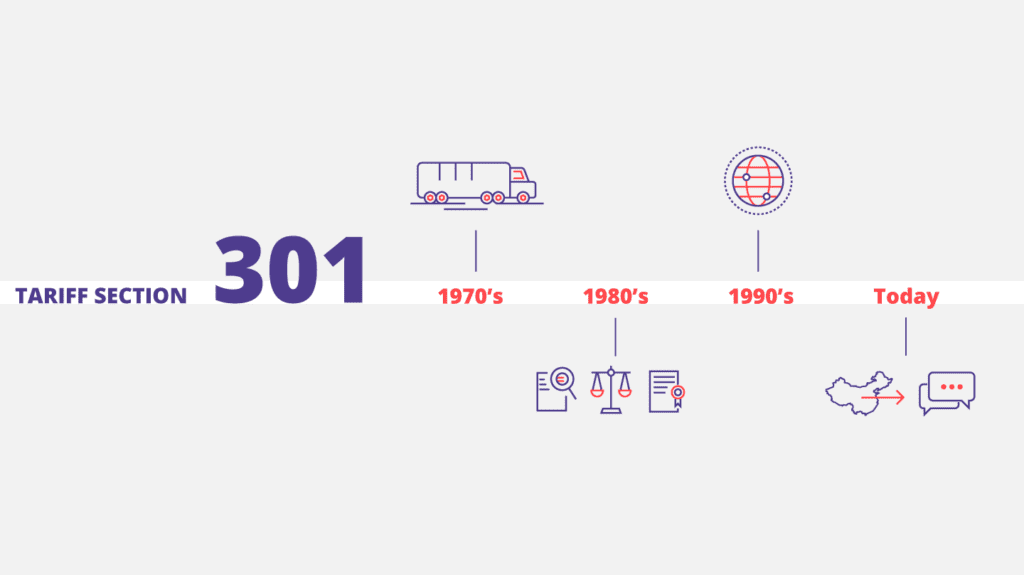
Section 301 tariffs were designed as a permanent trade policy instrument, not emergency measures. They are not affected by the IEEPA ruling. In March 2026, USTR initiated new Section 301 investigations into 16 economies — including China — targeting structural manufacturing overcapacity. Public hearings were set for May 5, with outcomes expected by late July.
The structure of US-China trade friction has changed in form, not in direction. The post-IEEPA environment is lower-cost than 2025 — but the policy direction continues to generate new tariff mechanisms. Build your supply chain for ongoing volatility, not a return to pre-2018 conditions.
5-Point Action Checklist Before Your Next US Shipment
| # | Action | Why It Matters |
|---|---|---|
| 1 | Recalculate HS code duty rate (Section 301 only) | IEEPA layers removed; old rate = wrong landed cost |
| 2 | Request updated DDP freight quote | Any quote pre-Feb 20 overstates duty cost |
| 3 | Confirm importer of record on DDP shipments | Forwarder may hold refund claims on your behalf |
| 4 | Check 2025 entry documentation accuracy | Errors delay buyer’s refund claim; positions you as reliable partner |
| 5 | Model buyer negotiation scenarios | 5%, 10%, 15% unit price reduction — know your floor before the call |
Frequently Asked Questions
Q: Can Chinese exporters claim the US tariff refund directly? No. Only the US importer of record — the company that paid duties at customs clearance — can file for IEEPA refunds. Chinese exporters are not eligible. However, if your freight forwarder acted as importer of record under DDP terms, they may hold refund claims on your goods.
Q: Do Section 301 tariffs still apply to China goods after the ruling? Yes. Section 301 tariffs (Lists 1–4A) were not affected by the February 2026 ruling and remain fully active. Only IEEPA-based tariffs were struck down. Your effective duty rate is lower than 2025, but Section 301 still applies.
Q: Will Walmart’s price cuts directly reduce what I can charge? Not directly — but the pressure propagates through the supply chain. When major retailers compete on price using refund capital, wholesale buyers renegotiate supplier costs. Having an updated landed cost model ready before that conversation is your strongest negotiating position.
Q: How do I update my DDP landed cost after the ruling? Ask your freight forwarder to recalculate duty estimates on a Section 301-only basis, removing all IEEPA layers. Any DDP quote produced before February 20, 2026 is based on an outdated duty structure. Request explicit confirmation that your forwarder has updated their duty calculations.
Vantage Forwarding provides China-to-US DDP freight with post-ruling landed cost recalculations built in — updated duty estimates by HS code, compliant export documentation, and transparent all-in quotes that reflect the current Section 301-only tariff environment.
Request an updated DDP landed cost quote for your US route →
Published: May 2026 Sources: Learning Resources, Inc. v. Trump, US Supreme Court (Feb 20, 2026); CBP court filing on refund processing (May 22, 2026); Walmart Q1 2026 earnings call; ABC News (May 28, 2026); Penn Wharton Budget Model; PwC Trade Insight brief (May 2026)

 English
  Chinese
  Arabic
  French
  German
  Portuguese
  Spanish