On May 14, 2026, the US Supreme Court issued a unanimous 9-0 ruling in Montgomery v. Caribe Transport II, LLC that permanently altered the liability landscape for freight brokers and third-party logistics providers operating in the United States.
For Chinese exporters and importers shipping high-value goods to the US, this ruling is not background legal news. It directly affects which logistics partners are safe to work with, how US freight insurance structures are being repriced, and why carrier vetting by your China sourcing agent or freight forwarder now carries more commercial weight than at any point in the last decade.
This article explains what happened, what it means for your supply chain, and what a professional DDP USA logistics partner should now be doing on your behalf.
What the Montgomery Ruling Actually Changed
The case originated from a 2017 highway crash in Illinois. Truck driver Shawn Montgomery lost his leg when a Mack truck operated by Caribe Transport — a carrier with a documented “conditional” safety rating from the FMCSA, and known deficiencies in driver qualification and vehicle maintenance — struck his parked vehicle.
Montgomery sued not only the carrier and driver, but also C.H. Robinson, the freight broker that had selected and dispatched Caribe Transport for the load.
For years, freight brokers used the Federal Aviation Administration Authorization Act (FAAAA) as a legal shield. Under FAAAA, federal law preempts state tort claims related to broker “services” — which brokers argued included their carrier selection decisions. That defense repeatedly succeeded in lower courts, effectively insulating brokers from negligent-hiring liability regardless of which carrier they chose.
The Supreme Court’s unanimous decision removed that shield. The Court held that state-law negligent-hiring claims against freight brokers fall within FAAAA’s safety exception — meaning states retain authority to hold brokers liable when they fail to exercise ordinary care in selecting a carrier.
The ruling puts a heavier burden on 3PLs and freight brokers to vet carriers for safety records — and even when they do, they now face the likelihood of defending themselves against lawsuits any time an injury accident occurs involving a carrier they hire.
What This Means for Freight Costs and Insurance Structures

The commercial consequences are moving fast.
For 3PLs, premiums for Contingent Auto Liability (CAL) and Professional Liability are rising sharply. Historically, brokers carried relatively inexpensive CAL because they were rarely held directly liable for road accidents. Post-Montgomery, insurers are now pricing in the “deep pocket” risk — the likelihood that a broker will be named in a lawsuit regardless of whether they operated the truck.
Spot rates, which had already risen approximately 35–40% year-over-year, are the most exposed segment to the ruling, largely because spot rates are driven by 3PL and freight brokerage negotiations. Previously, brokerages were not required to carry liability coverage beyond a $75,000 bond covering payment defaults. Asset-based carriers are required to carry $1 million in auto liability and $100,000 in cargo coverage per load. Brokers will now need to work with insurance providers to obtain coverage that has not previously existed.
The carrier insurance minimum has been $750,000 since 1980 and covers less than 1.5% of the median nuclear verdict. The broker insurance minimum is zero. The median trucking verdict is $36 million. Something has to give.
In practical terms: logistics providers that relied on minimal insurance structures to keep rates artificially low are now facing a forced repricing. The gap between compliant, well-insured logistics partners and underinsured spot brokers is about to become visible in the rate card — and in claims outcomes when things go wrong.
The Specific Risk for High-Value Goods Shipping from China
For high-value goods shipping — electronics, precision components, medical devices, luxury consumer products — the post-Montgomery environment creates a specific and compounding risk profile.
Carrier selection failure is now a direct financial liability. A broker or 3PL that selects a carrier with a conditional FMCSA safety rating, inadequate insurance, or a documented crash history is now exposed to state-law negligent-hiring claims. If that carrier damages or loses a container of high-value electronics and a driver is injured in the same incident, the broker’s liability extends well beyond the cargo claim.
The insurance gap between carriers and brokers is closing — but unevenly. Compliant 3PLs with rigorous carrier vetting programs are restructuring their insurance programs to reflect the new liability standard. Discount brokers who built their model on thin margins and minimal overhead are facing a structural cost shock that many will not survive. For importers who selected logistics partners based primarily on rate, this is the moment to reassess.
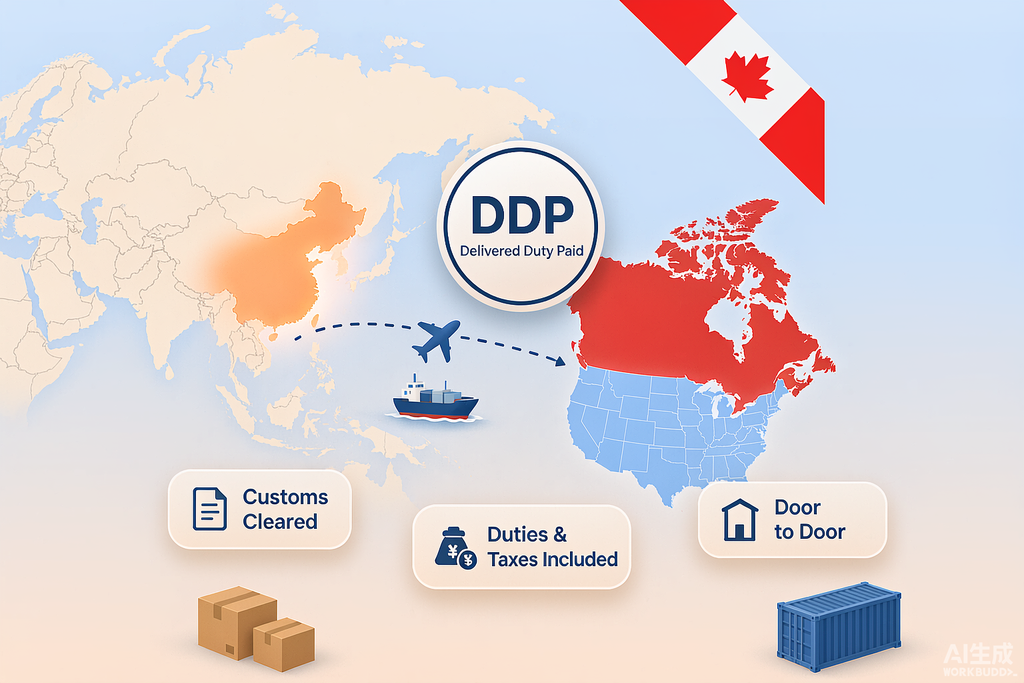
DDP arrangements put liability management in one place. Under DDP USA (Delivered Duty Paid) terms, your logistics provider takes full responsibility for the shipment from origin to final US delivery — including customs clearance, duty payment, and overland transport. That structure means one accountable party, one insurance program, and one carrier vetting standard applied from factory gate to customer door. In a post-Montgomery environment, having that accountability consolidated is not just operationally convenient — it is a risk management decision.
What a Compliant China Sourcing Agent Should Be Doing Now
The Montgomery ruling has clarified the standard against which every logistics provider handling US-bound freight will be measured. For Chinese exporters evaluating their China sourcing agent or freight forwarder partnerships, here is the compliance floor:
Mandatory carrier safety screening Every overland carrier used for US domestic legs should be screened against FMCSA’s Safety Measurement System (SMS) data. Carriers with conditional ratings, high out-of-service percentages, or recent crash involvement should be excluded from the approved carrier list — not as a preference, but as a liability management requirement.
Umbrella and excess liability coverage Post-Montgomery, a professional logistics partner handling high-value cargo should carry Contingent Auto Liability (CAL) at levels appropriate to the cargo values they handle, plus umbrella or excess liability coverage above the primary policy limits. For electronics, precision components, and other high-value categories, this is the baseline expectation — not a premium add-on.
Documented carrier vetting records Because negligent-hiring claims require plaintiffs to show the broker “knew or should have known” about carrier safety deficiencies, brokers with documented carrier approval processes — FMCSA score checks, insurance certificate verification, onboarding audits — are in a substantially stronger legal position than those without records. Ask your logistics provider what their carrier approval process looks like and whether it is documented.
White-label packaging for high-value shipments For electronics and precision goods where cargo identity increases theft risk during transit, white-label packaging removes visible product identification from the outer carton. A container of unmarked boxes presents a materially different risk profile than one branded with recognizable product logos. This is standard practice for professional high-value freight operations and a practical theft-deterrent that complements the insurance and vetting structure.
Choosing the Right Logistics Partner in a Post-Montgomery Market
The ruling reinforces the importance of choosing a brokerage partner with rigorous carrier vetting processes and financial stability — and is likely to accelerate industry consolidation toward scaled players who can absorb the compliance cost.
For Chinese exporters, the practical takeaway is straightforward: the cheapest logistics rate is no longer a safe proxy for the best logistics value. A broker who saved you $200 per container by using a conditionally-rated carrier was always exposing your cargo to risk. Post-Montgomery, that same broker is now also a direct liability exposure for the US trucking operations that move your freight.
The three questions worth asking any logistics partner before booking US-bound high-value freight:
- What is your carrier approval process, and is it documented?
- What liability insurance do you carry for the domestic US leg, including umbrella coverage?
- Can you provide DDP terms that fix my landed cost and consolidate transport liability under one contract?
If the answers are vague, that is your signal.
Vantage Forwarding operates China-to-US freight with mandatory carrier compliance screening, umbrella liability coverage on high-value cargo, and DDP USA service that fixes your landed cost from factory to final delivery. For electronics, precision components, and other high-value categories, we apply white-label packaging as standard on applicable shipments.
Request a DDP freight assessment for your US route →
Last updated: May 2026 Sources: Montgomery v. Caribe Transport II, LLC, 608 U.S. ___ (2026); FreightWaves post-Montgomery analysis (May 2026); Howden Group insurance impact briefing (May 2026); TD Cowen freight analysis (May 2026)
 English
  Chinese
  Arabic
  French
  German
  Portuguese
  Spanish