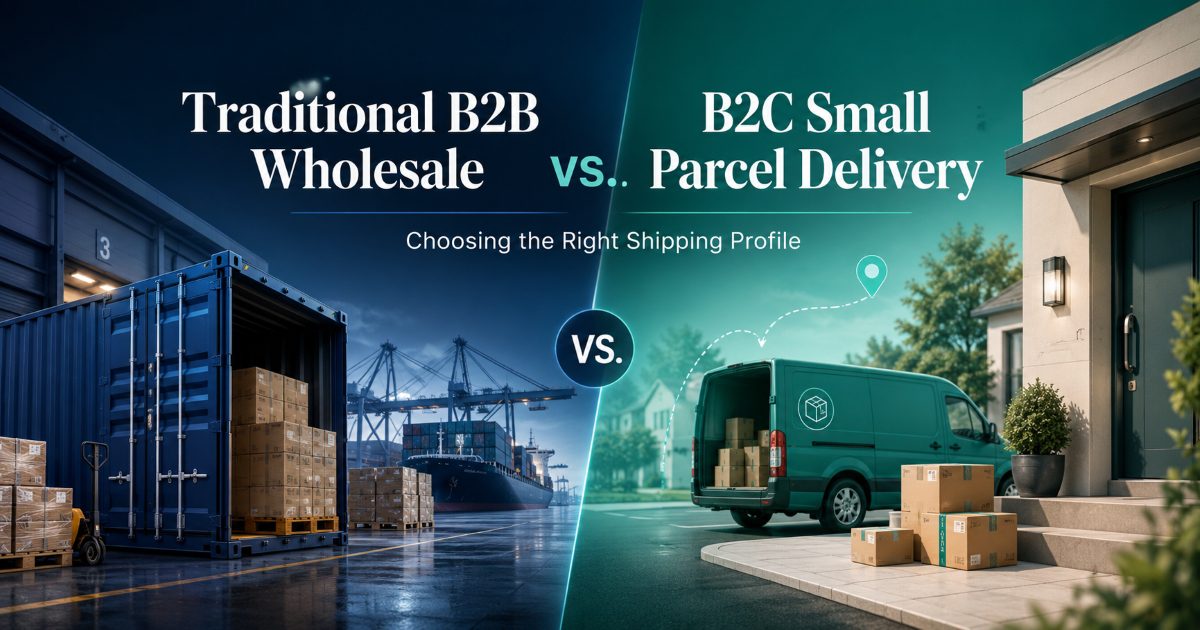
International transportation frameworks require precise alignment with corporate operational models. While traditional B2B commercial cargo and direct-to-consumer B2C small parcels both move along cross-border shipping lanes, their systemic designs are driven by fundamentally divergent mechanics.
Traditional B2B wholesale operations function like heavy industrial components, demanding absolute timing and rigid compliance at every node. Conversely, B2C delivery models focus on instant retail fulfillment, prioritizing fast processing and localized stock placement.
Importers must carefully evaluate these structural differences to select the correct transport framework. Misaligning your business model with your logistics setup creates severe operational bottlenecks, undermines supply chain resilience, and skews total landed cost transparency.
The Core Strategic Differences: A Five-Dimensional Analysis
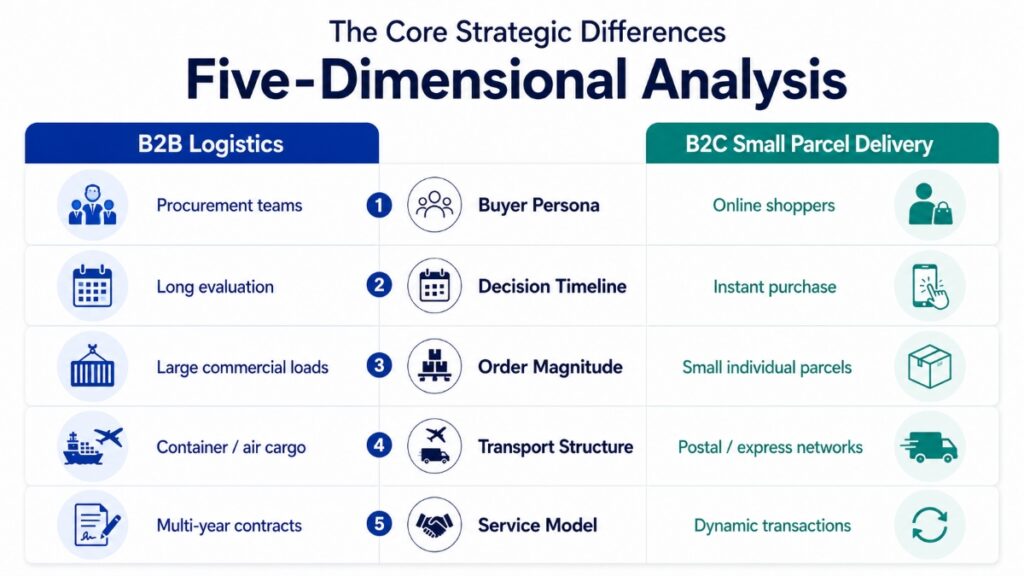
Selecting an international shipping option requires a thorough analysis of how decision timelines, freight volumes, and contractual structures impact your transit risk profiles.
Decision Timelines and Buyer Personas
B2B logistics serves institutional procurement divisions and corporate supply chain managers. These transactions involve complex corporate hierarchies, extensive standard operating procedures, and elongated evaluation windows.
B2C small parcel delivery interacts directly with individual retail consumers. In this model, purchasing behavior relies on instant conversion, where transactions complete with a single digital click.
Order Magnitudes and Capital Allocation
A single B2B shipment routinely aggregates high-value inventory or industrial machinery into large commercial volumes. These moves rely on specialized sea freight container setups or structured air cargo networks.
B2C transactions consist of decentralized, low-weight individual items. These shipments utilize global postal networks, dedicated cross-border express lines, or advanced fulfillment centers.
Service Commitments and Contractual Longevity
B2B freight procurement relies on fixed, multi-year service contracts that anchor baseline ocean and air rates. These agreements safeguard cross-border transport against volatile market shifts.
B2C fulfillment operates within a transactional environment, adjusting dynamically to rapid consumer trends and localized retail patterns.
The Operational Mechanics of B2B Wholesale Routing
Traditional B2B wholesale logistics functions as a highly tailored infrastructure. Every shipment must navigate complex multi-tiered regulatory and technical requirements.
Tiered Cost Structuring and Equipment Vetting
B2B freight relies on volumetric-tiered pricing. Moving heavy industrial freight requires specialized carrier certifications, verified equipment availability, and precise weight-to-volume load planning.
Time-Critical Enforcement Protocols
Delivery windows are managed under strict contractual terms. Delays at destination terminals can disrupt downstream production lines, triggering contractual penalties and causing immediate margin depletion.
Dedicated Compliance and Customs Vetting
B2B imports require thorough pre-clearance documentation audits. Dedicated customs specialists must reconcile supplier-level commercial invoices, packing lists, product descriptions, certificates of origin, and phytosanitary or industrial inspection data before the vessel departs.
For accurate UK customs classification for luxury retail goods, all data points must align perfectly with official tariff structures to prevent costly border queries.
The Technical Drivers of B2C Small Parcel Fulfillment
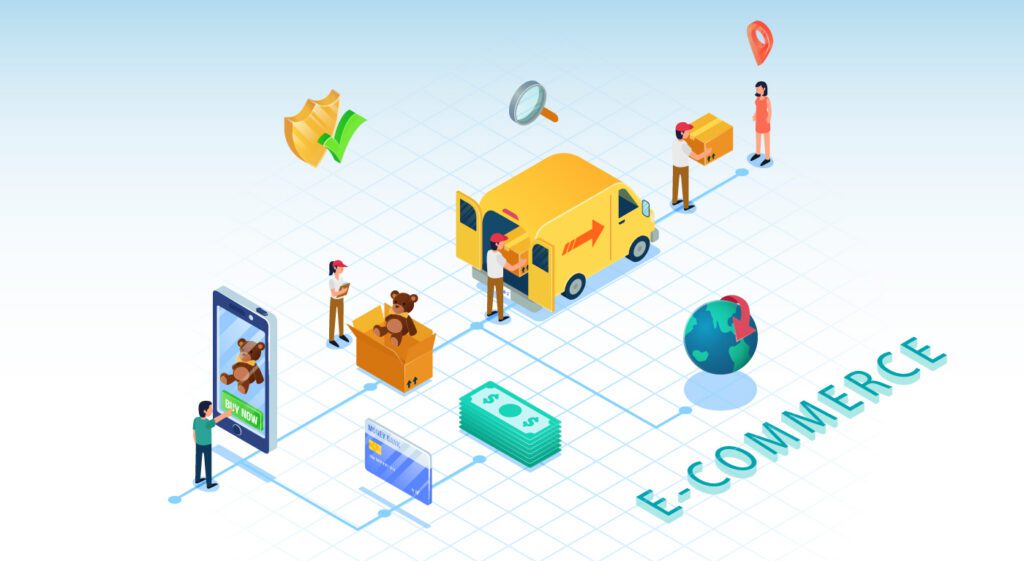
B2C small parcel delivery functions like a highly automated fulfillment network. Success relies on algorithmic efficiency, real-time tracking integration, and strict tax compliance.
Algorithmic Consolidation and Courier Routing
B2C parcel logistics utilizes regional cross-docking centers to consolidate high-frequency shipments. Merging diverse retail items into high-volume air express flows reduces baseline transport costs, allowing brands to offer competitive checkout pricing.
Tracking Integration and Reverse Logistics Vetting
Fulfillment visibility is critical for maintaining consumer retention. Shipping pipelines must push real-time tracking milestones directly to the consumer’s interface.
Furthermore, a comprehensive retail strategy requires integrated reverse logistics frameworks. This includes localized returns management, automated sorting, and efficient product relabeling at destination hubs.
Cross-Border Tax Regimes and Import Thresholds
B2C cross-border moves navigate complex, region-specific tax structures that differ significantly from standard B2B entry.
- The European Paradigm: Shipments bound for the European Union must integrate with modern Import One-Stop Shop (IOSS) systems to pre-collect and declare value-added tax (VAT) for low-value goods.
- The American Paradigm: US-bound consumer cargo leverages Section 321 de minimis exemptions, allowing qualified individual entries valued under $800 to bypass formal customs duties, which optimizes fulfillment speeds.
Choosing Your Logistics Model: Strategic Integration Frameworks
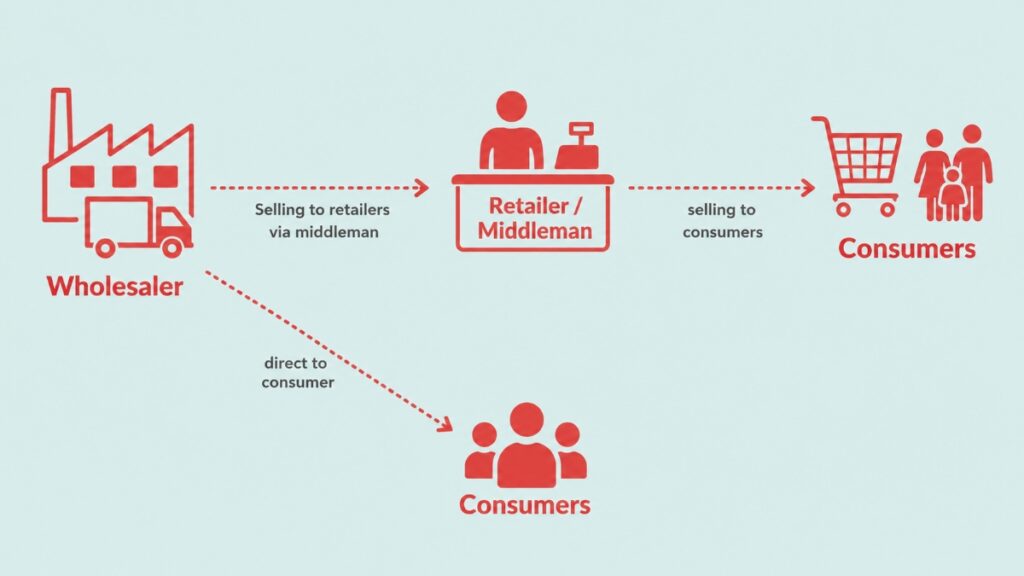
Industrial operations with dedicated manufacturing pipelines are naturally structured for the B2B wholesale lane. Industrial parts or raw apparel fabrics are best handled through comprehensive bulk freight coordination. Sourcing through major B2B supplier networks allows brands to lock in fixed five-year master supply agreements and coordinate stable factory-to-warehouse transport routes.
Conversely, direct-to-consumer digital brands must prioritize specialized B2C delivery configurations. Storing high-turnover inventory within localized fulfillment centers or third-party logistics (3PL) hubs allows brands to leverage automated pick-and-pack services, rapid kitting, and reliable final-mile delivery networks to meet rapid retail expectations.
B2B Wholesale vs. B2C Fulfillment
Two distinct cross-border operating models, with a hybrid route for businesses serving both wholesale and direct-to-consumer channels.
Bulk shipments
Individual orders
Bulk entry. Regional fulfillment. Local delivery.
Combine consolidated cross-border movement with inventory deployment and parcel-level delivery closer to the end customer.
Modern supply chains increasingly deploy sophisticated hybrid structures to maximize commercial margins. High-volume electronics and consumer retail enterprises utilize a dual-track strategy.
They move bulk inventory across international lanes under highly optimized B2B shipping profiles to capture low container-level transport costs. Once the cargo arrives at a regional fulfillment center, the operation switches seamlessly to a B2C shipping profile, utilizing localized parcel networks to execute final-mile delivery.
This hybrid approach allows enterprises to maintain total landed cost transparency while preserving supply chain resilience across all distribution channels.
A Vetting Checklist for Selecting Shipping Profiles
To ensure your cross-border logistics aligns with your target market, supply chain managers should apply this standard verification framework:
- Document Audit: Confirm that your logistics provider can manage both commercial customs clearance entries and individual low-value small parcel digital declarations.
- Infrastructure Review: Verify if the carrier provides access to physical consolidation hubs in China and specialized multi-warehouse networks across the UK and Europe.
- Value-Added Service Capability: Audit the provider’s capacity to execute advanced fulfillment tasks, including cloud-based global inventory tracking, product labeling, and multi-supplier consolidation.
- Tax Vetting: Validate that the transport lane incorporates proactive tax compliance mechanisms, including UK Postponed VAT Accounting (PVA), European IOSS management, or US Section 321 entries.
- Reverse Logistics Planning: Ensure the logistics pipeline has established regional sorting nodes to handle consumer returns and product rework efficiently.
Navigating global trade channels requires a visible, adaptable logistics strategy. Partnering with a verified, compliance-driven forwarder like Vantage Forwarding ensures these complex B2B and B2C shipping profiles are managed seamlessly, keeping your international trade routes fully protected.

 English
  Chinese
  Arabic
  French
  German
  Portuguese
  Spanish