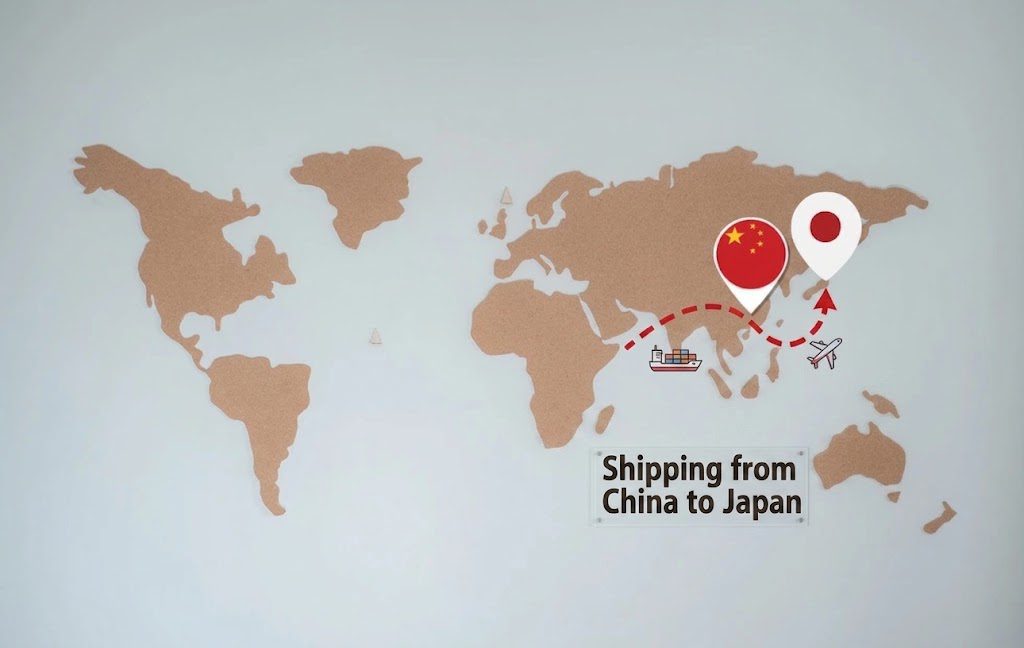
What does importing into Japan require?
Every commercial shipment into Japan needs an importer of record registered in Japan, a commercial invoice, a packing list, and a transport document. Japanese customs uses the Harmonized System, so duty rates follow the HS code of each product. On top of duty, Japan applies consumption tax (JCT) at 10 percent, which registered Japanese businesses can generally reclaim.
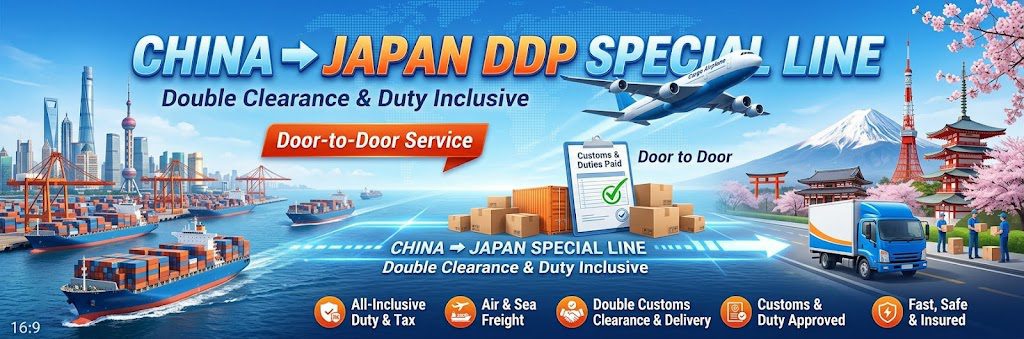
The importer of record must be a Japanese entity. A foreign seller can deliver DDP, but clearance and tax filing then run through a Japanese customs broker or a local partner, which is why DDP to Japan is usually arranged with a broker who holds the entry.
What documents does a China-Japan shipment need?
The core set is compact:
- Commercial invoice with HS codes and Incoterms
- Packing list matching the invoice line by line
- Bill of lading or air waybill
- Import declaration filed by the Japanese importer or broker
Accuracy matters more than volume. A single HS code mismatch can trigger inspection and a delay measured in days. Our importer documents checklist lists the standard set.
Which shipping mode fits the lane?
The China-Japan lane is short, so speed options are affordable:
| Mode | Transit time | Best fit |
| Sea freight (FCL/LCL) | 3 to 7 days | Bulk, standard cargo |
| Air freight | 1 to 2 days | Urgent, high-value goods |
| Express courier | 2 to 4 days | Samples, small parcels |
Sea freight between China and Japan is quick compared with most global lanes because the distance is short. Air freight is a genuine same-week option. The choice follows value and urgency, not habit.
How are duties calculated?
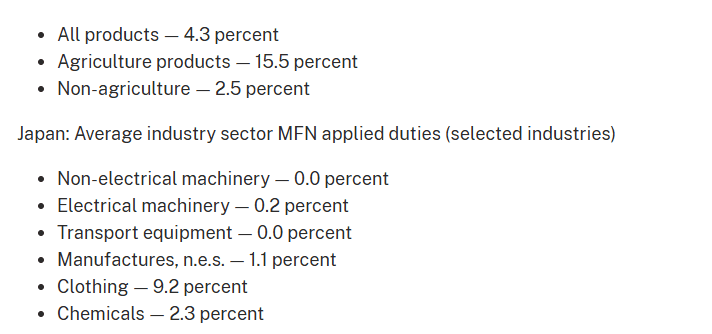
Japanese duty is ad valorem, charged as a percentage of the customs value, with the rate set by the HS code. Some goods move duty free under trade agreements, while others carry rates that vary by product. The rate is product-specific, which is why classification is the foundation of a clean shipment. Our HS code guide for electronics helps with the classification step.
Consumption tax at 10 percent applies on the duty-inclusive value. For a B2B buyer registered in Japan, the tax is an accounting item, not a cost. For a DDP seller, it is a filing obligation handled through the broker.
What are the special rules for electronics and batteries?
Electronics imported into Japan may need compliance marks depending on the product category, and any device containing a lithium battery follows IATA rules for air or IMDG rules for sea. The battery paperwork (UN38.3 summary and correct declaration) is checked at booking, not at the border, so it must be ready before the cargo is tendered. Our IATA DGR guide for lithium and magnetized cargo explains the document set.
How do you choose a Japan customs broker?
The broker is the operational anchor of a Japan shipment. Look for one that files through NACCS (the nationwide customs system), works with the destination port or airport you plan to use, and quotes clearance as a separate line so you can see the cost. A good broker confirms the HS code before the shipment departs, not after it arrives, and it keeps the importer’s records straight for the consumption tax return.
Common mistakes with China-Japan shipments
- Assuming the seller can clear goods without a Japanese importer
- Declaring HS codes that differ between invoice and packing list
- Sending battery cargo without the UN38.3 summary and missing the flight
- Under-declaring value to reduce duty and triggering inspection
- Booking air for cargo that could move by sea at a fraction of the cost
Frequently asked questions
Can a Chinese seller deliver DDP to Japan?
Yes, but clearance and consumption tax filing need a Japanese customs broker or local partner. The seller does not simply hand the goods at the border.
How fast is shipping from China to Japan?
Sea freight runs 3 to 7 days, air freight 1 to 2 days, and express courier 2 to 4 days for small parcels. It is one of the fastest international lanes from China.
Does Japan charge VAT like Europe?
Japan charges consumption tax (JCT) at 10 percent, applied at import like VAT. Registered Japanese businesses can usually reclaim it.
Are Chinese electronics duty free into Japan?
It depends on the HS code and any trade agreement coverage. Classify the product first, then confirm the rate with the broker.
Conclusion
Shipping from China to Japan is fast, but precise. Secure a Japanese importer of record, keep the HS codes consistent, prepare battery declarations early, and match the mode to the value. The lane is short enough that most delays come from paperwork, not distance, and paperwork is fully within your control.
 English
  Chinese
  Arabic
  French
  German
  Portuguese
  Spanish