
Every year, tens of thousands of commercial trucks in the United States, Canada, and Mexico are pulled off the road during routine inspections — some for days at a time. For Chinese exporters whose goods are sitting inside those trailers, the impact is direct: delayed deliveries, frustrated buyers, and supply chain disruptions that no amount of planning at the origin port can prevent.
Understanding how North American truck inspection works — and what consistently triggers violations — is not a carrier problem. It is a shipper problem. If your cargo contributes to a failed inspection, your shipment stops. Full stop.

What Is CVSA International Roadcheck?
The Commercial Vehicle Safety Alliance (CVSA) runs the largest targeted enforcement program on commercial motor vehicles in the world. Every year since 1988, it has conducted a concentrated 72-hour inspection blitz — known as International Roadcheck — across the US, Canada, and Mexico simultaneously.
During those 72 hours, nearly 15 trucks and motorcoaches are inspected every minute across North America. Inspectors work at fixed weigh stations, inspection sites, and pop-up checkpoints. The event is publicly announced months in advance, yet the failure rates remain significant every single cycle.

In 2025, the vehicle out-of-service rate was 18.1% and the driver out-of-service rate was 5.9% — nearly one in five vehicles inspected was placed out of service on the spot.
An out-of-service order means the truck stops moving. Immediately. The driver cannot legally continue until the violation is remedied. For time-sensitive freight, that window can translate directly into missed delivery windows, detention charges, and customer escalations.
Roadcheck typically runs every May. But the inspection standards that govern it — the CVSA North American Standard Out-of-Service Criteria — apply 365 days a year. Any commercial vehicle on a North American road can be subjected to a Level I inspection at any time. Roadcheck simply concentrates enforcement density for 72 hours.
What Inspectors Actually Check
Every truck going through a standard inspection is evaluated on a 37-step Level I procedure covering two areas: the driver’s operating requirements and the vehicle’s mechanical fitness.
The driver inspection covers:
- Valid commercial driver’s license (CDL)
- Hours-of-service records and ELD (Electronic Logging Device) compliance
- Medical examiner’s certificate
- Drug and Alcohol Clearinghouse status
- Seat belt usage
The vehicle inspection covers:
- Brake systems and brake adjustment
- Tires and wheels
- Cargo securement
- Lighting and electrical systems
- Coupling devices and fifth wheel
- Fuel and exhaust systems
- Steering and suspension
Focus areas change annually — in 2026, the driver focus is ELD tampering, falsification, or manipulation, and the vehicle focus is cargo securement. But the full 37-step process runs regardless of the named focus. Inspectors do not skip brakes because the focus area is cargo.
The Violations That Actually Ground Trucks
The data across multiple years tells a consistent story. Two categories dominate vehicle out-of-service orders regardless of what the annual focus area is:
Brakes — the persistent leader
Brake systems led the 2025 out-of-service list. CVSA inspectors recorded 3,304 brake system violations — 24.4% of all vehicle OOS findings — plus 2,257 additional violations for 20% defective brakes. Those two categories combined for more than 41% of all vehicle out-of-service orders in 2025.

Brake violations have topped the out-of-service list in every recent Roadcheck cycle. Focus areas change annually. Brake failures do not.
Cargo Securement — the shipper-facing risk
In 2025, 18,108 violations were issued because cargo was not secured to prevent leaking, spilling, blowing, or falling, and 16,054 violations were issued for vehicle components or dunnage not being secured. That is more than 34,000 cargo-related violations in a single year.
In CVSA’s 2025 Roadcheck results, cargo securement accounted for roughly 11% of all vehicle out-of-service violations.
This is the category where shipper behavior directly influences inspection outcomes. How freight is packed, how it is loaded, and what documentation accompanies it all affect whether a cargo securement check passes.
ELD and Hours-of-Service — the driver compliance risk
Falsification of records of duty status was the second most-cited driver violation across all FMCSA inspections in 2025, at 58,382 total violations. Five of the top ten driver violations in the 2024 FMCSA enforcement dataset were hours-of-service or ELD related.
ELD violations are a carrier compliance problem, not a shipper problem — but they ground the truck carrying your freight just the same.
Why This Matters Specifically for Chinese Exporters
The freight compliance risk landscape for Chinese exporters shipping to North America has several distinct characteristics that make this more than a background concern.
Cargo securement is directly influenced by how goods are packed at origin. A container loaded in Guangzhou or Shenzhen with inadequate bracing, loose dunnage, or stacked freight that shifts in transit creates a cargo securement problem that won’t be discovered until a North American inspector opens the trailer door. FMCSA rules require that the aggregate working load limit of tiedowns be at least half the weight of the cargo being secured. Packaging decisions made in China determine whether that threshold is met.
Tight delivery windows amplify inspection risk. Chinese exporters frequently operate on B2B contracts with fixed delivery dates — Amazon FBA check-in windows, retail distribution center appointments, seasonal stock deadlines. A truck placed out of service for 12–24 hours while a brake repair is arranged can collapse a delivery appointment entirely. There is no negotiating with an inspection order.
Carrier selection is a compliance decision. A carrier with a poor FMCSA safety rating is statistically more likely to fail inspection. Chinese exporters who select freight partners based solely on rate — without checking carrier safety scores — are accepting a compliance risk they may not fully understand.
Inspection frequency is year-round, not just during Roadcheck. The 72-hour blitz gets the attention, but FMCSA data shows that roadside inspections happen daily across thousands of locations. Any shipment moving overland in North America at any time of year is subject to the same standard.
5 Practical Steps to Reduce Your Freight Compliance Exposure
1. Vet your carrier’s FMCSA safety rating before booking The FMCSA Safety Measurement System (SMS) is publicly accessible at ai.fmcsa.dot.gov. Before booking a carrier for US delivery, check their out-of-service rate and inspection history. Carriers with a pattern of violations are a measurable risk to your delivery timeline. A freight partner who pre-screens carriers on your behalf using FMCSA data is worth the conversation.
2. Pack for securement, not just protection The difference between “properly packed” and “FMCSA-compliant” is not always the same thing. Cargo that is adequately protected from damage may still fail a securement inspection if it can shift, lean, or create a load imbalance during transit. When loading containers for North American overland distribution, ensure freight is blocked and braced against lateral and longitudinal movement, tiedown working load limits are correctly calculated, and loose dunnage, tools, and packing materials are secured separately.
3. Build inspection-week buffer time into May delivery planning Roadcheck runs every May and is announced publicly, typically in February. For North American shipments with delivery windows in the second half of May, build a 2–3 business day buffer into your transit planning. This is not about avoiding the inspection — it is about ensuring that an out-of-service event does not collapse your delivery window entirely.
4. Require freight partners to provide carrier compliance documentation For high-value or time-critical shipments, require your freight forwarder or logistics partner to confirm the safety rating of the final-mile carrier. A professional freight partner should be able to provide this without hesitation. If they can’t, that is a gap in their service structure.

5. Add transit delay coverage to high-value shipment insurance Standard cargo insurance covers loss and damage. It does not always cover the downstream cost of a delivery delay caused by a truck being placed out of service. For shipments where late delivery triggers contractual penalties or lost sales opportunities, confirming that your insurance coverage includes transit delay is a low-cost protection worth having.
The Compliance Standard That Never Changes
The best summary of North American freight inspection culture comes from the enforcement data itself: the safest fleets in this industry do not prepare for Roadcheck. They operate Roadcheck-ready all year and treat the three-day blitz as one more Tuesday rather than a compliance emergency.
For Chinese exporters, the equivalent principle is this: freight compliance is not a seasonal concern. The inspection standards that govern North American overland transport apply every day, on every lane, at any weigh station or pop-up checkpoint. A shipment that would pass inspection in June will pass inspection in November. The inverse is also true.
The exporters who experience the fewest compliance-related disruptions are the ones who build carrier vetting, cargo securement standards, and logistics partner accountability into their standard operating procedures — not as a response to an enforcement blitz, but as the baseline expectation.
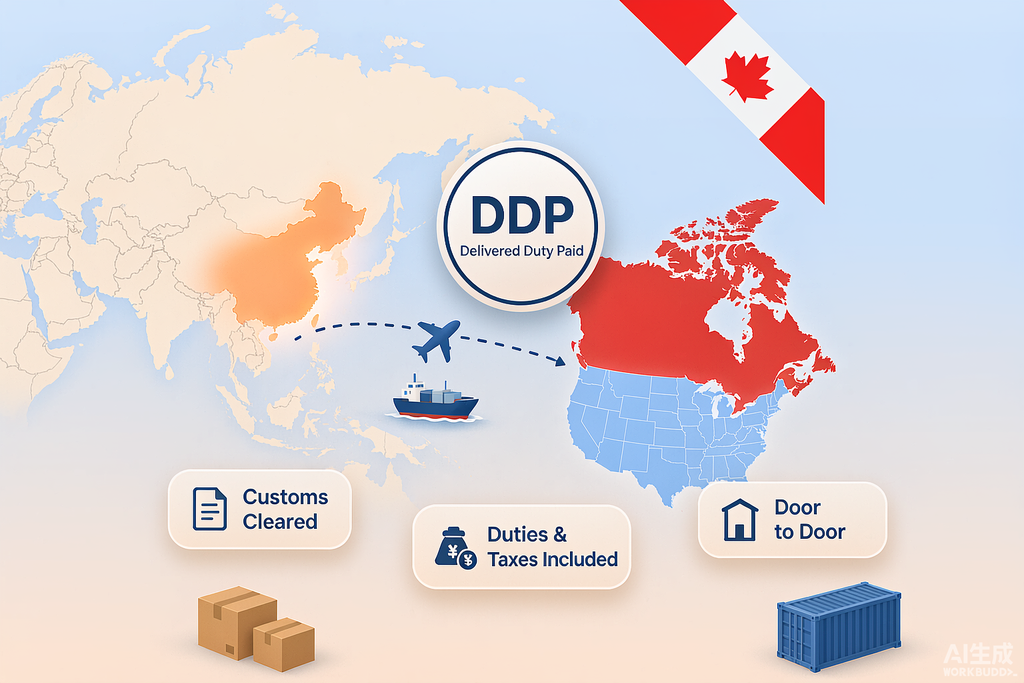
Vantage Forwarding manages China-to-US freight with carrier compliance screening built into our logistics workflow — including FMCSA safety rating checks, cargo securement guidance at origin, and DDP delivery options that put full transport accountability under one roof. Talk to our North America freight team →
Last updated: May 2026 Sources: CVSA International Roadcheck official data (2025–2026); FMCSA Safety Measurement System; FreightWaves Roadcheck analysis (May 2026)
 English
  Chinese
  Arabic
  French
  German
  Portuguese
  Spanish