Air Freight from China: 2026 Guide to Rates, Transit Times & Cost-Saving Tips
Vantage Forwarding
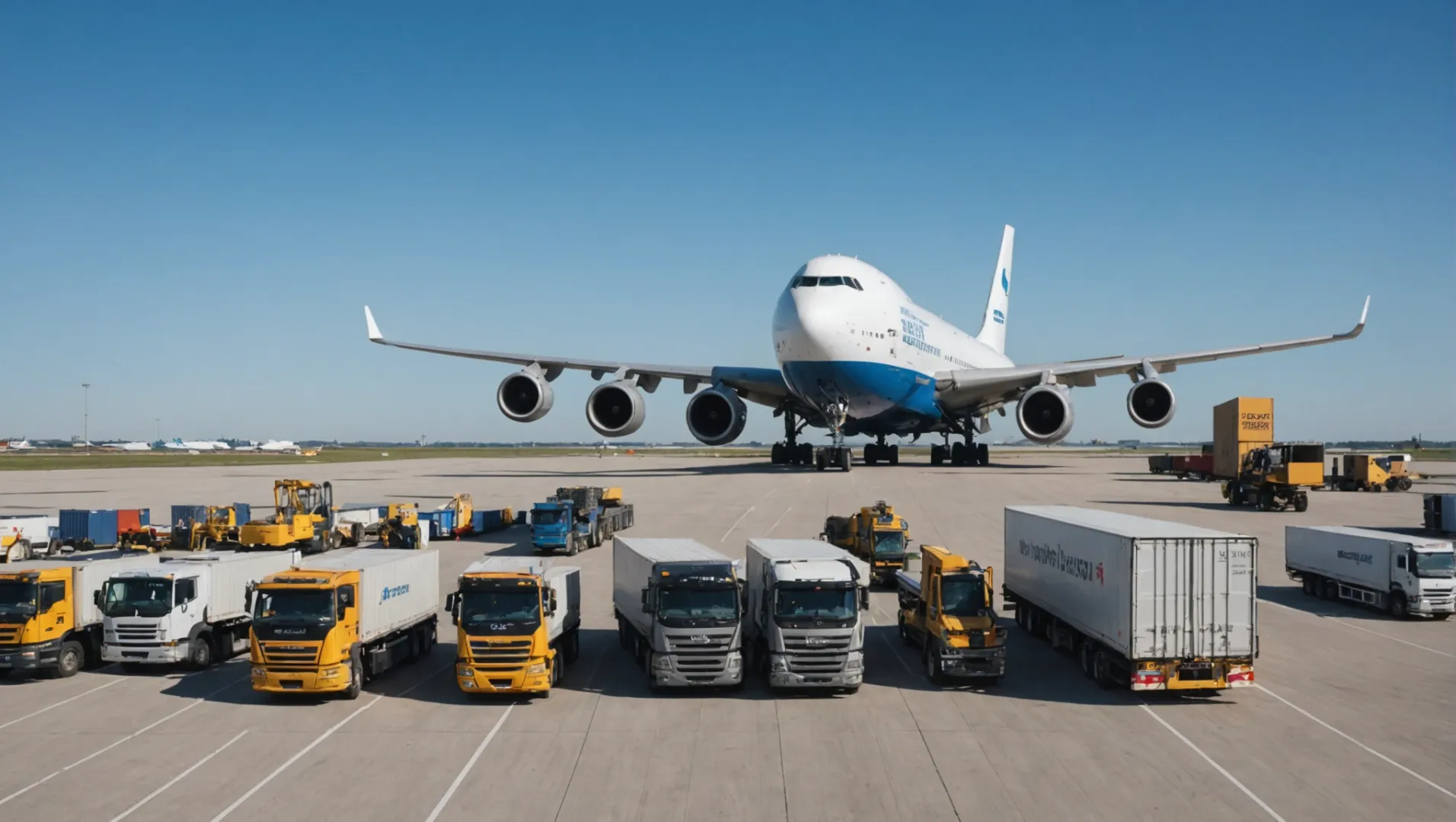
Three numbers decide whether air freight from China makes you money or burns it:
The rate per kilogram (which isn’t what you think it is)
The volumetric divisor (1:6000 vs 1:5000 – a $1,000 difference on a single pallet)
The difference between “direct” and “deferred” (2 days vs 7 days, but half the price)
This guide walks you through each one. No fluff. No recycled logistics jargon. Just what you need to ship air cargo from China in 2026 without getting ripped off.
Before analyzing pricing structures, it is vital to distinguish between the two primary methods of transporting goods by air from China: International Express Courier and Traditional Air Freight. Mixing up these two services is one of the most common mistakes new importers make, and it can result in unexpected fees and customs delays.
Feature
International Express Courier
Traditional Air Freight
Providers
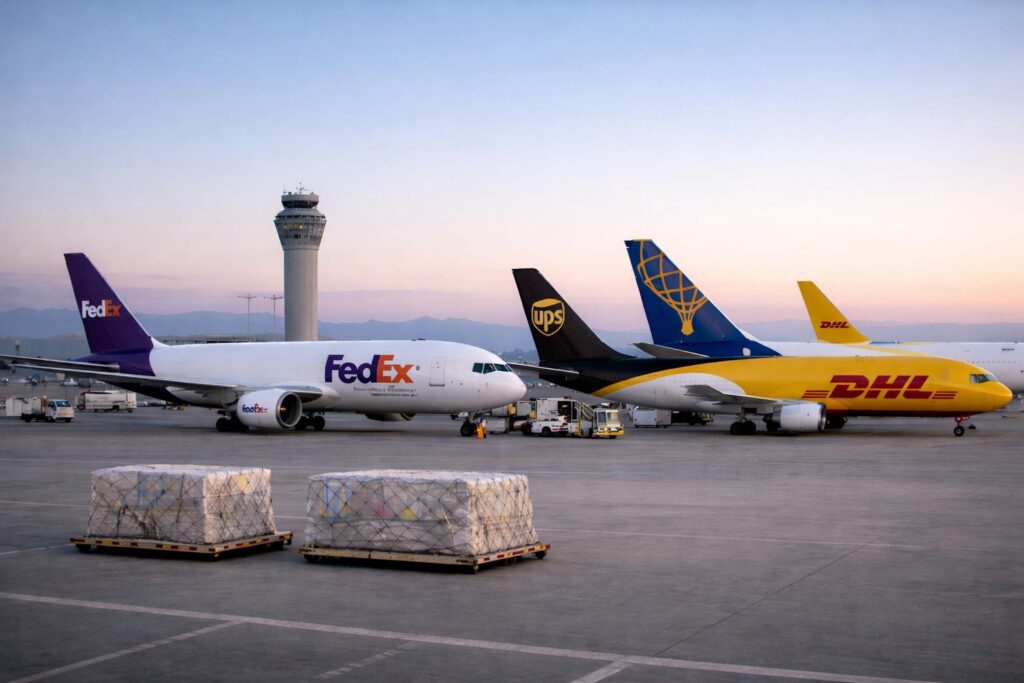
DHL, FedEx, UPS
Commercial Airlines & Cargo Carriers
Service Scope
Door-to-Door (All-Inclusive)
Airport-to-Airport (Standard)
Best For
Small Shipments (<45 kg)
Large Shipments (>45 kg to multi-ton)
Customs Handling
Handled internally by courier
Requires a dedicated customs broker
Speed
Fast (2 to 5 business days)
Moderate (4 to 9 days with ground)
International Express Courier
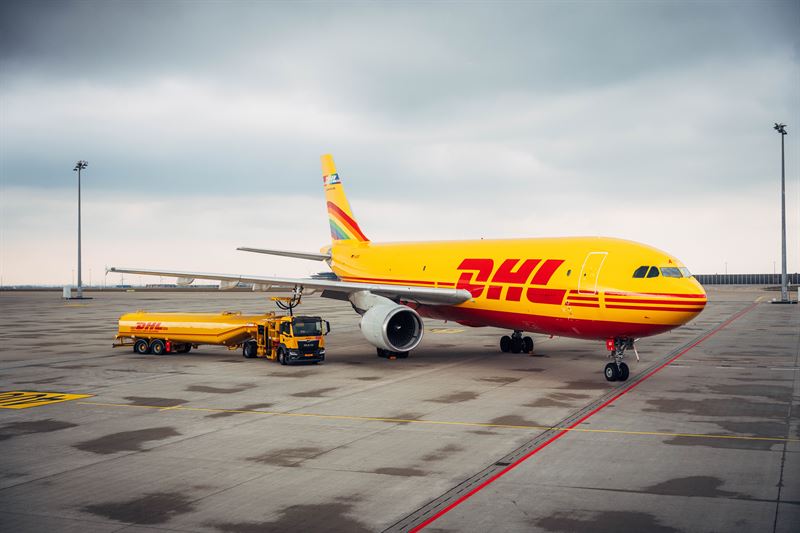
When you book through giants like DHL, FedEx, or UPS, you are paying for an all-in-one, door-to-door network. The courier picks up the goods from your supplier in Shenzhen, Ningbo, or Guangzhou, processes export customs, flies the cargo on their proprietary aircraft fleet, clears import customs at the destination, and delivers it directly to your warehouse. This method is exceptionally streamlined, making it ideal for high-value items, urgent product samples, or shipments weighing less than 45 kg.
Traditional Air Freight
Traditional air freight from china operates on an airport-to-airport model. It relies on the cargo space of commercial passenger flights (belly cargo) or dedicated main-deck freighters operated by carriers like Cathay Pacific, China Southern, or Atlas Air.
With traditional air freight, the base rate covers only the flight from the origin airport (e.g., PVG or SZX) to the destination hub (e.g., LAX or FRA). You or your freight forwarder must handle local trucking on both ends, export warehousing, terminal handling fees, and dedicated customs clearance. While it involves more logistical touchpoints, it becomes significantly more cost-effective than express shipping for cargo exceeding 45 kg to 100 kg.
Understanding how airlines compute china air cargo rates is essential for accurately budgeting your logistics costs. The most critical rule to remember is that air freight charges are based on Chargeable Weight, which is the greater value between the shipment’s Gross Weight (actual weight on a scale) and its Volumetric Weight (the space it occupies in the cargo hold).
Aplanes have a strict spatial capacity alongside a maximum weight limit. If you are shipping a metric ton of lightweight items, like cotton pads or inflatable pool floats, your cargo will fill up the plane long before it reaches the maximum weight capacity. Conversely, if you are shipping solid iron cast-iron skillets, the plane will hit its weight limit while leaving plenty of open space in the hold. To balance this out, airlines use a standardized formula to convert physical volume into a “weight equivalent.”
The Air Freight Volumetric Formula
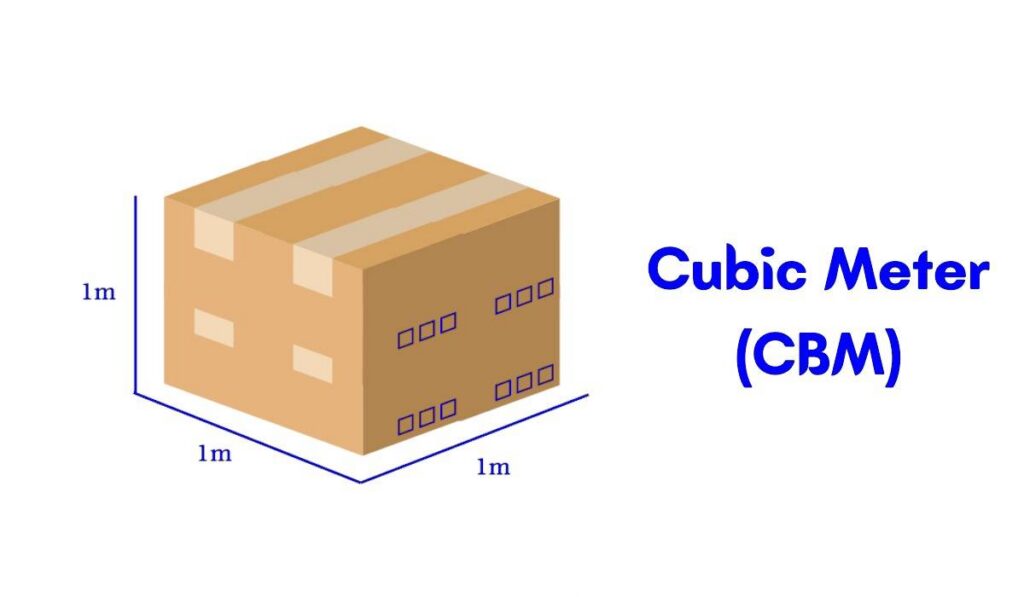
For standard air cargo, the industry uses a volumetric ratio of 1:6000 (expressed as 1 cubic meter equals 167 kg) or 1:5000 for express couriers.
Traditional Air Freight Formula:(Length x Width x Height in cm) / 6000 per package.
Express Courier Formula:(Length x Width x Height in cm) / 5000 per package.
Example: Imagine you are shipping 10 cartons from Guangzhou to New York. Each carton weighs 12 kg and measures 50 cm x 40 cm x 40 cm.
Actual Gross Weight: 10 cartons x 12 kg = 120 kg
Total Volume: 0.5m x 0.4m x 0.4m x 10 = 0.8 cubic meters
Air Freight Volumetric Weight:(50 x 40 x 40) / 6000 = 13.33 kg per carton. For 10 cartons, that equals 133.3 kg.
Because the Volumetric Weight (133.3 kg) is higher than the Actual Gross Weight (120 kg), the airline will bill you based on 133.3 kg.
To make it easy to assess your upcoming shipments, use our interactive calculation tool below to compare your actual weight against volumetric metrics instantly.
Surcharges That Make Up the Total Rate
When a forwarder quotes you china air cargo rates, that rate is typically broken down into several lines or presented as an “all-in” figure. It is important to know what these components are so you can spot hidden markups:
Air Freight Base Rate (AF): The core carrier charge for transportation between airports.
Fuel Surcharge (MYC): A variable fee pegged to global jet fuel price fluctuations.
Security Surcharge (SCC): Fees for airport security screenings and X-ray processing at Chinese departure hubs.
Terminal Handling Charges (TATC/Origin THC): The cost of handling, loading, and consolidating cargo into Unit Load Devices (ULDs) at the airport warehouse.
Export Customs Clearance Fee: The cost to file the export declaration documentation with China Customs.
3. Average Air Freight Cost Per KG from China (2026 Market Benchmarks)
Air freight rates fluctuate significantly throughout the year. While prices are highly volatile, having a baseline understanding of weight brackets helps you evaluate whether a quote from a forwarder is reasonable.
In air cargo logistics, pricing scales dynamically based on volume. The higher the weight bracket of your cargo, the lower the rate per kilogram. Airlines classify cargo rates into specific brackets, typically written as: +45 kg, +100 kg, +300 kg, +500 kg, and +1000 kg.
Below is an indicative benchmark table showing average seasonal costs per kilogram for standard air cargo from major Chinese logistics hubs (like Shanghai PVG, Shenzhen SZX, or Hong Kong HKG) to key Western destinations.
Destination Region
Weight Bracket
Low Season (Jan–Aug)
Peak Season (Sep–Dec)
United States (LAX/JFK)
45 – 100 kg
$4.50 – $6.00 / kg
$7.50 – $11.00 / kg
100 – 300 kg
$4.00 – $5.20 / kg
$6.80 – $9.50 / kg
300 – 500 kg
$3.50 – $4.80 / kg
$6.00 – $8.50 / kg
500+ kg
$3.00 – $4.20 / kg
$5.50 – $7.80 / kg
Europe (FRA/CDG/AMS)
45 – 100 kg
$4.00 – $5.50 / kg
$6.50 – $9.50 / kg
100 – 300 kg
$3.50 – $4.80 / kg
$5.80 – $8.20 / kg
300 – 500 kg
$3.20 – $4.20 / kg
$5.20 – $7.50 / kg
500+ kg
$2.80 – $3.80 / kg
$4.80 – $6.80 / kg
United Kingdom (LHR)
100 – 500 kg
$3.60 – $4.90 / kg
$6.00 – $8.90 / kg
Note: These rates represent standard airport-to-airport freight. They do not include final local delivery, customs brokerage fees, or destination duties.
The Seasonality Factor: Tracking the Highs and Lows
The air cargo calendar is divided into distinct periods that dictate market pricing:
The Q4 Peak Season (September to December): Driven by Black Friday, Cyber Monday, Christmas shopping preparations, and year-end inventory restocks. During this window, e-commerce giants lock up massive amounts of charter space, causing market rates to double or even triple. Space becomes extremely limited, and cargo roll-overs (delays where your cargo is pushed to a later flight) are common.
The Pre-Chinese New Year Rush: Occurring roughly 3 to 4 weeks before Lunar New Year (which typically falls between late January and mid-February). Factories across China shut down entirely for 2 weeks, prompting importers to rush production and ship everything out simultaneously, causing a dramatic 10-day price spike.
The Slack Season (March to August): This is the ideal time for standard restocks. Shipping volumes drop, plane capacity opens up, and rates generally bottom out, giving you excellent leverage to negotiate optimal spot rates.
4. Air Freight Transit Times from China to Major Destinations
When choosing air shipping china, you are paying for speed. However, “transit time” can mean different things depending on how the route is structured. A direct flight takes significantly less time than an indirect routing involving transshipment hubs.
Direct vs. Indirect Routing
Direct Flights: Your cargo is loaded at an airport like Shanghai (PVG) and flies straight to Los Angeles (LAX) or Frankfurt (FRA). The actual flight time is only 10 to 15 hours. Once you add origin handling, customs clearance, and terminal deconsolidation, the total door-to-door timeline is typically 3 to 5 days.
Indirect / Transshipment Routings: To save money, carriers often route cargo through intermediary hubs (e.g., Incheon ICN, Taipei TPE, or Bangkok BKK). While the base air freight rate is lower, your goods must be unloaded, sorted, and re-loaded onto a connecting flight. This adds handling risks and extends the door-to-door delivery timeline to 6 to 10 days.
5. The Step-by-Step Air Freight Process
To execute air freight smoothly, a precise, chronological sequence must be followed. Misordering steps or failing to prepare documentation ahead of schedule will instantly lead to missed flight bookings and costly storage penalties at airport terminals.
Here is exactly how an expert freight forwarder like Vantage Forwarding manages your shipment journey from factory floor to destination warehouse:
1.Cargo Pickup and Domestic Transit:Day 1。
Your freight forwarder coordinates with your supplier across major manufacturing zones. The goods are securely packed, palletized, labeled with shipping marks, and trucked to an export customs warehouse at airports like Hong Kong, Shenzhen, or Shanghai.
2.Warehouse Receipt and Measurement Audit:Day 1 – 2。
The cargo arrives at the airport terminal warehouse. Operators perform an official weight and volume audit using calibrated scales and laser dimension scanners to establish the billable Chargeable Weight.
3.China Export Customs Clearance:Day 2。
The export brokerage team submits the customs declaration documentation (Commercial Invoice, Packing List, and Export Licenses). Clearance is secured before the scheduled flight cutoff time.
4.Air Transport and Flight Inbound:Day 3。
The goods are consolidated into specific aircraft Unit Load Devices (ULDs) or loaded as loose cargo onto the booked flight. The plane transits from China to the destination hub airport.
5.Destination Customs Clearance and De-palletization:Day 4。
Upon touchdown, the local customs broker submits import entries to clear the cargo. Once cleared, the airline transfers the ULDs to an off-dock warehouse where pallets are broken down for final sorting.
6.Last-Mile Delivery:Day 4 – 5。
Local cargo trucks or couriers pick up the individual cartons or pallets from the warehouse, executing final delivery directly to your commercial address, fulfillment center, or residential doorstep.
Air freight is subject to much stricter safety and customs oversight than ocean freight. Failing to properly declare your cargo parameters can lead to severe fines, confiscation, or your company being blacklisted by commercial airlines.
A wide array of common retail items are classified as hazardous or restricted under international aviation safety regulations:
Lithium-Ion Batteries: Found in everything from smartphones and power banks to electric scooters and smart home devices. These require strict UN38.3 testing certification, specialized safety packaging, and must be flown on dedicated cargo freighters rather than passenger planes.
Liquids, Powders, and Gels: Cosmetics, skincare items, creams, and chemical compounds require a verified MSDS (Material Safety Data Sheet) and a formal Appraisal Report for Cargo Transport by Air issued by authorized Chinese testing laboratories before airlines will accept them.
Magnetic Materials: Items containing powerful magnets (such as high-end speakers, electric motors, or industrial equipment) can interfere with an aircraft’s navigation systems. These must undergo a specialized magnetic shielding inspection and test at the departure airport.
Shifting Customs Landscapes
The global regulatory environment is tightening rapidly, meaning compliance documentation must be flawlessly executed before your cargo leaves China:
United States Market Changes: Strict enforcement of the UFLPA (Uyghur Forced Labor Prevention Act) requires importers to maintain clear traceability records detailing raw material sourcing down to the base component level. Furthermore, stricter scrutiny over low-value imports means that high-volume air shipments must have precise, un-aggregated digital manifest data submitted prior to arrival.
European Union Modernization: Import frameworks demand detailed, pre-arrival safety and security data filings. Importers must ensure that complete HS codes and detailed product descriptions are declared accurately at the item category level to avoid automatic cargo rejections at primary EU entry points.
7. Professional Insider Tips to Reduce Your Air Freight Expenses
Because air freight from china is priced premiumly, implementing small logistical tweaks can result in significant cost savings. Experienced supply chain professionals use these actionable strategies to optimize their freight spend:
1. Optimize Packing Formats to Eliminate “Dead Space”
Since volumetric weight often drives your final bill, work closely with your manufacturer to eliminate unnecessary air spaces inside retail packaging and outer shipping cartons. Nesting products together, using vacuum packaging for textiles, and tailoring outer carton dimensions to match the items perfectly can shift your shipment from a high volumetric rate to a standard gross weight rate, instantly saving you 15% to 30%.
2. Consider Palletization Carefully
While placing cargo on plastic or wooden pallets protects it during forklift operations, standard pallets add both extra physical weight and increase box height. In air freight, an extra 10 centimeters of height across a multi-pallet shipment can add hundreds of dollars in volumetric charges. Whenever safe, opt for reinforced, heavy-duty double-wall corrugated boxes with hand-strapping instead of full heavy wooden pallets.
Hong Kong (HKG): A completely free-trade port with streamlined export regulations. It is often the best choice for sensitive cargo, brand-name items, and goods containing lithium batteries, offering maximum routing flexibility.
Shenzhen (SZX) & Guangzhou (CAN): Excellent hubs for standard electronics and consumer products manufactured throughout the Pearl River Delta, offering lower domestic trucking fees compared to routing via Hong Kong.
Shanghai (PVG): The largest air cargo hub in mainland China, offering unmatched direct flight capacities to North America and Europe, making it ideal for large-volume industrial shipments originating in East China.
Working with an agile forwarder allows you to compare line-haul rates across these major hubs concurrently to secure the best available spot rate.
4. Utilize Deferred or Hybrid Routing Schemes
If your inventory needs to arrive faster than ocean freight (30+ days) but doesn’t require ultra-express 3-day delivery, ask your forwarder for deferred air services. By selecting routes that include brief transshipment stops, you can lower your total freight bill by 20% while still ensuring your inventory lands securely within 7 to 9 days.
Navigating the fast-moving air cargo market requires a reliable, transparent logistics partner. At Vantage Forwarding, we help you bypass the stress of complex international logistics by providing tailored, end-to-end air freight solutions from China’s primary manufacturing hubs directly to your destination.
Whether you require standard airport-to-airport freight, a fully managed door-to-door delivery solution, or specialized customs clearance support, our team handles every aspect of your shipment with precision. We ensure your documentation is fully compliant, optimize your packaging parameters to keep costs down, and secure space on premium flights even during peak seasons.
Contact our logistics specialists today to receive a transparent, competitive air freight quote tailored specifically to your business needs.
Hello! How can we assist you with your special cargo shipping today?
Please share your cargo type (lithium batteries, branded goods, or liquids), destination, and any special requirements. We'll reply with a quote and process shortly.
Send Message
Vantage Forwarding • Usually replies within 2 hours


 English
  Chinese
  Arabic
  French
  German
  Portuguese
  Spanish