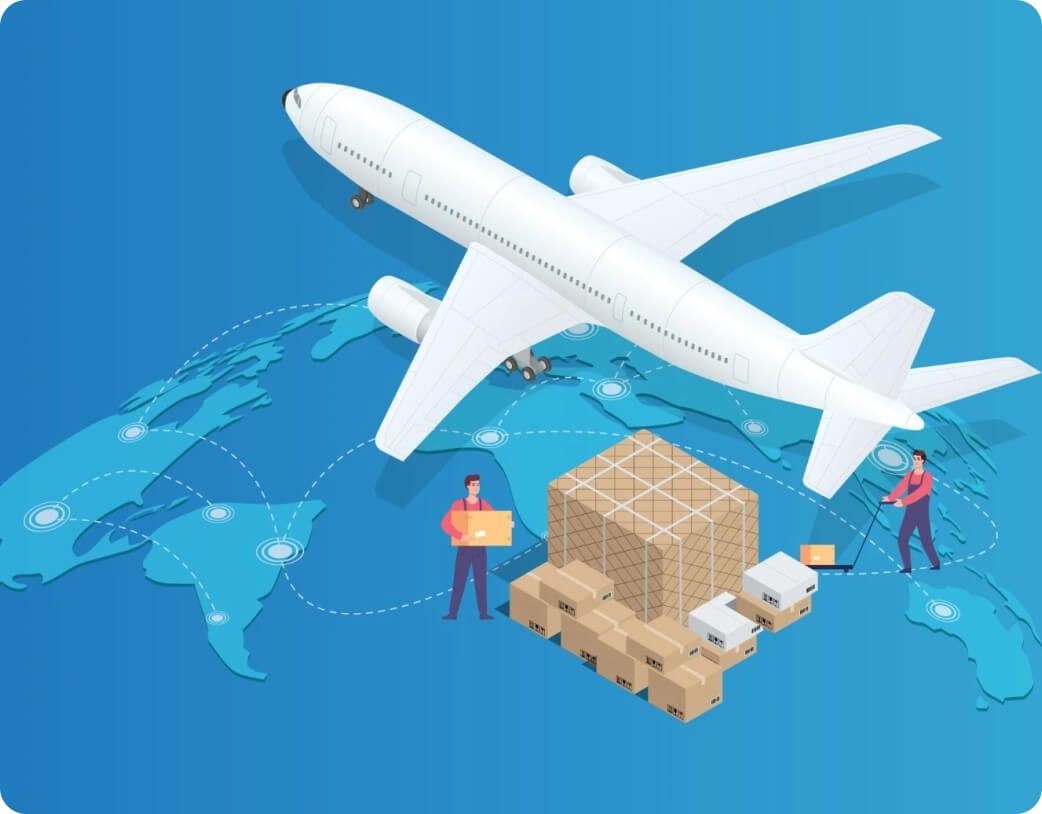
What does a China air freight forwarder actually do?
A China air freight forwarder buys capacity from airlines, consolidates shipments from many shippers onto shared air waybills, files the export declaration, handles security screening and ULD build up, and hands the cargo to a destination agent who clears and delivers it. They are not a courier and they are not an airline; they are the operating layer between the two.
That definition matters because air freight forwarding is a capability business. Two companies can offer the same route at similar rates while one runs the process and the other resells it. The difference shows up the first time a shipment is screened, bumped, or examined.
What can an air freight forwarder do that a booking agent cannot?
Anyone can email a rate. The working capabilities sit underneath:
- Contracted capacity. Allocations on specific flights, which survive peak season better than spot purchases.
- Consolidation. Combining several shippers’ cargo under one master air waybill so each pays a share of the minimum charges and handling.
- Screening and build up. X-ray or ETD screening, palletising, and weight and dimension capture that matches what the airline will measure.
- Export declaration. Filing against the correct HS code and handling licences, inspection certificates, and dangerous goods paperwork.
- A destination agent who actually answers. Clearance and delivery are performed by a partner at destination, and their quality is your experience.
How do MAWB and HAWB differ?
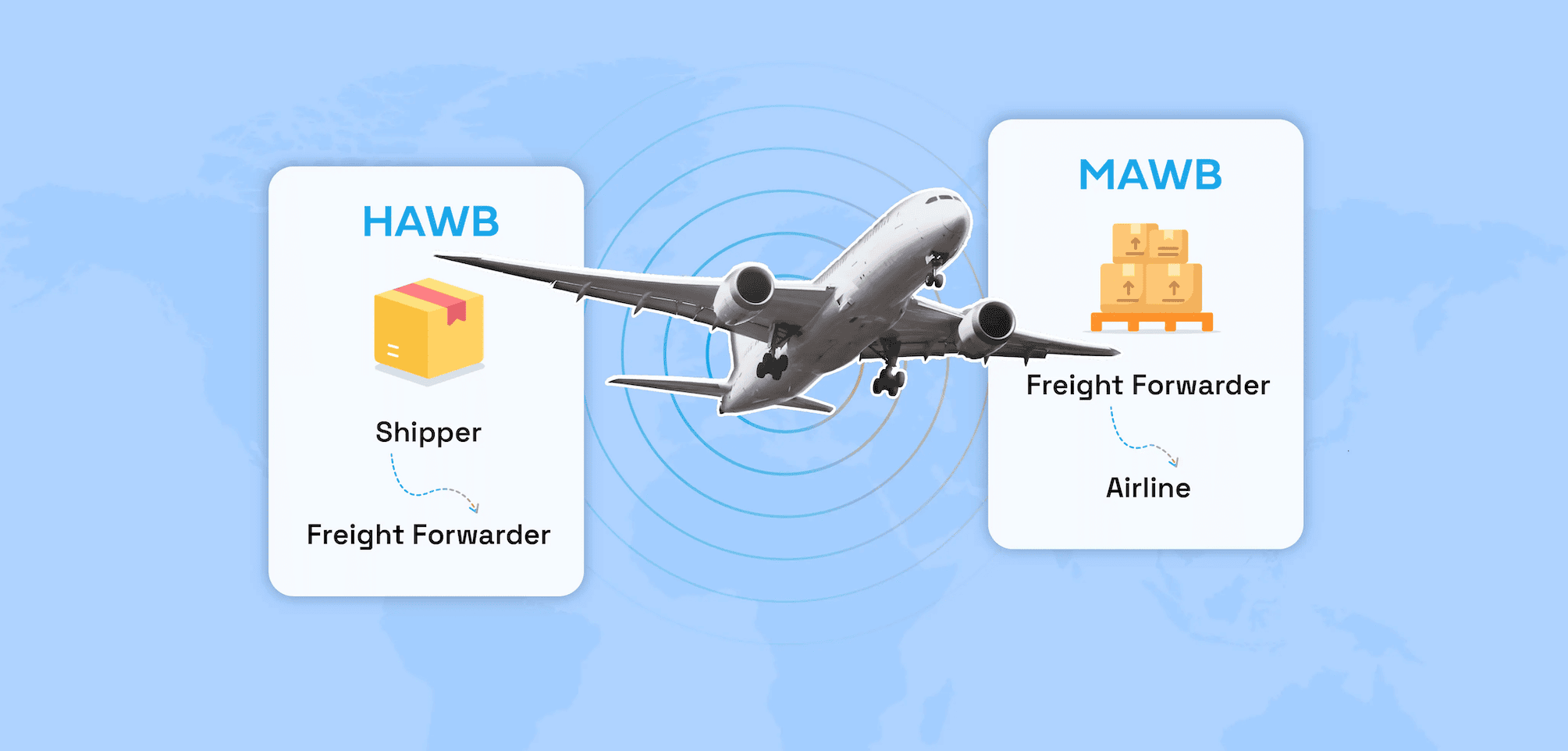
The master air waybill is the contract between the forwarder, as the airline’s customer, and the carrier. The house air waybill is the contract between you and the forwarder. Your cargo flies under the master while you hold the house.
This structure is why consolidation works: the airline sees one shipper and one weight, and the forwarder splits the cost among the houses inside. It also means your tracking runs on the house number, so ask for both when you ship.
What is a consolidation and why does it cut cost?
Airline pricing carries fixed costs per shipment: minimum charges, AWB fees, handling. Spread across one 80 kg shipment, those fixed costs are heavy. Spread across a 900 kg consolidation, they are noise. Shippers with small or mid sized cargo get airline economics they could never access alone, which is the core service a freight forwarder in Guangzhou or any origin hub sells.
How do forwarders get access to capacity?
Airlines allocate space to forwarders for the season and sell the remainder as spot. Allocation holders can promise a Tuesday flight in November; spot buyers queue. In peak windows the spread between those two positions is measured in days of transit, not in dollars.
When you evaluate China air freight forwarders, ask which carriers they hold allocations with on your lane. The answer tells you whether they can protect your schedule when the market tightens.
CASS settlement is plumbing that separates established operators from newcomers. CASS is IATA’s cargo settlement system, the billing rails between airlines and forwarders, and a forwarder settled into CASS has standing accounts with the carriers it books. In practice it can tender cargo without prepaying each airline, and disputes do not stall your boxes on the dock.
What air specific qualifications should you check?
Air adds a regulatory layer that sea freight does not have, and the checks are specific:
- Dangerous goods certification. Lithium batteries, magnets, liquids, and aerosols require IATA DGR trained staff with current certificates and, for some categories, an approved handling arrangement. Ask for the certificate validity, not for a yes.
- Airport side presence. Forwarders with their own or partner warehouses at PVG, CAN, SZX, or HKG control screening queues and build up schedules. Forwarders that subcontract everything inherit whoever is cheapest that week.
- Customs registration in good standing. China export declaration runs through the forwarder’s credentials, and a poor record means more inspection, not less.
- A named destination agent. Get the company name at destination and how long the partnership has run.
The generic forwarder vetting framework covers network strength and support quality for any mode. The four items above are the air layer on top of it.
Which questions separate a real air forwarder from a sales desk?
Ask these six and listen to whether the answers are operational:
- Which carriers do you hold allocations with on my lane, and what is the current frequency?
- Do you consolidate on this route, and what is your current average build?
- Who performs screening and build up, your own warehouse or a subcontractor?
- Walk me through what happens if my shipment is bumped. What do I pay, what do you pay?
- What destination agent clears my cargo, and what is included in their fee?
- Which dangerous goods categories can you accept today, with whose approval?
A sales desk answers question one and stalls on the rest. An operator answers all six without checking with anyone.
What should you expect to pay for?
Cheap air freight forwarding and good air freight forwarding overlap less than you would hope, and the gap hides in specific lines: screening handled in house versus queued outside, priority product codes versus economy roll risk, and destination fees quoted versus discovered. The quote audit approach applies here: ask for the exclusion list before the price list.
For what happens after the forwarder accepts your booking, the step by step air freight process walks the seven stages from pickup to delivery.
FAQ
What is the difference between a freight forwarder and a courier?
A courier is an integrator that flies its own aircraft and delivers door to door under one network. A forwarder buys space on airlines, consolidates, and orchestrates clearance and trucking through partners. Above roughly 45 to 100 kg on a lane, the forwarder model usually prices better.
Do I need a forwarder for a small air shipment?
Usually yes, because airlines sell to forwarders rather than to individuals, and the fixed costs per shipment only make sense when shared through a consolidation.
How do China air freight forwarders charge?
Base rate per chargeable kilogram plus surcharges, plus flat fees for AWB, origin handling, and export declaration, plus destination charges on the other side. Ask for the destination side in writing before you compare prices.
Can a forwarder handle lithium batteries by air?
Some can, with IATA DGR trained staff and accepted handling arrangements. Ask which UN numbers they currently accept on your lane, and expect restrictions on state of charge, marking, and packaging.
What happens if my shipment is bumped from a flight?
Economy product codes roll to the next available departure at no rebate. Priority codes cost more upfront and move first. Agree the handling in advance, because after the bump there is nothing to negotiate.
Is the cheapest forwarder quote the one to take?
Not by default. Compare delivered cost per chargeable kilogram with the exclusion list attached, then price the schedule risk. Two quotes with different routing or different destination coverage are different products wearing the same number.
 English
  Chinese
  Arabic
  French
  German
  Portuguese
  Spanish