In the fast-evolving world of global e-commerce and international trade, the year 2026 marks a turning point for logistics. Shipping from China to global markets like the USA, UK, and EU is no longer just about finding the lowest price on a spreadsheet. With the introduction of new environmental taxes on maritime routes, the tightening of de minimis thresholds, and the rise of AI-driven supply chain management, the decision between air vs sea freight from China has become a strategic financial move.
If you are importing high-demand products—be it football jerseys, luxury goods, or trending sneakers—understanding the nuance of “Total Landed Cost” is the only way to protect your margins this year.
The Logistics Landscape in 2026: What Has Changed?
Before we dive into the numbers, we must address the “2026 factor.” The global supply chain has stabilized post-pandemic, but new complexities have emerged:
- Green Logistics Taxes: Many sea carriers now pass on carbon emission costs to the shipper, narrowing the price gap between slow sea freight and fast air freight for mid-sized loads.
- Customs Digitization: 2026 has seen the full implementation of AI-based customs scanning. This means documentation errors that used to “slide by” now cause instant delays, regardless of whether you ship by air or sea.
- The Shift in Consumer Expectations: With “Next-Day Delivery” becoming a global standard, the opportunity cost of having inventory stuck at sea for 40 days is higher than ever.
1. Air Freight: The Speed Demon of 2026
Air freight remains the premier choice for businesses where time-to-market is the primary driver of ROI.
Cost Structure in 2026
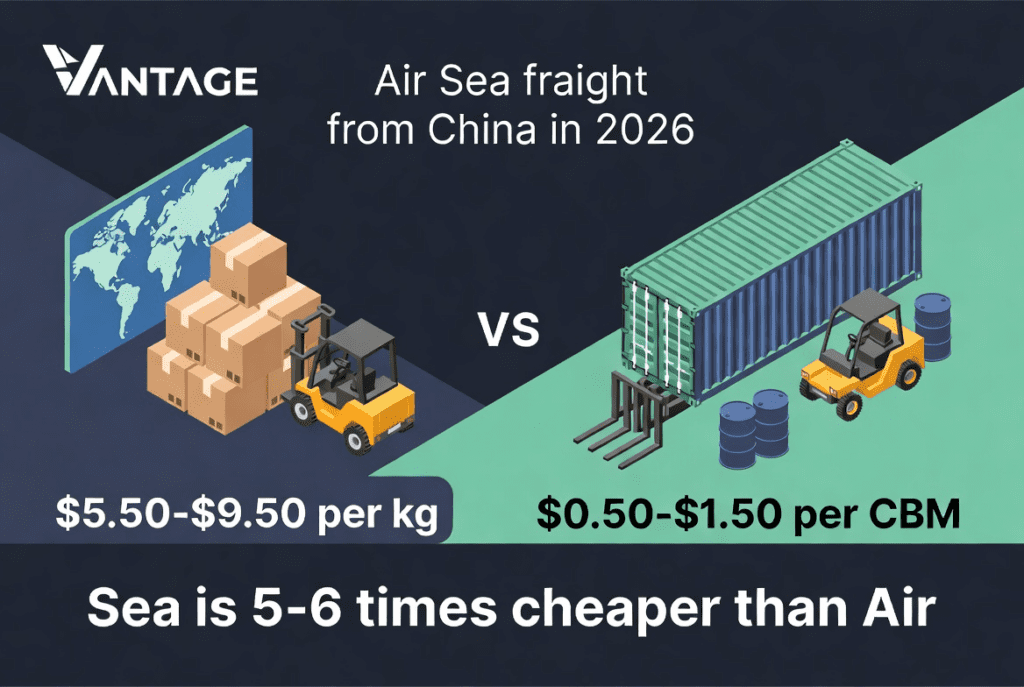
Currently, air freight rates from major hubs like Shenzhen, Guangzhou, and Shanghai are hovering between $5.50 and $10.00 per kilogram, depending on the destination and the level of service (Express vs. Standard Air).
- Best for: Shipments between 50kg and 300kg.
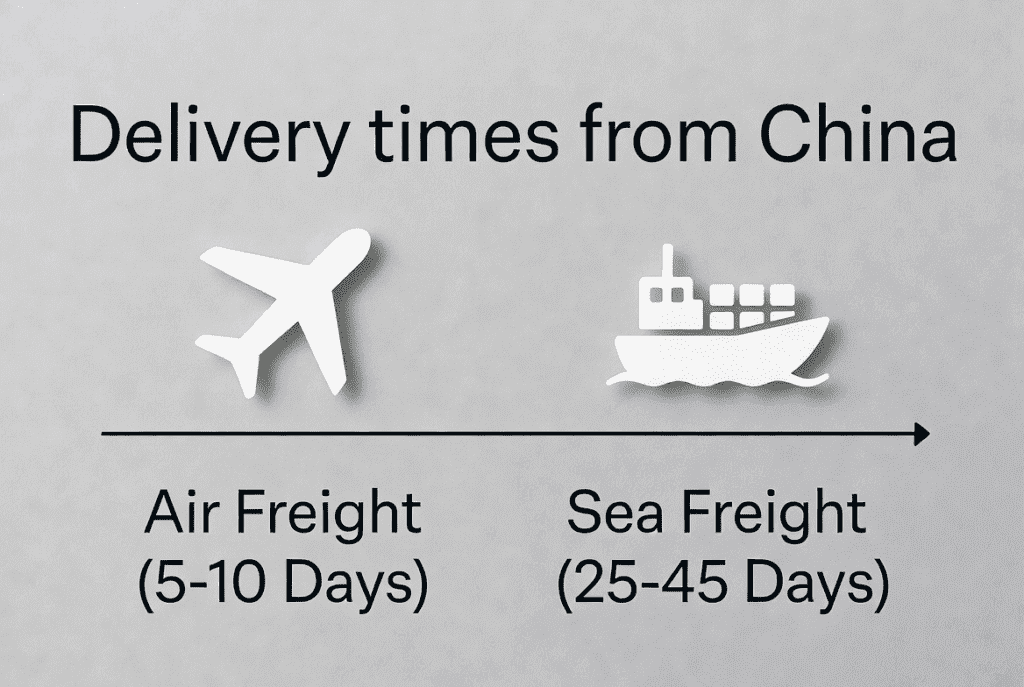
- Transit Time: 3 to 7 days (Express) or 8 to 12 days (Standard).
Why Air Freight Saves You More (The Hidden Logic)
It sounds counterintuitive to say the more expensive option saves money, but for specific categories, it’s true. For example, when shipping luxury goods from China to the USA, the risk of theft, moisture damage, or style obsolescence is high. Air freight minimizes “inventory carrying costs”—the interest and capital tied up in goods that aren’t yet on your shelves.
2. Sea Freight: The Backbone of Bulk
Despite the new carbon taxes, sea freight remains the most cost-effective method for large-scale inventory replenishment. In 2026, we categorize sea freight into three main tiers:
LCL (Less than Container Load)
Perfect for growing brands. You share container space with other shippers.
- 2026 Rates: $90 – $160 per CBM (Cubic Meter).
- Pros: Low entry cost.
- Cons: Higher risk of damage due to frequent handling at consolidation warehouses.
FCL (Full Container Load)
If you are moving massive volumes of apparel and sneakers for a national rollout, FCL is unbeatable.
- 2026 Rates: A 20ft container (approx. 28 CBM) from Ningbo to Los Angeles averages $3,200 – $4,800.
- Pros: Maximum security, lowest per-unit cost.
Fast Vessel Services (The 2026 Hybrid)
Services like Mason or ZIM have optimized their 2026 routes to offer “Air-like” speeds at “Sea-like” prices, cutting trans-Pacific times down to 12–15 days.
3. Comparative Analysis: Air vs. Sea for Specific Niches
To give you a clearer picture, let’s look at how freight choice impacts different business models we’ve covered in our 2026 series:
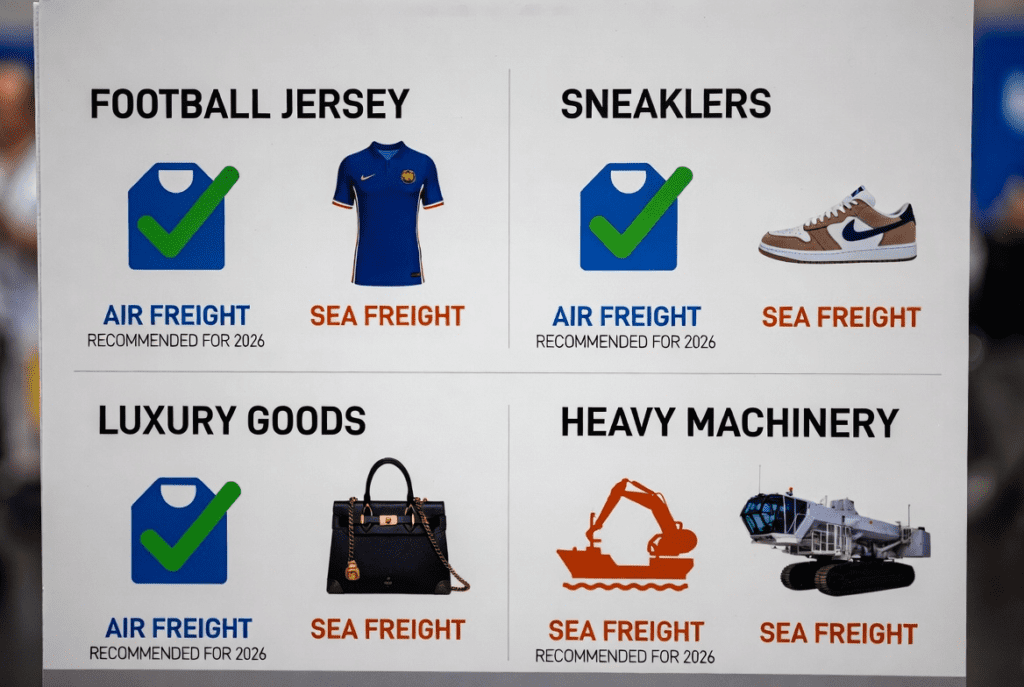
| Product Category | Recommended Freight | Reason |
| Football Jerseys | Hybrid / Air | Highly seasonal. Missing a tournament window by 2 weeks renders stock worthless. |
| Sneakers & Apparel | Sea (LCL/Fast Vessel) | Moderate weight. Sea freight allows for better margins on competitive retail pricing. |
| Luxury Handbags/Watches | Air Freight | High value, low weight. Maximum security and insurance are paramount. |
| Heavy Machinery/Furniture | Sea (FCL) | Prohibitive air costs. Physical dimensions dictate sea transport. |
4. The Financial Strategy: Calculating “Total Landed Cost”
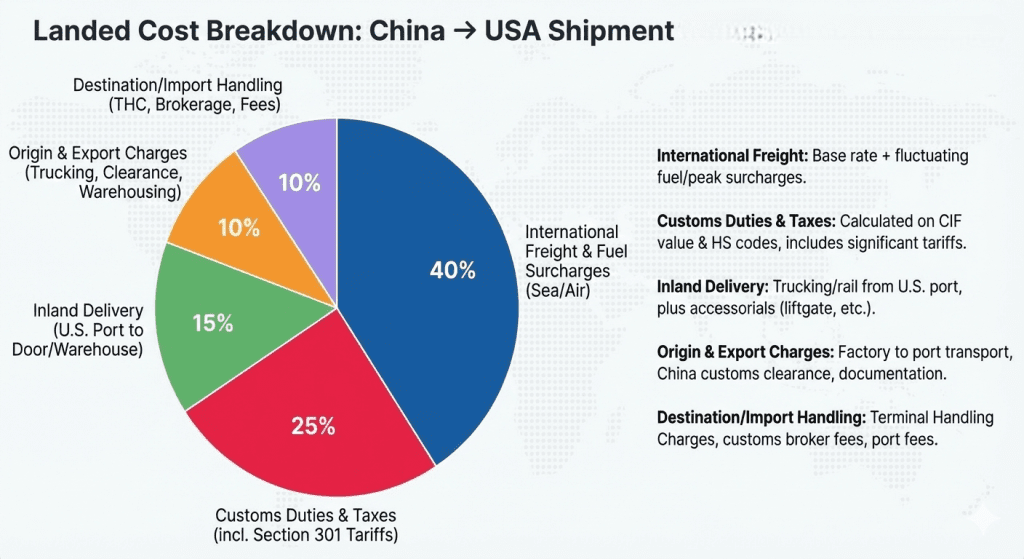
The biggest mistake 2026 importers make is only looking at the freight quote. To see which saves you more, you must calculate the Total Landed Cost (TLC):

The “Inventory Carrying Cost” Factor
If you spend $50,000 on stock and ship it via sea (45 days), you are paying interest on that $50,000 for a month and a half without making a sale. If air freight (5 days) costs $3,000 more but allows you to sell the stock and reinvest the profit 40 days sooner, Air Freight is actually the cheaper financial move.
5. 2026 Customs & Compliance: Avoiding the “Money Pit”
In 2026, customs issues are the leading cause of “shipping cost blowouts.” Whether you choose air or sea, you must navigate:
- De Minimis Changes: Many countries have lowered the threshold for tax-free imports. Ensure your freight forwarder provides DDP (Delivered Duty Paid) options to avoid surprise bills for your customers.
- Section 301 & Tariffs: For China-to-USA shipping, tariffs remain volatile. Sea freight requires a “Continuous Bond,” while air freight often uses “Single Entry Bonds.”
- Sustainability Documentation: In 2026, you may be required to show the “Carbon Footprint” of your shipping route.
6. Pro Tips to Lower Your 2026 Shipping Bill
Regardless of the method you choose, use these “insider” strategies to shave off extra costs:
- Volumetric Weight Optimization: Air freight charges based on size or weight (whichever is greater). If you are shipping jerseys, use vacuum-sealed packaging to reduce volume by 40%.
- Consolidation is Key: If you buy from five different suppliers in Guangzhou, have a forwarder consolidate them into one LCL shipment rather than five separate air parcels.
- Book “Off-Peak”: Avoid the weeks leading up to Chinese New Year or Golden Week, where rates can spike by 200%.
- Use AI Tracking: In 2026, real-time tracking is standard. Use it to coordinate your warehouse staff, avoiding “demurrage” (waiting fees) at the port or airport.
7. Frequently Asked Questions: Navigating China Freight in 2026
Q1: At what weight does sea freight become cheaper than air freight?
Q2: Are there hidden fees in sea freight that I should watch out for in 2026?
ISF Filing Fees: Required for US-bound sea cargo.
Demurrage and Detention: Charges incurred if your container sits at the port too long.
Chassis Surcharges: Fees for the trailer used to move the container to your warehouse.
Residential Delivery Surcharges: If you are shipping to a home address rather than a commercial dock.
Q3: Which method is safer for fragile or high-end items?
Q4: How has the 2026 “Green Tax” affected sea freight rates?
Q5: Can I track my China shipment in real-time in 2026?
Q6: What is the best shipping term (Incoterm) for 2026?
Conclusion: Which One Saves You More?
The answer for 2026 is nuanced:
- Sea Freight saves you more capital (cash on hand) if you have a slow-moving, heavy, or predictable inventory.
- Air Freight saves you more opportunity cost (potential profit) if you have high-value goods, tight deadlines, or high-turnover products like limited edition sneakers.
The smartest importers in 2026 use a 70/30 split: 70% of their core stock via Sea Freight to keep margins high, and 30% via Air Freight to respond to market trends and prevent “out-of-stock” disasters.
Ready to get a custom quote for your 2026 China-to-Global shipment? Speak with our logistics experts today to find the perfect balance between speed and savings.
 English
  Chinese
  Arabic
  French
  German
  Portuguese
  Spanish