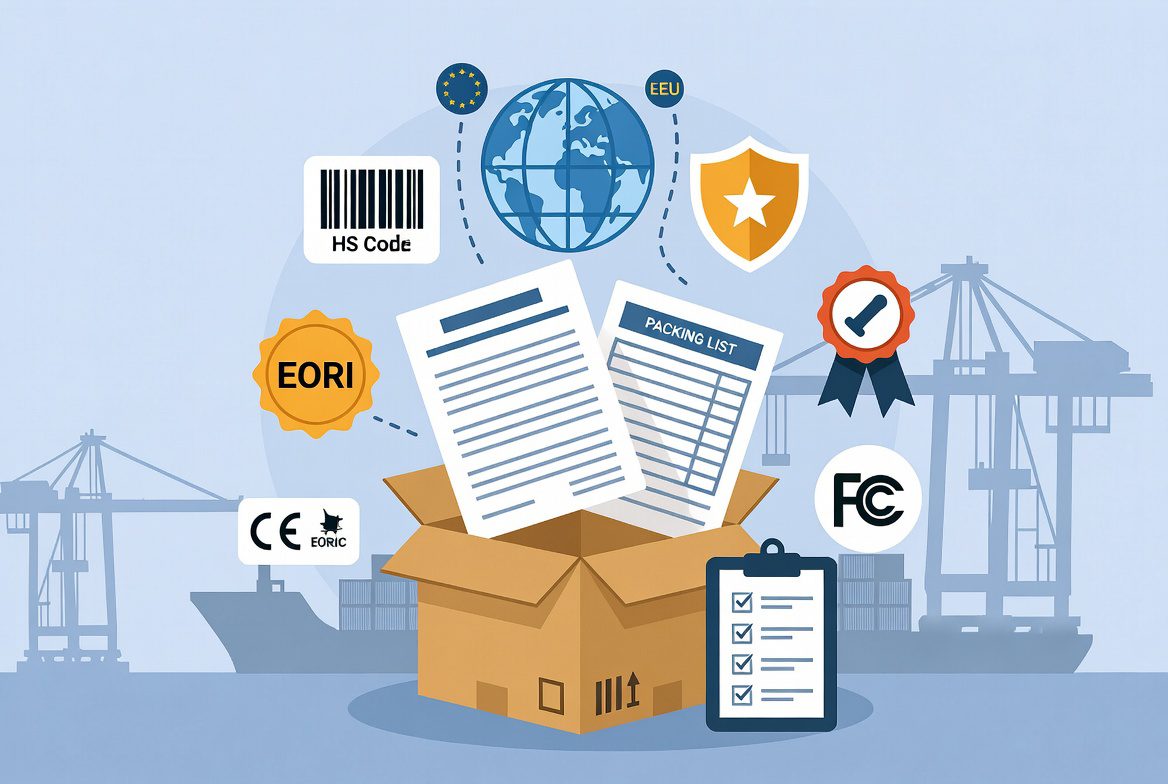
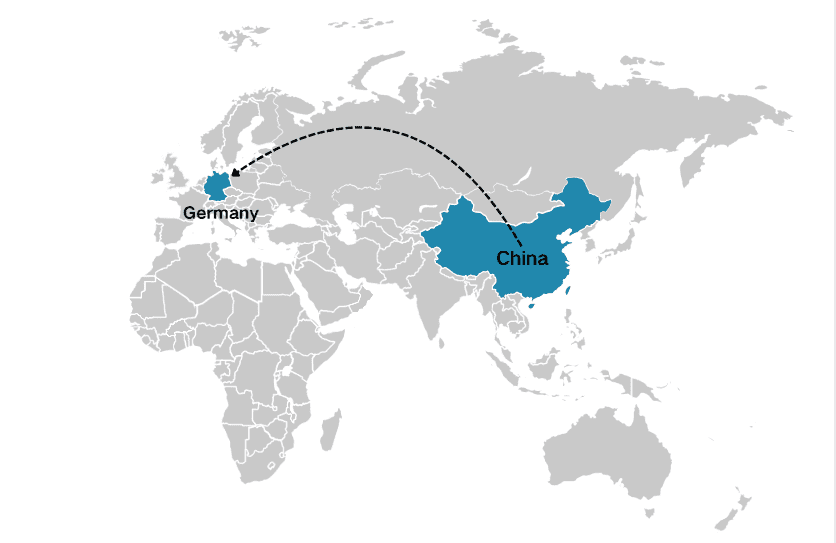
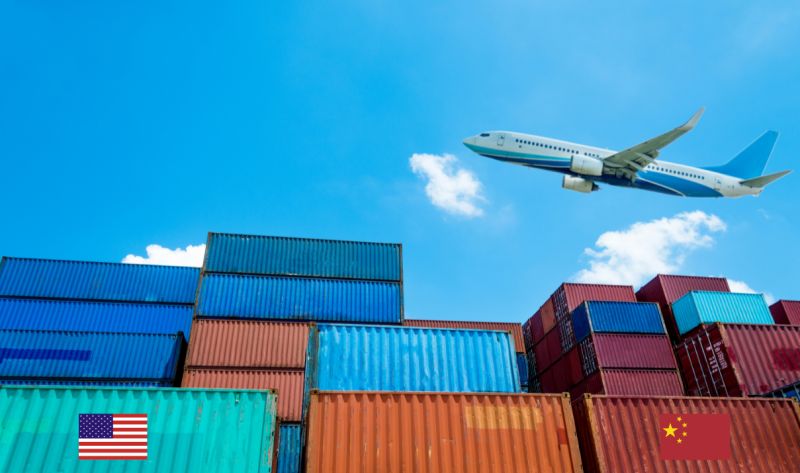
Every shipment from China needs three documents before anything else: a commercial invoice, a packing list, and a transport document such as a bill of lading or air waybill, all carrying the correct HS code. On top of those, the US and the EU each add their own entries, a CBP entry summary and Importer Security Filing for the US, and an EORI number plus VAT details for the EU. This checklist covers the documents every shipment shares, the ones each destination adds, and the product certificates that decide whether your goods clear or sit in a bonded warehouse.
It is written for first-time and repeat importers shipping consumer goods, electronics, and food-related products from China to the US and the EU.
Documents every shipment needs
These four travel with every commercial shipment regardless of destination. Get any one wrong and customs cannot value or identify the goods.
| Document | What it shows | Why it matters |
|---|---|---|
| Commercial invoice | Buyer, seller, value, description, Incoterm | Drives duty calculation and admissibility |
| Packing list | Carton count, weights, dimensions, marks | Confirms the invoice against the physical load |
| Transport document (B/L or AWB) | Contract of carriage and receipt of goods | Proof the carrier took the goods; needed to release them |
| HS code | Harmonized classification of each item | Sets the duty rate and any special requirements |
The commercial invoice is the anchor. Customs values the goods from it, and the HS code on it sets the tariff. If the invoice description is vague, such as “parts” or “gifts,” brokers have to guess the classification, and that guess often triggers inspection.
US-specific documents
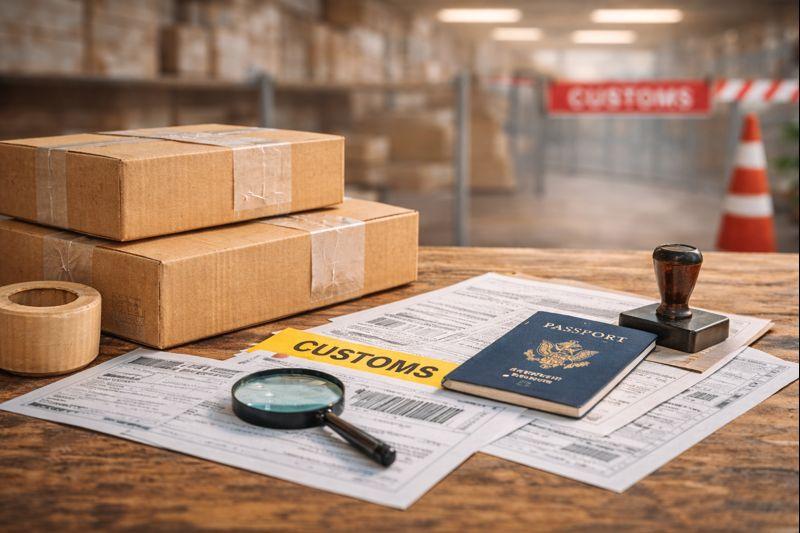
Commercial shipments into the US clear through CBP and almost always need a licensed customs broker. The entries below are the ones brokers ask for first.
| Document | Who files it | When |
|---|---|---|
| CBP entry summary (Form 7501) | Broker, on your behalf | At the time of entry |
| Importer Security Filing (ISF 10+2) | Importer and carrier | At least 24 hours before loading |
| Customs bond | Importer | Before the first entry; covers potential duties and penalties |
| Power of attorney (POA) | Importer to broker | Before the broker can act |
| ACE filing | Broker via CBP system | Electronic entry, replaces paper |
The ISF 10+2 is the one first-time importers miss. It requires ten data elements from the importer, including the seller, buyer, HTS code, and vessel, plus two from the carrier. File it late and CBP can hold the container and assess penalties. The full US import framework is at cbp.gov/trade.
EU-specific documents
The EU uses a single customs union, so the requirements are the same across member states, with VAT handled at the destination country level.
| Document | What it is | When needed |
|---|---|---|
| EORI number | Economic Operator Registration and Identification | Before any EU customs declaration |
| Import declaration | Electronic entry into the EU system | At the point of import |
| VAT registration or fiscal rep | To account for import VAT | Before the goods are released for free circulation |
| Transit document (T1/T2) | For goods moving through the EU to another state | If the load is not cleared at first port |
| Commercial invoice and transport doc | Same as universal set | With every shipment |
Without an EORI number, a shipment cannot be declared to EU customs at all, so it stalls at the border. Apply for it through the national customs authority of the member state where you first import. The EU import procedure overview is at Your Europe and the customs framework at taxation-customs.ec.europa.eu.
Product-specific certificates
Some goods cannot enter without a conformity or agency certificate. These are checked at the border, not just at valuation, so missing one means the whole shipment is refused.
| Product type | Certificate | Issued by |
|---|---|---|
| Most electronics and machinery | CE marking (EU) | Manufacturer self-declaration under EU law |
| Radio and telecom equipment | FCC authorization (US) | fcc.gov |
| Food, cosmetics, medical devices | FDA registration or prior notice (US) | fda.gov |
| Consumer products with safety risks | CPSC certificate (US) | cpsc.gov |
| Chemicals and treated materials | REACH compliance (EU) | echa.europa.eu |
CE marking is the one EU exporters underestimate. It is the manufacturer’s declaration that the product meets EU safety, health, and environmental rules, and it must travel with the technical file. The CE framework is at single-market-economy.ec.europa.eu. Radio products going to the US need FCC equipment authorization before they ship, not after they arrive.
How Vantage Forwarding handles document prep
We move goods from China to the US and EU, and document control is part of how we keep a shipment moving. Our role is coordination and checking, not issuing your certificates. The steps below are what we walk through with importers.
When you book with us, we collect the document set before the vessel sails. We ask for the commercial invoice and packing list first because they drive the HS code and the duty calculation. If the description is too vague to classify, we send it back for clarification rather than letting the broker guess.
For the US, we coordinate the ISF 10+2 filing window and confirm the customs bond and power of attorney are in place before departure. For the EU, we confirm the EORI number and the VAT details so the import declaration can be lodged on time at the port of entry.
We pre-alert the destination broker with the full set, including any product certificate the goods require. That step is where most delays are prevented, because the broker can flag a missing certificate while the cargo is still at sea instead of after it has landed.
Common document mistakes that delay clearance
Most holds come from a short list of avoidable errors. Fixing these before departure is far cheaper than recovering a stuck container.
The invoice does not match the goods. A declared value, quantity, or description that conflicts with the packing list or the physical cartons triggers inspection and possible penalties under your declared HTS code.
The HS code is missing or wrong. The code sets the duty and the rules. A wrong code can mean an underpaid tariff and a penalty, or an overpaid one and lost margin. See our guide on HS code mistakes for the cost breakdown.
The ISF is filed late or incomplete for the US. The 24-hour-before-loading deadline is firm, and a late filing can hold the container and draw a CBP penalty.
There is no EORI for the EU. Without it the goods cannot be declared and sit at the border until the number is issued.
A required product certificate is missing. No CE, FCC, FDA, or CPSC certificate where one is needed means the goods are refused at the border, not just delayed.
There is no customs bond for the US. Commercial entries almost always require a bond; without one CBP will not release the shipment.
FAQ
What is the single most important document?
The commercial invoice. It drives valuation, classification, and admissibility, and every other document references it.
Do I still need paper documents?
Most filings are electronic, CBP uses ACE and the EU uses its electronic declaration system. Carriers still issue a bill of lading, but a telex release lets you clear without the paper original.
What happens if I file the ISF late?
CBP can hold the shipment and assess penalties. File it at least 24 hours before the cargo is loaded onto the vessel.
Do I need a customs broker?
For commercial shipments, practically yes. A broker files the entry summary, manages the bond, and handles the declaration. We coordinate one on your behalf.
What is an EORI number?
It is the EU identification number every economic operator needs to file a customs declaration. Apply through the customs authority of the member state where you first import.
About this article
This checklist was prepared by the Vantage Forwarding logistics desk, which coordinates China to US and EU freight. It is general guidance drawn from official CBP and EU sources, not legal or customs advice. Confirm the current requirements with CBP, the EU customs authorities, a licensed broker, and your product certifier before shipping.
 English
  Chinese
  Arabic
  French
  German
  Portuguese
  Spanish