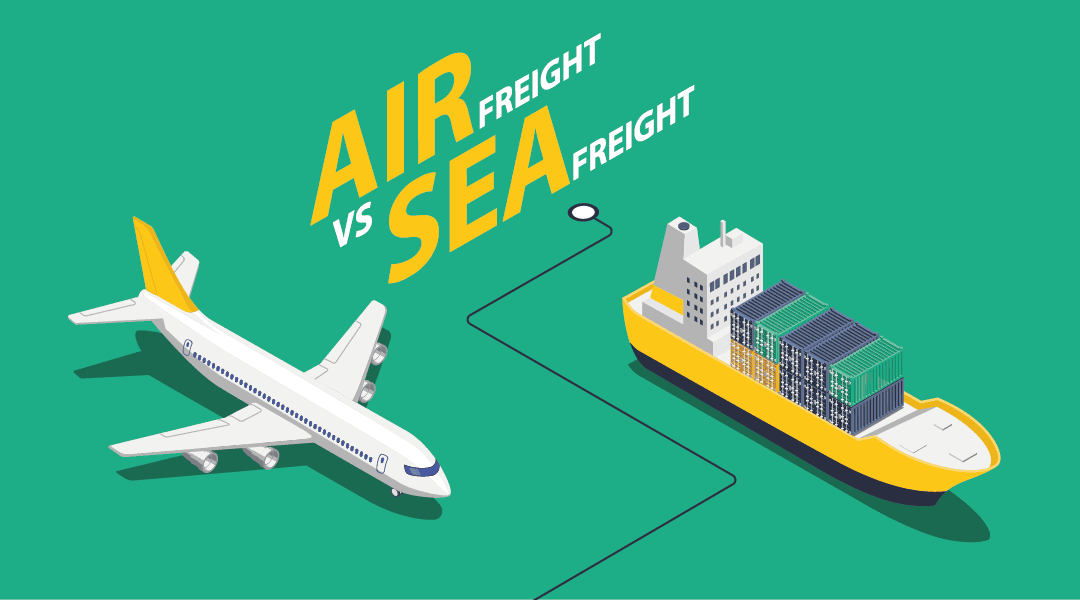
Choosing between air freight and sea freight from China can directly affect your shipping cost, delivery speed, and profit margin.
While air freight is faster, sea freight is often more economical for larger shipments. The challenge is knowing when to switch from one to the other.
This 2026 guide explains the cost differences, transit times, chargeable weight rules, and break-even points to help importers choose the most efficient shipping method.
The three modes
| Mode | Typical transit | Best weight range | Door-to-door? |
|---|---|---|---|
| Express (DHL/UPS/FedEx) | 3–5 days | < 100 kg | Yes, easiest |
| Air freight | 7–15 days | 100–500 kg | Usually port-to-port + truck |
| Sea freight | 25–30 days | > 300 kg / any CBM | Port-to-port + drayage |
Express is a premium per-kg product; air freight is the middle; sea is the volume economy.

2026 indicative rates & transit
Reference only — lanes and fuel surcharges move these weekly.
- Express: ~$6–12 / kg, 3–5 days.
- Air freight: ~$7–15 / kg (plus handling), 7–15 days.
- Sea LCL: ~$80–160 / CBM, 25–30 days.
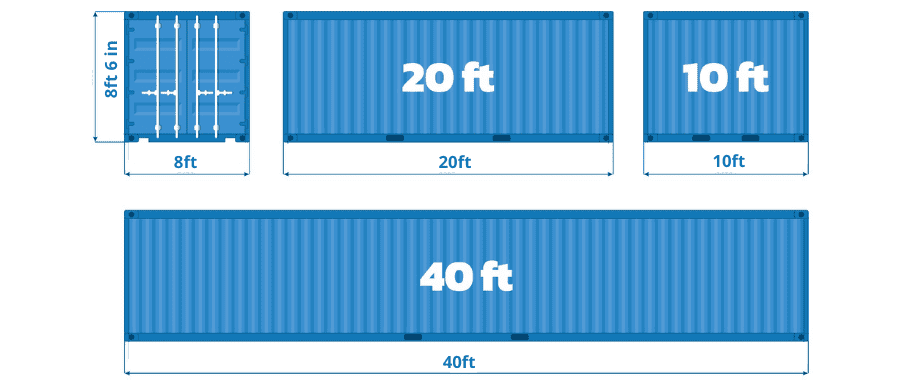
- Sea FCL (20ft): ~$1,500–3,500, 25–30 days depending on destination.
Notice the crossover: at low weight, air is tolerable; past a few hundred kg, sea pulls far ahead per unit.
Chargeable weight: the air trap
Air carriers bill on chargeable weight = the greater of actual weight or volumetric weight (length × width × height / 6000, cm). Bulky-light goods (pillows, furniture frames) can be billed 2–3× their real weight. Always get both numbers before comparing to sea.
The break-even point
Rule of thumb for China → US/EU:
- Under ~150 kg with urgency → air or express.
- 150–300 kg → compare carefully; air still wins if the goods are dense and time-sensitive.
- Over ~300 kg or any meaningful CBM → sea is almost always cheaper, if you can wait.
Density is the tiebreaker. A 200 kg dense shipment may fly cheaper than a 200 kg bulky one.
When air wins
- New-product launch where stockouts cost more than freight.
- Replenishment to avoid a sea-shipment delay.
- Spare parts / high-value-per-kg items.
- Goods that must arrive before a trade show or season.
Air is an insurance policy against lost sales, not just a courier.
When sea wins
- Base inventory and predictable replenishment.
- Bulky, heavy, low-value-per-kg goods.
- Anything where a 30-day window is fine.
- FCL volumes where per-unit cost dominates margin.
Pair sea with FCL vs LCL logic to pick container type.
Compliance notes for air
Air has the strictest rules on dangerous goods. Lithium batteries, aerosols, and many electronics need UN38.3 / MSDS documentation and may be restricted or surcharged. Misdeclaring them is a safety and legal violation — declare accurately and use a forwarder who handles DG properly. (Battery specifics are covered in our category guides.)
FAQ
Can I ship part air, part sea for one order?
Yes — many importers fly the first batch and sea the rest. It smooths cash flow and stockouts.
Do these rates include duty?
No — duty is separate (see DDP vs DDU and the Import Duties Guide). DDP quotes fold it in; otherwise budget for it.
Why does sea transit vary so much?
Port congestion, customs holds, and inland drayage add days. Build buffer into any sea plan.
Related guides
- How to Choose Your Shipping Method from China
- DDP vs DDU: Which Incoterm Saves You More
- FCL vs LCL: Break-Even Volume for China Imports
- 2026 Import Duties & Compliance Guide
Published by the Vantage Forwarding Trade Desk. Rates are 2026 indicative references — confirm a live quote before booking. For a mode recommendation on your specific shipment, contact us.
 English
  Chinese
  Arabic
  French
  German
  Portuguese
  Spanish