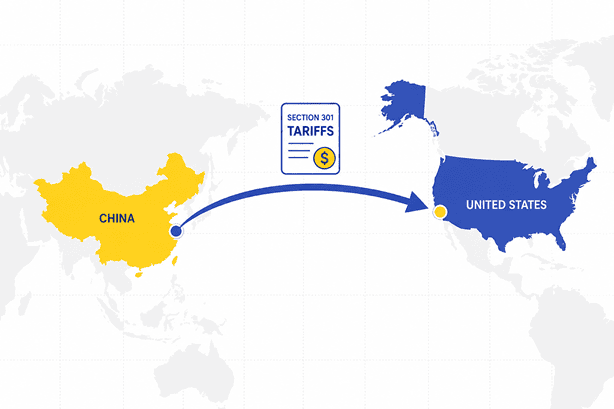
US Section 301 adds 7.5%–25% on top of base duty for many China-origin goods. Here's how to confirm your DDP
If your goods are China-origin and you ship DDP to the USA, there is a line item that can quietly erase your margin: the Section 301 tariff.
It is not part of the base duty. It is an additional duty layered on top, and it applies to a large share of the Chinese products imported into the US. The catch? Many quotes leave it out — and under DDP, you are the one who pays it at the border.
This article shows you what Section 301 is, how to check whether your quote includes it, and a simple checklist to protect your margins.
Section 301 derives from the US Trade Act of 1974. In 2018, the Office of the US Trade Representative (USTR) determined that certain Chinese practices were unfair and authorized additional tariffs on Chinese-origin goods. These are collected by US Customs and Border Protection (CBP) at entry, on top of the regular HTS base duty.
Key facts:
It applies to China-origin goods (country of origin, not country of shipment).
It is additional to the base MFN duty, VAT is separate, and MPF/HMF fees are calculated on value.
It is not the same as the de minimis change — Section 301 has applied to container freight for years and now also hits the formerly duty-free parcels.
The lists and the rates
Section 301 duties were imposed in stages, often called “Lists.” Historically:
List
Typical additional duty
List 1
25%
List 2
25%
List 3
25% (a portion was previously at 7.5%)
List 4A
7.5% (a portion was previously at 15%)
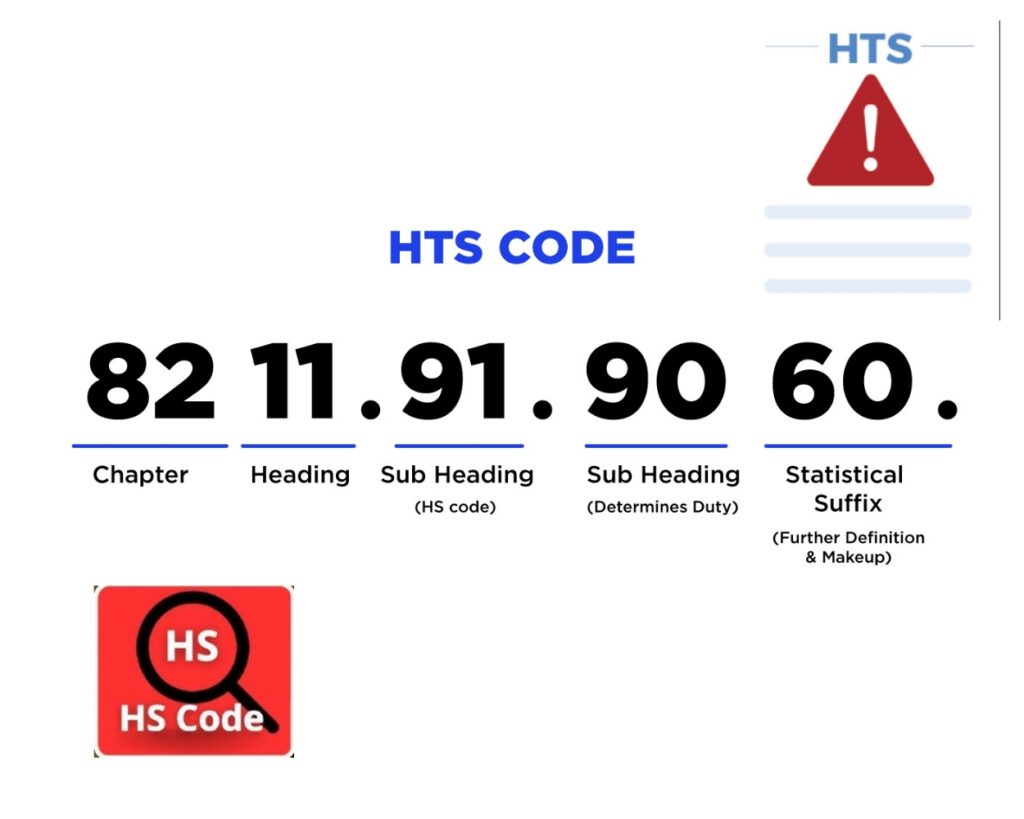
The exact rate for a given product depends on its HTS code and which list covers it. Some products have been subject to exclusions that later expired or were reinstated, so the rate for the same code can change between quarters.
These percentages are historical reference points. The 2025–2026 environment has seen adjustments; always confirm the current rate for your specific HTS code before quoting.
Why it matters more under DDP
Under DDP (Delivered Duty Paid), the seller/forwarder is the importer of record and pays all duties and taxes at the border, then passes a single delivered price to the customer.
That means:
If your quote omits Section 301, the duty is still collected at entry — and you absorb it.
If the customer “pre-paid” a DDP price that excluded 301, your margin covers the gap.
Because 301 can be 7.5%–25%, the gap is rarely small.
This is why a DDP quote must itemize base duty + Section 301 + VAT/GST + fees, not just a flat “duties included” line.
Get the correct 10-digit HTS code for the product (see HS Code Mistakes on getting this right).
Cross-reference the USTR Section 301 lists (published by the Office of the USTR) for that code.
Confirm the current rate with a licensed US broker — because lists and exclusions change.
Ask your forwarder to show the 301 line in the written quote, not just a total.
A product with a $50,000 value at a 25% Section 301 rate adds $12,500 of duty at entry. That is the difference between a profitable shipment and a loss-making one.
A quote-confirmation checklist
Before you accept any DDP-to-USA quote, confirm in writing:
[ ] The HTS code used for the quote (and that it matches the actual product).
[ ] The base MFN duty rate applied.
[ ] The Section 301 additional duty explicitly listed (with the % and the list, if available).
[ ] VAT/GST and MPF/HMF fees shown separately.
[ ] A statement that rates are current as of the quote date and subject to change before entry.
[ ] Who bears the cost if rates rise between quote and arrival (define this in your contract).
If a forwarder cannot show the 301 line, treat that as a red flag — not a discount.
2025–2026 volatility
The Section 301 landscape has been unusually active:
Several product exclusions have expired and been reinstated on shifting schedules.
New investigations and list modifications are announced periodically by USTR.
Combined with the end of de minimis (see De Minimis Ended), the cost of getting the quote wrong is higher than ever.
The safe pattern: quote with the current rate, state the quote date, and refresh before each shipment.
Red line: don’t disguise origin
The compliant response to high Section 301 rates is accurate classification, a current quote, and (where legitimate) duty-relief mechanisms. Transshipping goods through a third country to disguise Chinese origin and avoid 301 is customs fraud — it carries seizure, penalties, debarment, and personal liability. Vantage will not knowingly file an entry that misstates country of origin. See How to Legally Lower Import Duties for the compliant alternatives.
FAQ
Is Section 301 included in the base duty?
No. It is an additional duty collected on top of the base HTS rate.
Do EU and UK shipments have a 301 equivalent?
No — Section 301 is a US measure. The EU and UK have their own duty structures and (for the EU) the post-de-minimis changes covered in the Import Duties Guide.
What if my product had an exclusion?
Exclusions have been time-limited and have expired for many products. Confirm current status with a broker; do not assume an old exclusion still applies.
Can I avoid 301 by shipping DAP instead of DDP?
The duty is still due at entry regardless of Incoterm — DAP just shifts who pays it to the buyer. It does not remove the tariff.
Published by the Vantage Forwarding Trade Desk. Section 301 lists and rates change frequently — verify the current rate for your HTS code with a licensed US broker before quoting. For a DDP quote that itemizes every duty line, contact us.
Hello! How can we assist you with your special cargo shipping today?
Please share your cargo type (lithium batteries, branded goods, or liquids), destination, and any special requirements. We'll reply with a quote and process shortly.
Send Message
Vantage Forwarding • Usually replies within 2 hours


 English
  Chinese
  Arabic
  French
  German
  Portuguese
  Spanish