Key Data at a Glance
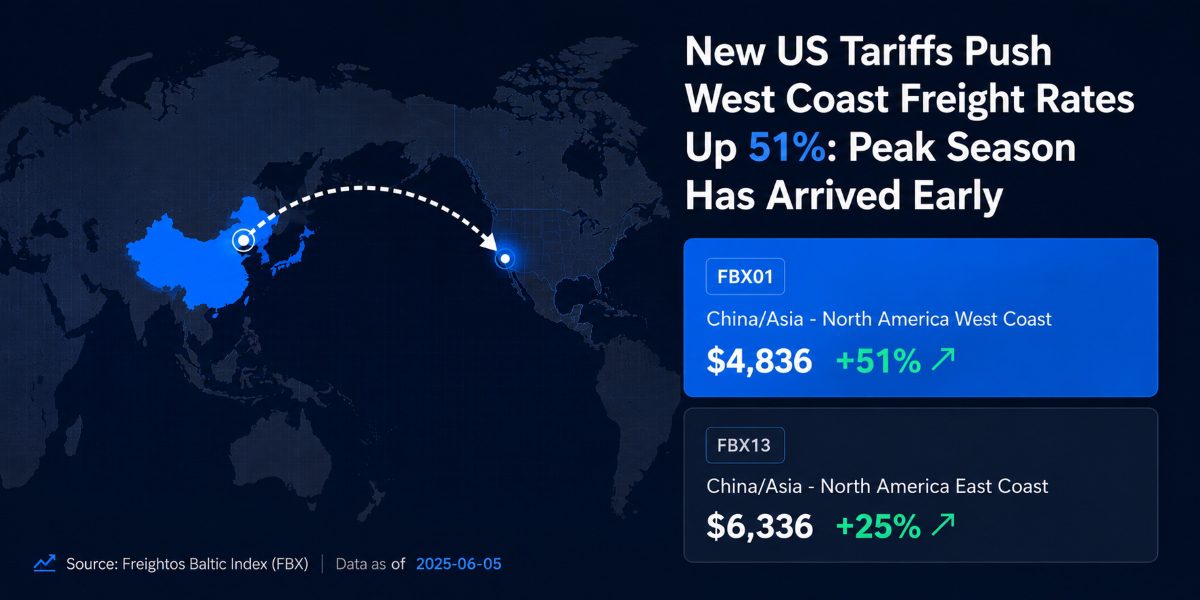
- Asia–US West Coast rates jumped 51% in one week to $4,836/FEU
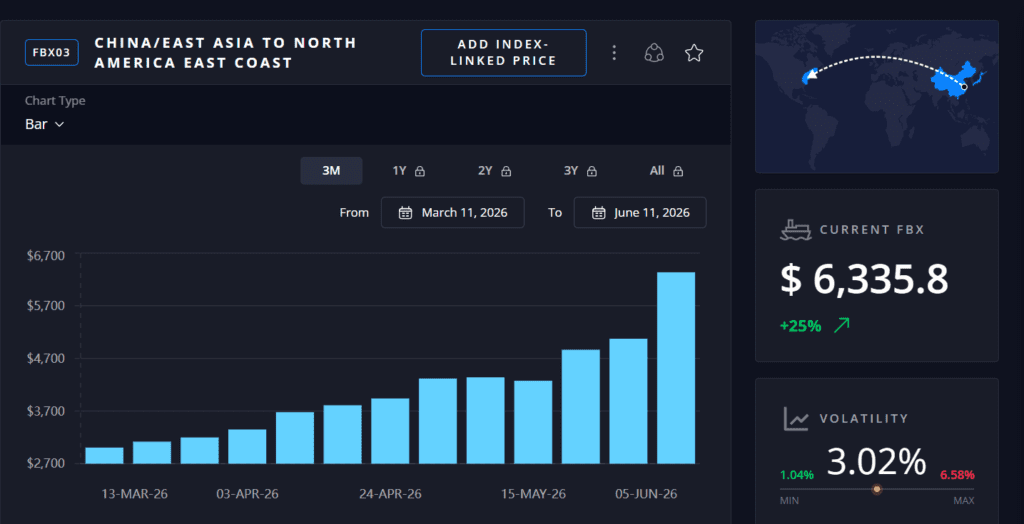
- Asia–US East Coast rates rose 25% to $6,336/FEU
- Sharpest single-week increase since last June’s tariff-driven demand spike
- Hormuz Strait tensions are pushing fuel costs up—a second layer of rate pressure
What Happened: Tariffs Triggered a Frontloading Rush
On June 1, 2026, new US tariffs on Chinese goods took effect. Importers responded the way they always do—by shipping early to get ahead of the policy—and the rush has pushed the transpacific lane into an early peak season.
The Freightos Baltic Index (FBX) shows Asia–US West Coast container rates surging 51% in a single week to $4,836/FEU, with Asia–East Coast rates up 25% to $6,336/FEU. Freightos Head of Research Judah Levine called these the sharpest weekly increases since last June’s tariff-driven demand spike, when rates climbed more than $2,000/FEU in a week.
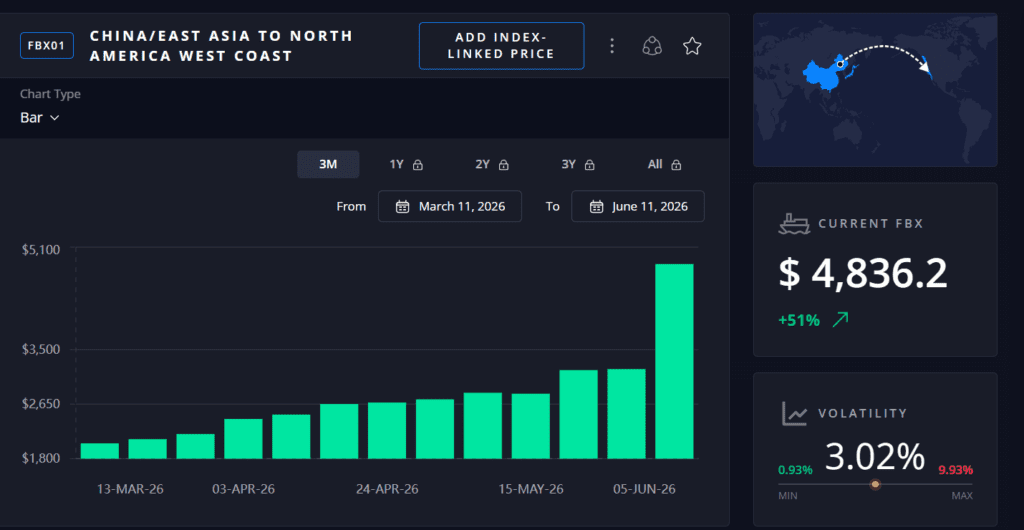
Here’s the detail that matters most: ocean volume indices remain well below last year’s levels. Rates aren’t rising because consumer demand recovered—they’re rising because shipments that would have spread across the second half of the year are being compressed into a few weeks. This is a timing squeeze, not a volume boom, and that distinction shapes how long the spike is likely to last.
The Second Pressure Point: Fuel
Alongside the tariff rush, tensions around the Strait of Hormuz are driving oil prices higher. While the situation hasn’t yet caused broad operational disruptions beyond the Gulf region, rising fuel costs are already feeding into bunker surcharges.
US inflation adds another layer: gasoline has climbed to $5.21 per gallon, CPI is up 2.4%, and PPI up 3.2%. For exporters, the implication is that even if base ocean rates eventually cool, bunker adjustment factors (BAF) and US inland delivery costs won’t retreat as quickly.
What This Means for Exporters Shipping from China
The near-term challenge: space is tight and spot rates sit at yearly highs. If you have June–July cargo without confirmed bookings, you’re now competing in a seller’s market—act immediately rather than waiting for rates to soften.
The structural opportunity: the frontloading window is also an avoidance window. Cargo that moves before tariff enforcement fully tightens can materially reduce duty exposure. And as West Coast congestion risk builds, shippers with the flexibility to route via the East Coast or pivot volume to European lanes will hold the negotiating leverage.
5 Practical Moves to Make Now
1. Plan shipments 45–60 days ahead. Tariff details are still moving. Stretching your planning horizon from the usual 2–4 weeks to 45–60 days buys you room to absorb the next policy surprise.
2. Evaluate West Coast + inland routing first. Entering via West Coast ports and moving inland typically costs about 25% less than East Coast direct calls—but monitor West Coast congestion closely, because demurrage and detention from delays can erase the savings.
3. Lock in contract rates. In a market that moves 51% in a week, playing the spot market is a losing position. Quarterly or semi-annual agreements with your forwarder hedge against further peak-season increases.
4. Diversify beyond the US. European, Southeast Asian, and Latin American lanes carry far less policy risk right now. Reducing single-market dependence on the US is more fundamental risk control than any rate strategy.
5. Optimize packaging to cut billable volume. Rate spikes amplify the value of every saved cubic meter. Revisit packaging specs and container utilization—it’s one of the few cost levers entirely within your control.
How Vantage Forwarding Helps You Navigate This
As a B2B cross-border logistics specialist, Vantage Forwarding offers direct answers to the current market:
- DDP (Delivered Duty Paid) service: we handle duties and customs clearance end to end, giving you a fixed landed cost that insulates you from policy swings
- Compliance monitoring: our team tracks and interprets US tariff developments in real time, flagging changes before they hit your shipments
- US lane space protection: long-term carrier relationships let us prioritize space for contract customers during frontloading rushes like this one
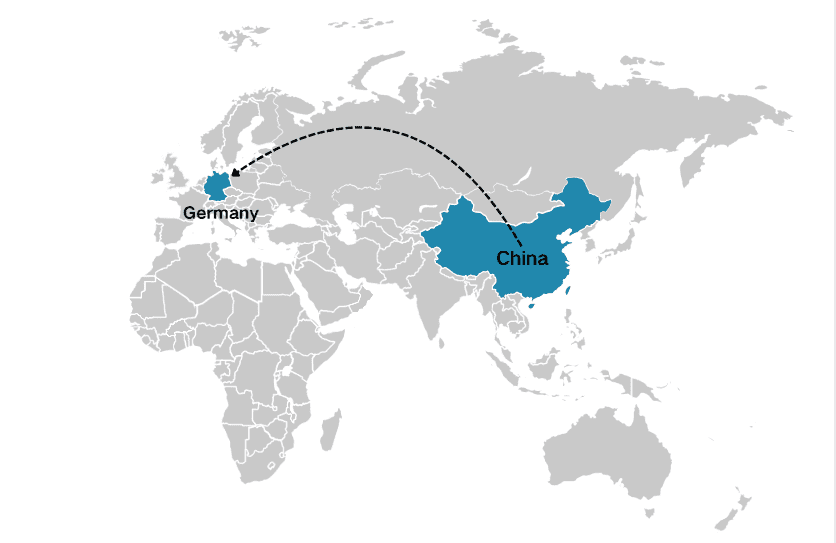
- Full European network: door-to-door coverage of all major EU ports supports your market diversification strategy
- End-to-end visibility: instant quotes, booking, and tracking through our logistics platform shorten your decision cycle
The current window is limited. If you have June–July shipments planned, we recommend confirming space and rates this week.
Get This Week’s US & EU Lane Rates →
 English
  Chinese
  Arabic
  French
  German
  Portuguese
  Spanish