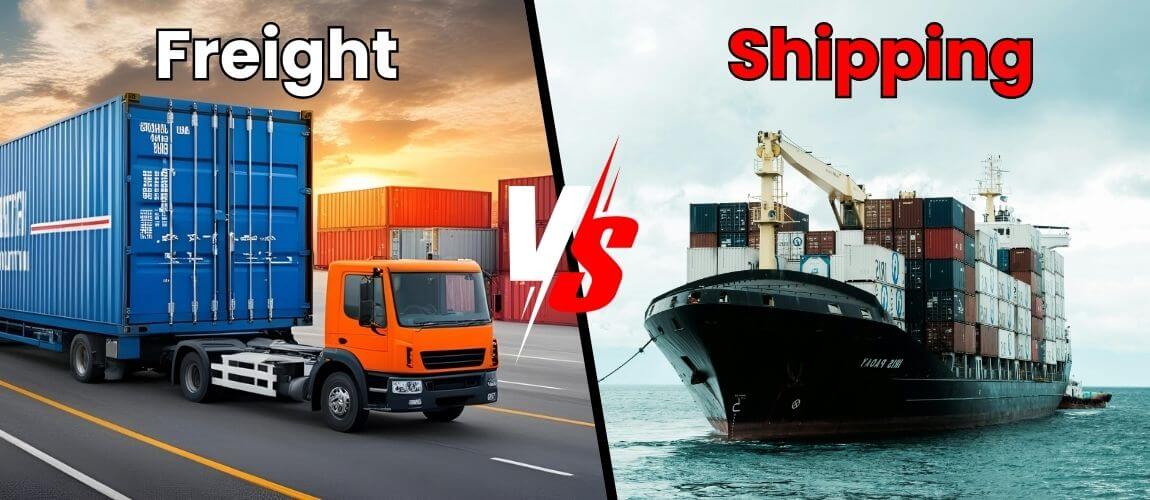
Guangzhou to Bac Ninh: Which shipping method saves you time and which one saves you compliance headaches?
For electronics and EV component makers moving capacity into northern Vietnam, a production line in Bac Ninh waiting on PCBs from Shenzhen doesn’t measure delay in days—it measures it in lost output per hour. The Guangzhou/Shenzhen → Bac Ninh/Bac Giang corridor has become one of Asia’s most time-sensitive supply lanes.
This guide compares the two workhorses of this corridor:
- Scheduled cross-border truck express – typical transit: 3–4 days, best for urgent, high-value shipments
- Coastal fast ship – typical transit: 12–15 days, better for bulk, non‑urgent cargo
We also walk through the compliance requirements that trip up first‑time shippers—including lithium battery transport, Vietnam import regulations, and documentation traps.
Why This Corridor Demands a Different Playbook
The factories clustered in Bac Ninh and Bac Giang—Samsung, Foxconn, Luxshare, Goertek and their hundreds of tier-2 suppliers—run just-in-time production. Components often ship from South China with 48–96 hours of buffer before they’re needed on the line.
That compresses the logistics decision into three questions:
- How fast, reliably? Average transit matters less than worst-case transit.
- Can the channel legally carry my cargo? Lithium cells, charged PCBA, and power machinery each carry different dangerous-goods classifications.
- What does a day of delay actually cost? For a line-down event at an EV battery pack plant, the answer is usually “more than the entire freight bill for the quarter.”
With that frame, here’s how the two main channels compare.
Cross-Border Truck Express: The Speed Benchmark
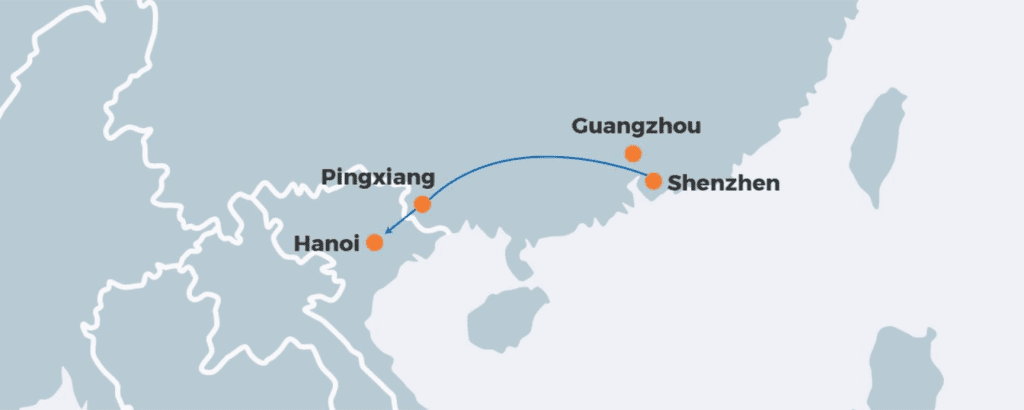
Scheduled truck express runs from Guangzhou/Shenzhen warehouses through the Youyi Guan (Friendship Pass) border crossing at Pingxiang, then down Highway 1 to the Bac Ninh/Bac Giang industrial zones.
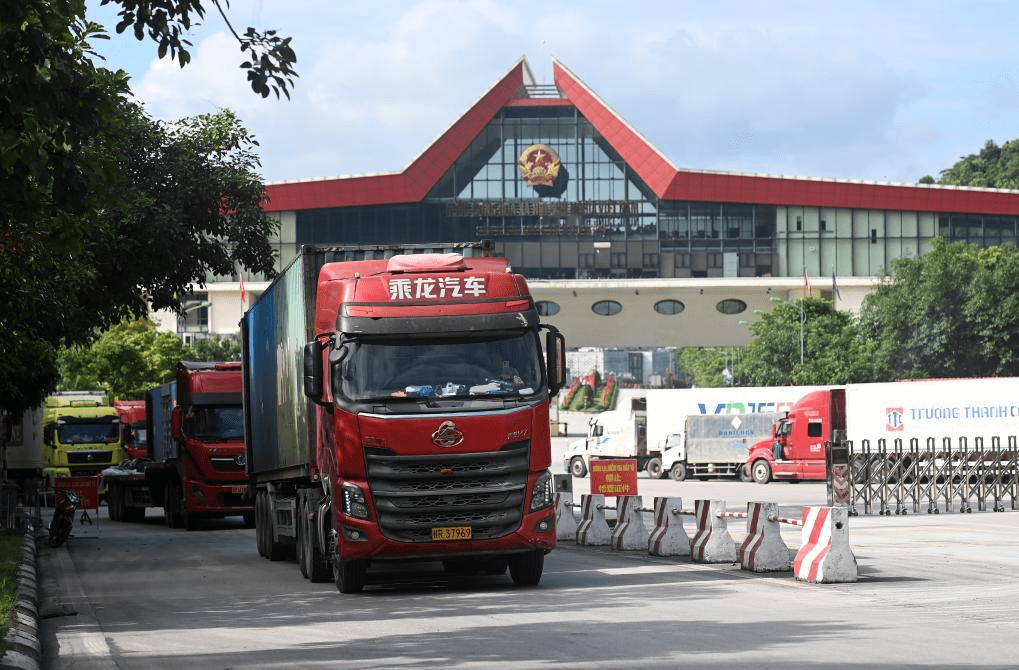
Typical door-to-door transit: 2–3 days.
A standard schedule looks like this:
- Day 0, evening: cargo cut-off at Shenzhen/Dongguan consolidation warehouse, customs pre-declaration filed
- Day 1: line-haul to Pingxiang (~800 km), export clearance
- Day 1–2: border crossing and Vietnam import clearance at Huu Nghi
- Day 2–3: delivery to Bac Ninh, Bac Giang, Hanoi, or Hai Phong area plants
Two structural risks to plan around. First, border congestion: Youyi Guan throughput fluctuates with seasonal cargo peaks and policy inspections—a crossing that takes 4 hours in March can take 24+ in peak weeks. Second, holiday closures around Chinese New Year and Vietnamese Tet stack up backlogs that take days to clear.
The Green Channel Advantage
This is where the corridor has genuinely improved. China and Vietnam operate priority clearance lanes—”green channels”—at major land crossings for qualifying cargo, including electronics components moving under processing-trade arrangements.
What green-channel handling means in practice:
- Pre-arrival declaration: documents are filed and risk-screened before the truck reaches the border, cutting dwell from hours to minutes for compliant loads
- Priority lane physical access at Youyi Guan, bypassing the general cargo queue
- AEO mutual recognition: shipments handled by AEO-certified forwarders on both sides draw lower inspection rates
The catch: green-channel eligibility is documentation-driven. One mismatched HS code or an invoice/packing-list discrepancy drops the entire truck into the standard inspection queue—taking every other shipper’s cargo on that truck with it. This is why dedicated electronics trucks (not mixed general cargo) are worth the premium for time-critical loads.
Coastal Fast Ship: The Volume Workhorse
The sea alternative runs from Shekou or Nansha to Hai Phong, with feeder-style fast vessels making the run on fixed weekly schedules.
Typical port-to-door transit: 5–7 days (2–3 days sailing + 1–2 days clearance at Hai Phong + last-mile to Bac Ninh, ~120 km inland).
Where sea wins:
- Cost: per-kg rates run 40–60% below truck express for LCL, and the gap widens for full containers
- Heavy and oversized cargo: power machinery, stamping equipment, and battery-pack assembly lines that exceed road weight limits move by sea without special permits
- Dangerous goods capacity: Class 9 lithium battery shipments move under IMDG rules with established booking procedures—often easier to book at scale than road DG slots
Where sea loses: schedule granularity. Miss the weekly cut-off and your effective transit becomes 12–14 days. Typhoon season (June–October) adds rolling risk on this exact route.
Head-to-Head: Truck Express vs. Coastal Fast Ship
| Factor | Cross-Border Truck (卡班) | Coastal Fast Ship |
|---|---|---|
| Door-to-door transit | 2–3 days | 5–7 days |
| Worst-case transit | 4–6 days (border congestion) | 12–14 days (missed sailing/typhoon) |
| Departure frequency | Daily | 1–3 sailings/week |
| Cost (LCL, per kg) | Benchmark | 40–60% lower |
| Lithium battery (Class 9) | Limited DG truck slots; SOC ≤30% packing rules | IMDG-compliant, scalable capacity |
| Heavy machinery | Road weight limits apply | Preferred channel |
| Best for | JIT components, samples, line-down recovery | Planned replenishment, batteries at volume, equipment |
Most experienced shippers allocate their logistics as follows: 20% by truck (urgent goods) and 80% by sea (planned goods). Is your current ratio reasonable?
To get the latest timetables and quotes for South China → ASEAN truck express routes, please leave your contact information.
Shipping Lithium Batteries to Vietnam: The Compliance Layer
Lithium batteries are where this corridor gets unforgiving. Cells, packs, and battery-powered devices are Class 9 dangerous goods, and non-compliant shipments don’t just get delayed—they get rejected at the border or offloaded at origin, with the shipper bearing return costs.
The non-negotiable document set:
- UN38.3 test summary for every cell/battery model on the shipment—altitude, thermal, vibration, shock, short-circuit testing certified
- MSDS (SDS) issued within the validity window, matching the exact battery model
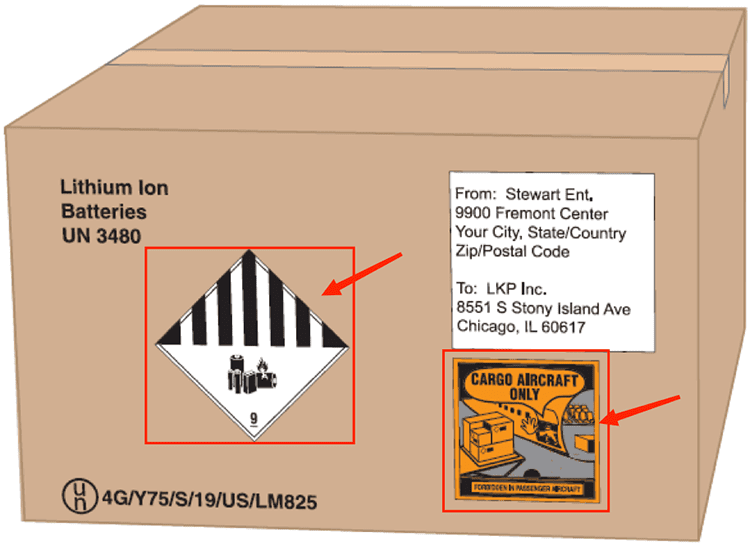
- Correct UN classification: UN3480 (lithium-ion batteries shipped alone), UN3481 (packed with or contained in equipment), UN3171 (battery-powered vehicles/equipment)
- State of charge ≤30% for cells shipped standalone—a rule inherited from air transport that DG road operators on this lane also enforce
- Compliant packaging and marking: UN-spec packaging, Class 9 hazard labels, and lithium battery handling marks on every carton
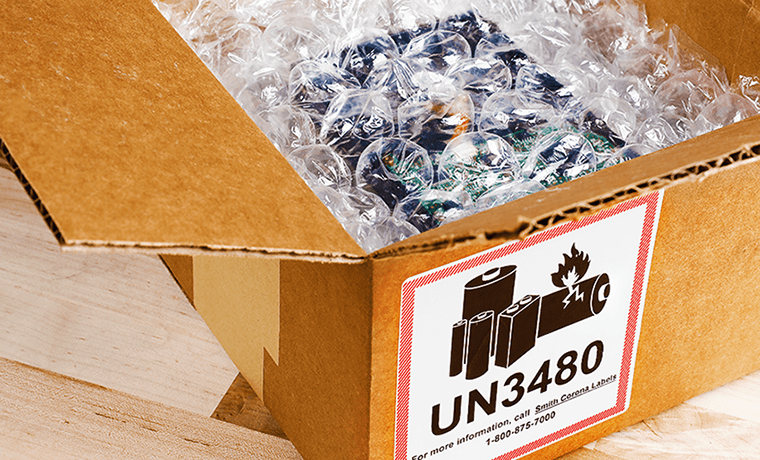
Two lane-specific realities worth knowing. First, DG truck capacity is the bottleneck: only a subset of cross-border operators hold dangerous-goods road permits on the China-Vietnam lane, and slots sell out ahead of production peaks—book 5–7 days ahead rather than the 1–2 days general cargo needs. Second, Vietnam-side import licensing: battery imports tied to EV assembly may require additional import registration by the consignee; confirm your Vietnamese partner’s license scope before the truck rolls, not after.
PCBs and most power machinery move as general cargo, but watch two edge cases: PCBA with installed button cells crosses into UN3481 territory, and machinery with hydraulic fluid or sealed batteries may need MSDS documentation even when it isn’t formally classed as DG.
Building a Resilient China-Vietnam Component Pipeline
Pulling it together, the resilient setup for an electronics or EV component shipper looks like this:
- Dual-channel by design. Qualify both a truck and a sea routing during onboarding, not during a crisis. Switching channels mid-disruption takes days you won’t have.
- Pre-clear everything. Green-channel speed comes from documentation discipline: locked HS codes, consistent invoice/packing data, and pre-arrival filing as standard practice.
- Separate DG from general cargo flows. Mixed loads inherit the slowest cargo’s inspection risk. Batteries travel on dedicated DG schedules; PCBs ride the daily express.
- Buffer around known calendar risk. Tet + CNY closures and typhoon season are predictable—build inventory ahead of them instead of paying crisis freight through them.
- Work with a forwarder running both sides. Border performance depends on having clearance teams at Pingxiang and Huu Nghi/Hai Phong who talk to each other daily.
FAQ: China to Vietnam Electronics Logistics
How long does trucking from Shenzhen to Bac Ninh take?
Scheduled cross-border truck express runs 2–3 days door to door via the Youyi Guan (Friendship Pass) crossing, with daily departures. Border congestion in peak weeks can extend this to 4–6 days, which is why time-critical shippers use green-channel pre-clearance.
Can I ship lithium batteries from China to Vietnam by road?
Yes, but only with DG-permitted operators. You’ll need UN38.3 test summaries, a current MSDS, correct UN classification (UN3480/3481), state of charge at or below 30% for standalone cells, and UN-spec packaging with Class 9 labels. DG truck slots are limited—book 5–7 days ahead.
Is sea freight from Guangzhou to Hai Phong faster than regular ocean shipping?
Coastal fast ship services run fixed weekly schedules with 2–3 day sailings, delivering port-to-door to Bac Ninh in 5–7 days—much faster than intercontinental ocean freight, at 40–60% below truck express rates. The trade-off is lower departure frequency and typhoon-season risk from June to October.
What is the green channel at the China-Vietnam border?
Green channels are priority clearance lanes at major land crossings like Youyi Guan, combining pre-arrival declaration, dedicated physical lanes, and lower inspection rates for compliant, well-documented cargo—particularly electronics under processing-trade arrangements. Eligibility depends on clean documentation; discrepancies drop shipments back into standard queues.
Should I use truck or sea for EV components from China to Vietnam?
Planning a China → Vietnam component lane?
To receive this week’s truck express timetable and rate sheet for South China to ASEAN industrial zones (Bac Ninh, Bac Giang, Hanoi, Hai Phong, and beyond), please contact us directly with your cargo type and monthly volume.
Email: [your email]
WhatsApp / WeChat: [your number]
We’ll reply within 24 hours with a tailored rate sheet and schedule.
 English
  Chinese
  Arabic
  French
  German
  Portuguese
  Spanish