DAP Incoterms® 2020: Complete Guide to Delivered at Place (Buyer & Seller Duties)
Vantage Forwarding
Last reviewed: June 2026 · This guide is updated annually. Customs rules and duty thresholds change — always verify with a licensed customs broker or local authority before shipping.
What Does DAP Mean in Trade?
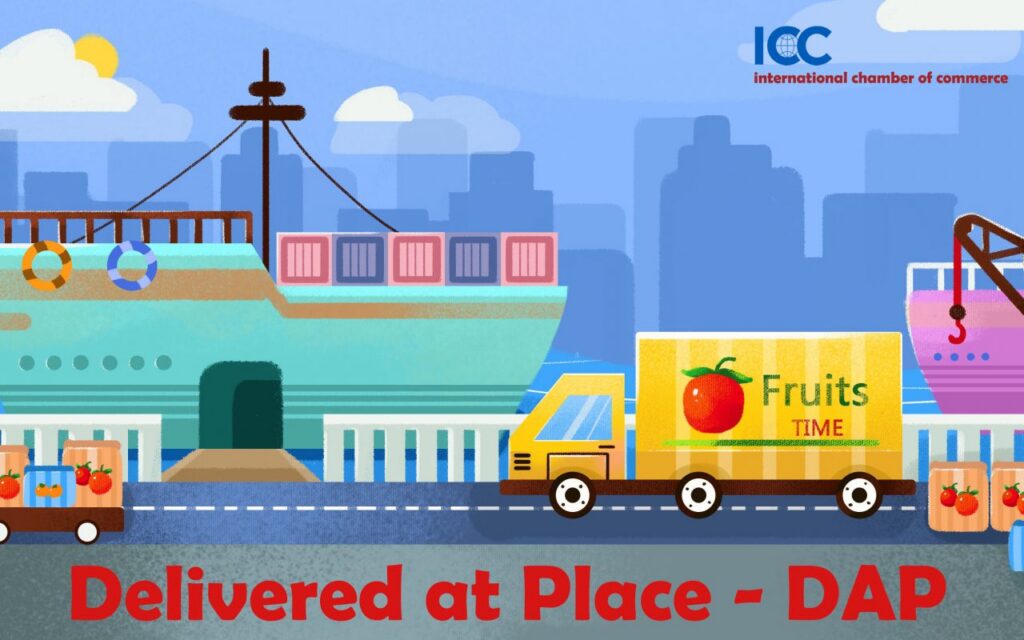
DAP (Delivered at Place) is an Incoterm defined under Incoterms® 2020 by the International Chamber of Commerce (ICC).
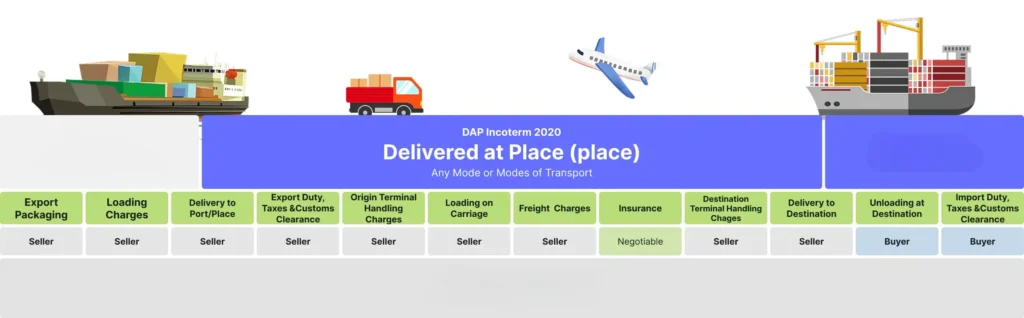
Under DAP, the seller is responsible for delivering goods to a named destination — which can be a port, warehouse, distribution centre, or the buyer’s premises. The seller bears all costs and risks up to that point.
At the moment goods arrive at the named place and are placed at the buyer’s disposal — but before unloading — risk and responsibility transfer from seller to buyer.
DAP in one sentence
The seller brings the goods to your door. You unload them, clear them through customs, and pay all import duties and taxes.
DAP applies to any mode of transport: ocean freight, air freight, road, rail, or multimodal combinations.
TL;DR — Key Facts About DAP
Factor
Detail
Seller’s responsibility ends
When goods arrive at the named destination, ready for unloading
Under DAP, the seller covers everything up to the named place of delivery:
Export customs clearance in the origin country (filing export declaration, paying any export duties)
International freight (ocean, air, road) from origin to the named destination
Cargo insurance — not mandatory under DAP, but the seller carries the risk during transit, so cover is strongly advised
Pre‑carriage — domestic transport within the origin country to the main port or airport
The seller does not handle or pay for:
Unloading at the destination
Import customs clearance in the destination country
Import duties, VAT, or any destination taxes
Any costs arising from customs delays at the destination
What the Buyer Must Do Under DAP
This is where many buyers get caught off guard — especially in international e‑commerce, where DAP can mean a delivery driver arrives with a duty bill the buyer never expected.
The buyer’s obligations under DAP:
1. Import Customs Clearance
The buyer — or the buyer’s appointed customs broker — must file the import declaration with the relevant customs authority in the destination country.
In the EU, that means filing with the destination member state’s customs authority.
In the US, it means a CBP entry filing.
If goods arrive without clearance arranged, they will be held in a bonded warehouse. Storage fees accumulate from day one — at the buyer’s cost.
2. Payment of Import Duties
All import duties, calculated on the declared customs value of the goods, are the buyer’s responsibility. Duty rates depend on:
The destination country’s applicable duty rate (including preferential rates under trade agreements)
3. Payment of Import VAT (or equivalent)
In most destinations — including the EU, UK, Australia, and many others — import VAT/GST is charged on the customs value.
Regional note: Since July 2021 (and continuing under current rules), the EU charges import VAT from the first euro of goods value. Standard EU member state VAT rates apply (e.g., 19% Germany, 20% France, 21% Netherlands).
4. Unloading
The buyer is responsible for unloading goods from the delivery vehicle at the named place. If unloading is complex (heavy machinery, bulk cargo), this is a real cost the buyer carries.
5. Any Costs Arising from Customs Delays
If customs clearance is delayed — due to documentation errors, physical inspection, or regulatory holds — all storage, demurrage, or handling fees during that delay fall to the buyer.
Where Risk Transfers Under DAP: The Precise Moment
Risk transfers at the named place of destination, when goods are placed at the buyer’s disposal, ready for unloading — but before unloading begins.
If goods are damaged during transit from origin → seller’s risk, seller’s problem
If goods arrive and are damaged during unloading → buyer’s risk, buyer’s problem
If goods are held at the destination port for customs clearance delays → costs and risk of loss during that hold are the buyer’s
Practical implication: The named place matters enormously. “DAP Hamburg” (just the port) vs “DAP [Your Warehouse Address], Hamburg” create very different buyer risk profiles. Always confirm the exact named place in the DAP contract.
EU B2B exception: A VAT‑registered EU business buying under DDP cannot recover the import VAT because the forwarder paid it in their own name. DAP (or FCA) is often the correct choice for B2B importers who need to reclaim input VAT.
When to Choose DAP (and When Not To)
DAP is appropriate when:
The buyer is a B2B importer with customs capability (has a broker, understands duty rates, can recover VAT)
The buyer wants control over customs clearance (uses their own broker, maintains direct visibility)
The buyer is EU‑registered for VAT — DAP allows reclaiming import VAT (DDP does not)
The shipment involves regulated or sensitive products where the buyer’s compliance team must manage import docs
DAP is problematic when:
The buyer is an end consumer (B2C) with no customs experience — the arrival duty bill is a shock and often triggers refusal
The seller is running e‑commerce on marketplaces (Amazon EU, Temu, SHEIN) where customers expect an all‑inclusive price
Goods are subject to high inspection risk — incorrect HS codes or declared values cause delays entirely at the buyer’s cost
The destination country has recently changed duty thresholds (see regional box below)
DAP in Practice: A Step‑by‑Step Example
Scenario: A UK‑based buyer (VAT‑registered retailer) purchases 200 units of consumer electronics from a Shenzhen supplier. Contract terms: DAP [Buyer’s Warehouse], Birmingham, UK.
What the seller handles:
Factory packaging and export preparation
Export customs clearance in China
International ocean freight from Yantian to Felixstowe
Insurance during transit (seller’s risk until delivery)
What the buyer handles on arrival:
Appoints a UK customs broker to file the import entry with HMRC
Pays UK import duty (HTS rate for consumer electronics: 0–5% depending on product)
Pays UK import VAT (20%) on the declared customs value
Arranges domestic haulage from Felixstowe to Birmingham warehouse
Unloads at the warehouse
If customs clearance is delayed, goods sit in the Felixstowe bonded area. Storage charges accumulate at the buyer’s account from day one of the hold.
What to Negotiate When Buying Under DAP Terms
Before signing a DAP purchase contract, confirm the following:
The exact named place – “DAP UK” is not valid. Use “DAP [Your Warehouse Address], Birmingham, UK, Incoterms® 2020”. Specificity determines where seller’s obligation ends.
Whether insurance is included – DAP does not oblige the seller to insure, but the seller carries transit risk. Confirm if insurance is included or if you need supplementary cover.
The declared customs value – You pay duty on the declared value. If the seller under‑declares to help you save duty, you carry the compliance exposure. Ensure the commercial invoice matches the actual transaction price.
The HS code classification – Your broker files using the HS code you provide. Agree the HS code in advance to avoid discrepancies.
Unloading responsibility – For heavy or awkward cargo, confirm you have the equipment or service available at the named place. If unloading is complex, consider negotiating DDP.
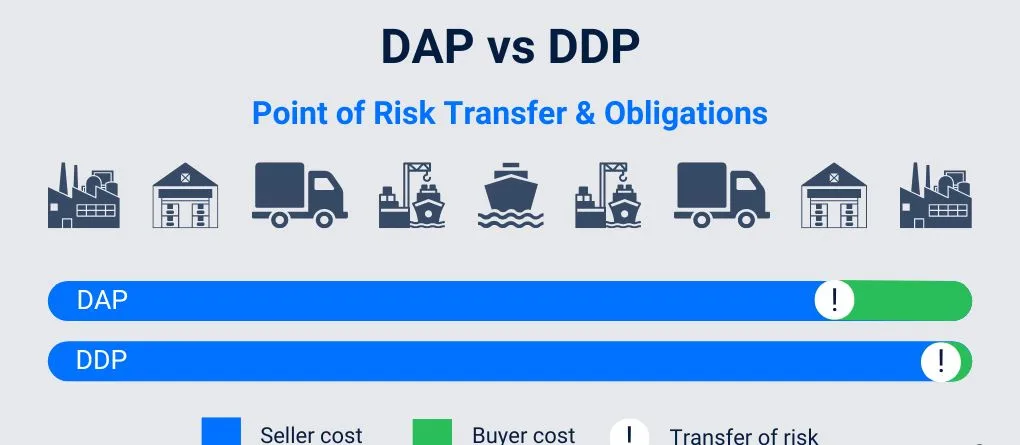
DAP sits one step below DDP on the seller‑responsibility spectrum. Under DAP, the seller has done almost everything — except import clearance and duty payment. That last step is the buyer’s.
Frequently Asked Questions
What does DAP mean in shipping? DAP stands for Delivered at Place. Under Incoterms® 2020, the seller delivers goods to a named destination and is responsible for all costs and risks up to that point. The buyer is responsible for unloading, import customs clearance, and all import duties and taxes. Who pays customs duty under DAP? The buyer pays all import customs duties under DAP. Duties are calculated and collected at the destination country’s customs authority when goods arrive. If the buyer does not arrange clearance and payment, goods are held in a bonded area at the buyer’s cost. What is the difference between DAP and DDP? Under DAP, the buyer pays duties and import VAT at the destination. Under DDP (Delivered Duty Paid), the seller or their freight forwarder pays all duties and VAT upfront, and the buyer receives goods with no additional charges. DDP is preferred for B2C e‑commerce; DAP is often preferred for B2B buyers who want to manage their own customs and recover import VAT in their own name. Is DAP suitable for EU shipping after recent reforms? For B2C e‑commerce, DAP creates significant problems because end consumers often refuse delivery when faced with unexpected duty and handling fees. For B2B buyers with customs capability and VAT registration, DAP remains appropriate — especially because it allows input VAT recovery. See the EU regional box above for current thresholds. What happens if a DAP shipment is held at customs? All costs arising from customs holds — storage fees, examination costs, re‑inspection — fall to the buyer under DAP. The seller’s risk transferred at delivery to the named place; the customs delay period is entirely the buyer’s exposure. This is why DAP buyers need a reliable customs broker who can resolve documentation issues promptly.
Need Help with DAP or DDP Shipments?
International freight under DAP or DDP requires careful coordination of export/import clearance, HS code classification, and duty estimation. A licensed freight forwarder can help you:
Determine the correct Incoterm for your business model (B2B vs B2C)
Prepare accurate commercial invoices and export declarations
Arrange DDP terms that fix your landed cost before goods leave origin
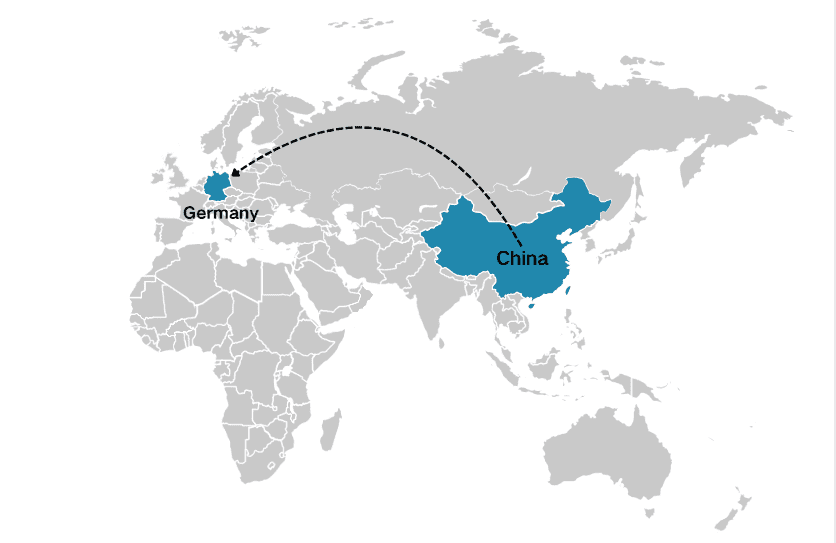
Vantage Forwarding specialises in China‑to‑EU and China‑to‑US shipments under both DAP and DDP terms, including HS code support and EU landed cost estimates.
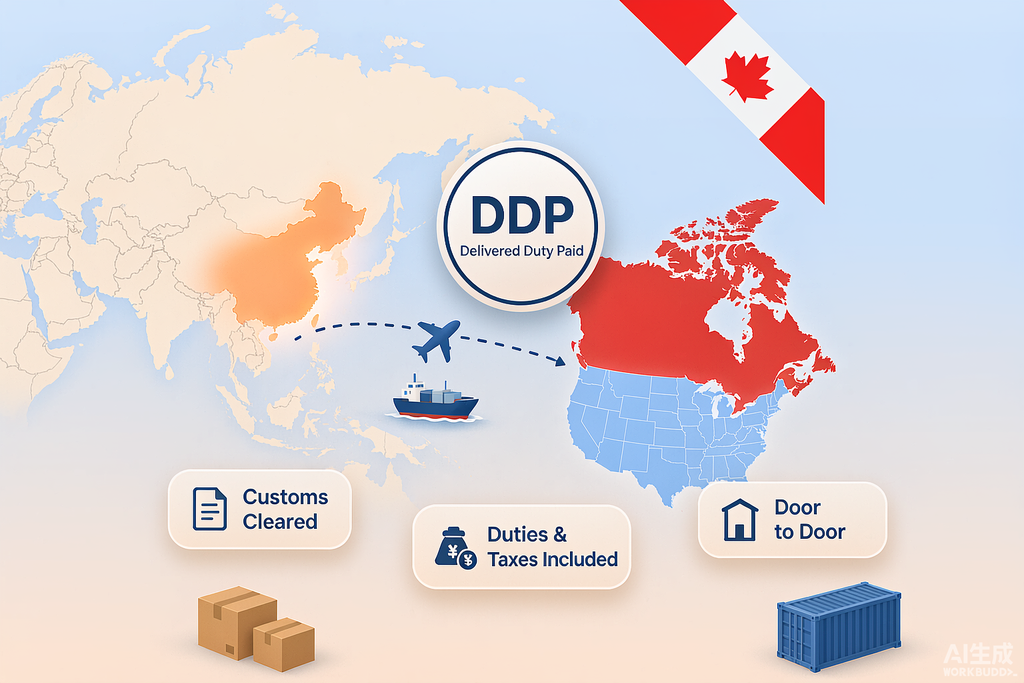
DDP shipping to Canada from China: what the quote covers, customs duty and GST or HST by province, the CBSA process, transit times, and when DDP is the right call.
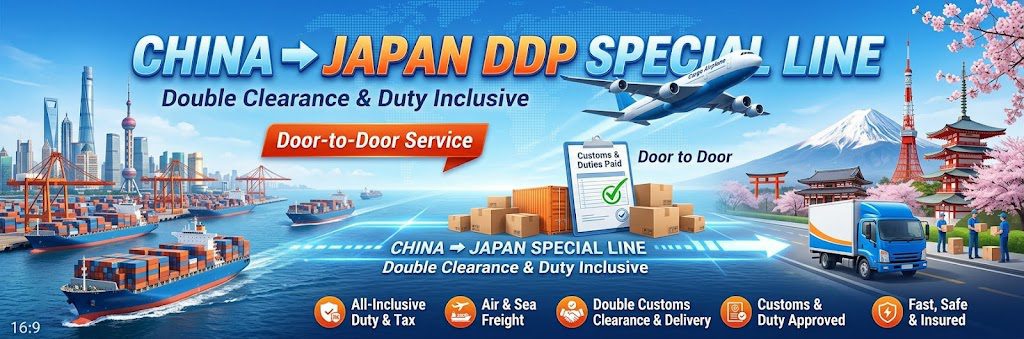
DDP shipping to Japan from China in 2026: what the price covers, customs duty, the 10% consumption tax that now applies to every import, RCEP savings, and transit times.
Hello! How can we assist you with your special cargo shipping today?
Please share your cargo type (lithium batteries, branded goods, or liquids), destination, and any special requirements. We'll reply with a quote and process shortly.
Send Message
Vantage Forwarding • Usually replies within 2 hours
 English
  Chinese
  Arabic
  French
  German
  Portuguese
  Spanish