1688 Hidden Costs: The $5 Product That Costs $100 to Ship
You found that perfect widget on 1688.com for $5. You’re already picturing the sales rolling in. You get a shipping quote that seems okay, maybe $20. Then the final bill lands, and it’s $100. Or worse, your customer gets hit with a surprise customs bill. What the hell happened? You just got hit by the hidden costs of 1688 shipping to USA.
Listen up. This isn’t about blaming 1688; it’s about understanding how the game is played from Guangzhou to your customer’s doorstep. Most sellers on 1688 are domestic suppliers. They know nothing about international shipping. They’ll quote you a price to get it to a local Chinese warehouse, and that’s where your real problems begin. This guide is your shield against getting ripped off.
The ‘5000’ Rule That Catches Beginners Off Guard: Volumetric Weight
You’re shipping a box of lightweight, fluffy pillows. It weighs 2 kilograms. You think, great, cheap shipping! But then the carrier charges you for 15 kilograms. What gives?

This is volumetric weight, and it’s the number one killer of profit margins for e-commerce sellers. Carriers don’t just care about how heavy your box is; they care about how much space it takes up on their plane or ship. Imagine shipping a huge box of cotton candy. It weighs next to nothing, but it takes up the space of a small refrigerator. The carrier will charge you for the refrigerator space, not the cotton candy’s actual weight.
- How it works: They measure your package’s Length x Width x Height (in cm). Then they divide that number by a ‘dimensional factor,’ usually 5000 or 6000 for air freight. The result is your volumetric weight.
- The Catch: You’ll be charged for whichever is higher: the actual weight or the volumetric weight. Always. Always assume you’ll be charged for the volumetric weight if your product is bulky but light.
Always get the dimensions of your product’s packed box, not just its weight. This is critical for getting an accurate quote.
The Chinese Customs ID Passport: Your HS Code
Your product needs an HS Code. Think of this as its international passport number, a universal identification system for goods. Every product has one. Get it wrong, and you’re asking for trouble.
- What it does: The HS Code tells customs exactly what your product is. This dictates the import duties and taxes you’ll pay in the USA. It also flags any restrictions or special requirements.
- The Danger: If you use the wrong HS Code, your shipment can be delayed, held by customs, or even seized. You could face hefty fines. Worse, if customs decides your code was intentionally misleading, you’re looking at serious penalties.
Don’t guess your HS Code. Ask your supplier for it, but always double-check it yourself or have your freight forwarder verify it. This one detail can save you thousands in headaches and delays. According to the operations team at Vantage Forwarding’s Guangzhou Baiyun hub, 80% of shipment delays happen because sellers don’t understand their HS codes or choose the wrong Incoterm.
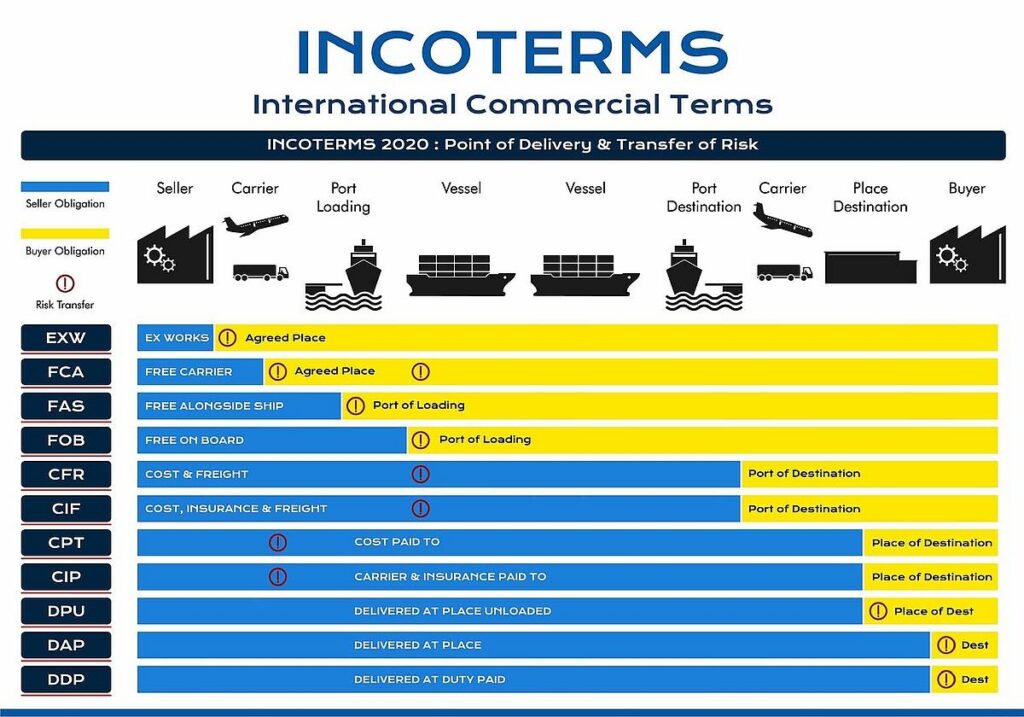
The ‘Surprise Bill’ Incoterms: DAP vs DDP
These fancy acronyms, Incoterms, define who is responsible for what, and when, during the shipping process. For e-commerce sellers, two are crucial: DAP and DDP. Choosing the wrong one is how your customer gets hit with a surprise bill.
- DAP (Delivered At Place): This means we deliver the goods to your customer’s door in the USA. Sounds great, right? But here’s the kicker: your customer is responsible for paying all import duties, taxes, and customs clearance fees upon arrival. They get a call from FedEx or UPS demanding money before they’ll release the package. That’s a terrible customer experience, leading to angry emails, refused packages, and negative reviews.
- DDP (Delivered Duty Paid): This is the gold standard for e-commerce. With DDP, we handle everything. All shipping costs, customs clearance fees, import duties, and taxes are paid upfront, here in China, before the goods even leave. Your customer receives their package with no unexpected charges, no phone calls, no hassle. It’s a seamless, professional experience.
Always, always opt for DDP when shipping to your end customers in the USA. It might seem slightly more expensive upfront, but it eliminates all hidden fees for your buyer and protects your brand reputation. The peace of mind is worth every penny.
The Fuel & Remote Area Fee Assassins
Just when you thought you had the costs figured out, these two pop up to stab your budget in the back.
- Fuel Surcharge: This is a variable fee added by carriers to account for fluctuating fuel prices. It’s usually a percentage of the base freight cost and can change weekly or monthly. It’s rarely included in initial ‘rough’ quotes from 1688 suppliers or even some inexperienced forwarders. Always ask for the current fuel surcharge percentage.
- Remote Area Surcharge: Does your customer live in a small town in Montana or a tiny island off the coast of Florida? If their delivery address is considered ‘remote’ by the carrier (UPS, FedEx, DHL), you’ll get hit with an extra fee. This can be anywhere from $25 to $50 per shipment. It’s not always obvious until the address is entered into the carrier’s system.
A good freight forwarder will check for remote area surcharges upfront if you provide the full delivery address. Don’t let these sneak up on you.
Customs Clearance & Handling Fees: The Gatekeepers
Getting your goods into the USA isn’t just about paying duties. There are fees for the actual process of clearing customs.
- Customs Brokerage Fee: Unless you’re a licensed customs broker yourself (you’re not), you’ll need someone to handle the paperwork and communication with US Customs. This service comes with a fee.
- ISF Filing (Importer Security Filing): For ocean freight, this is a mandatory filing that must be submitted to US Customs at least 24 hours before your cargo is loaded onto the vessel in China. Miss this, and you’re looking at a $5,000 fine per violation. Yes, $5,000.
- Entry Summary Declaration (ESD): This is the formal declaration of your goods to US Customs, detailing their value, origin, and classification. It’s another piece of the puzzle that incurs a fee.
These aren’t optional. They are part of the cost of doing business internationally. Make sure they are included in any DDP quote you receive.
Duties, Taxes, and Tariffs: Uncle Sam’s Cut
This is often the biggest chunk of change after the base shipping cost. When importing into the USA, you’ll almost always owe duties and taxes.
- Import Duty: This is a tax levied by the US government on imported goods. The percentage varies wildly based on your product’s HS Code and its country of origin. Some products have 0% duty, others can be 20% or more.
- Section 301 Tariffs: Many goods from China are still subject to additional tariffs under Section 301. These can add another 7.5% to 25% on top of the regular import duty. This is a huge cost that many beginners overlook.
- De Minimis Value: For most imports, if the total declared value of your shipment (excluding shipping costs) is under $800, it can enter the USA duty-free. This is great for small, low-value shipments. However, if you’re shipping multiple items to one customer, or a larger batch to your own warehouse, you’ll likely exceed this.
Understanding these costs upfront is non-negotiable. A reputable freight forwarder will calculate these for you based on your product’s HS Code and declared value.
The ‘Last Mile’ Delivery Cost: Getting It to the Door
Even after your goods clear customs at a US port or airport, they still need to get to their final destination. This is the ‘last mile.’ For small parcels, this is typically handled by UPS, FedEx, or USPS. For larger shipments, it might be a local trucking company.
This cost is usually bundled into DDP services, but if you’re doing DAP or arranging parts of the shipping yourself, remember to factor it in. It’s not free just because it’s on US soil.

Why You Need a Real Freight Forwarder (Not Just Your 1688 Supplier)
Your 1688 supplier is great at making products. They are generally terrible at international logistics. They’ll often quote you a price that only covers getting your goods to a local Chinese port or an express courier’s depot, leaving you to deal with everything else.
A dedicated freight forwarder, especially one with a strong presence like Vantage Forwarding’s Guangzhou Baiyun hub, acts as your logistics partner. We consolidate shipments, negotiate rates with carriers, handle all the complex paperwork, and most importantly, provide you with a transparent, all-inclusive quote.
- Expertise: We know the HS Codes, the Incoterms, the tariffs, and the best routes.
- Consolidation: We can combine your goods with other shipments to get better rates (LCL – Less than Container Load).
- Transparency: We give you one price, DDP, door-to-door, so you know exactly what you’re paying. No surprises.
- Problem Solving: If customs holds your shipment, we deal with it. If there’s a delay, we communicate it.
How to Get a Bulletproof Quote for 1688 Shipping to USA
To avoid getting blindsided, you need to provide your freight forwarder with specific, accurate information. Don’t skimp on the details:
- Product Description: What exactly are you shipping? Be specific.
- HS Code: Provide the correct HS Code. If unsure, provide detailed product specs (materials, function, etc.) so your forwarder can help classify it.
- Total Quantity: How many units?
- Total Weight: The actual gross weight of all packed cartons.
- Total Dimensions: The Length x Width x Height of EACH packed carton, and the total number of cartons. This is crucial for volumetric weight calculation.
- Declared Value: The commercial value of your goods (for customs purposes).
- Origin Address: The exact pickup address in China (your 1688 supplier’s factory or warehouse).
- Destination Address: The full, exact delivery address in the USA (including zip code).
- Desired Service Level: Air freight (faster, more expensive) or ocean freight (slower, cheaper)?
- Incoterm: Specify DDP (Delivered Duty Paid) for a truly all-inclusive quote.
Without these details, any quote you get is just a guess, and you’ll pay for those guesses later.
Stop Guessing, Start Shipping Smart
Shipping from 1688 to the USA doesn’t have to be a minefield of hidden fees. The key is transparency and working with a partner who understands the intricacies of international logistics, from the factory floor in Guangzhou to your customer’s doorstep in the USA.
Don’t guess these hidden costs and risk your profit margins or your customer’s trust. Skip the math and run your exact specs through our Landed Cost Calculator to get a real, locked-in DDP quote out of Guangzhou. We’ll give you one price, all-inclusive, no surprises. That’s the Vantage Forwarding promise.

 English
  Chinese
  Arabic
  French
  German
  Portuguese
  Spanish