一分钟搞懂国际贸易术语(Incoterms)
Incoterms are the International Chamber of Commerce’s (ICC 2020) standard trade rules that decide, for each leg of a shipment, who arranges the transport, who pays for it, and where the risk of loss or damage passes from seller to buyer. For a 中国至阿联酋的海运 deal, the right Incoterm is the difference between a clean delivered price and a border surprise you never budgeted for.
Every Incoterm splits three things:
- Responsibility — who books and controls the carrier.
- 成本 — who pays freight, insurance, duty and VAT.
- 风险 — the exact point where the seller’s liability ends and the buyer’s begins.
Master those three and you can read any supplier quote. The mistake most first-time importers make is focusing only on the unit price and ignoring which costs the term pushes onto their side of the table.
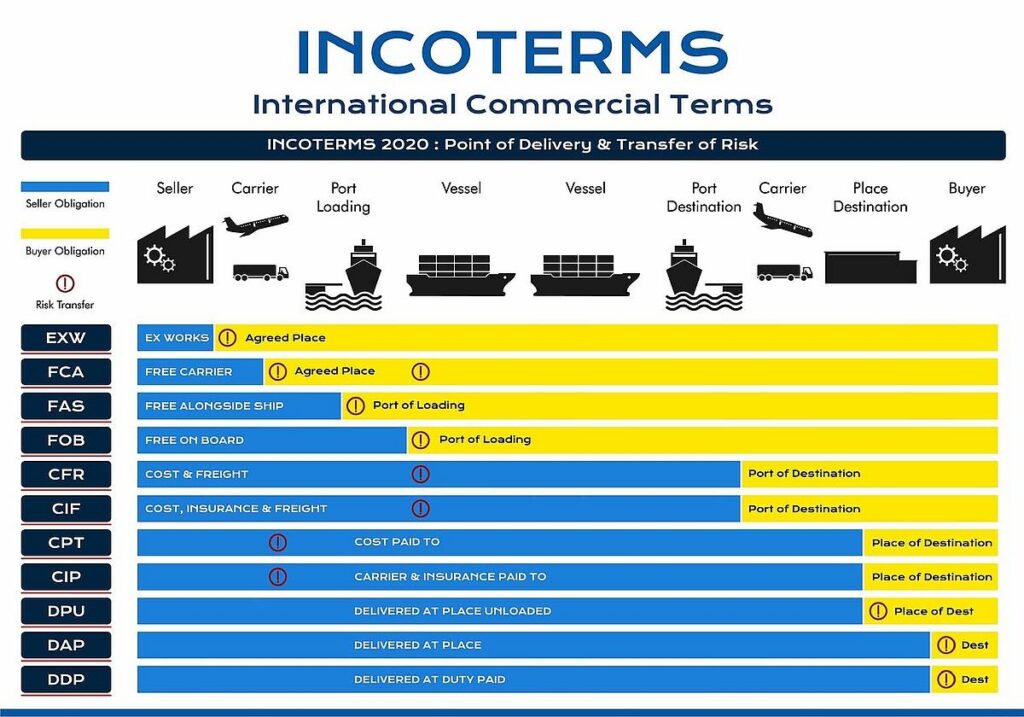
The 2020 rules contain 11 Incoterms split into groups by mode: seven for any mode of transport (including road and air) and four — FOB, CFR, CIF and FAS — reserved for sea and inland waterway, where risk passes at the ship’s rail. For containerised China–UAE trade, the relevant terms are almost always the all-mode ones, with FOB and CIF the traditional ocean choices. Knowing which group a term sits in tells you immediately where risk transfers.

EXW and FOB: buyer takes the ocean leg
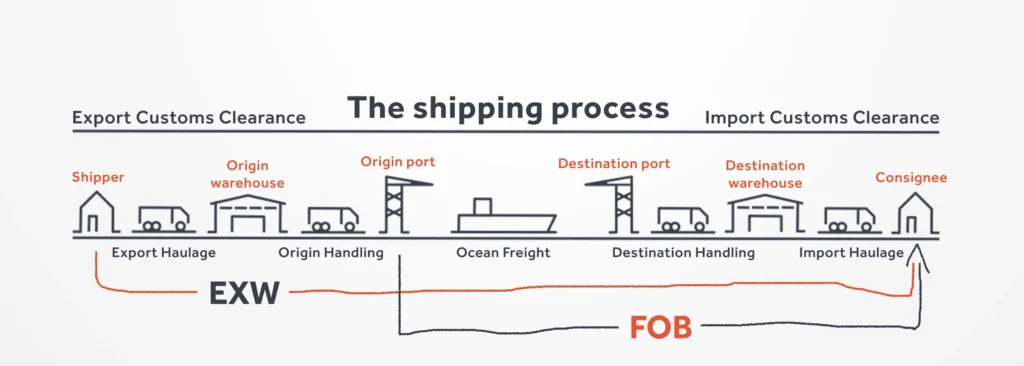
EXW (Ex Works) puts almost everything on the buyer. The seller simply makes the goods available at their factory gate in China. You arrange pickup, export clearance, ocean freight, insurance, import clearance and delivery. EXW gives you maximum control but maximum workload — not ideal for a first China import.
离岸价(船上交货) is the most common term for China–UAE trade. The seller pays to move the goods to the Chinese port, clear them for export and load them onto the vessel. Risk passes to you once the cargo is on board. From that moment, you (or your forwarder) book the ocean freight, insurance, import clearance and last mile.

FOB is popular because it lets the buyer control the main ocean leg and compare freight quotes, while the seller handles the messy Chinese inland leg. For importers who want rate transparency on the China–UAE corridor, FOB is the natural starting point.
Note that FOB is always tied to a named port of loading — “FOB Shenzhen” means the seller’s responsibility ends at the Shenzhen beam. If your supplier is in inland Guangzhou, the inland leg to Shenzhen is still the seller’s cost under FOB, which is why the Incoterm’s named point matters as much as the letters. Always write the port, never just “FOB China,” or the responsibility line blurs.
小故事: A Sharjah retailer took an EXW quote that looked USD 400 cheaper per container than FOB. By the time they paid a Chinese trucker, export broker, port handling and their own freight, the “saving” had flipped into a USD 600 loss, plus two weeks of coordination stress. The lower headline price was the most expensive choice.
CFR and CIF: seller pays freight/insurance to port
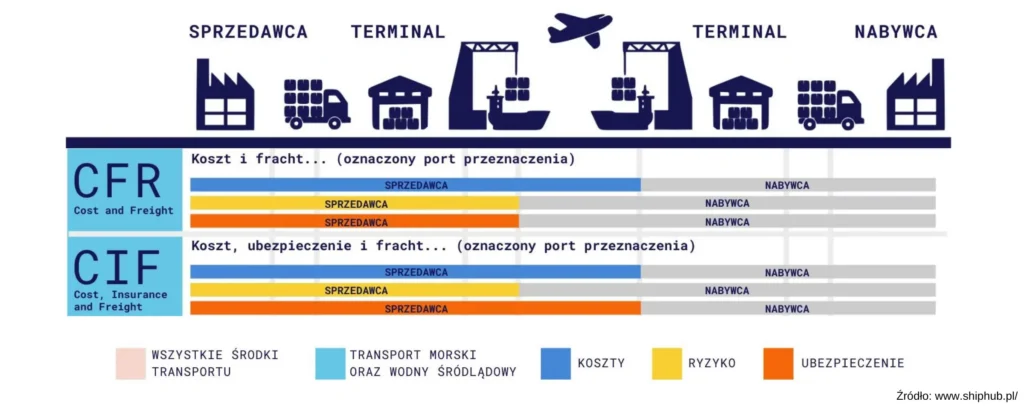
CFR (Cost and Freight) 和 CIF (Cost, Insurance and Freight) shift the ocean leg back to the seller. Under CFR the seller pays freight to the UAE port; under CIF the seller also buys cargo insurance. In both, risk still transfers to the buyer at the ship’s rail in China — insurance under CIF protects the buyer’s interest, but the claim is the buyer’s to make.

These terms suit buyers who prefer a single Chinese invoice and do not want to negotiate ocean freight themselves. The trade-off is less visibility and potentially inflated freight built into the seller’s quote. On a volatile lane like China–UAE in 2026, that hidden margin can be significant.
For many SMEs, CFR/CIF means “one supplier, one price, one point of contact.” Just confirm the freight component separately so you know what you are paying for the sea leg versus the goods.
One subtlety trips up new importers: under CIF the seller buys insurance, but only to the minimum Institute Cargo Clauses (C) cover. If your goods are high-value or fragile, that minimum may leave a gap you discover only after a claim. Many buyers on CIF add their own top-up cover or shift to FOB and insure directly. The term sets the baseline; your cargo’s risk profile should set the insurance level.
DAP and DDP: delivered to your door
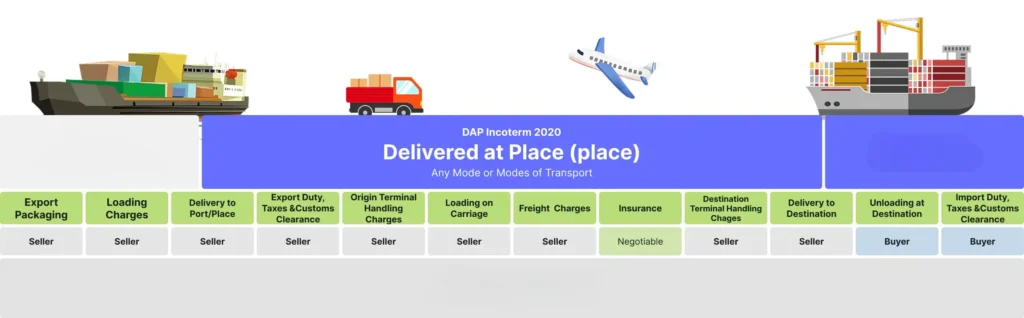
DAP(就地交付) means the seller delivers the goods, cleared for import transit but not for import, to your named place in the UAE. The seller covers freight and risk all the way to your door, but 你 handle import clearance and pay the 5% duty and 5% VAT. DAP is a step toward hands-off receiving without the seller owning the tax.
DDP(完税后交货) is the most complete term. The seller takes the goods all the way to your door, including import clearance and the payment of duty and VAT. You receive cleared, taxed, delivered cargo and do almost nothing at the border.

DDP is where the tax question lands squarely on the seller. If you want to know who pays the 5% duty and VAT, the answer under DDP is: the seller does, inside the quoted price. Our DDP shipping from China to UAE service is built for importers who want that single all-in number.
DDP is not free — the seller prices the duty, VAT and clearance risk into the quote. But for a first shipment, that visibility often beats a cheap FOB price that hides a complicated, costly UAE border on the other end.
One practical catch under DDP: the seller must be set up to pay UAE VAT, which can mean a local entity or a fiscal representative. Some Chinese suppliers decline DDP for exactly this reason, or price it cautiously. If a supplier offers DDP, confirm they can actually settle UAE tax compliantly — a DDP quote with no ability to pay VAT at the border is a promise that breaks at clearance.
Which Incoterm fits your China–UAE shipment
Use this decision guide:
- First-time importer, low volume — choose DDP. You get one price, cleared and delivered, and learn the market before owning the border.
- Growing importer wanting freight control — choose FOB. You book the ocean leg, compare rates, and only take risk once cargo is on the vessel.
- Want seller to handle sea freight — choose CFR or CIF, but audit the freight line.
- Happy to manage import yourself — DAP gets goods to your door with you settling duty and VAT.
The import side of any term comes back to the same UAE rules. Under FOB, CFR, CIF and DAP, the buyer owns import clearance responsibility and the duty/VAT. Only DDP moves that to the seller. Match the term to your team’s capacity, not to the lowest headline number.
Concrete case: a first-time importer of USD 8,000 of goods chooses DDP and receives one invoice of, say, USD 9,400 all-in. A FOB quote might show USD 8,200 goods plus USD 600 freight plus about USD 880 duty and VAT — a lower headline but more moving parts and a UAE border to manage. For a newcomer, the DDP number is easier to trust; for a volume buyer, FOB’s transparency usually wins. The right term follows your maturity, not the catalogue.
Talk to a forwarder about terms
Incoterms are not just paperwork; they are your cost map. The right term depends on your volume, your team’s experience and how much of the China–UAE border you want to own.
If you are unsure which term protects your margin, talk it through with a forwarder before you sign the supplier quote. We can model the same shipment under FOB, CIF and DDP so you see the real landed difference, not just the factory price.
您的 集装箱类型及整箱/拼箱 choice also interacts with the term — a consolidated LCL under DDP behaves very differently from a 40HQ under FOB. Getting both decisions right together is what keeps a China–UAE shipment profitable. We see too many importers locked into a term from their first quote who never re-check it as volumes grow; the optimal term at one container a month is rarely the optimal one at ten.
Talk to us about your Incoterms →
Send your supplier quote and cargo details. We will tell you which Incoterm gives you the clearest landed cost and handle the freight, clearance or full DDP delivery to match.
常见问题
Which Incoterm is best for first-time China to UAE imports?
DDP is usually best for first-timers because the seller handles freight, import clearance and pays the 5% duty and VAT, giving you one delivered price with no border surprises.
Who pays the 5% UAE duty and VAT under FOB?
Under FOB the buyer pays ocean freight from China and owns import clearance, so the buyer pays the 5% duty and 5% VAT at the UAE border.
DAP 和 DDP 有什么区别?
Under DAP the buyer clears import and pays duty and VAT; under DDP the seller clears import and pays duty and VAT, delivering goods fully cleared to your door.