What is Landed Cost? The Complete Guide for E-commerce Sellers
Vantage Forwarding
What Is Landed Cost? (Simple Definition)
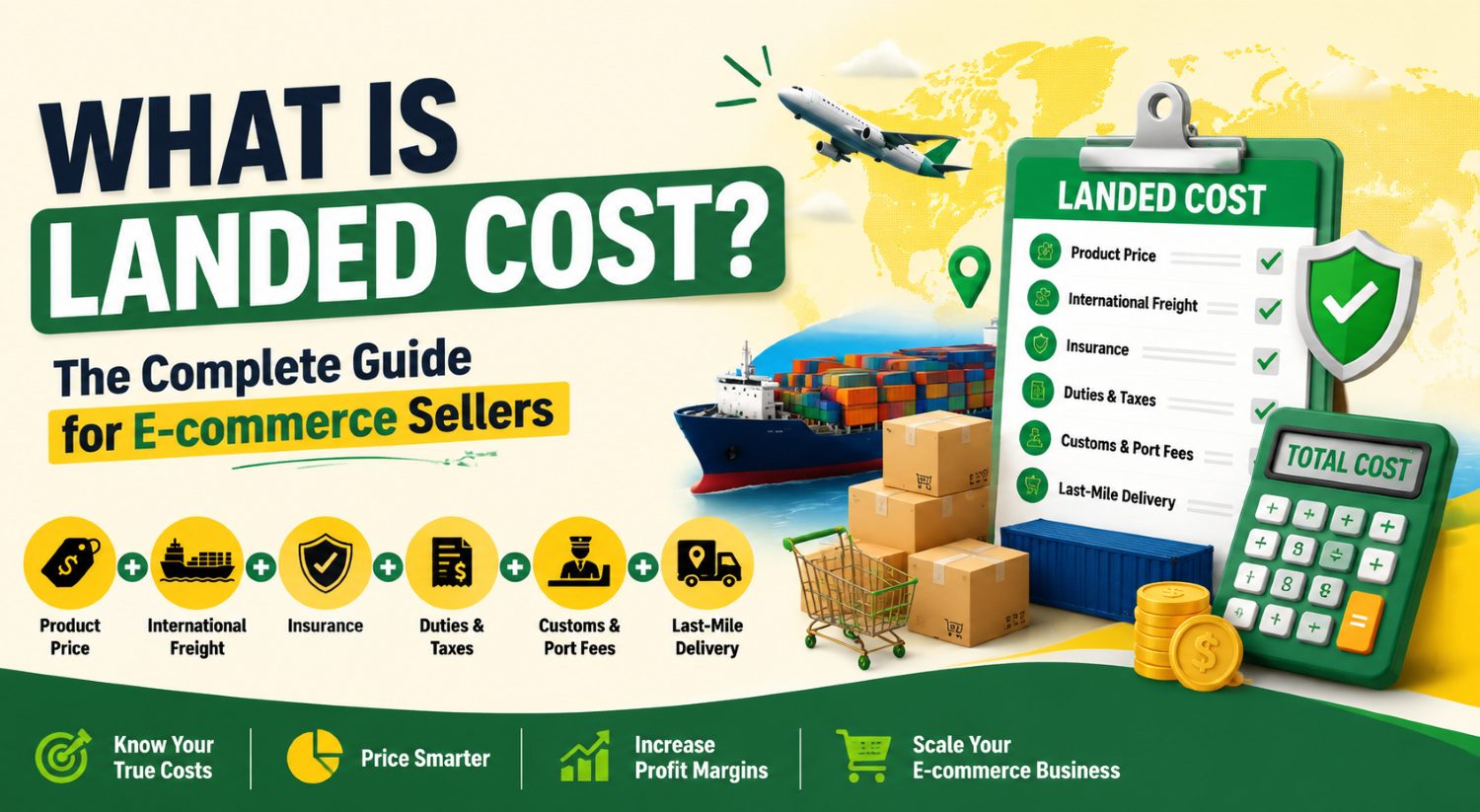
Landed cost is the total amount you pay to get a product from the factory to your warehouse or fulfillment center — fully cleared through customs and ready to sell.
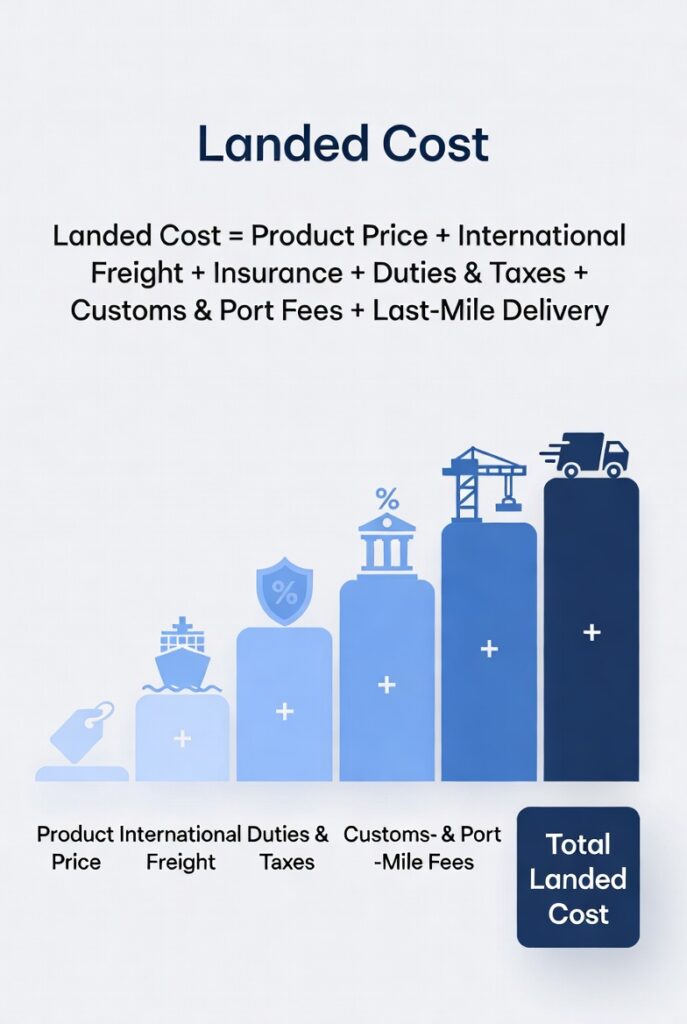
It is not just the purchase price. It is not just the shipping quote. Landed cost is every cost combined:
The word “landed” refers to when goods physically arrive — or “land” — at their destination. In e-commerce terms, landed cost covers everything from the moment you place a factory order to the moment the product sits on your warehouse shelf, ready to ship to a customer.
Why it matters in one sentence: If you price based on factory cost alone, you will lose money. Landed cost is the only accurate foundation for pricing, profitability analysis, and sourcing decisions.
The 6 Components of Landed Cost
1. Product Purchase Cost
The price you pay the supplier. This is your starting point — but it is not the same number regardless of how it is quoted.
EXW (Ex Works): Factory price only. You arrange and pay for everything from the factory door: domestic trucking, export packaging, export customs. Appears cheapest on paper, highest logistical burden in practice.
FOB (Free on Board): Factory price plus domestic China logistics and export clearance. The seller delivers goods to the nominated vessel, export-cleared. This is the most common pricing basis for China imports and the recommended baseline for landed cost calculations.
Rule: Always confirm whether your supplier quote is EXW or FOB. A $4 EXW price and a $4.80 FOB price may represent the same actual cost once domestic China logistics are added — or the FOB may be genuinely cheaper.
2. International Freight (Transportation Cost)
The cost to move goods from the origin country to the destination country. This is typically the second-largest component of landed cost and the most variable.
Four main options and their typical cost ranges (China → US, 2026):
Method
Transit Time
Cost Range
Best For
Express courier (DHL/FedEx)
3–7 days
$8–$15/kg
High-value, urgent parcels
Economy air express
7–15 days
$4–$8/kg
Standard e-commerce parcels
Sea freight LCL
25–40 days
$100–$150/CBM
Mid-volume orders
Sea freight FCL (20ft)
18–35 days
$2,500–$4,500 total
High-volume sellers
Route selection matters: Direct routes cost more but deliver faster. Transhipment routes (goods transferred at a hub port) are cheaper but add 3–7 days and one more handling touchpoint. For time-sensitive stock, direct routing is worth the premium.
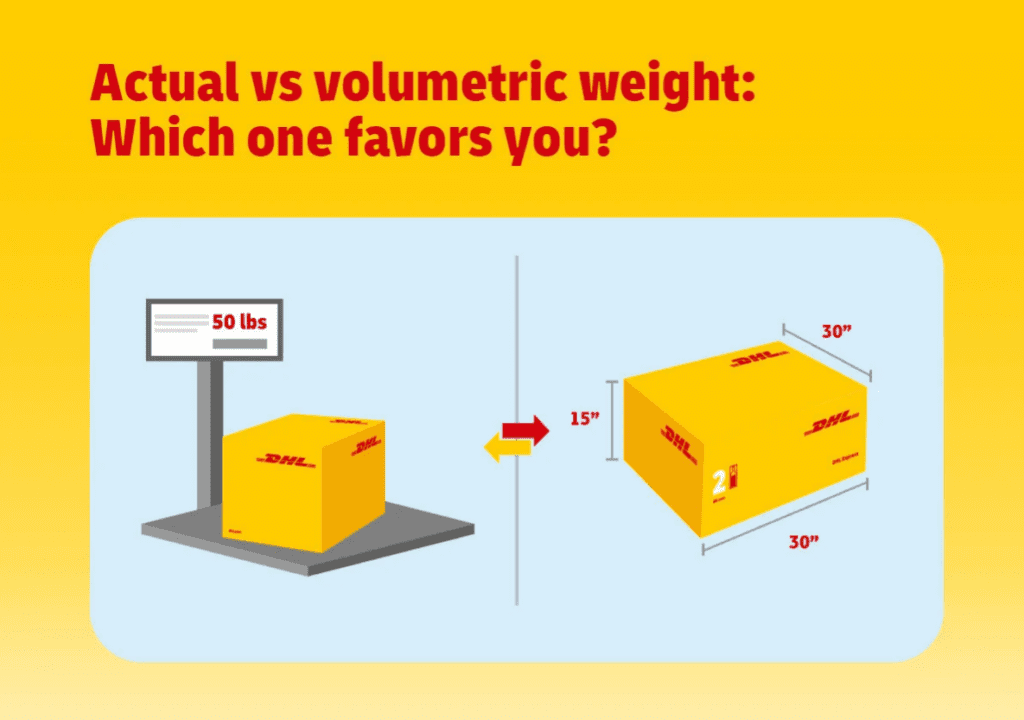
The volumetric weight trap: Carriers charge by chargeable weight — whichever is higher between actual weight and volumetric weight:
A 300g product in a 20×15×10cm box has a volumetric weight of 600g — you are billed for 600g. Bulky, lightweight products (foam goods, apparel, large plastic items) can run 3–5× their actual weight. Always calculate volumetric weight before committing to a product.
Market factors that affect freight cost:
Fuel surcharges: adjust monthly or weekly; currently 16–47% on international air routes (June 2026)
Peak season surcharges: Q4 and Chinese New Year add 20–40% to air freight rates
Geopolitical disruptions: Red Sea rerouting, port strikes, and canal closures create sudden rate spikes
Exchange rate movements: freight billed in USD affects costs for non-USD buyers
3. Insurance
Insurance covers the value of your goods during transit. It is not mandatory under most Incoterms — but for any shipment with meaningful value, skipping it is a risk decision, not a savings decision.
Standard cargo insurance rate: Approximately 0.1%–0.5% of declared shipment value, depending on product type, carrier, and coverage terms.
A $10,000 shipment at 0.3% = $30 in insurance
Losing an uninsured $10,000 shipment: $10,000
For most e-commerce sellers, cargo insurance is one of the cheapest lines in the landed cost model relative to the risk it covers.
What to check:
Whether your freight forwarder’s quote includes insurance or quotes it separately
All-risks coverage vs. named-perils coverage (all-risks is broader and recommended)
Whether your policy covers both loss and damage, including partial loss
For e-commerce sellers sourcing from China, import tariffs and taxes are consistently the most underestimated components of landed cost. In 2026, relying on outdated tax models or assuming your small parcels will slip through duty-free is an express ticket to financial ruin.
🇺🇸 US Import Duties: The Death of De Minimis (China-Origin)
If you are shipping to the US market, the old loopholes have been completely welded shut.
The Exemption is GONE (Rest in Peace, Section 321): The historic $800 de minimis loophole has been fully eliminated for all China-origin goods. Every single e-commerce parcel entering the United States—even a single $15 sample—now requires formal or informal customs entry, a 10-digit HTSUS classification code, and full duty payment.
The Section 301 Tariff Burden: On top of the standard base HTS duty (which ranges from 0% to 25%), most consumer goods from China are hit with a mandatory Section 301 List 4A surcharge (currently +7.5%). This pushes the combined effective duty rate for standard e-commerce categories (apparel, electronics accessories, home goods) into a brutal 20% to 35% bracket.
Regulatory Turmoil Warning: Trade policy is highly volatile. The USTR’s ongoing reviews mean blanket rate hikes or sudden classification shifts can happen with minimal notice. Never calculate your margins without building a 5% to 10% tariff contingency buffer.
If your destination is Europe, the regulatory landscape is shifting beneath your feet as of mid-2026.
Standard Commercial Imports: Bulk shipments still face standard customs duties (0–12% depending on the exact HS code) plus the destination country’s local VAT (ranging from 19% in Germany to 25% in Scandinavia).
The July 1, 2026 Flat Duty Crisis: The €150 duty-free threshold for small parcels is officially dead. Effective July 1, 2026, all B2C consignments under €150 face a mandatory flat €3 customs duty per item, seamlessly integrated into and collected via the IOSS (Import One Stop Shop) system at checkout.
The November 2026 Handling Surcharge: To make matters tighter, the EU will introduce an additional uniform €2 Handling Fee per consignment starting November 1, 2026. If you are doing direct-to-consumer (DTC) dropshipping or low-value parcel fulfillment to Europe, these fixed per-item fees must be baked into your front-end pricing immediately.
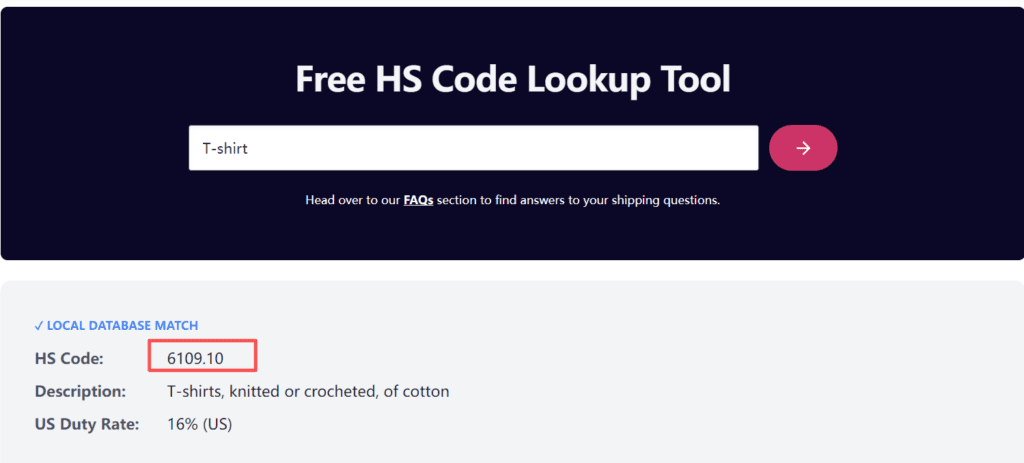
Landed Cost Pro-Tip: Do not guess your HS Codes. A single misclassification can trigger anti-dumping duties (ADD) which can exceed 100% of the product’s value, or cause customs to seize your entire shipment. Always verify the code with a licensed broker or an expert freight forwarder before production finishes.
5. Customs Clearance and Port Fees: The Administrative Toll
These fees look small individually, but they hit every single entry and accumulate fast. This is the exact section where unvetted freight forwarder quotes hide the “etc.” that later blows up your invoice.
🇺🇸 US Customs Fees (Official 2026 Rates)
For standard commercial imports (Formal Entries valued at $2,500 or more), U.S. Customs and Border Protection (CBP) mandates specific processing user fees that adjust annually for inflation.
Fee Type
2026 Rate / Cost
Operational Notes
Customs Brokerage Fee
$75 – $200 / entry
The service fee charged by a licensed broker to prepare and file your CBP entry.
Merchandise Processing Fee (MPF)
0.3464% of FOB value (Min: $33.58 | Max: $651.50)
Mandatory ad valorem fee. Any entry valued under $9,694 automatically hits the $33.58 minimum toll.
Harbor Maintenance Fee (HMF)
0.125% of cargo value
Sea freight only. Assessed on the value of commercial cargo loaded or unloaded at US ports.
Single Entry Import Bond
$50 – $100 / shipment
Required if you don’t have a continuous bond; covers duties/penalties risk for one entry.
Continuous Import Bond
~$500 – $600 / year
Essential if you import 5+ times a year. Drastically lowers per-shipment paperwork friction.
ISF Filing Fee (10+2)
$25 – $50
Sea freight only. Importer Security Filing must be transmitted 24 hours before the vessel leaves China. Failure triggers a $5,000 fine.
CBP Examination Fee
$200 – $3,000+
Only if randomly flagged or targeted for physical/X-ray inspection. You pay for the storage and warehouse handling during the delay.
Mandatory Documentation Fees
Beyond government customs, expect these standard administrative line items from your carrier or broker to keep your paperwork legally compliant:
Certificate of Origin (CO):$25 – $100(Crucial for verifying product manufacturing roots or claiming preferential trade treatment).
Specialist Inspection Certificates:$100 – $500(Required for regulated categories: FDA for food/cosmetics, FCC for wireless electronics, or CPSC for children’s toys).
Re-forwarding / Doc Turn-in Fees:$35 – $75 per house bill.
Practical Budget Guidance: For a standard $5,000 to $15,000 China-to-US ocean LCL shipment, always hard-code $300 to $550 into your financial spreadsheet exclusively for customs brokerage and port entry fees—completely separate from your core ocean freight and product duties. Treating these as “rounding errors” is exactly how a $300 quote turns into a $750 headache.
6. Last-Mile Delivery and Warehousing
Everything from the port of arrival to your warehouse — and from your warehouse to fulfillment-ready.
Drayage (Port to Warehouse):
Within 50 miles of port: $300–$600 per container
50–200 miles: $600–$1,200 per container
Air freight to warehouse (door delivery): usually included in all-in air quotes
Amazon FBA Sellers — The Extra FBA Tax
If you are shipping directly into Amazon’s network, your landed cost doesn’t stop at the warehouse door. Amazon slaps on highly complex logistical layers that can easily swallow 15–30% of your retail margin.
Inbound Placement Fees: Amazon now charges a split-inventory fee to distribute your stock across its network. Expect to pay $0.21 to $0.68+ per unit unless you pay extra to ship to multiple regional hubs yourself.
Low-Inventory Surcharges: Keep your stock levels healthy. If your inventory drops below Amazon’s historical demand baseline, they will penalize you $0.32 to $1.11+ per unit sold.
FBA Prep & Fulfillment: Amazon barcoding and polybagging run $0.50 to $2.00+ per unit, while final standard pick-and-pack fulfillment costs $3.20 to $8.50+ per unit.
3PL Warehouse Sellers:
Receiving: $25–$75 per pallet
Storage: $20–$50 per pallet per month
Pick and pack: $2–$5 per order
Returns processing: $2–$5 per return
Landed Cost Formula
LANDED COST PER UNIT =

  FOB Unit Price
+ (Total Freight ÷ Units)
+ (Shipment Value × Insurance Rate ÷ Units)
+ (Declared Value × Combined Duty Rate ÷ Units)
+ (Brokerage + MPF + Bond + Port Fees ÷ Units)
+ (Drayage + Warehousing + Prep ÷ Units)

= True Cost Per Unit
Landed Cost Multiplier = Landed Cost Per Unit ÷ FOB Price
A multiplier of 1.40 means your true cost is 40% above the factory price. For most China-to-US consumer goods, multipliers of 1.3 to 1.6 are typical by sea freight. Air freight can push this to 1.5–1.8 or higher.
Complete Calculation Example
Product: Bluetooth earbuds, sourced from Shenzhen
Order Size: 500 units | FOB price: $8.00/unit
Destination: Los Angeles 3PL Warehouse
Component
Total Cost
Per Unit
Practical Insights
Product Cost (FOB)
$4,000.00
$8.00
Base price leaving China, including export clearance.
Sea Freight LCL
$238.50
$0.48
0.45 CBM @ $130/CBM + origin handling fees.
Cargo Insurance
$12.00
$0.02
Comprehensive all-risks coverage (0.3% of cargo value).
Import Duties
$496.00
$0.99
Calculated at 12.4% (Base HTS 4.9% + Section 301 List 4A 7.5%).
Customs & Port Fees
$263.58
$0.53
2026 Reality-Check: Includes Brokerage ($150), Continuous Bond split ($25), ISF filing ($50), HMF ($5), and the mandatory CBP MPF minimum ($33.58).
Last-Mile Logistics
$480.00
$0.96
Drayage from LA port, 3PL receiving, and 1 month of warehouse storage.
Total Landed Cost
$5,480.08
$10.96
Your true cost to get one unit shelf-ready in the US.
Landed Cost Multiplier:1.37× — Your true cost is 37% higher than the initial supplier quote.
The Bottom-Line Reality: If this product retails on Amazon for $29.99, your gross margin after landed cost is $19.03 per unit (63.5%). Once you deduct standard FBA pick-and-pack fees ($5.00–$6.00) and competitive PPC advertising acquisition costs ($4.00–$6.00), your true net profit lands right between $7.00 and $8.00 per unit.
Knowing these precise numbers before wires leave your bank account is the entire point of running an accurate landed cost calculation.9 per unit. Knowing this before placing the order is the point of landed cost calculation.
What Affects Landed Cost? Key Variables to Monitor
1. Shipping method Sea freight is cheapest per unit but slowest. Air freight is fastest but can cost 5–10× more. The right choice depends on your product margin, stock turnover, and how much a stockout costs your business.
2. Route and carrier selection Direct routes cost more but reduce handling. Transhipment routes are cheaper but add lead time and damage risk. For fragile or high-value goods, direct routing often delivers the better landed cost when insurance and damage write-off are factored in.
3. Product characteristics Weight, volume, fragility, and regulatory category all affect freight, insurance, and inspection costs. A product’s HS code determines its duty rate — and two similar products can have materially different rates depending on materials, function, or construction.
4. Market and political conditions Fuel prices, port congestion, geopolitical events, and currency fluctuations all create variability in freight cost. Tariff rates can change with trade policy shifts. Build flexibility into your landed cost model rather than treating any one figure as fixed.
5. Contract terms (Incoterms) Whether you buy EXW, FOB, CIF, or DDP directly determines which cost components you own. FOB puts freight, insurance, import clearance, and last-mile on the buyer. DDP consolidates everything under the seller or forwarder — simplifying calculation but reducing cost visibility.
Why Landed Cost Is More Important Than Factory Price
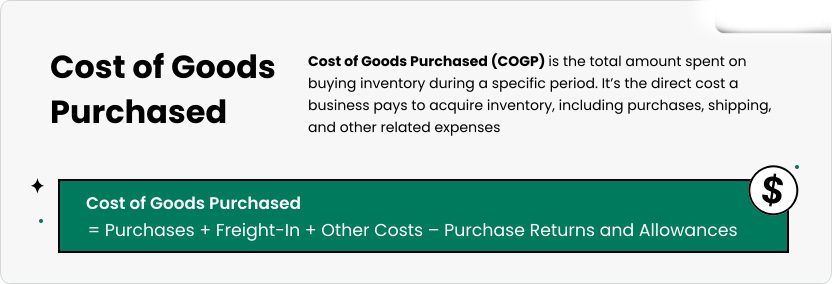
Most e-commerce sourcing mistakes happen because sellers evaluate products on factory price rather than landed cost.
Accurate pricing: You cannot set a profitable retail price without knowing your full cost. A $3 factory price with a 1.6× multiplier is a $4.80 landed cost — and that changes which products make sense.
Supplier comparison: Two suppliers offering $3.00 and $3.50 FOB respectively look like a $0.50/unit difference. If the cheaper supplier’s packaging increases volumetric weight enough to raise freight cost by $0.80/unit, the “cheaper” supplier is actually more expensive.
Profitability analysis: Margin calculations built on factory price overstate profit. Landed cost is the baseline all financial modeling should use.
Risk management: Understanding what drives your landed cost — freight volatility, duty rate exposure, warehousing inefficiency — tells you where to focus cost control and where to build contingency. Sellers who model landed cost by component can identify and fix the most expensive leaks in their supply chain.
5 Common Landed Cost Mistakes
1. Forgetting insurance Insurance is a small fraction of landed cost but covers catastrophic risk. A $10,000 shipment at sea without insurance is a $10,000 gamble on a carrier’s track record.
2. Ignoring volumetric weight The most common reason freight costs more than expected. Always calculate volumetric weight for your actual carton dimensions before approving a product.
3. Underestimating tariff rates on China goods At 20–35% combined duty for most consumer categories, duties often exceed freight cost. Sellers who quote factory price to buyers without modeling duties lose money the moment goods clear customs.
4. Treating MPF and port fees as rounding errors $186 in customs fees on a 500-unit order is $0.37/unit — not nothing. On 20 shipments per year, that’s $3,720 that didn’t appear in the original plan.
5. Calculating landed cost per shipment, not per unit $500 freight on 50 units = $10/unit. $500 freight on 500 units = $1/unit. Knowing your minimum viable order quantity for freight cost to make sense is a landed cost question.
Landed Cost Quick Reference
Component
What It Includes
Typical % of Landed Cost
Product cost (FOB)
Factory price + China domestic logistics + export clearance
Landed cost is the total cost to bring a product from the factory to your warehouse or fulfillment point, ready to sell. It includes the purchase price, international freight, insurance, import duties and taxes, customs clearance fees, and last-mile delivery and warehousing costs.
Q: How do I calculate landed cost for products from China?
Add together: your FOB unit price + (total freight ÷ units) + (insurance premium ÷ units) + (declared value × duty rate ÷ units) + (customs fees ÷ units) + (last-mile and warehousing ÷ units). The sum is your landed cost per unit.
Q: What is a typical landed cost multiplier for China imports?
For most e-commerce products shipped by sea from China to the US, landed cost runs 1.3–1.6× the FOB factory price. Air freight or high-duty products can push this to 1.6–1.8×. Heavy or bulk goods by FCL can run closer to 1.2–1.3×.
Q: What is the difference between landed cost and total cost of ownership?
Landed cost covers all costs to get goods to your warehouse. Total cost of ownership goes further to include returns, warranty costs, inventory write-offs, and the cost of capital tied up in stock. For sourcing decisions, landed cost is the primary calculation. For full business modeling, total cost of ownership is more complete.
Q: Does DDP shipping give me a complete landed cost automatically?
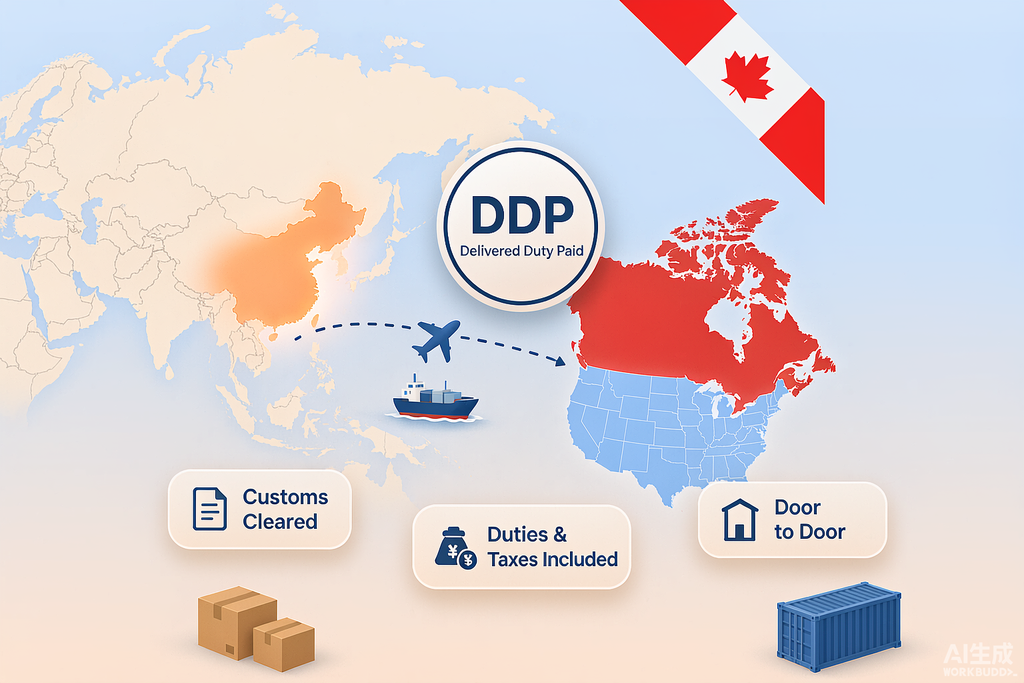
Almost. Under DDP (Delivered Duty Paid), the freight forwarder quotes freight, customs, duties, and door delivery as one all-in price — which covers components 2–6 in one figure. You still need to add your product cost to get the full landed cost. DDP simplifies the calculation but removes detailed visibility into each cost line.
Q: How does the EU €3 customs fee affect landed cost for EU-bound shipments?
From July 1, 2026, each distinct product type (HS code) in a sub-€150 parcel incurs a €3 fee (rising to €5 from November 2026). A single-product parcel adds €3 to landed cost per order. A parcel with 3 different product types adds €9. For EU e-commerce, this fee must be modeled into your per-order landed cost from July onward.
Vantage Forwarding provides itemised landed cost estimates for China-to-US and China-to-EU shipments — including current duty rates by HS code, insurance options, DDP all-in quotes, and cost breakdowns by component so you can model accurately before placing your purchase order.
DDP shipping to Canada from China: what the quote covers, customs duty and GST or HST by province, the CBSA process, transit times, and when DDP is the right call.
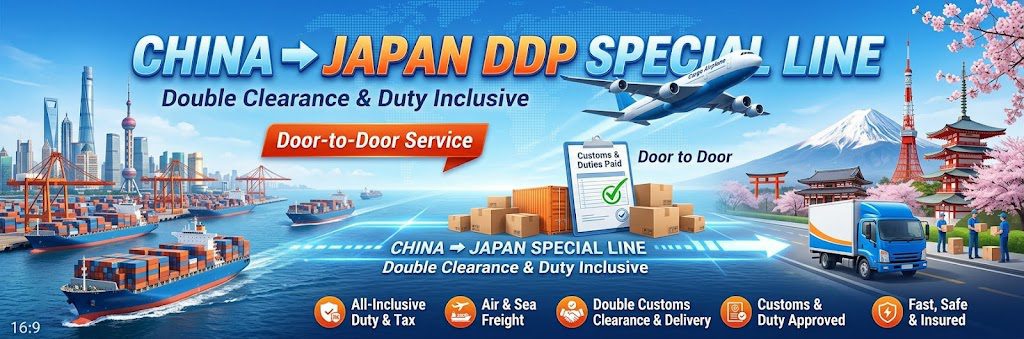
DDP shipping to Japan from China in 2026: what the price covers, customs duty, the 10% consumption tax that now applies to every import, RCEP savings, and transit times.
Hello! How can we assist you with your special cargo shipping today?
Please share your cargo type (lithium batteries, branded goods, or liquids), destination, and any special requirements. We'll reply with a quote and process shortly.
Send Message
Vantage Forwarding • Usually replies within 2 hours
 English
  Chinese
  Arabic
  French
  German
  Portuguese
  Spanish