What Is DDP Shipping? Delivered Duty Paid (Incoterms® 2020) Explained
Vantage Forwarding
By the Vantage Forwarding operations team — Guangzhou-based, handling DDP routes to the US, UK, EU, Canada, Australia, and Mexico daily. Last updated June 2026.
Quick Summary — TL;DR
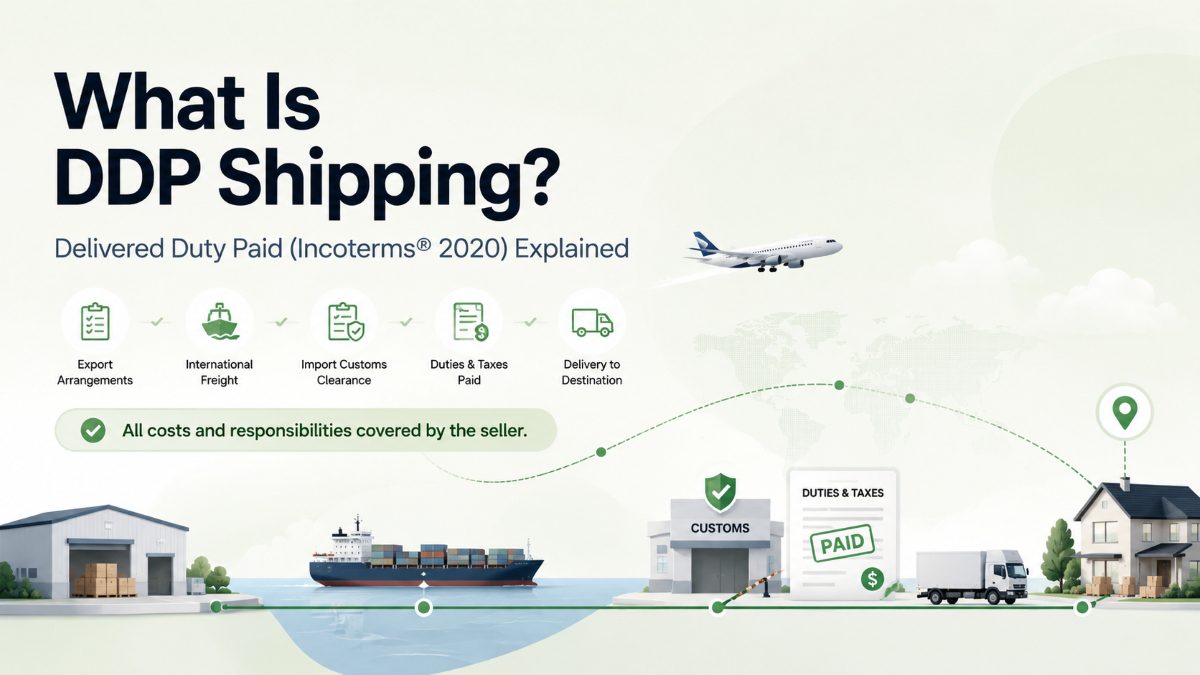
DDP (Delivered Duty Paid) is the Incoterms® 2020 rule that places maximum responsibility on the seller. The seller arranges and pays for everything—international freight, export clearance, import clearance, all duties and taxes, and final delivery to the buyer’s address. The buyer receives goods with no customs paperwork, no separate duty bill, and no delivery surprise.
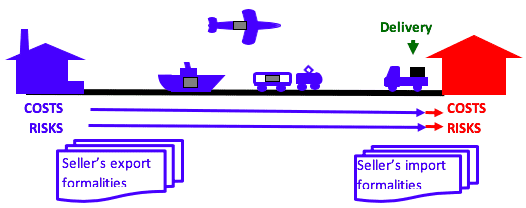
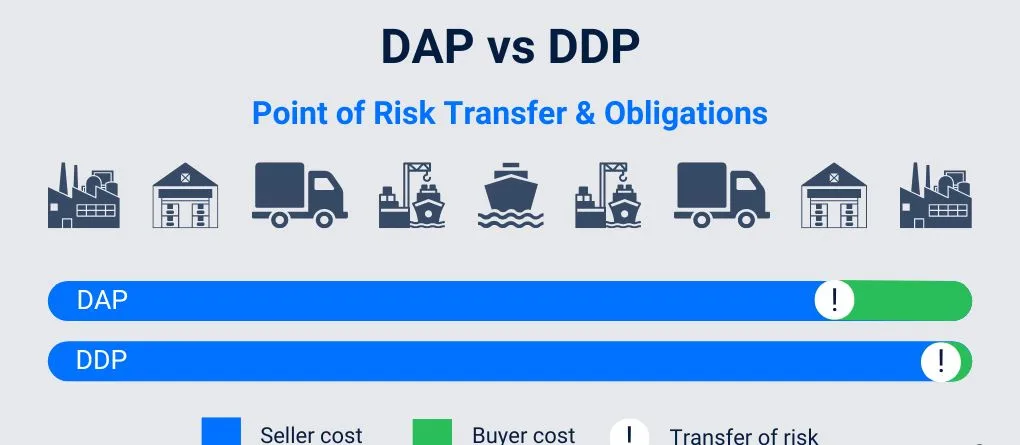
The key difference from DAP: Under DAP, the buyer handles import clearance and pays duty on arrival. Under DDP, the seller handles it all before the goods reach the buyer.
Even the most complex shipment has a clear path.
When to use it: Cross-border e-commerce, B2C shipping, first-time importers, or any seller who wants a fixed, predictable landed cost.
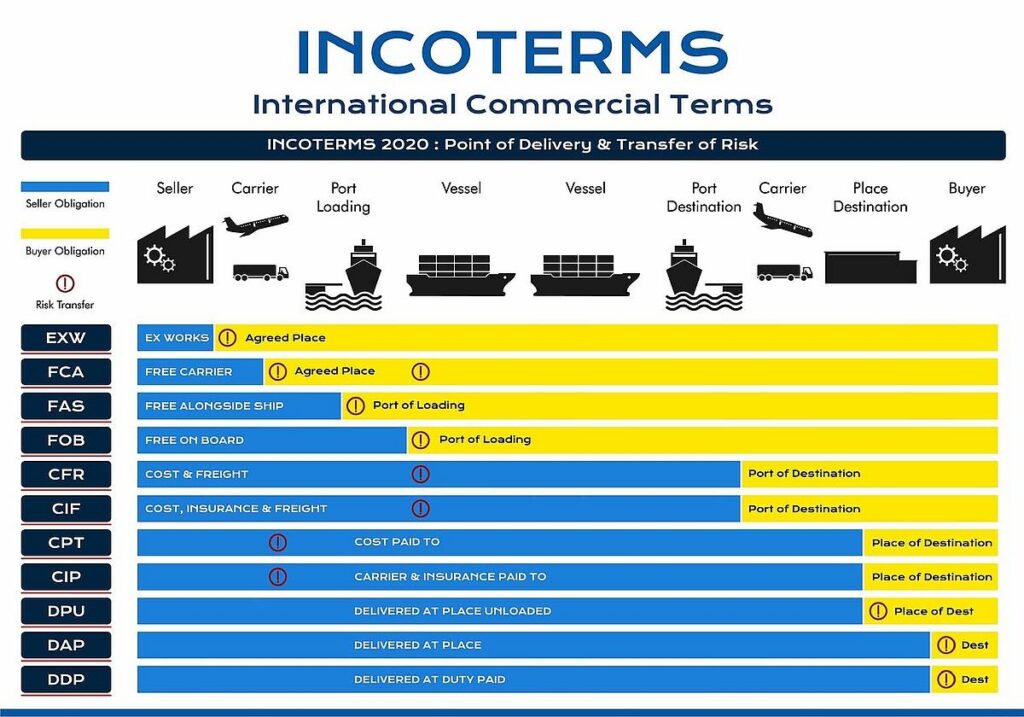
DDP stands for Delivered Duty Paid. It is one of 11 Incoterms® defined by the International Chamber of Commerce (ICC) in the Incoterms® 2020 rules, which are the globally recognized standards for international trade terms.
In plain English: under DDP shipping, the seller pays for and manages every step of the journey—from the factory in China to the buyer’s front door. The buyer receives goods without touching a customs form, paying a duty bill, or dealing with a carrier.
If you’ve ever wondered “what does DDP mean in shipping”, here’s the shortest answer: the seller does everything, and the buyer just receives.
This is fundamentally different from terms like FOB (Free On Board), where the buyer takes over from the vessel at the origin port, or DAP (Delivered At Place), where the seller delivers to a location but the buyer still handles import clearance. DDP goes further than both.
The DDP Incoterm: Full Seller Obligations
Under the DDP Incoterm (Incoterms® 2020), the seller is responsible for the entire logistics chain:
Packaging and preparing goods for export
Inland transport from the factory to the origin port or airport
Export customs clearance in the country of origin (China, in this case)
International freight (ocean, air, or road)
Cargo insurance — not mandatory under the Incoterm itself, but expected in practice
Import customs clearance in the destination country
Payment of all applicable import duties, taxes, VAT or GST
Final delivery to the named place in the destination country
Risk transfers to the buyer only at the named delivery point—the buyer’s warehouse, 3PL address, or any agreed location.
One important legal clarification on importer of record: The seller is responsible for import clearance under DDP, but does not have to be the legal importer of record in the destination country. In practice, the freight forwarder or a local licensed customs agent acts as importer of record on the seller’s behalf. This is standard for China-origin shipments entering the US, UK, or EU—the seller does not need a legal entity in the destination country to offer DDP.
What Does “Duties Included Shipping” Actually Cover?
Many sellers ask: “does duties included shipping actually cover everything?” The answer is: usually most things—but not always all things. The scope varies by forwarder and route.
Typical DDP quote coverage:
Component
Included in DDP?
Notes
International ocean or air freight
Yes
Mode depends on route and lead time
China export customs clearance
Yes
Requires accurate commercial invoice and HS code
Destination import customs clearance
Yes
Core of what separates DDP from DAP
Import duty
Yes — pre-estimated
Based on HS code and destination duty rate
VAT / GST
Depends on route
Always confirm explicitly for EU and UK shipments
Cargo insurance
Sometimes
Confirm whether included or quoted separately
Final-mile delivery to address
Yes
Remote area surcharges may apply
Customs exam fees (if selected by CBP)
Usually not
CBP-initiated exams are at seller/buyer cost
Anti-dumping / countervailing duties
Depends on product
Confirm by HS code for China-origin goods to US
The phrase “duties included” does not automatically mean “all taxes and fees included.” Before committing, ask your forwarder three questions: (1) Is VAT or GST included? (2) Who bears the cost of a customs exam if selected? (3) Are remote area surcharges included for my delivery postcode?
DDP vs DAP: The Most Important Distinction
If you’ve ever wondered “what is the difference between DDP and DAP”, here’s the short answer:
The key takeaway: DDP transfers all customs risk and duty payment to the seller. DAP leaves import clearance and duty payment to the buyer.
DDP is Delivered Duty Paid — the seller clears customs and pays duties before delivery. DAP is Delivered At Place — the seller delivers to an agreed location, but the buyer still arranges import clearance and pays any duties due on arrival.
Both Incoterms deliver goods to a named location in the destination country. The critical difference is the customs and duty layer:
Why DAP causes customer experience problems in e-commerce:
Under DAP, the carrier delivers to the buyer’s address and may present a tax demand before releasing the parcel—or send a separate customs notice. For a consumer who bought something on Shopify expecting a clean delivery, this is friction that leads to refused deliveries, chargebacks, and negative reviews. Under DDP, the duty was paid before the parcel reached the buyer’s country. The delivery experience is as seamless as a domestic order.
This is why DDP has become standard for China-to-consumer cross-border e-commerce, and why sellers who switch from DAP to DDP typically report fewer post-delivery disputes.
DDP vs FOB: When Control Matters More Than Simplicity
DDP and FOB (Free On Board) represent opposite ends of the seller-responsibility spectrum. FOB transfers risk to the buyer at the origin port; DDP retains it with the seller until the destination door.
Factor
DDP
FOB
Who controls freight booking
Seller / forwarder
Buyer
Who pays international freight
Seller / forwarder
Buyer
Who handles destination customs
Seller / forwarder
Buyer’s customs broker
Who pays import duty and VAT
Seller / forwarder
Buyer
Total cost visibility for buyer
Single fixed price
Factory price + multiple separate invoices
Buyer’s control over carriers
Low
Full
Best for buyer
Predictable landed cost, no logistics management needed
Volume importers with negotiated freight and broker rates
For a full decision framework and cost comparison across both Incoterms, see our DDP vs FOB guide.
Why DDP Shipping Matters More in 2026
Policy changes in 2025–2026 have made the cost of getting import clearance wrong—or leaving it to the buyer—significantly higher in major markets.
United States (US CBP guidance): The de minimis exemption that allowed China-origin goods under $800 to enter duty-free was suspended in May 2025. Every China-origin parcel now faces import duty regardless of declared value. The rate depends on the product’s HTS code and any applicable Section 301 tariffs—there is no single flat rate. Sellers still using DAP for US-bound shipments are generating customs charges that arrive with the parcel, and buyers who did not expect them are refusing delivery or initiating chargebacks.
European Union (European Commission — IOSS and customs): From July 1, 2026, the EU applies a €3 customs duty per item by tariff heading on sub-€150 e-commerce parcels from non-EU sellers. VAT continues to apply from €0 via the IOSS system. A seller DAP-shipping small parcels into the EU without IOSS registration is now generating both a VAT demand and a new per-item duty charge for customers on delivery.
United Kingdom (UK government import guidance): 20% VAT applies from £0 on imports. For B2C sellers, VAT should be collected at point of sale—not on delivery. Customers who receive a VAT demand from Royal Mail on a parcel they thought was fully paid represent a structural churn risk.
DDP removes all of these friction points. Duties, VAT, and clearance are handled before the parcel reaches the buyer’s country. To model the full cost across different markets, use our landed cost calculator.
Who Should Use DDP Shipping?
DDP is the right model for:
E-commerce sellers (Shopify, WooCommerce, TikTok Shop) shipping directly to consumers in the US, UK, EU, Australia, or Canada who want a seamless post-purchase experience
Small and mid-size B2B importers who do not have an established customs broker relationship in the destination country
Sellers entering a new market who want predictable landed costs before building local logistics infrastructure
First-time importers who want to remove customs complexity from operations entirely
DDP is less necessary for:
Large-volume B2B importers with established customs broker relationships and predictable HTS-based duty rates
Buyers who need to control carrier selection for retailer or platform compliance requirements
Companies whose finance teams need to record inventory and customs liability separately for accounting purposes
The two models can coexist: many established importers use FOB for large planned B2B shipments and DDP for small-batch or B2C replenishment runs. See our freight forwarder guide for a full model comparison.
6 Things to Check Before Agreeing to a DDP Quote
Many sellers ask: “does DDP include VAT?” — and the honest answer is: it depends on the forwarder. Before committing to any DDP arrangement, confirm these six points:
1. Is VAT or GST included? Some DDP quotes cover import duty but not VAT. For EU and UK shipments, VAT is often the larger number. Confirm explicitly.
2. What happens if there is a customs exam? CBP-initiated exams in the US and hold fees at EU/UK borders are not always included in DDP quotes. Ask who bears those costs if the shipment is selected for inspection.
3. Does the quote cover your delivery postcode? Remote area surcharges from last-mile carriers appear after the original quote if the forwarder didn’t price for your exact address. Provide the full postcode when requesting a quote.
4. What HS code is being used for duty calculation? DDP duty estimates are based on the product’s HS code. An incorrect or overly broad classification can mean the actual duty differs from the estimate. Ask to see the HS code and estimated rate.
5. Is pricing based on actual or volumetric weight? International freight is charged by whichever is greater—actual or dimensional (volumetric) weight. A light but bulky shipment bills at volumetric weight, which can significantly change the freight component of a DDP quote.
6. What shipping mode is included and what is the transit time? DDP quotes can use ocean freight (25–40 days from China) or air (5–8 days). Make sure the quoted transit time matches your lead time requirement before confirming.
How Vantage Forwarding Structures DDP Shipments
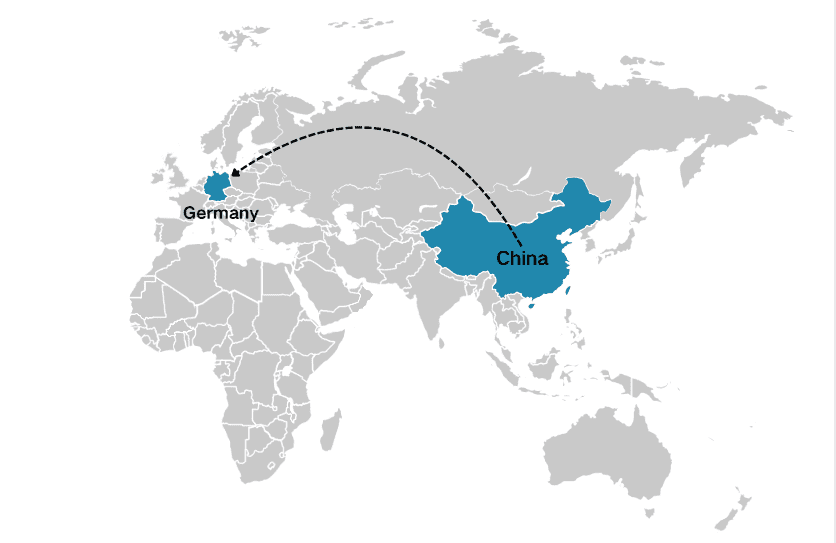
From Guangzhou, we handle DDP routes to the US, UK, Germany and wider EU, Canada, Australia, and Mexico. Before issuing a DDP quote, we review:
Product name, material, and intended use
HS code verification — we cross-check the supplier’s stated code against the destination tariff schedule, not accept it at face value
Shipment weight and carton dimensions to confirm volumetric weight
Declared value and duty exposure by destination
Delivery postcode to identify remote area surcharges upfront
The quote we issue covers China-side pickup, export clearance, international freight, destination import clearance, duty and VAT handling where applicable, and final-mile delivery. The goal is that no number appears after the quote is issued—not at destination customs, not on delivery.
For shipments that include sensitive goods categories—lithium batteries, cosmetics, liquids—our team confirms routing and channel eligibility before quoting. See our sensitive goods guide for how this affects DDP routing options.
For a full explanation of how double clearance works within a DDP arrangement, see our DDP double clearance guide.
FAQ: DDP Shipping and Delivered Duty Paid
What does DDP mean in shipping?
DDP (Delivered Duty Paid) is an Incoterms® 2020 rule under which the seller is responsible for the complete logistics chain: international freight, export clearance in China, import clearance in the destination country, all applicable duties and taxes, and final delivery to the buyer’s named address. The buyer receives goods without managing any customs formalities or paying additional charges on arrival.
What is the difference between DDP and DAP shipping?
Both DDP and DAP deliver goods to a named location in the destination country. Under DDP, the seller or forwarder arranges import clearance and pre-pays all duties and taxes before delivery. Under DAP, the buyer is responsible for import clearance and pays duties on arrival — often through a carrier tax demand collected at the door. DDP removes all post-delivery customs friction; DAP leaves it to the buyer.
Is DDP the same as duties included shipping?
Essentially yes, though scope varies by quote. Both mean import duty is covered by the seller or forwarder rather than collected from the buyer on arrival. Always confirm whether VAT or GST is also included — some DDP quotes cover duty but not VAT, particularly for EU and UK destinations.
Does DDP shipping include VAT?
It depends on the forwarder, the route, and the destination country. Many DDP quotes to the EU and UK include VAT handling, but not all. For EU shipments under €150, VAT via IOSS and the new €3 per-item duty from July 2026 both need to be confirmed separately. Always ask explicitly before shipment.
Who is the importer of record under DDP?
The seller is responsible for import clearance under DDP, but does not have to be the legal importer of record themselves. In practice, the freight forwarder or a licensed customs agent acts as importer of record in the destination country on the seller’s behalf. The seller does not need a local legal entity in the destination country to offer DDP.
Is DDP shipping legal?
Yes. DDP is a standard Incoterms® 2020 arrangement and fully legal when goods are declared accurately, duties and taxes are handled correctly, and the importer-of-record structure is valid in the destination country. Legality depends on accurate product declaration — not the Incoterm itself.
When should I use DDP instead of FOB?
Use DDP when you want a fixed, predictable landed cost without managing customs clearance, when your buyers are end consumers who should not receive unexpected tax demands on delivery, or when entering a new market without established local logistics. Use FOB when you are a high-volume importer with your own freight contracts, customs broker, and need to control carrier selection.
What happens if a DDP shipment is held at customs?
Under DDP, a customs hold is the seller’s or forwarder’s responsibility to resolve — not the buyer’s. Common causes include incorrect HS code, vague product description, declared value mismatch, or a routine customs exam selection. A reliable DDP forwarder manages holds proactively and communicates status rather than passing the issue to the buyer.
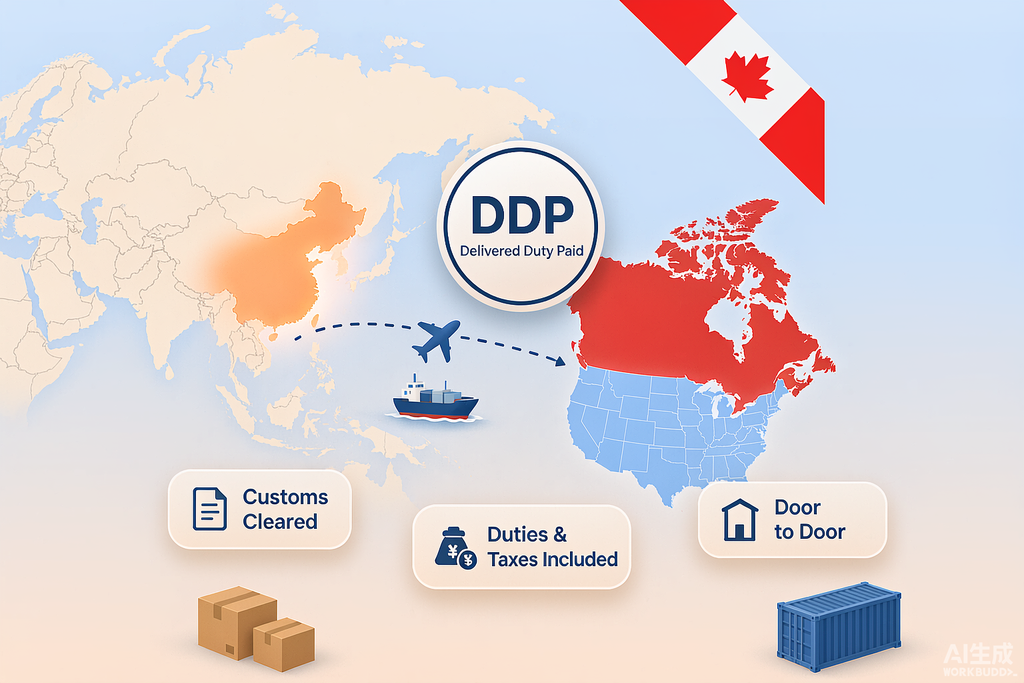
DDP shipping to Canada from China: what the quote covers, customs duty and GST or HST by province, the CBSA process, transit times, and when DDP is the right call.
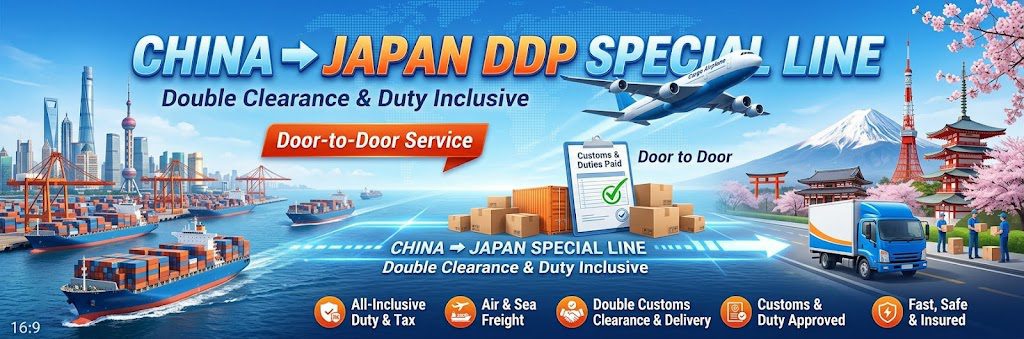
DDP shipping to Japan from China in 2026: what the price covers, customs duty, the 10% consumption tax that now applies to every import, RCEP savings, and transit times.
Hello! How can we assist you with your special cargo shipping today?
Please share your cargo type (lithium batteries, branded goods, or liquids), destination, and any special requirements. We'll reply with a quote and process shortly.
Send Message
Vantage Forwarding • Usually replies within 2 hours
 English
  Chinese
  Arabic
  French
  German
  Portuguese
  Spanish