UK E-commerce sellers: Did you know that up to 30% of the final cost for premium “Shop the Drop” merchandise comes from unexpected VAT bills and failed delivery surcharges—not the product itself? While flash sales generate massive revenue spikes, standard postal networks often collapse under sudden order volumes. This operational strain leads to customs holds, lost tracking, and costly customer chargebacks that quickly destroy your profit margins.
Scaling high-value streetwear or collectibles into the UK safely isn’t just about speed; it’s about watertight tax compliance (IOSS/CDS) and single-parcel visibility. Low-cost forwarders frequently hide these complexities, leaving you to handle angry customers and HMRC penalty notices alone. In this guide, we break down the exact logistics framework you need—from priority air-injection to automated VAT prepayment—to secure your brand reputation and ensure every parcel lands compliantly on British doorsteps.
Table of Contents
How to Scale Premium Dropshipping Safely into the UK
Direct answer: Importers can protect high-value e-commerce fulfillment lines by combining secure origin parcel sorting with direct air freight injection and automated UK VAT compliance systems. To manage premium UK drop-shipping logistics successfully, you must ensure that all single-parcel consignments accurately declare value benchmarks and clear under valid customs frameworks like the Import One-Stop Shop (IOSS) or Postponed VAT Accounting (PVA). This strategic approach eliminates unexpected hidden dropshipping fees at the border, prevents parcel rejections, and allows you to scale premium dropshipping safely into the local UK delivery network.
High-value e-commerce packages entering the United Kingdom must strictly align with the data processing requirements enforced by His Majesty’s Revenue and Customs (HMRC). Brands can review the official regulations governing cross-border single-parcel e-commerce tax thresholds directly on the UK Government Trade and Customs Portal.
Common Red Flags: Hidden Dropshipping Fees to Watch For
Non-compliant or low-cost freight forwarders frequently use low upfront air freight rates to win initial fulfillment contracts. They later recover their profit margins by issuing secondary invoices for destination delivery options that should have been covered initially. These unquoted expenses typically appear during three distinct stages of the shipping lifecycle.
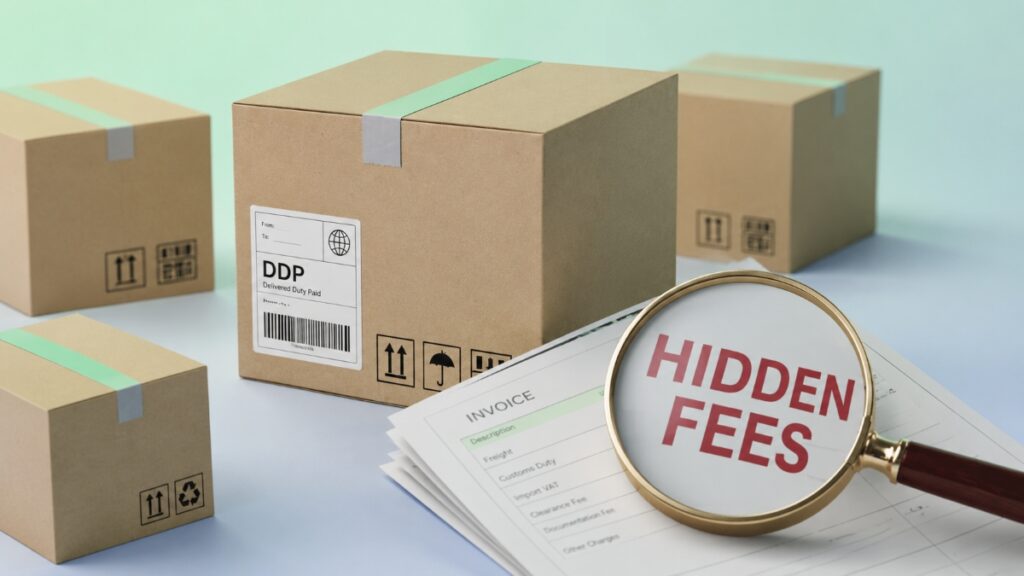
Unquoted Local Handling Fees and Remote Area Delivery Surcharges
Many baseline e-commerce logistics rates are calculated assuming delivery to standard urban areas across major transport networks. If your actual customer base includes postcodes in Northern Ireland, the Scottish Highlands, or offshore islands, carriers apply secondary fees. These remote area delivery surcharges can append unexpected overhead costs to your final fulfillment invoice.
Undisclosed Single-Parcel Customs Re-Submission Fees
When a freight forwarder submits low-quality electronic manifest data to HMRC, the risk of automated clearance rejections increases. If customs authorities flag an entry due to a generic product description or an incomplete commercial invoice, the packet is flagged for manual review. Unvetted forwarders frequently charge hidden administrative re-submission fees to correct and refile these individual customs entries.
Final-Mile Surcharges and Redelivery Processing Costs
Premium consumers expect flexible delivery windows, precise digital tracking milestones, and automated address validation. If a local UK courier attempts delivery and faces an incorrect address or a recipient rejection, the packet is returned to a local sorting terminal. Opaque freight contracts often contain fine print that transfers the financial liability for redelivery processing costs back to the e-commerce brand.
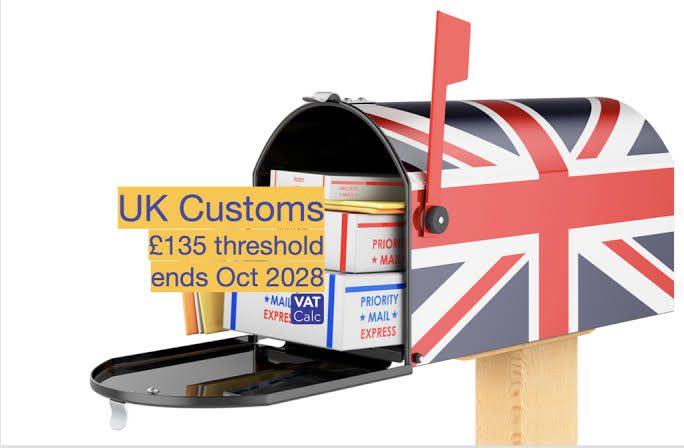
Structural VAT Handling: Overcoming the £135 Threshold and Using Postponed VAT Accounting (PVA)
To safeguard your digital storefront from terminal customs holds, your supply chain management must follow clear tax processing pipelines. Under official UK HMRC guidelines, e-commerce imports are split into two distinct financial categories based on the transaction value of the shipment.
Processing Low-Value Dropshipping Shipments Valued Under £135
For single-parcel consignments with an individual transaction value of £135 or below, standard customs duties do not apply. Instead, local UK import VAT of 20% must be collected directly from the consumer at the point of sale. The e-commerce merchant then reports and settles this tax electronically using a valid IOSS registration or an authorized local customs clearance agent.
Managing High-Value Shipments Above £135 with Postponed VAT Accounting (PVA)
When a premium e-commerce order or a consolidated bulk inventory shipment exceeds the £135 threshold, it faces both standard customs duties and import VAT at the border. Paying import VAT upfront at the port of entry can create severe cash flow constraints for scaling retail brands.
To resolve this cash flow bottleneck, registered UK businesses can utilize Postponed VAT Accounting (PVA). This compliance-focused mechanism allows importers to declare and recover import VAT simultaneously on their standard quarterly VAT return rather than paying physical cash at the port.
If your dropshipping model handles transactions over £135 without an established PVA framework or a valid EORI link, the parcel is held at the border. Local couriers will then refuse to deliver the packet until they collect the unpaid tax and a steep administrative handling fee directly from your consumer on their doorstep.
Strategic Evaluation: Postal Packets vs. Premium UK Dedicated Logistics Lines
To safeguard your brand reputation during large-scale drop events, you must understand the operational differences between standard shipping methods and dedicated e-commerce lines. Evaluating these transit structures ensures you maintain complete control over your delivery metrics.
The table below contrasts the technical differences between basic postal shipping methods and risk-controlled, dedicated UK drop-shipping lines:
| Operational Feature | Standard International Postal Packets | Premium Dedicated UK Logistics Line |
| Origin Processing Speed | 3 to 5 days of unmonitored bulk terminal staging | Instant barcode scanning and 24-hour flight injection |
| Air Freight Allocations | Space-available cargo loading with frequent delays | Guaranteed space allocations on direct commercial flights |
| Customs Clearance Method | Consolidated postal clearing prone to bulk terminal holds | Pre-filed single-parcel electronic customs clearance |
| Tax Handling Transparency | Omitted or hidden; prone to post-delivery consumer bills | Fully automated pre-paid VAT and integrated PVA support |
| Final-Mile Tracking | Inconsistent milestones; untracked handover gaps | Real-time tracking from origin scan to final door-to-door receipt |
| Delivery Success Rates | Frequent package losses and high return rates | High success rates with monitored local carrier handovers |
Example Scenario: How Cheap E-commerce Routing Generates Heavy Financial Losses
A luxury streetwear collective launched a highly anticipated apparel drop, generating £25,000 in revenue from customers across the United Kingdom within forty-five minutes.
Forwarder A offered an extremely cheap per-kilogram rate for standard international packets, promising low upfront shipping costs but omitting itemized tax processing structures.
Forwarder B (VantageForwarding) provided a dedicated UK air-injection solution that included itemized single-parcel pre-clearance data and a fully integrated Postponed VAT Accounting setup.
The brand selected Forwarder A to protect their initial product margins. Because Forwarder A used an unvetted, shared postal consolidation network, the sudden order spike sat in an unmonitored origin warehouse for several days. When the cargo finally arrived at the UK border, customs officials held the entire batch because the electronic paperwork lacked proper product identifiers and under-reported values.
HMRC levied a £4,500 penalty notice for revenue non-compliance, and the local courier charged an additional £15 administrative handling fee directly to individual buyers before delivery. The shipping delay extended past 28 days, forcing the e-commerce store to issue £8,500 in product refunds and handle extensive merchant platform disputes that completely erased their flash drop profits.
Checklist: Preparing Your Premium Store for Safe UK Fulfillment Scaling
Before launching your next high-volume “Shop the Drop” event, verify that your logistics setup meets these strict operational parameters:
- Confirm that your e-commerce platform’s API connects smoothly with your forwarder’s data system for real-time order matching.
- Verify that every product entry in your inventory system is mapped to a valid, accurate ten-digit HS code.
- Ensure all commercial invoice templates automatically display itemized unit values, buyer details, and accurate product descriptions.
- Test your customer notification system to confirm tracking links update automatically from the initial origin scan.
- Confirm that your product packaging utilizes durable outer materials to protect branded retail boxes from transit damage.
- Verify that your shipping route utilizes automated pre-paid VAT or integrated PVA pathways to prevent border collection delays.
- Review your carrier’s weight and dimension thresholds to prevent unexpected size surcharges on final delivery invoices.
Main Operational Risks of Opaque Freight Networks
Relying on low-cost, unvetted freight networks introduces structural vulnerabilities that can stall your supply chain and generate unexpected financial exposure:
- High chargeback rates and merchant account limitations caused by extended transit delays.
- Severe brand damage stemming from poor packaging that allows retail presentation boxes to arrive dented or scuffed.
- Increased package loss rates during unmonitored handovers between international carriers and local networks.
- Potential legal holds and penalty notices from customs authorities if your provider blends premium goods with non-compliant cargo.
How VantageForwarding Secures Your Premium E-commerce Drops
VantageForwarding helps e-commerce brands arrange specialized UK drop-shipping logistics with clearer customs responsibility, transparent tracking protocols, and reliable handling for high-volume order spikes. We focus on providing sustainable, data-driven fulfillment solutions rather than cutting corners through unvetted postal channels.
Before your flash sale launches, our documentation review team performs a complete audit of your data systems, packaging parameters, and customs declarations. This proactive screening process helps us minimize the risk of data mismatches, unexpected port surcharges, or delivery friction at UK air gateways.
We work through an established, highly vetted overseas agent network and licensed customs brokers to manage your premium e-commerce freight seamlessly. VantageForwarding ensures that every stage of your transport route is actively tracked, providing your supply chain directors with a clear, secure, and auditable trail from factory pickup to final door-to-door delivery.
Frequently Asked Questions
What is the significance of the £135 threshold for UK e-commerce imports?
Under UK HMRC rules, imports with a value of £135 or below are exempt from standard customs duties, but local import VAT must be collected at the point of sale and reported electronically. For shipments valued above £135, formal customs entries apply, and both standard duties and VAT must be settled at the border.
How can I utilize Postponed VAT Accounting (PVA) for shipments over £135?
To use PVA, your business must be registered for VAT in the UK and hold a valid EORI number. When your customs broker submits the entry declaration via the Customs Declaration Service (CDS), they must state that you are utilizing PVA, allowing the import VAT to be deferred to your regular tax return.
How can I tell if an e-commerce shipping quote contains hidden dropshipping fees?
A quote may be risky if the freight forwarder cannot identify the final-mile UK courier, provides vague transit windows without daily tracking updates, or refuses to explain how import VAT data is processed at the UK border. Complete transparency is essential to scale premium dropshipping safely.
Does a dedicated logistics line protect my product’s branded packaging?
Yes. Dedicated e-commerce logistics lines utilize prioritized sorting bins and protective pallet configurations to reduce manual handling stress. This specialized care prevents retail presentation boxes from suffering scuffs, dents, or tears during international transit.
Can UK customs hold an entire container of small parcels if one order is non-compliant?
Yes. If a freight forwarder consolidates thousands of unvetted parcels under a single master manifest and customs discovers contraband or severe under-valuation in one packet, they may hold the entire shipment for manual review. This highlights the importance of using a provider that enforces strict asset protection and data sorting controls.
What information should I provide to secure an accurate UK drop-shipping quote?
To receive a customized e-commerce logistics plan, prepare your exact product category details, average parcel weights, outer packaging dimensions, projected order volumes per drop, and confirmation of your UK VAT or IOSS registration data.
How does VantageForwarding manage high-volume order spikes during a flash sale?
We utilize automated data systems that capture order details instantly and generate compliant customs manifests before your cargo reaches the airport. Our partnerships with direct air freight carriers ensure your parcels secure priority spacing, keeping your delivery timelines stable.

 English
  Chinese
  Arabic
  French
  German
  Portuguese
  Spanish