Table of Contents
When you’re shipping from China month after month, the FCL vs LCL Shipping decision isn’t a one-time exercise — it’s something that quietly compounds in your logistics spend. Pick wrong for too long, and you’re either overpaying for air you didn’t use or bleeding time and handling costs on shipments that should have been consolidated.
I’ve run this comparison for our clients more times than I can count. What follows is the same framework I use when someone asks me whether to book a full container or share space.
What FCL Shipping from China Really Means
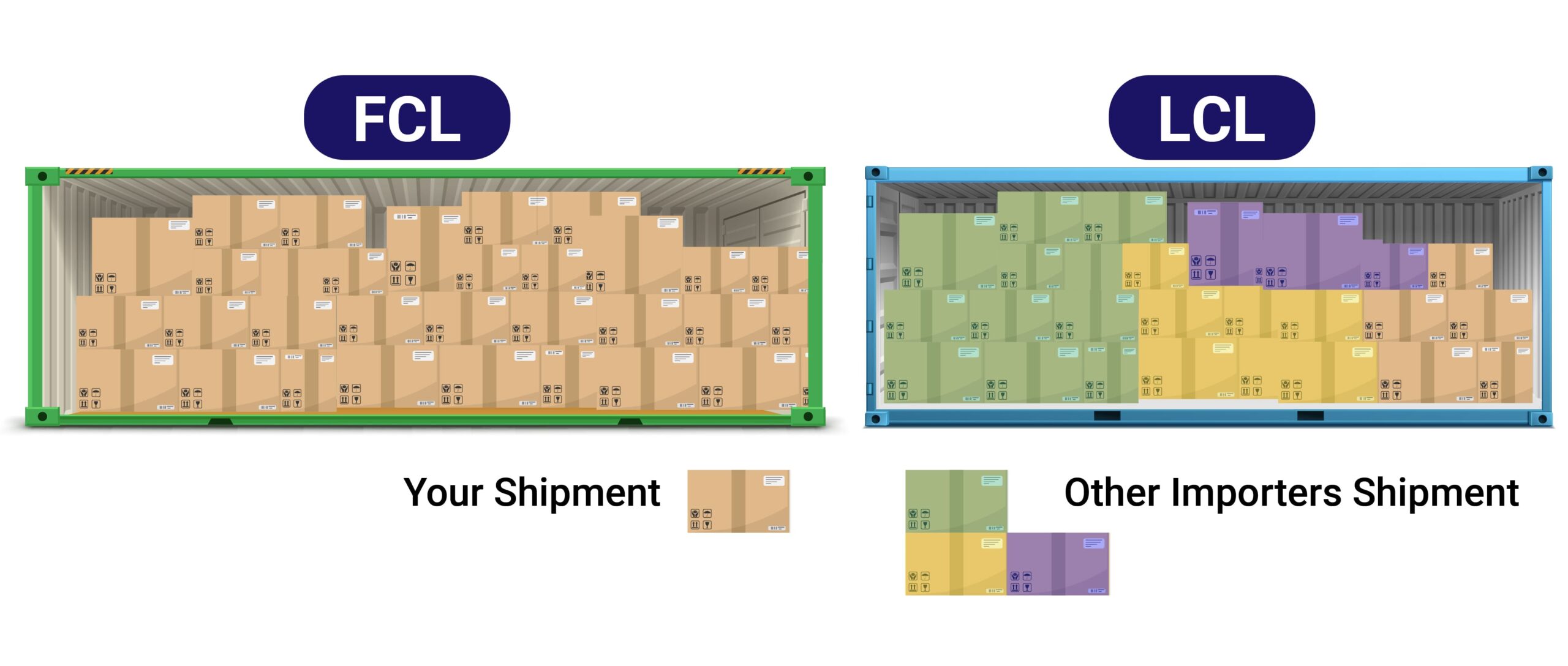
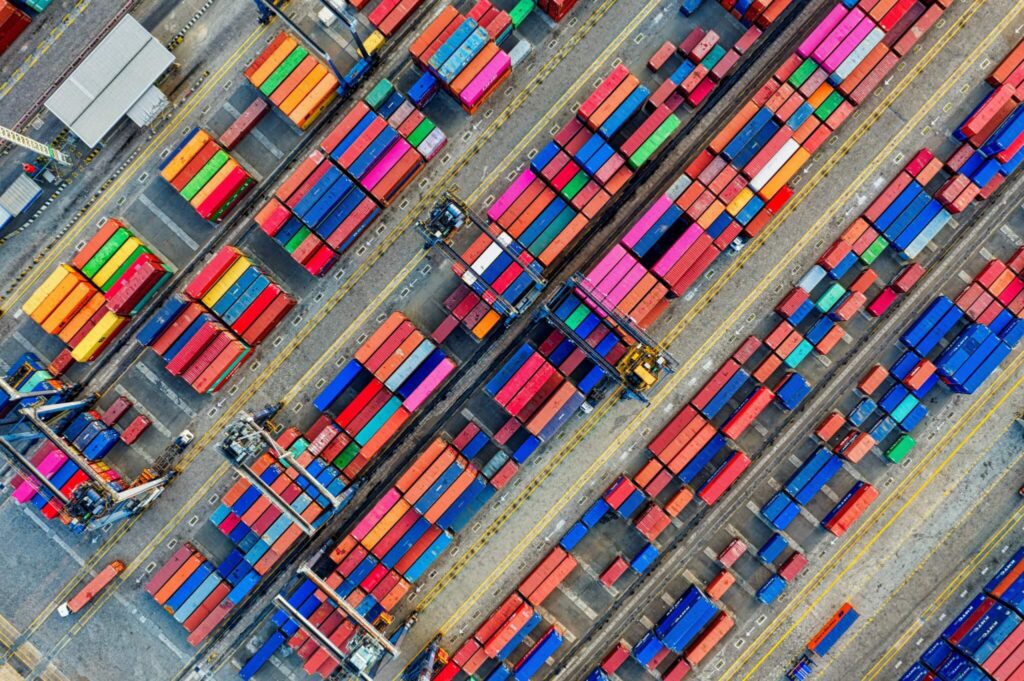
FCL (Full Container Load) is your own 20ft or 40ft container. No one else’s cargo shares the box.
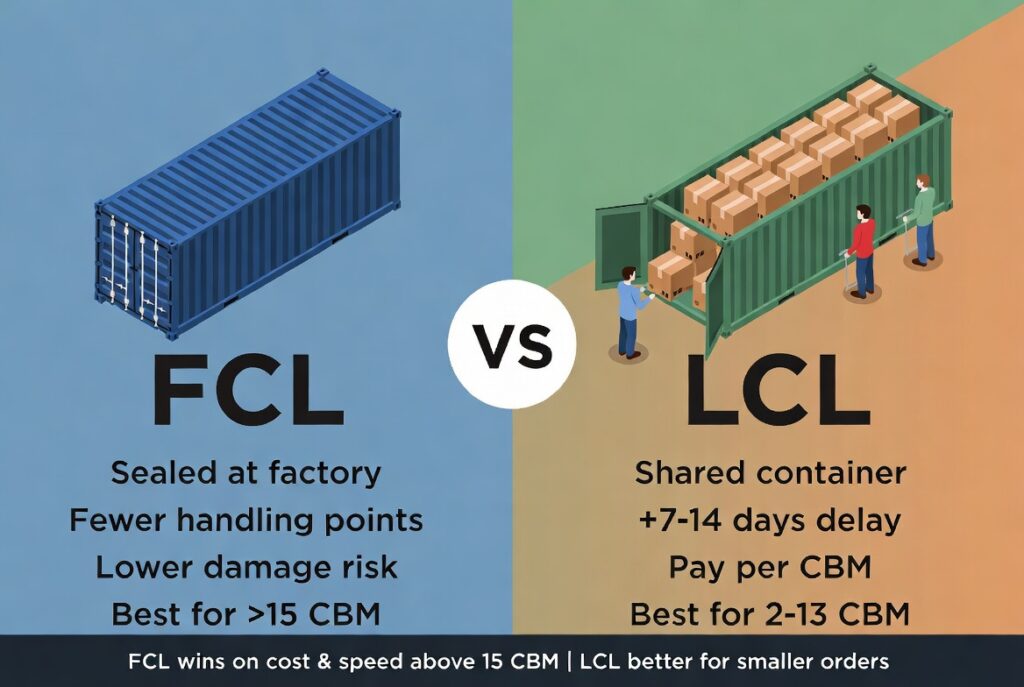
The core advantage is control. The container is sealed at your supplier’s facility (or our consolidation warehouse), opened only at final destination, and moves with fewer touchpoints. This means lower damage risk, more predictable scheduling, and transit times that don’t depend on other shippers’ goods arriving on time. You also avoid consolidation delays, which can add a week or more at origin.
The trade-off is straightforward: you pay for the whole container whether it’s fully utilized or not. For orders under 13 CBM — roughly half a 20ft container — that empty space starts to eat into the per-unit savings. Above 15 CBM, FCL shipping from China almost always wins on unit cost.
What LCL Shipping from China Really Means
LCL (Less than Container Load) puts your goods in a shared container. Multiple shippers’ cargo is consolidated at a warehouse in China, shipped together, and then split apart at the destination warehouse.
On paper, LCL shipping from China is attractive: you only pay for the space you occupy, by cubic meter or by weight (whichever is higher). For volumes in the 2–13 CBM range, it’s often the only option that makes cash-flow sense — especially if you’re testing a product or shipping irregularly.
The downsides aren’t hidden, but they’re easy to underestimate. More handling = higher probability of damage or loss. The consolidation/deconsolidation process adds 7–14 days on average. And per-unit costs can be surprisingly high once minimums, documentation fees, and terminal charges are included. We’ve seen shipments under 2 CBM where the minimum billable weight effectively doubled the expected cost.
Real Cost Comparison: What Actually Tips the Balance
Here’s where the money moves when you compare FCL vs LCL shipping from China:
- Ocean freight base rate: FCL is priced per container. From Shenzhen to LA, a 20ft currently runs 2,900–4,300 depending on the week. LCL is priced per CBM or per 100kg. A 5 CBM LCL load might come in at 1,900–2,700, but the break-even against FCL usually happens around the 13–15 CBM mark.
- Handling and documentation: LCL carries higher per-shipment handling costs because of the extra consolidation steps. Expect 150–300 more in terminal and warehouse fees at both ends compared to FCL.
- Customs: Duty rates are the same, but LCL containers hold multiple shippers, so customs pulls them for inspection more often. When one shipper’s paperwork has a problem, everyone waits.
- Rate stability: This is something most comparisons miss. FCL rates swing weekly with space availability and peak season surcharges — you might see a 40% spread between low and high season on the same route. LCL rates are typically more stable, since the risk is spread across multiple shippers and the forwarder manages a consistent consolidation schedule. If you’re budgeting far ahead, LCL can offer more predictable costs.
Where the Hidden Costs Live
For LCL shipping from China, the biggest unexpected costs are time and minimums. Many forwarders set a minimum of 1 CBM or 200kg. If your shipment is smaller, you still pay that floor. And the extra days sitting in consolidation aren’t free — they tie up inventory and delay sales. I’ve seen the combination of minimum charges and delayed delivery erase what looked like a 20% saving on the freight line.
For FCL shipping from China, under-utilization is the main culprit. Booking a 20ft container and only loading 8 CBM means you’re paying for roughly 60% of unused space. Destination demurrage (when the container sits at port) and detention (when it’s held at the receiver’s yard) also hit harder with FCL, because those charges clock per container — not per pallet — and add up fast.
When FCL Makes the Smarter Choice
Go with FCL when:
- Your shipment is 13–15 CBM or more (roughly half a 20ft container and above)
- Transit time matters — FCL is faster, with fewer handling points and no consolidation wait
- Your goods are delicate, high-value, or need minimal handling
- You have regular volume to the same destination and can plan full loads
- Damage risk is a major concern — the sealed box is a real advantage
When LCL Is the Right Call
LCL is the better fit when:
- Your volume is in the 2–13 CBM range, or orders are irregular
- You’re testing a new market and don’t want to commit to a full container
- Cash flow is tight and you need to ship now, not wait to accumulate volume
- Your freight forwarder from China runs efficient, frequent consolidation services so delays are minimal
- You want more stable freight rates that don’t swing wildly with spot market conditions
Outside these ranges: under 2 CBM, you’re still in LCL territory but should expect minimum charges; above 15 CBM, FCL nearly always wins on per-unit economics.
Two Real Situations from This Year
A fashion brand was shipping 7–9 CBM of apparel every month via LCL to Los Angeles. By adjusting their ordering cadence to ship every other month instead — consolidating into roughly 16 CBM loads — they switched to FCL and cut per-unit shipping cost by about 17%, with transit shortening by 9 days on average.
On the other side, a home goods importer insisted on FCL for 4–5 CBM shipments, paying for half-empty containers every time. We moved them to well-managed LCL with a forwarder that runs weekly sailings from Shenzhen. Their per-shipment cost dropped roughly $1,150, and they stopped tying up working capital in unused container space.
Neither story is uncommon. The point is simply that the right answer depends on your actual numbers — not a rule of thumb.
How We Help Clients Decide
We don’t have a blanket preference for FCL or LCL. When a client asks us what to do, we pull their last six months of shipment data, map out volumes, transit requirements, and product characteristics, and run both scenarios with all fees included — consolidation minimums for LCL, empty-space cost for FCL, demurrage risk, everything.
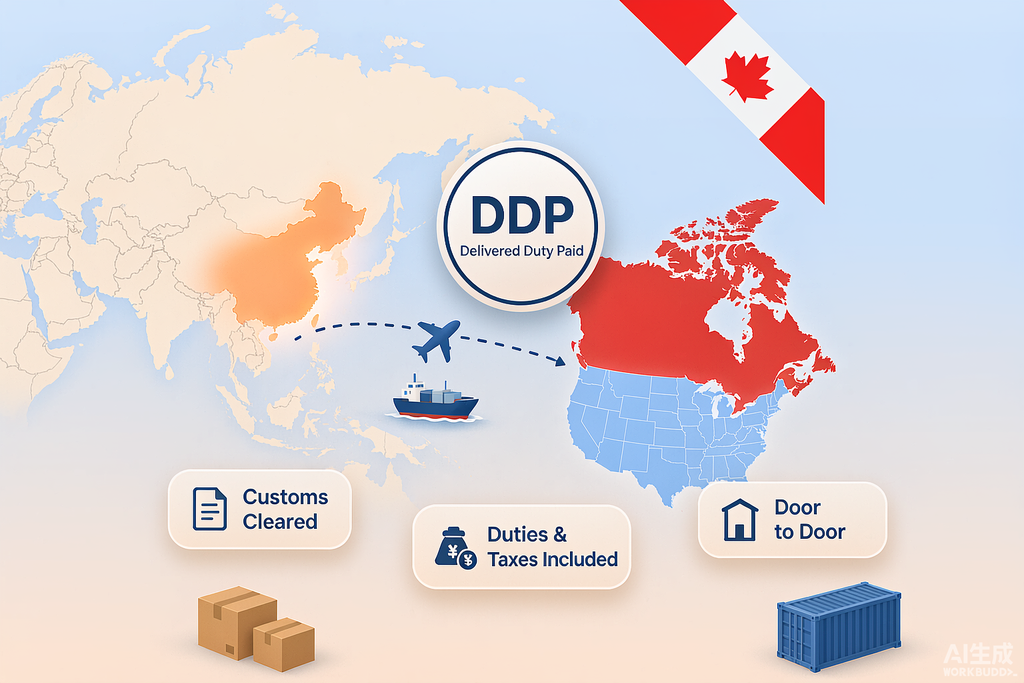
We also offer DDP options across both modes, so if you’re shipping FCL or LCL from China and need duties and VAT settled upfront, that’s covered.
Quick Self-Check for Your Next Shipment
Before you decide FCL vs LCL shipping from China this month, answer these five:
- What’s my actual shipment volume in CBM? (Not an estimate — pull the packing list.)
- Is this a regular order or a one-off?
- How time-sensitive is the delivery?
- What’s the value and fragility of the goods?
- Am I prepared to handle potential extra transit time and additional handling if I go LCL?
If you answer those honestly, the right mode usually becomes clear. And if it doesn’t, that’s a signal to get a side-by-side cost comparison from someone who has both lanes running regularly.
The Bottom Line
The cheapest option on paper isn’t always the real savings winner. The method that saves you the most money is the one that matches your actual volume, timing, and risk tolerance — not the one with the lowest headline rate. If you’re shipping from China in 2026, that’s the only logic worth following.
 English
  Chinese
  Arabic
  French
  German
  Portuguese
  Spanish