
Market Overview
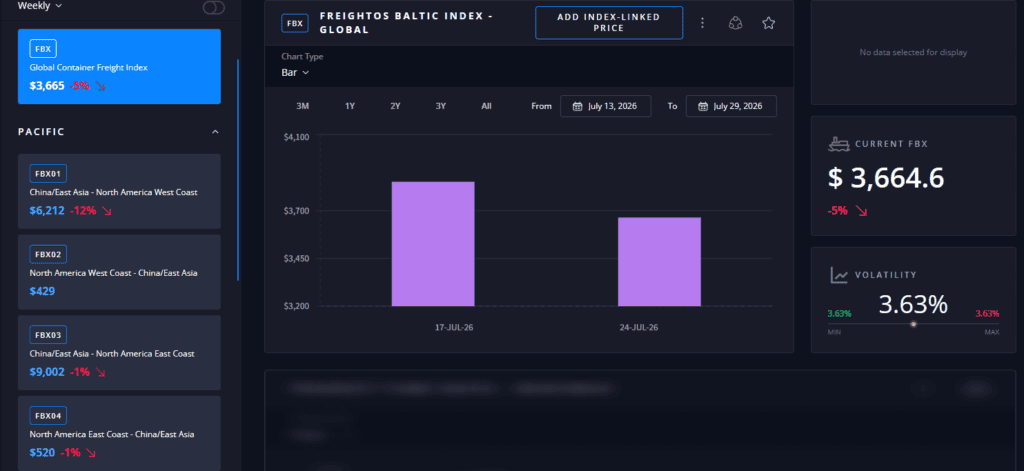
Capacity strategies and trade policy developments continued to influence freight pricing across major trade routes during the week of July 27, 2026.
According to the latest Freightos Terminal market data released for this week, several key lanes recorded week-over-week rate declines:
- China → North America West Coast ocean spot rates decreased 12% week over week
- Southeast Asia → Middle East air cargo spot rates decreased 23% week over week
These movements reflect current market conditions rather than a permanent shift in freight pricing trends.
Freight rates remain highly dynamic and can change quickly depending on:
- Seasonal shipping demand
- Vessel capacity deployment
- Fuel costs
- Port conditions
- Trade policy changes
- Geopolitical developments
1. Ocean Freight Market: Short-Term Rate Correction After Peak Season Pressure
China–North America West Coast Spot Rates Decline 12% Week Over Week
Recent Freightos Terminal data shows that spot container rates from China to the North American West Coast decreased by 12% compared with the previous week.
The decline appears to be related to several short-term market factors:
Seasonal Demand Adjustment
As peak shipping season demand begins to moderate, some importers have already accelerated inventory preparation earlier in the cycle due to uncertainty surrounding tariffs and supply chain risks.
As a result, booking pressure has eased compared with previous weeks.
However, this does not necessarily indicate a long-term downward trend.
Freight rates may continue to fluctuate depending on:
- Retail inventory cycles
- Holiday demand preparation
- Carrier capacity decisions
- Unexpected market disruptions
Carriers Continue Capacity Management Through Blank Sailings
While spot rates have softened, carriers are actively managing available capacity through blank sailings.
This strategy allows shipping lines to:
- Reduce excess vessel availability
- Maintain schedule reliability
- Limit rapid rate declines
For shippers, this means lower spot rates may provide temporary opportunities, but capacity availability should still be monitored carefully.
A lower freight quote does not always guarantee lower total logistics costs, as businesses must also consider:
- Transit time changes
- Port congestion
- Storage charges
- Inland transportation costs
2. Trade Policy Changes Add Short-Term Uncertainty
Importers Adjust to New Tariff Environment
Recent changes in the U.S. tariff framework have created additional complexity for companies importing goods from Asia.
New Section 301 tariff measures and adjustments to existing duty structures require importers to review:
- Product classification
- Country of origin
- Applicable duty rates
- Total landed costs
The impact varies significantly by product category and sourcing strategy.
For some businesses, tariff changes may influence supplier selection or inventory timing, while others may experience limited impact.
3. Air Cargo Market: Rates Cool After Earlier Demand Strength
Southeast Asia–Middle East Air Freight Rates Drop 23%
Air cargo spot rates on the Southeast Asia–Middle East route declined 23% week over week.
The movement reflects short-term market normalization after periods of stronger demand.
Possible factors include:
- Improved capacity availability
- Reduced urgent shipments
- Seasonal demand changes
However, air freight pricing remains sensitive to external factors.
Fuel Costs and Geopolitical Risks Remain Key Variables
Although spot rates have softened, airlines continue to face cost pressure from:
- Jet fuel price fluctuations
- Regional conflicts
- Operational disruptions
Therefore, current price reductions should be viewed as a market adjustment rather than confirmation of a sustained downward cycle.
4. Industry Developments to Monitor
China’s Growing Role in Global Shipbuilding
Recent industry reports indicate that Chinese shipyards continue to hold a dominant position in global shipbuilding orders.
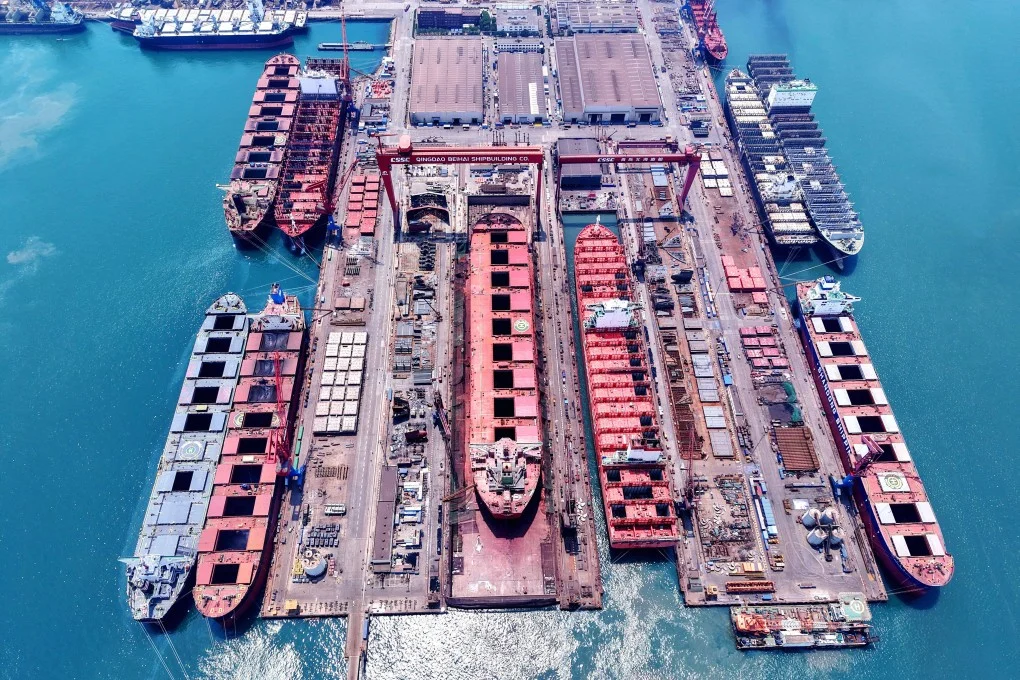
This reflects China’s strong manufacturing capabilities and maritime supply chain ecosystem.
However, the impact on freight markets will depend on future factors including:
- Fleet expansion pace
- Carrier deployment strategies
- Global trade growth
Increased vessel capacity does not automatically translate into lower freight rates, as market demand and carrier management remain critical factors.
Warehouse Automation Continues Expanding
Warehouse automation remains an important long-term logistics trend.
Technologies such as automated storage and retrieval systems (AS/RS) are helping companies improve:
- Inventory efficiency
- Order processing speed
- Warehouse scalability
Unlike weekly freight rate changes, automation represents a structural transformation in supply chain operations.
5. Implications for Importers and E-Commerce Businesses

Current market conditions create both opportunities and challenges.
Short-Term Opportunities
Businesses may benefit from:
- More competitive spot freight pricing
- Improved shipping flexibility
- Opportunities to optimize transportation costs
However, companies should avoid making decisions based only on temporary rate movements.
Recommended Strategy
Instead of focusing only on weekly freight fluctuations, importers should:
Monitor Market Cycles
Track:
- Seasonal demand changes
- Carrier capacity adjustments
- Regional rate movements
Maintain Logistics Flexibility
Consider combining:
- Ocean freight
- Air freight
- Consolidation services
- Alternative shipping routes
Optimize Total Landed Cost
Evaluate the complete supply chain cost, including:
- Freight
- Customs duties
- Warehousing
- Delivery expenses
Conclusion: Freight Markets Remain Dynamic and Cycle-Driven
The latest Freightos Terminal data highlights a short-term adjustment in global freight markets, with selected ocean and air routes experiencing rate declines as seasonal demand patterns change.
However, freight pricing remains highly cyclical and influenced by multiple external factors. Current declines should not be interpreted as a permanent reduction in transportation costs.
For importers and e-commerce businesses, the key strategy is not simply chasing lower rates, but building a flexible supply chain capable of adapting to changing market conditions.

 English
  Chinese
  Arabic
  French
  German
  Portuguese
  Spanish