TL;DR — What This Guide Covers
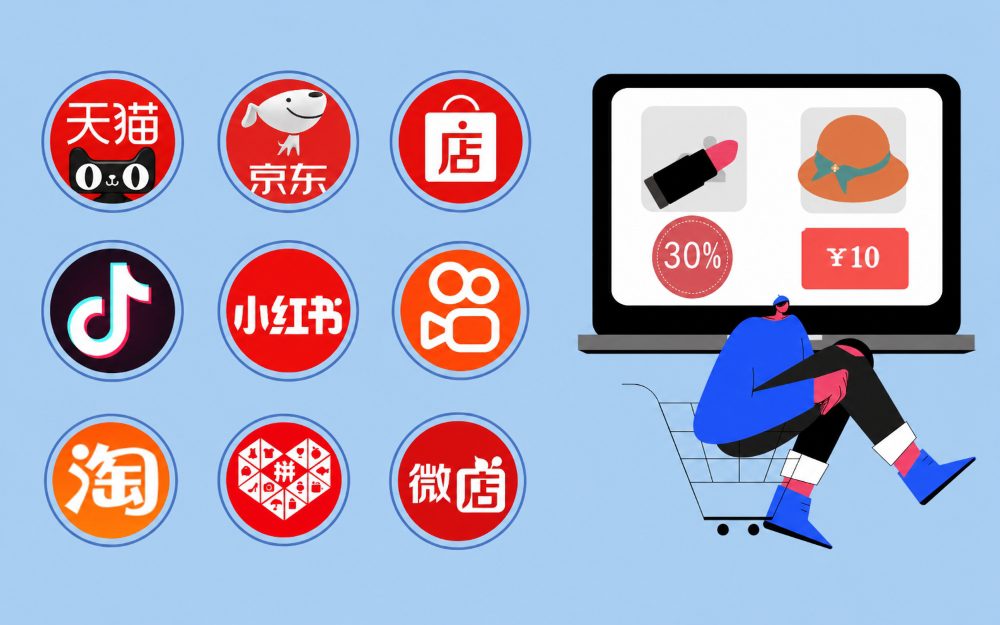
- What: China’s domestic platforms — Taobao, 1688, JD.com, Douyin, Pinduoduo, Xiaohongshu, and Weidian — carry far more product depth and lower prices than international-facing platforms like AliExpress or Temu. Shopping on Chinese domestic platforms gives international buyers access to the same factories that supply the products they already buy, at factory-level pricing.
- Why: The factory supplying your $40 AliExpress order often sells the same product on 1688 for $5–8. 1688 overseas buyers access factory-direct pricing that AliExpress sellers themselves use for sourcing. Domestic platforms also run the world’s largest shopping festivals, with discounts international platforms cannot replicate.
- How: International buyers on Chinese platforms access them via freight forwarders — you get a China warehouse address, shop from any domestic platform, and goods ship to you internationally as a consolidated parcel. No Chinese phone number or bank account required on your end.
- Who it’s for: Anyone willing to invest 30 minutes of setup for significantly lower prices and access to products that simply don’t exist on export platforms. Particularly valuable for Taobao international buyers sourcing fashion, niche goods, or collectibles, and for commercial buyers using 1688 for wholesale.
- First step: get your China warehouse address → start with Taobao
Table of Contents
Why Go Beyond AliExpress and Temu?
AliExpress and Temu are export platforms. They are convenient, English-language, and ship directly to your door. But they are not where Chinese consumers shop — and that distinction matters for one simple reason: price.
Every product on AliExpress has passed through at least two or three margin layers above the original factory price. The factory sells to a domestic wholesaler, who sells to an AliExpress seller, who marks up for export, platform fees, and international service overhead. By the time that product reaches you, the price can be 3–5× what the same factory charges on 1688.
China’s domestic platforms eliminate those layers. That price gap — not curiosity — is why a growing number of international buyers are setting up freight forwarder accounts and shopping directly on platforms built for Chinese consumers.
There is a second reason: product range. China’s domestic platforms carry the full breadth of Chinese manufacturing output. Niche electronics, regional food products, independent designer fashion, early-release products, and categories that never clear international platform compliance policies exist domestically and nowhere else.
This guide covers every major domestic platform, ranked by accessibility — starting with the easiest entry points and moving toward the more specialised channels.
Platform Overview: From Easiest to Most Specialised
| Platform | Best For | Access Level | Price vs AliExpress |
|---|---|---|---|
| Taobao | General shopping, fashion, niche finds | ★★★☆☆ Moderate | 20–40% lower |
| Tmall | Brand flagships, authenticated luxury | ★★★★☆ Easier | 10–25% lower |
| JD.com | Electronics, verified brands | ★★★☆☆ Moderate | 15–30% lower |
| 1688 | Factory-direct wholesale | ★★☆☆☆ Hard | 50–70% lower |
| Pinduoduo | Agricultural goods, budget products | ★★★☆☆ Moderate | 30–50% lower |
| Douyin | Live commerce, beauty, fashion discovery | ★★☆☆☆ Hard | 20–40% lower |
| Xiaohongshu | C-beauty, lifestyle, niche brands | ★★★☆☆ Moderate | 15–25% lower |
| Weidian | Independent designers, collectibles | ★☆☆☆☆ Hardest | Varies |
The Platforms: What Each One Offers
Taobao (淘宝) — Start Here
The one-line pitch: The world’s largest consumer marketplace, with over 1 billion listings — everything from factory-surplus electronics to handmade ceramics, independent fashion, and products you won’t find anywhere else.
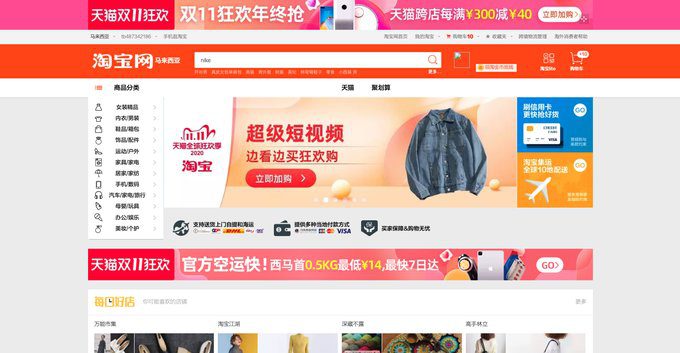
Taobao (the name translates as “seeking treasure”) was launched by Alibaba in 2003. Taobao and Tmall together command approximately 44% market share in China’s e-commerce, with combined GMV of around $1.1 trillion. It is where most international buyers begin their domestic platform journey — and for good reason.
Why international buyers choose it:
- Domestic retail pricing, not export-marked-up pricing — typically 20–40% below AliExpress on comparable goods
- Product depth that no export platform matches: regional brands, niche collectibles, artisan goods, limited-run items
- Taobao Live: embedded live commerce with flash deals and real-time product demonstrations
- The largest variety of sellers in China, making price comparison straightforward
Access requirement: Taobao requires Alipay for payment (linked to a Chinese bank account). Most international buyers use a freight forwarder’s purchasing service or a dedicated purchasing agent, who buys on your behalf for a 2–5% service fee.
Best entry strategy: Use Google Translate’s Chrome extension for desktop browsing. Search with Chinese keywords (or use image search) to find products. For your first order, work through a freight forwarder purchasing service rather than attempting independent checkout.
Tmall (天猫) — Brand-Verified Shopping
The one-line pitch: Alibaba’s brand-authenticated B2C platform — China’s equivalent of a department store where every seller is a verified brand.
Tmall launched in 2008 as Taobao Mall. While Taobao is open to individual sellers and small businesses, Tmall requires official brand registration and deposits. The result is a platform where every product comes from an authenticated source — making it the preferred channel for premium goods, imported brands, and anything where authenticity matters.
Why international buyers choose it:
- Verified brand flagships from global and domestic brands at domestic Chinese prices
- Tmall Global (天猫国际) offers a cross-border import model for international brands — bonded warehouse stock, 2–5 day delivery in China, with customs collected at point of sale
- 45 brands each surpassed ¥1 billion in sales on Tmall during 2024’s Singles’ Day alone, including Apple and Nike
- In May 2025, Alibaba launched the “Red Cat” initiative with Xiaohongshu, embedding shoppable Tmall links in social content — making product discovery even easier
Best for: Authenticated luxury goods, imported brand products at Chinese domestic prices, electronics from official brand stores.
JD.com (京东) — Electronics and Authenticity
The one-line pitch: China’s second-largest platform and the gold standard for electronics, appliances, and authenticated branded products — with a logistics network that delivers to 90% of Chinese cities next day.

JD.com generated approximately $547 billion GMV in 2025, with over 700 million monthly active users. Unlike Taobao’s third-party marketplace model, JD.com operates substantial first-party direct sales — owning its own warehousing and last-mile logistics network of 1,400 warehouses.
Why international buyers choose it:
- Explicit authenticity guarantee: JD.com built its reputation on verified genuine products, making it the trusted source for electronics and health products
- Same-day or next-day delivery within China means goods reach your freight forwarder’s warehouse faster than from any other domestic platform
- Chinese-market-only electronics releases, components unavailable through export channels, and products months ahead of international availability
- Luxury brand presence: Gucci’s JD.com flagship features AR/VR previews and “white glove” delivery — for buyers seeking genuine luxury at domestic prices, JD’s authorized stores are the verified route
Best for: Electronics, health and beauty products where authenticity matters, premium brands, tech products not yet available internationally.
1688.com — Factory-Direct Wholesale
The one-line pitch: The platform where Taobao and AliExpress sellers buy their own inventory — priced at factory cost, not resale margin.
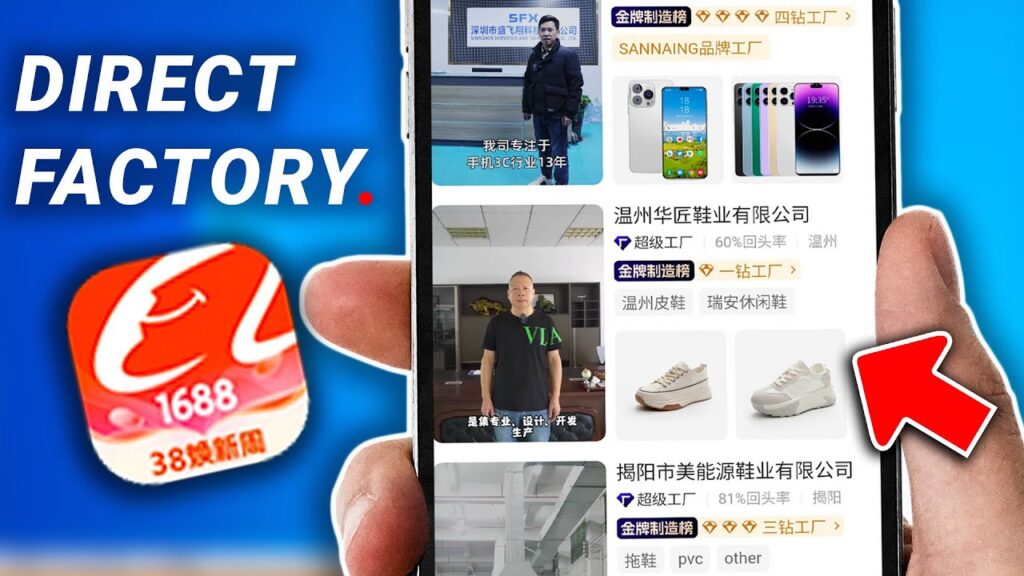
The B2B flows on 1688.com reached CNY 3 trillion (USD 420 billion) in 2024. With over 10 million active sellers and 150 million product listings, most sold directly by manufacturers, 1688 is the deepest price layer in China’s e-commerce stack. The same factory selling on AliExpress for $20 typically lists the same item on 1688 for ¥30–50 (~$4–7).
Why international buyers choose it:
- Factory-to-buyer pricing: the 50–70% discount versus AliExpress reflects the elimination of every intermediate margin layer
- Manufacturing customisation: OEM/ODM production at MOQs of 50–200 units — specify colors, materials, packaging, and branding
- Supply chain research: trace AliExpress and Amazon listings back to their source factory, then buy direct
- Alibaba is actively building 1688 Overseas, with plans to expand to 15+ countries — reducing the access barrier further over the next 12 months
Access requirement: 1688 is Chinese-only in interface and payment — the most challenging domestic platform for independent international access. Most buyers use a freight forwarder’s purchasing service. MOQ structures mean individual unit purchases are often not available.
Best for: Buyers ordering 10+ units of a product, sourcing for resale or e-commerce, OEM/ODM manufacturing.
Pinduoduo (拼多多) — Group Buying and Agricultural Direct
The one-line pitch: China’s group-buying platform — prices drop as more buyers join a purchase, with a direct line from farmers and manufacturers to consumers.
Pinduoduo generated $656 billion GMV in 2024, with more than 540 million monthly active users. Its model targeted price-sensitive consumers in China’s lower-tier cities and rural areas, creating a direct channel from agricultural producers and small manufacturers to buyers.
Why international buyers choose it:
- Agricultural products and regional food specialties at prices unavailable elsewhere: direct-from-farmer produce, regional snacks, processed foods, and traditional food products
- Manufactured goods at the most aggressively competitive prices in the Chinese market — Pinduoduo’s group-buying mechanics mean prices decrease as purchase volume increases
- FMCG and commoditised consumer goods that don’t require brand verification: household products, basic apparel, personal care items
- In October 2025, Pinduoduo introduced Temu Global, a direct-from-factory marketplace for European and North American shoppers that logged USD 500 million in its debut month — indicating the platform’s ambition to extend its model internationally
Best for: Food products, agricultural goods, high-volume commodity purchases, buyers most focused on absolute lowest price over brand or service quality.
Douyin (抖音) — Live Commerce and Discovery
The one-line pitch: China’s TikTok — but with a fully developed commerce infrastructure where factories, brands, and KOLs sell directly via live stream, often at prices below any other channel.
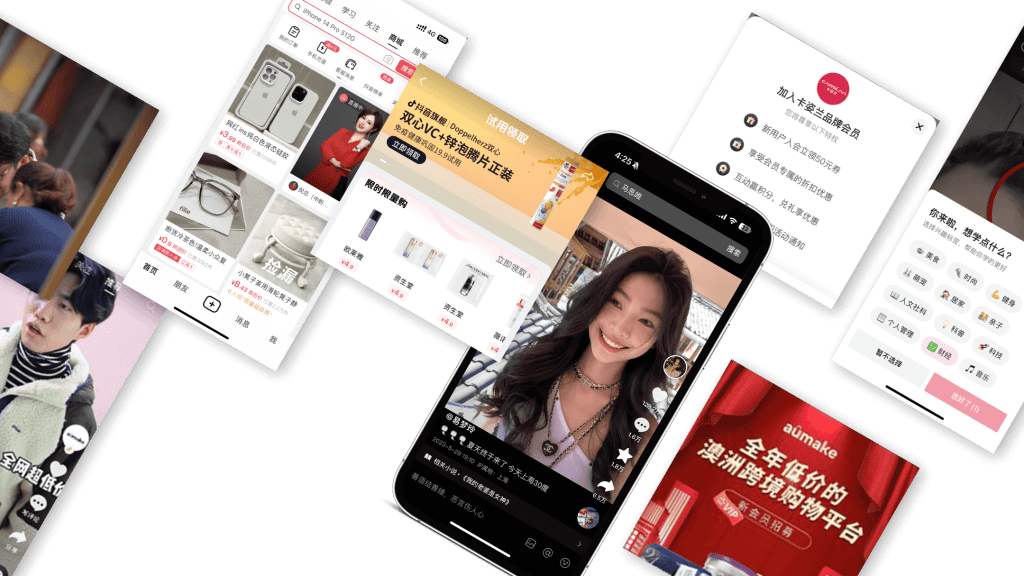
Douyin generated approximately $656 billion GMV in 2025, with more than 750 million monthly active users. Its GMV grew at 60% year-on-year in 2023. Douyin rewards content quality and KOL partnerships as much as product quality, which is why brands in beauty, skincare, fashion, and lifestyle treat Douyin as a primary channel rather than a secondary one.
Why international buyers choose it:
- Discovery channel: Douyin’s algorithm surfaces products from small domestic manufacturers that have never listed on export platforms — genuinely novel products unavailable anywhere internationally
- Factory direct streams: Chinese manufacturers increasingly run their own live streams selling at factory prices with real-time product demonstrations — for buyers who navigate the interface, these prices are the lowest available
- Flash deals during major festivals: Douyin’s countdown deal format during 618 and Double 11 produces more extreme discounts than static product listings
- Beauty, fashion, and lifestyle depth: Douyin embeds shoppable video into short-form feeds; it generated CNY 1.2 billion (USD 167 million) in a single L’Oréal beauty campaign in September 2025 — illustrating the category density available
Access challenge: Douyin’s live stream interface requires either basic Mandarin comprehension or real-time translation tools. The commerce layer is more complex than static platform browsing. Purchasing agents experienced with Douyin commerce are the most practical route for non-Mandarin buyers.
Best for: Product discovery, beauty and fashion sourcing, buyers comfortable with live stream navigation or working with a Mandarin-speaking agent.
Xiaohongshu (小红书) — Social Discovery and C-Beauty
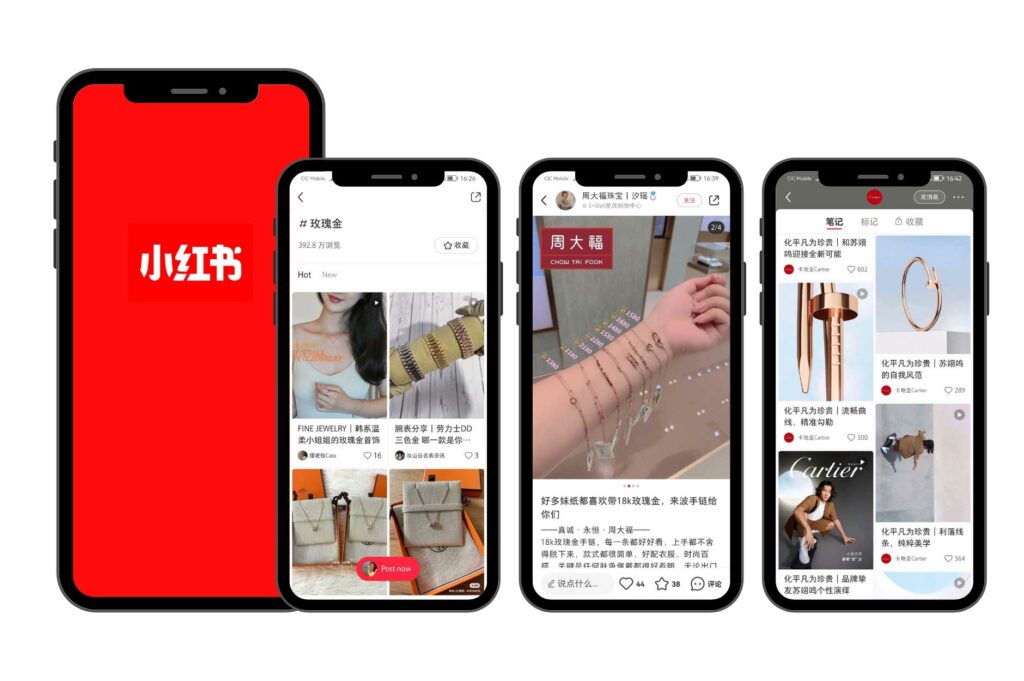
The one-line pitch: China’s Pinterest and Instagram combined — a peer review and lifestyle platform where product discovery happens through authentic user content, with direct purchase capability.
Why international buyers choose it:
- Chinese beauty (C-beauty), wellness, and lifestyle products discovered through authentic peer reviews rather than algorithmic product listings
- Independent domestic designers and niche brands that don’t list on larger platforms but maintain an active Xiaohongshu presence
- Research tool before purchasing on other platforms: Xiaohongshu reviews are the most trusted source for product authenticity and quality assessment in China
- Social commerce content leads directly to purchase — Alibaba’s May 2025 “Red Cat” initiative embeds shoppable Tmall links inside Xiaohongshu posts
Best for: Beauty, wellness, domestic fashion brands, research before buying on Taobao or JD.
Weidian (微店) — WeChat’s Hidden Market
The one-line pitch: Individual sellers, independent designers, and niche specialists operating entirely within WeChat — no public search, discoverable only through social sharing.
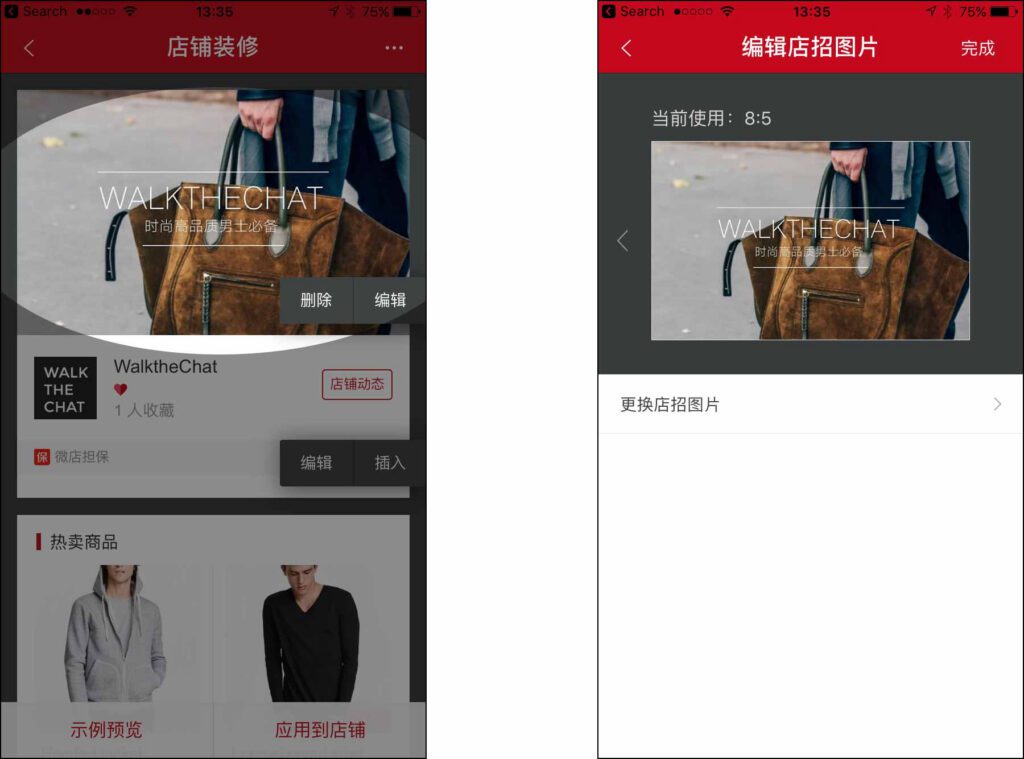
Why international buyers seek it out:
- Exclusive independent designers: Many Chinese fashion designers and streetwear labels operate exclusively on Weidian — they prefer WeChat’s social distribution over Taobao’s algorithm competition, creating genuine exclusivity
- Collectors and specialists: Vintage clothing curators, limited-edition toy traders, secondhand luxury resellers — inventories that exist nowhere else online
- Social pricing: Weidian sellers price below equivalent Taobao listings because their customers come through personal recommendation rather than platform search — regular buyers negotiate directly for volume or loyalty discounts
- Direct manufacturer outlets: Some factories use Weidian for direct-to-consumer sales of product categories that don’t fit Taobao’s review structure
Access challenge: Weidian is the most difficult domestic platform to access independently. There is no public search engine — stores are only discoverable through WeChat sharing. Payment requires WeChat Pay. International buyers find Weidian stores primarily through Xiaohongshu posts, Chinese fashion communities on Reddit and Telegram (particularly in sneaker, streetwear, and collectible communities), and purchasing agents who maintain active WeChat networks.
Best for: Fashion-forward buyers specifically seeking Chinese independent designers; collectors in niche categories; buyers whose purchasing agent has active WeChat access to specific sellers.
The Price Gap in Numbers
To understand why domestic platforms matter, the cost comparison is the core data point — explained once here rather than repeated across each platform section.
The price structure for the same product across China’s distribution chain:
Factory price (1688)          ¥30–50      (~$4–7)
↓ Taobao reseller markup
Taobao domestic price         ¥80–120     (~$11–17)
↓ Export platform markup + fees
AliExpress international      $20–35
↓ End-to-end DTC logistics
Temu / SHEIN consumer         $25–45
The difference between 1688 factory price and AliExpress is not a small discount. At 5–10 units, the goods saving typically exceeds the freight forwarder service fee by a factor of 3–5. At 50+ units, the economics of domestic platform access become decisive.
China’s Shopping Festivals: The Advanced Buyer’s Calendar
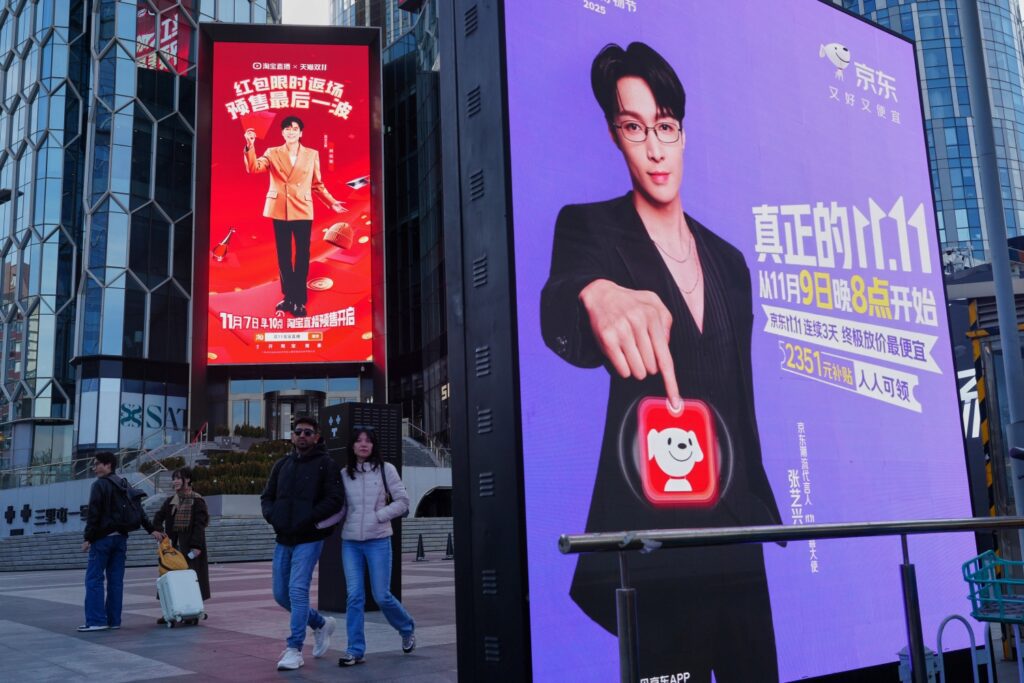
International buyers willing to plan orders around China’s festival calendar access discount structures that no Western shopping event approaches.
| Festival | Dates | Typical Discount Range | Best Categories |
|---|---|---|---|
| 618 Shopping Festival | June 1–18 | 20–50% | Electronics, appliances, fashion |
| Double 11 (Singles’ Day) | November 1–11 | 30–60% | Everything — largest event globally |
| Double 12 | December 12 | 20–40% | Clearance stock, apparel, home goods |
| Chinese New Year | January/February | 15–30% pre-holiday; 30–50% post-holiday clearance | Gifts, food, festival goods |
| Qixi (Chinese Valentine’s) | August | 20–40% | Beauty, jewelry, fashion |
| National Day Golden Week | October 1–7 | 15–35% | Electronics, luggage, outdoor |
The 2024 Singles’ Day generated an estimated $197 billion in sales across major platforms, a 26.6% increase year-on-year. 45 brands each surpassed ¥1 billion in sales on Tmall alone.
The international buyer strategy: Place orders during pre-sale windows (typically 1–2 weeks before the main festival date), consolidate purchases at your freight forwarder’s China warehouse, and ship internationally once the window closes. This combines festival pricing with freight consolidation savings.
How to Access Chinese Domestic Platforms: The Freight Forwarder Model
One explanation covers every platform on this list.
A freight forwarder with a China consolidation warehouse provides:
- A Chinese warehouse address that becomes your domestic delivery destination for all platform orders
- Receipt and inspection of goods from multiple sellers
- Consolidation of multiple orders into one international parcel
- International shipping to your door via your chosen method
- Export customs declaration in China
The cost structure:
| Cost Component | Typical Range |
|---|---|
| Purchasing service fee (if used) | 2–5% of goods value |
| Domestic China shipping (seller → warehouse) | ¥5–20 per parcel |
| International freight — economy air (China → US/EU) | $4–8/kg |
| International freight — sea LCL (China → US) | $100–150/CBM |
The purchasing service fee is only charged if the forwarder buys on your behalf (necessary for Weidian, often needed for 1688 and Douyin). For Taobao, Tmall, and JD.com, experienced buyers place their own orders using translation tools and only need the warehouse address.
Vantage Forwarding operates as an international freight forwarder with China sourcing capability — supporting Taobao, 1688, and multi-platform purchasing alongside DDP delivery to the US, EU, and other major markets.
Your First Order: A Clean Action Plan
Step 1 — Choose your starting platform New to domestic platforms? Start with Taobao (widest product range, most forwarder support). Sourcing for resale at 10+ units? Start with 1688. Buying electronics or premium brands? Start with JD.com.
Step 2 — Browse with Google Translate On desktop, the Chrome extension translates pages in real time. Use image search on Taobao and 1688 if you cannot type in Chinese.
Step 3 — Place your order to the warehouse address At checkout, enter your forwarder’s China warehouse address. If you need a purchasing service, submit the product URL to your forwarder — they complete payment via Alipay or WeChat Pay.
Step 4 — Consolidate before shipping Wait until all ordered items are at the warehouse. Shipping multiple orders as one parcel is where the freight cost savings accumulate. Most forwarders send photos of received items for verification.
Step 5 — If timing allows, wait for a festival window If your purchase is not urgent, check whether 618 (June) or Double 11 (November) is approaching. Pre-sale discounts on your planned items often save more than the freight consolidation alone.
Where Chinese Domestic Platforms Rank Globally
This context matters because Taobao and Alibaba generate global traffic rankings without any formal international service — driven entirely by international buyers accessing them through freight forwarders and agents.
Cloudflare Radar General E-Commerce Rankings (June 1, 2026):
| Rank | Platform | Q1 2026 | June 2026 | Trend |
|---|---|---|---|---|
| #1 | Amazon | #1 | #1 | Untouched |
| #2 | Shopee | #2–3 | #2 | Held |
| #3 | eBay | #5–7 | #3 | Climbing |
| #4 | Temu | #3–4 | #4 | Slipped |
| #5 | Taobao | #4–7 | #5 | Held |
| #6 | Alibaba | #5–7 | #6 | Held |
| #7 | AliExpress | #8–10 | #7 | Re-entered |
Taobao ranking #5 globally — a platform with no formal international service, no English interface, and no international payment — reflects the scale of international buyers already accessing it through the freight forwarder model described in this guide.
Conclusion: Where to Start
China’s domestic platforms are not a complicated workaround. They are the world’s largest e-commerce ecosystem, and the freight forwarder infrastructure to access them is mature, affordable, and used by millions of international buyers.
The practical starting point depends on what you want:
- General shopping and niche finds → Taobao, accessed via freight forwarder purchasing service
- Factory-direct pricing at 5+ units → 1688, via freight forwarder purchasing service
- Electronics and authenticated brands → JD.com
- Product discovery in beauty and fashion → Douyin or Xiaohongshu
- Independent Chinese designer fashion → Weidian, via an agent with WeChat access
- Best prices at any volume → Time your orders around 618 or Double 11
The first step in all of these processes is the same: obtain your Chinese warehouse address from your freight forwarder. The rest of the steps will naturally follow.
Published: June 2026 Sources: Cloudflare Radar Internet Services Rankings (Q1–June 2026); USDA ATO Shanghai China E-Commerce Report 2025; Lengow China Marketplaces 2026; Mordor Intelligence China E-Commerce Market 2026; ECDB Global E-Commerce Data 2025; iiMedia Research China CBEC Market 2025; Netguru Global E-Commerce Country Data 2026; WorldFirst 1688 vs Taobao guide (March 2026)
 English
  Chinese
  Arabic
  French
  German
  Portuguese
  Spanish