Table of Contents
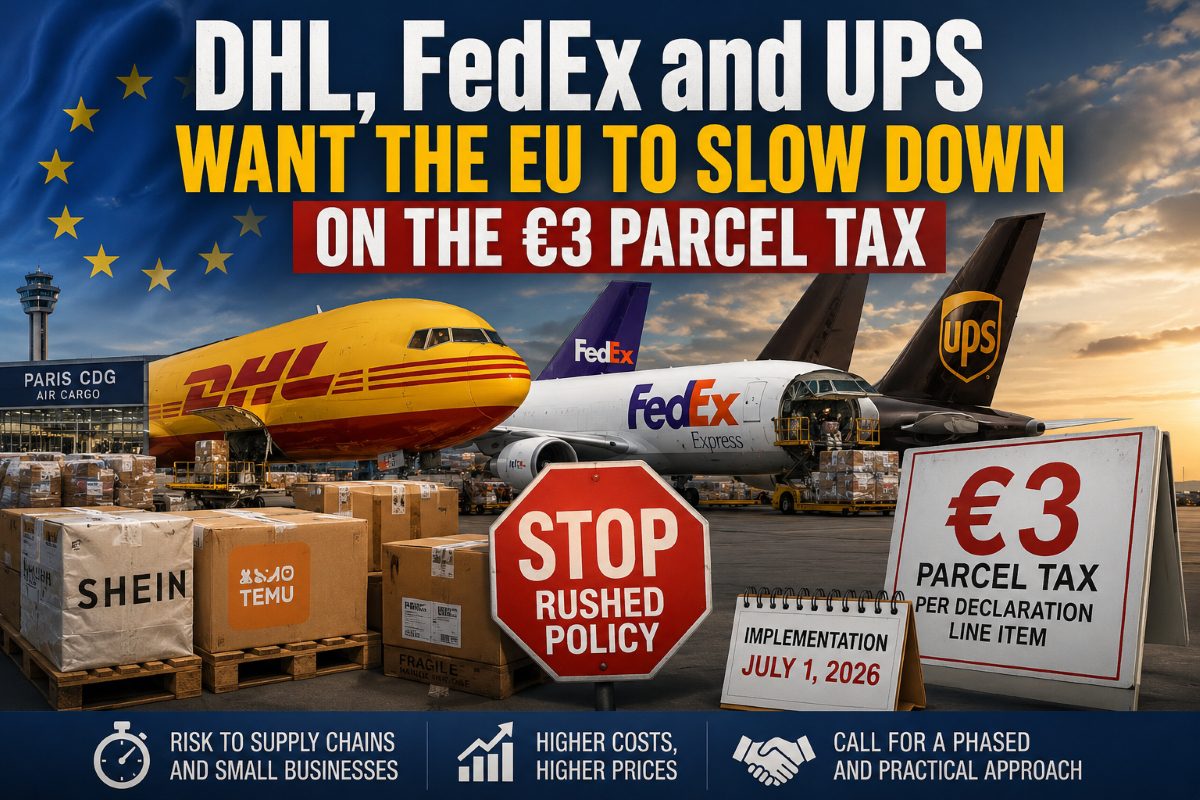
Three weeks before the EU’s new €3 Parcel Tax (the €3-per-line customs fee) is set to take effect on July 1, 2026, the three major integrators moving the largest share of cross-border e-commerce parcels into Europe delivered an uncomfortable reality check to EU finance ministers: the operational system is simply not ready.
On May 22, 2026, DHL Express Europe CEO Mike Parra, FedEx Europe President Wouter Roels, and UPS EMEA President Daniel Carrera co-signed a joint letter to EU finance ministers. Their message was direct and urgent:
“We therefore call on Ministers to endorse a phased approach: proceed with the EUR 3 flat-rate duty per item from 1 July 2026, while deferring the more complex and unresolved elements until they are legally certain and operationally viable.”
Crucially, this is not an anti-tax lobbying effort. DHL, FedEx, and UPS are not demanding that the EU abandon the €3 fee. Instead, they are urging for a realistic, phased implementation framework that prevents immediate border gridlock on day one.
For Chinese e-commerce exporters navigating supply chains into Europe through any carrier, understanding what these logistics giants are actually worried about—and the systemic uncertainties that remain unresolved—is critical to mitigating compliance risks and ensuring business continuity.
What the Three Carriers Are Worried About
The Scale Problem: Why EU De Minimis Reform Is Harder Than It Looks
The numbers explain why the carriers are concerned — and why EU de minimis reform is not simply a policy announcement but an operational transformation affecting every channel of China to EU ecommerce shipping. Low-value consignments accounted for 97.9% of imported items in 2025, while customs authorities were processing close to 180 direct shipments into the EU every second. The EU’s own Commission describes the overhaul as its most ambitious rewrite of EU customs rules since 1968.
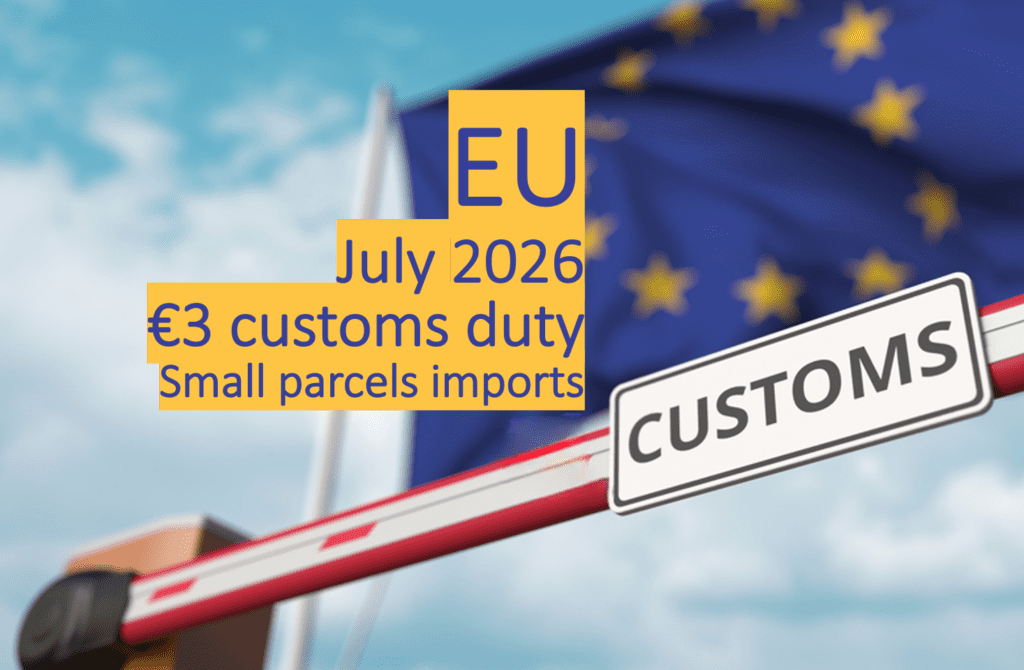
The €3/line fee will replace the current €150 de minimis exemption for parcels from non-EU countries from 1 July, with a €2 processing fee set to be added later in the year — probably in November.
Against that backdrop, DHL, FedEx and UPS argued that the new data requirements and administrative steps could not realistically be put in place on the timetable now envisioned.
The “Real Risk” Warning
Mike Parra, CEO of DHL Express Europe, Wouter Roels, president of FedEx Europe, and Daniel Carrera, president of UPS EMEA, said in the letter they foresaw a “real risk” of shipments being held up at EU borders “without a stable and workable legal framework”.
This is a significant statement from three companies whose business model depends on parcels moving fast. When the carriers themselves say there is a real risk of goods being held at EU borders, that is operational intelligence, not political positioning.
Medical Supplies and Supply Chain Disruption
The three companies warned that the disruption could affect medical supplies, slow industrial production, and create bottlenecks in European supply chains — risks they described as particularly significant in the current geopolitical context.
The mention of medical supplies is notable. It signals that the carriers’ concern extends beyond e-commerce parcels to every category of low-value import — including B2B industrial components, pharmaceutical supplies, and spare parts that happen to fall under the €150 threshold.
What Specifically Is “Not Ready”
The carriers’ letter identifies two distinct categories of concern:
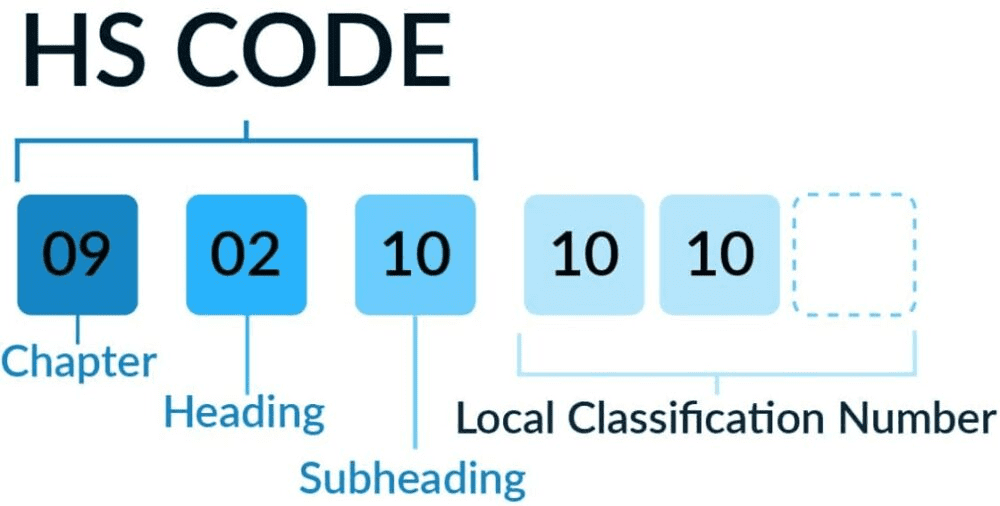
What they accept proceeding on July 1: The €3 flat-rate duty itself — one fee per product type (6-digit HS code) per parcel. This is relatively straightforward in concept.
What they want deferred: The more complex data requirements, reporting obligations, and administrative processes attached to the broader customs reform package. The new data requirements and other changes required by the new rules resulted in a level of complexity that cannot realistically be implemented by the July 1 deadline.
The distinction matters. The core fee structure — €3/line, per HS code, per parcel — is what Chinese exporters need to plan around from July 1. The surrounding compliance infrastructure (data sharing, risk profiling, new customs declaration formats) may roll out on a different timeline if the carriers’ request is accommodated.
What This Means If You’re Shipping China to EU Low-Value Parcels After July 1
Whether or not the EU accommodates the carriers’ phased request, the ground-level reality for Chinese exporters and China to EU ecommerce shipping does not fundamentally change. The EU customs regime for low-value parcels is tightening on a fixed calendar — here is what to plan for.
The €3 Fee Is Going Ahead
DHL, FedEx and UPS have written jointly to EU finance ministers urging a phased approach to the bloc’s new customs rules, warning that key elements of the framework are not ready for the 1 July 2026 start date. But they are explicitly asking for the €3 flat rate to proceed — not for the tax to be delayed or removed.
The fee structure:
- €3 per declaration line item (per 6-digit HS code per parcel)
- Rising to €5/line (€3 duty + €2 handling fee) from November 2026
- Applies to sub-€150 consignments from all non-EU origins
Your landed cost model needs to reflect this from July 1 regardless of any phasing agreement on the surrounding administrative requirements.
Border Delays Are a Real Possibility in July–September 2026
The carriers have explicitly warned of this risk. Even if the EU accepts a phased approach, the transition period of July–September 2026 is likely to be operationally imperfect. Customs systems across 27 member states will be adjusting simultaneously. Inspection rates may increase as authorities calibrate new procedures.
For Chinese exporters with time-sensitive EU shipments in Q3 2026, building additional buffer time into delivery commitments is prudent risk management. A shipment that would normally take 5–8 days door-to-door may take 8–12 days while border processing stabilizes.
Fragmented National Fees on Top of the EU-Wide Charge
The EU de minimis reform is not a single uniform change — it is a layered regulatory shift playing out at both EU and member-state level. While the EU-wide €3/line fee is being phased in, several Member States are introducing national fees, creating a more fragmented compliance landscape for China EU ecommerce sellers. Romania has already adopted a national charge on low-value non-EU parcels.
This means the €3/line EU fee is not the only charge to track. For exporters shipping to multiple EU markets, destination-specific national surcharges may apply on top of the EU-wide fee. Your freight forwarder’s customs broker should maintain a current breakdown by destination country.
Documentation Accuracy Is More Important Than Ever for China-EU Shipments
EU customs compliance for China ecommerce exports is moving from a background administrative task to a front-line business risk. Under the evolving customs framework, the product description, HS code, declared value, and country of origin on your commercial invoice are being cross-referenced more rigorously. Errors that previously resulted in minor delays may now trigger formal examinations under the new inspection regime.
For any shipment entering EU customs from July 1, 2026:
- Commercial invoice must reflect actual transaction value
- Each product must have its confirmed 6-digit HS code
- Country of origin declaration must be accurate
- For high-risk categories, consider proactive compliance documentation
Why DHL, FedEx and UPS Are Worth Listening to on This
It would be easy to read the carriers’ letter as self-interested lobbying — these companies handle the China to EU parcel volume that generates the most compliance overhead under the new rules.
That reading is incomplete. These three companies collectively have the most detailed operational visibility into EU customs processing capacity of any private-sector entities. When they say there is a real risk of shipments being held at EU borders, they are describing what their own systems are showing them — not making a theoretical argument.
Their request is also notably moderate. They are not asking for a delay to the fee. They are asking for the complex, legally unsettled elements to be sequenced more carefully. That is a technically credible position that EU finance ministers are likely to take seriously, even if the headline fee proceeds as planned.
The practical signal for exporters: the July 1 date is real, the fee is real, but the implementation environment will be imperfect. Flexibility in your logistics setup — particularly for Q3 2026 shipments — is worth more than usual.
What to Do Before July 1
For exporters already shipping to the EU:
- Update your DDP quotes. Any freight quote your forwarder produced before December 2025 does not include the €3/line duty. Request updated all-in DDP rates explicitly.
- Confirm your HS code classification for every SKU. The fee is calculated by HS code. A misclassified product may end up on the wrong declaration line, creating both cost and compliance exposure.
- Add 3–5 days buffer to EU delivery commitments in July–September 2026. The carriers have explicitly flagged border processing uncertainty in this window.
- Ask your freight forwarder what carrier systems they’re using for EU customs from July 1. If your forwarder routes EU shipments through DHL, FedEx, or UPS, the systems those carriers are using to process the €3 declaration will directly affect your clearance experience.
- Check destination-country surcharges separately. The EU-wide fee and national-level fees (Romania, and potentially others) are layered. Your per-shipment cost calculation needs to reflect both.
The Bigger Picture: What the Carriers’ Warning Means for China-EU Ecommerce Shipping Long-Term
The joint letter from DHL, FedEx, and UPS is the clearest signal yet that EU customs for low-value parcels is entering an operationally complex transition — not a smooth flip of a switch. For Chinese exporters shipping to Europe, the EU de minimis reform timeline is real, the compliance requirements are expanding, and the window to adapt is measured in weeks, not quarters. The fact that three major carriers felt it necessary to write publicly about border gridlock risk just weeks before implementation tells you something about the pace of this regulatory change.
For Chinese exporters, the direction of travel is clear: EU customs is becoming more rigorous, more data-intensive, and more expensive for low-value parcels. The €3 fee is the interim measure. The permanent regime — full de minimis abolition and the EU Customs Data Hub — arrives in 2028.
The exporters who adapt their documentation, cost models, and logistics partnerships now are building a compliance infrastructure that will serve them through the full transition, not just the July 1 implementation date.
Frequently Asked Questions
Q: Will DHL, FedEx or UPS delay EU parcel deliveries after July 1, 2026?
The three carriers have warned EU finance ministers of a real risk of shipments being held at EU borders if the new customs framework is not operationally ready. They are not announcing service delays — they are warning that border processing systems may not be fully prepared. Chinese exporters shipping to the EU in Q3 2026 should build additional transit buffer into delivery commitments.
Q: Does the €3 EU customs fee apply to shipments via DHL or FedEx?
Yes. The €3 flat-rate duty applies to all sub-€150 consignments entering the EU from non-EU origins, regardless of which carrier is used. DHL, FedEx, UPS, postal channels, and specialist e-commerce logistics companies are all subject to the same fee structure from July 1, 2026.
Q: What are the “complex unresolved elements” in the EU low-value parcel customs reform?
The carriers have not published a full list, but their letter references new data requirements and administrative changes associated with the broader EU customs reform package. The EU’s Customs Data Hub — which will handle the permanent customs reform — is not operational until 2028. The July 1 implementation is an interim measure, and the data infrastructure supporting it is still being finalized.
Q: How does this affect DDP shipping quotes for EU destinations?
Any DDP quote produced by a freight forwarder before December 2025 is based on an outdated duty structure — it does not include the €3/line fee. Request updated quotes explicitly from your forwarder for all EU-bound DDP shipments. The €5/line combined rate (duty + handling fee) expected from November 2026 should be the baseline for H2 2026 cost planning.
Vantage Forwarding provides China to EU DDP shipping with updated €3/line duty calculations built into all EU quotes — plus HS code classification support and customs documentation preparation that meets EU authorities’ expanded inspection standards from July 1.
Request a July 2026-compliant DDP quote for your EU route →
Q: What should Chinese e-commerce exporters do now to stay compliant with EU customs changes? Three immediate actions: (1) Confirm the 6-digit HS code for every product you ship to the EU — the €3 fee is calculated per HS code per parcel, so classification accuracy directly affects your cost. (2) Request updated DDP quotes from your freight forwarder that reflect the July 2026 fee structure — any quote from before December 2025 is outdated. (3) Add 3–5 days delivery buffer to EU-bound shipments in Q3 2026 while border processing systems stabilize. For ongoing China EU ecommerce shipping compliance, work with a forwarder whose customs team tracks EU regulatory changes at the destination-country level, not just the EU-wide headline.
Sources: Reuters / Matthias Inverardi (May 22, 2026); CEP-Research (May 28, 2026); The Loadstar (May 2026); Prism News (May 2026); Global Banking and Finance Review (May 2026); Shippo EU import fees guide (April 2026)

 English
  Chinese
  Arabic
  French
  German
  Portuguese
  Spanish