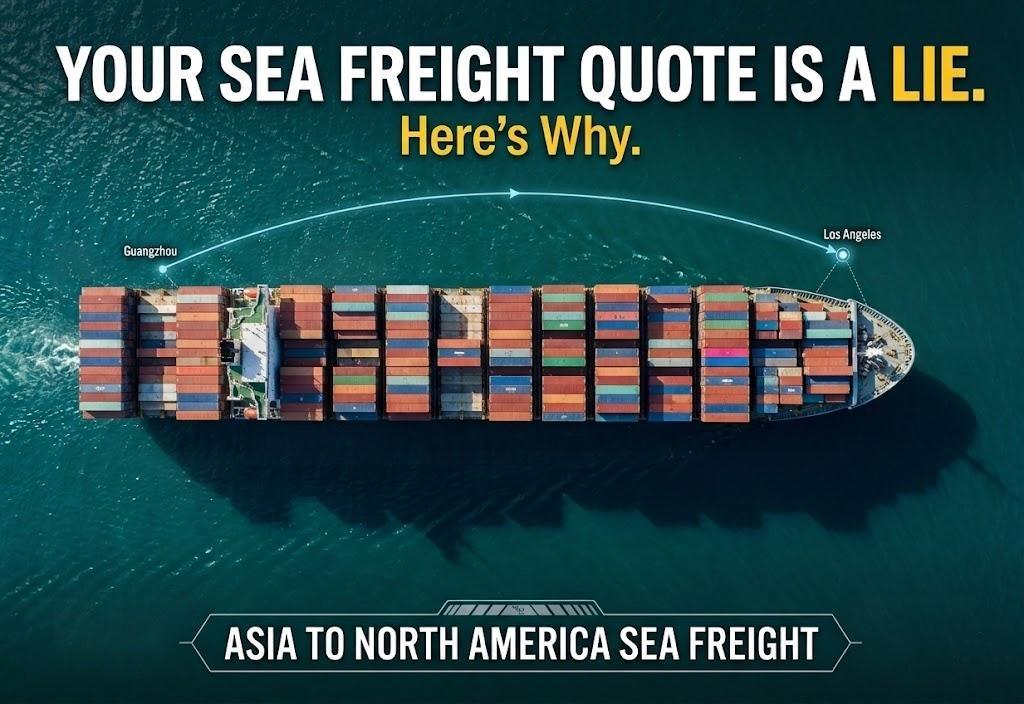
Your Sea Freight Quote is a Lie. Here’s Why.
You get a quote for shipping your goods from Guangzhou to Los Angeles. Looks good, right? Maybe $1,500 for a few pallets. You think you’re golden. Then the goods land, and suddenly, you’re hit with another $800, $1,200, maybe even $2,000 in ‘destination charges’ or ‘customs fees’ you never saw coming. Your profit margin just evaporated, and your North American buyer is furious about unexpected duties.
Sound familiar? That’s because most quotes only show you the tip of the iceberg. This isn’t a textbook.
Full Container or Just a Corner? Don’t Pay for Empty Air.
First, you need to know whether you are shipping a full container load (FCL) or a less than container load (LCL), and many people make the first mistake here.
- FCL (Full Container Load): This means you’re booking an entire container – usually a 20-foot or 40-foot box – all for your goods. Even if it’s not completely full, you pay for the whole thing. When does this make sense? If you’ve got enough product to fill at least 60-70% of a 20-footer, FCL is almost always cheaper per unit. It’s faster too, because your goods don’t have to wait for other people’s stuff to fill the container. It’s direct from port to port.
- LCL (Less than Container Load): This is for smaller shipments. Your goods share a container with other people’s cargo. Think of it like a shared taxi. You pay only for the space your goods take up. Sounds great, right? It can be, but it comes with more handling, more fees, and more potential for delays. Your goods need to be consolidated at the origin port and deconsolidated at the destination port. This means more hands on your product, more paperwork, and more opportunities for things to go sideways.
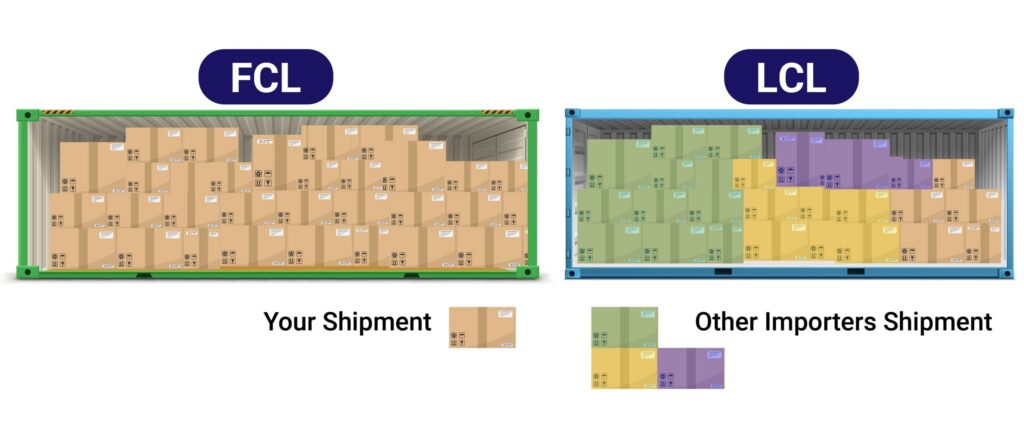
The key takeaway: Don’t force an LCL shipment into an FCL container if you don’t need the space, and don’t try to squeeze too much into LCL if you’re close to FCL volume. You’ll end up paying for it, one way or another.
Why Your ‘Cheap’ Sea Freight Quote Just Doubled: The Hidden Fee Assassins
This is where the real money gets spent, and where most sellers get blindsided. Your initial quote often only covers the basic ocean freight. Everything else? That’s extra. Let’s break down the common culprits.
Origin Charges (The China Side):
Before your goods even touch the water, there are fees to pay. These are charged by the port, the carrier, and the freight forwarder for getting your cargo ready to sail.
- Terminal Handling Charges (THC): This is what the port charges to move your container (or your LCL cargo) around the terminal, load it onto the ship, and offload it. It’s non-negotiable.
- Customs Clearance (Export): You need to get permission from Chinese Customs to export your goods. There’s a fee for this, usually handled by your forwarder.
- Documentation Fees: Bills of Lading, manifests, booking fees – all the paperwork needed to move your cargo legally. Each piece costs money.
- Trucking to Port (Drayage): Unless your factory is right next to the port, someone has to truck your goods from the factory warehouse to the port terminal. This isn’t free.
- VGM (Verified Gross Mass): A mandatory safety regulation. Every container needs its exact weight verified before it can be loaded onto a ship. There’s a small fee for this.
- Seal Fee: For FCL, a tamper-proof seal is put on your container. Small fee, but it’s there.
- LCL Specific: Consolidation Fee: If you’re shipping LCL, your forwarder needs to consolidate your goods with others into a full container. This involves labor and warehouse space, and you pay for it.
Ocean Freight & Surcharges: Beyond the Base Rate
Yes, there’s the base rate for moving your container from port A to port B. But then come the surcharges:
- BAF (Bunker Adjustment Factor): This is a fuel surcharge. Shipping lines adjust it based on the price of bunker fuel (the heavy oil ships use). It fluctuates constantly.
- CAF (Currency Adjustment Factor): This accounts for currency fluctuations between the US dollar and other currencies. Another variable fee.
- Peak Season Surcharge (PSS): During busy times (like before Chinese New Year or the holiday shopping season), carriers slap on extra charges because demand is high. Don’t get caught off guard.
Destination Charges (The North America Side): Welcome to Fee-Land
This is where the real pain often hits. Your goods have arrived, but they’re not free to go yet. These fees are charged by the destination port, customs, and local logistics providers.
- Terminal Handling Charges (DTHC): Just like at origin, the destination port charges to offload your container and move it around their yard.
- Customs Clearance (Import): Your goods need to be cleared by US or Canadian Customs. This involves a licensed customs broker, and they charge for their service. This is mandatory.
- ISF (Importer Security Filing): For shipments to the US, this is a critical one. It’s also called ’10+2′. Your customs broker must file specific data with US Customs at least 24 hours before the vessel departs China. Miss this deadline or get it wrong, and you’re looking at a $5,000 penalty per violation. Seriously.
- AMS (Automated Manifest System): Another US/Canada security filing fee.
- Drayage (Trucking from Port to Warehouse): Once cleared, your container needs to be trucked from the port to your final warehouse or fulfillment center. This can be a significant cost, especially if your destination is far from the port.
- Demurrage & Detention: The Time Bomb: This is a massive trap. Demurrage is what the shipping line charges you if you don’t pick up your container from the port terminal within the allotted free time (usually 3-5 days). Detention is what the shipping line charges you if you don’t return their empty container back to the port within the allotted free time. These fees stack up daily, and they can easily cost you hundreds, even thousands, of dollars if there are delays in customs clearance or trucking.
- Storage: If your LCL cargo sits at the Container Freight Station (CFS) too long, they’ll charge you for storage.
- LCL Specific: Deconsolidation/CFS Fees: For LCL, your cargo needs to be separated from the other shipments in the container at a Container Freight Station (CFS). This involves labor, equipment, and warehouse space, and you pay for it.
The ‘CBM’ Rule That Catches Beginners Off Guard (It’s Not Just Weight)
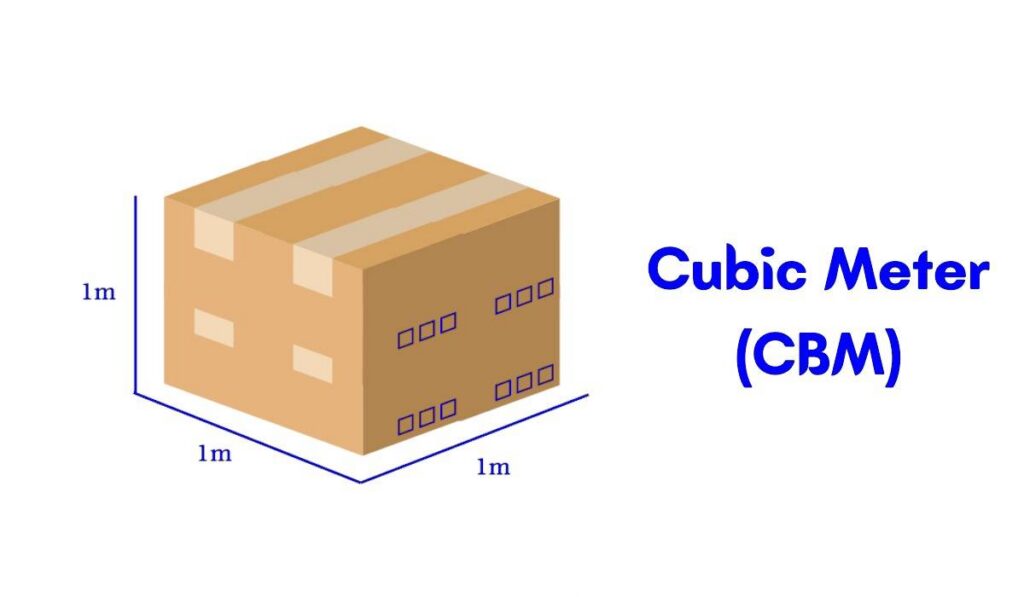
When you ship LCL, carriers don’t just care about how heavy your box is. They care about how much space it takes up. This is measured in Cubic Meters (CBM). The rule is simple: they’ll charge you based on either the actual weight of your cargo OR its volumetric weight, whichever is greater. For LCL, it’s usually 1 CBM = 500 KG or 1000 KG, depending on the carrier and route. Imagine shipping a huge box of pillows. It weighs next to nothing, maybe 20kg. But it takes up the space of a small refrigerator (say, 2 CBM). The carrier will charge you for the 2 CBM, not the 20kg. Always know your CBM for LCL shipments.
The Customs ID Passport: HS Codes & Your Tax Bill
Every single product you ship has an HS Code (Harmonized System Code). Think of it as the Chinese Customs ID passport for your product. This 6-10 digit number classifies your goods and dictates two crucial things: how much import duty (tax) you’ll pay when it enters North America, and if there are any specific import restrictions or requirements. Get this code wrong, and you could face delays, fines, or pay way too much in duties. Your supplier should provide this, but always double-check with your forwarder or customs broker. It’s your responsibility as the importer to ensure the correct HS code is declared.
Who Pays What? Incoterms: Your Buyer’s Nightmare or Smooth Delivery
Incoterms are international rules that define the responsibilities of sellers and buyers for the delivery of goods. They dictate who pays for what, and at what point risk transfers from seller to buyer. For e-commerce, two are critical:
- DAP (Delivered At Place): This means you, the seller, are responsible for getting the goods to your buyer’s door. You pay for all freight, origin charges, and destination charges up to their location. BUT, the buyer is responsible for paying the import duties and taxes when the goods arrive. This is a common trap for e-commerce. Your buyer gets a surprise bill from customs, they get angry, and you get a bad review.
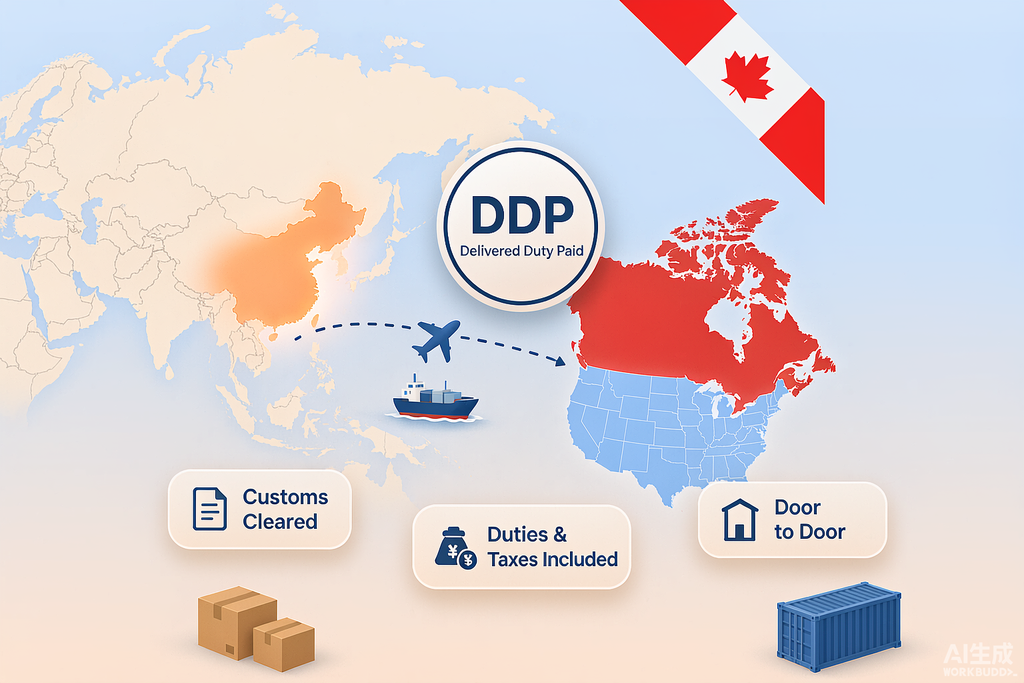
- DDP (Delivered Duty Paid): This is the gold standard for e-commerce. It means you, the seller, are responsible for everything – all freight, all charges, and all import duties and taxes. We pay everything upfront so your buyer never gets hit with a surprise customs bill. They get their package, no extra cost, no panic. This builds trust and avoids customer service headaches. For most e-commerce sellers shipping B2C or even B2B to smaller clients, DDP is the only way to go to ensure a smooth customer experience.
Always clarify your Incoterms with your supplier and your forwarder. Don’t assume. A misunderstanding here can cost you a fortune and your reputation.
Why Your Shipment Is Stuck: The Delay Assassins
Sea freight isn’t just about cost; it’s about time. And delays are a constant threat. Here are the usual suspects:
- Port Congestion: Major ports like Los Angeles/Long Beach or Vancouver can get backed up, leading to vessels waiting at anchor for days, sometimes weeks, to unload.
- Customs Holds: If your documentation is incomplete, incorrect, or if customs decides to inspect your cargo (randomly or due to suspicion), your shipment will be held. This triggers demurrage and detention fees.
- Weather: Typhoons in Asia, storms in the Pacific – Mother Nature doesn’t care about your shipping schedule.
- Carrier Issues: Vessel breakdowns, missed connections, or schedule changes by the shipping line.
According to the operations team at Vantage Forwarding’s Guangzhou Baiyun hub, 80% of shipment delays happen because of incomplete or incorrect documentation, especially the commercial invoice and packing list. Get those right, or pay the price in time and money.
Don’t Get Ripped Off: How to Pick a Forwarder (and What to Ask)
You need a partner, not just a vendor. A good freight forwarder is your eyes and ears on the ground. Here’s what to look for:
- Transparency: Do they give you a breakdown of all charges, or just one lump sum? Demand a detailed quote that shows origin, ocean, and destination charges separately.
- Communication: Can you reach them easily? Do they proactively update you on your shipment’s status?
- Experience: Do they specialize in Asia-North America routes? Do they understand the specific customs requirements for your product type?
- Network: Do they have reliable agents at both origin and destination? This is crucial for smooth customs clearance and trucking.
Don’t just go for the cheapest quote. The cheapest quote is often the one that’s hiding the most fees. Ask about all-inclusive DDP rates. Ask about potential demurrage/detention charges and how they help you avoid them. Ask about their process for customs clearance and ISF filing.
Look, this stuff is complicated. The difference between a smooth delivery and a financial nightmare often comes down to knowing these hidden shipping costs upfront. Don’t guess these hidden costs. Skip the math and run your exact specs through our Landed Cost Calculator to get a real, locked-in quote out of Guangzhou. We’ll lay out every single charge, upfront, so your North American buyers get exactly what they expect, without the nasty surprises.
 English
  Chinese
  Arabic
  French
  German
  Portuguese
  Spanish