By the Vantage Forwarding operations team — Guangzhou-based, handling DDP and sea freight to the US, EU, and Mexico daily. Last updated June 2026.
The factory price your supplier quotes is never what you actually pay. By the time a shipment from China reaches your warehouse door, the real cost includes freight, insurance, import duty, VAT or GST, and customs clearance fees—several of which don’t appear until cargo is already at the destination port.
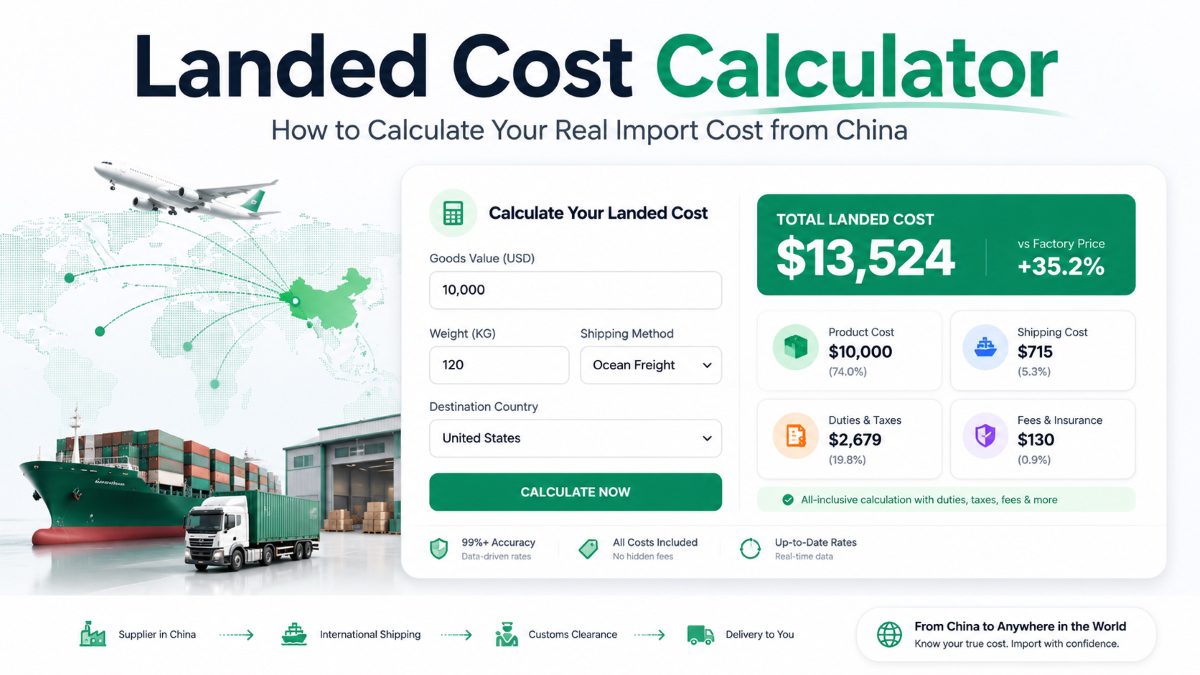
Use the calculator above to estimate your total landed cost from China. Below, we break down exactly what goes into each component, so you understand not just the number but where it comes from and how to reduce it.
Get a DDP Quote from Vantage → Fixed landed cost, duties included, no surprise charges on delivery.
What Is Landed Cost?
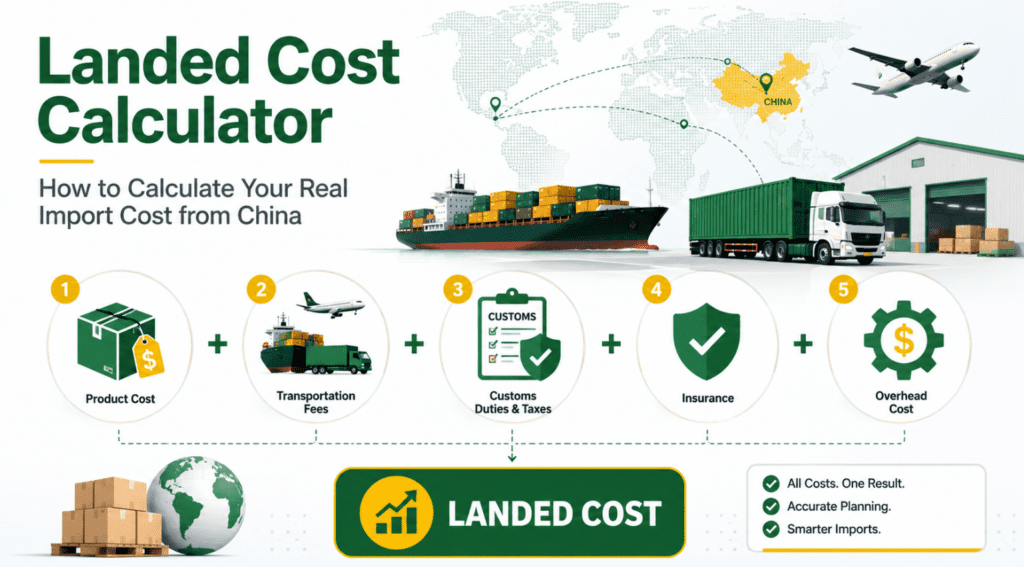
Landed cost is the total cost of a product by the time it arrives at your facility—every expense from the supplier’s factory gate to your warehouse door, including costs that appear at customs.
The formula:
Landed Cost = Goods Value + Freight + Insurance + Import Duty + VAT/GST + Customs Clearance Fees
This is the number that determines whether an import is actually profitable. A product that costs $10 at the Chinese factory can easily land at $16–$18 by the time it clears US customs—a 60–80% uplift that must be priced into your margin before you commit to an order.
Most first-time importers underestimate landed cost by 30–50% because they budget for the factory price and freight, but forget duty, VAT, and clearance fees. This guide covers all four layers.
The Four Cost Components You Need to Calculate
1. Freight + Insurance
International freight from China is priced per kilogram or per cubic meter (CBM), whichever produces the higher chargeable weight—the volumetric weight rule, which matters significantly for lightweight but bulky goods.
Reference rates from South China (Guangzhou/Shenzhen), June 2026:
| Shipping Mode | Typical Rate | Minimum | Transit Time | Best For |
|---|---|---|---|---|
| Ocean freight (FCL/LCL) | $5–7/kg effective | ~$380 | 25–40 days | Volume over 50 kg, planned replenishment |
| Air freight | $8–12/kg | ~$280 | 5–8 days | Urgent, high-value, light cargo |
| Express courier (DHL/FedEx/UPS) | $14–18/kg | ~$80 | 3–5 days | Under 50 kg, first samples |
Cargo insurance typically adds 0.3–0.6% of goods value. It is not optional for fragile, high-value, or sea freight shipments—uninsured ocean freight claims cap at amounts that rarely cover real losses.
For port-by-port sea freight transit times, see our China to USA sea freight guide. For express courier benchmarks, see our DHL shipping rates per kg guide.
2. Import Duty
Import duty is charged as a percentage of the declared goods value (ad valorem). The rate depends on the destination country, the product’s HS tariff code, and any trade-remedy measures that apply to China-origin goods.
2026 duty position by destination:
| Destination | Typical Duty Range | Key 2026 Position |
|---|---|---|
| United States | 0%–30%+ (product-dependent) | De minimis exemption suspended for China-origin goods since May 2025. Section 301 tariffs apply on most categories. Confirm exact rate by HTS code—rates vary significantly by product. |
| European Union | 0%–12% | From July 1, 2026: €3 customs duty per item by tariff heading on sub-€150 e-commerce parcels. A separate €2 handling fee per consignment is also under discussion for later in 2026. VAT applies from €0 via IOSS. |
| United Kingdom | 0%–12% | Customs duty generally does not apply to goods valued at £135 or less, but UK VAT is still due and is typically collected at point of sale for B2C shipments. Excise goods and gifts follow separate rules. MFN rates apply above £135. |
| Australia | 0%–10% | 10% GST. Duty-free threshold AUD 1,000 for most goods. Relatively stable policy environment. |
| Canada | 0%–18% | 5% GST. CUSMA does not cover China-origin goods; MFN rates apply per HS code. |
| Mexico | 5%–20% | 16% IVA. Mexico has applied tariffs on Chinese goods in several categories. Verify current IGI rate by HS code before ordering. |
The rate the calculator shows is an estimate based on product category. The actual rate is determined by the full HS code and, for the US, the applicable Section 301 list. Always confirm the exact duty with a customs broker before fixing a sourcing price.
3. VAT / GST
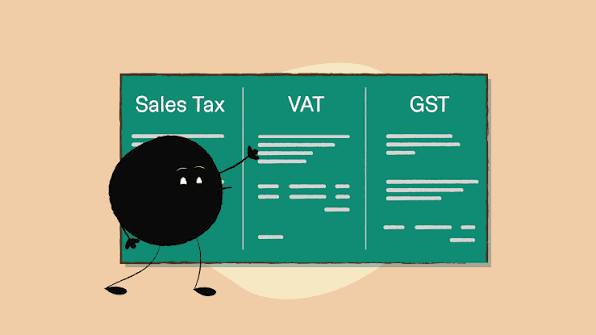
VAT and GST are consumption taxes applied to imported goods, separate from import duty. The tax base—what the rate is applied to—varies by country and typically includes goods value, freight, insurance, and duty combined, though rules differ.
| Country | VAT/GST Rate | Tax Base | Key Rule |
|---|---|---|---|
| United States | 0% federal | N/A at import | State sales tax applies at point of sale, not at customs |
| Germany (EU) | 19% | Goods value + duty + freight + insurance (CIF basis) | IOSS registration allows VAT collection at point of sale; otherwise collected at import |
| United Kingdom | 20% | Goods value + duty + freight + insurance | For B2C under £135: VAT collected at point of sale by the seller or marketplace |
| Australia | 10% GST | Customs value + freight + insurance | Low-value goods (under AUD 1,000) GST collected by seller or platform under low-value imported goods rules |
| Canada | 5% GST | Duty-paid value + freight | Provincial sales tax may apply additionally depending on destination province |
| Mexico | 16% IVA | Goods value + duty + freight + other charges | Applied at importation; IVA is recoverable for registered businesses |
VAT/GST calculation formula:
VAT/GST = applicable tax base × VAT/GST rate
The tax base is not simply the goods value—in most markets it includes freight, insurance, and duty. This is why the calculator applies VAT after adding freight and duty to the goods value.
4. Customs Clearance Fees

Clearance fees are paid to your customs broker or freight forwarder, not to the government. They’re real costs that belong in the landed cost model.
Typical components:
- Customs entry filing fee: $80–$200 (US), £80–£150 (UK), €100–€180 (EU) per shipment
- ISF filing (US ocean imports): $25–$50, required 24 hours before vessel departure
- Document handling / telex release: $30–$80
- Port drayage (US): $200–$600 depending on port and delivery distance
Under DDP, all of these are absorbed into the single upfront price—which is why DDP landed cost is predictable even when the individual components are not.
Why Landed Cost Varies More Than Expected
Two shipments with the same weight and goods value can arrive at very different landed costs. The key variables:
Product category and HS code. A 100 kg electronics shipment (0% EU duty, lower US duty exposure) lands very differently from 100 kg of apparel (12% EU duty, 27%+ US duty on many categories). The factory price doesn’t reflect this—the HS code does.
Shipping mode. The same 120 kg cargo costs roughly $660 by ocean LCL and $1,440 by express courier. The mode decision is the single largest freight cost lever, and it compounds into VAT in markets that apply tax on a CIF basis (EU, UK).
DDP vs. self-managed clearance. Under DAP, the buyer handles import. If your customs broker is slow or charges more than estimated, landed cost changes after the fact. Under DDP, you paid one fixed price and the forwarder absorbed the variability. In policy-volatile markets, that predictability has real financial value.
Current tariff environment. US Section 301 tariffs and the EU’s July 2026 e-commerce duty changes both affect the same product categories differently than 18 months ago. Rerun the calculator when entering a new product category or destination market.
A Real Landed Cost Example: 120 kg Apparel, Guangzhou → Los Angeles
| Cost Component | Basis | Amount |
|---|---|---|
| Goods value (FOB) | Given | $2,334 |
| Ocean freight (LCL, 120 kg) | 120 kg × $5.50/kg | $660 |
| Cargo insurance | $2,334 × 0.5% | $12 |
| Import duty (apparel, ~27.7% incl. Section 301) | $2,334 × 27.7% | $646 |
| US federal VAT | N/A | $0 |
| Customs entry + ISF filing | Fixed | $130 |
| Port drayage (LA/Long Beach) | Estimate | $280 |
| Total landed cost | $4,062 | |
| Uplift vs. factory price | +74% |
The duty line alone—$646 on this shipment—represents a cost that would have been close to $120 under the pre-Section 301 rate of ~5%. US importers of Chinese apparel who haven’t updated their landed cost models since 2023 are carrying that gap as margin erosion they may not have fully quantified.
How DDP Changes the Calculation
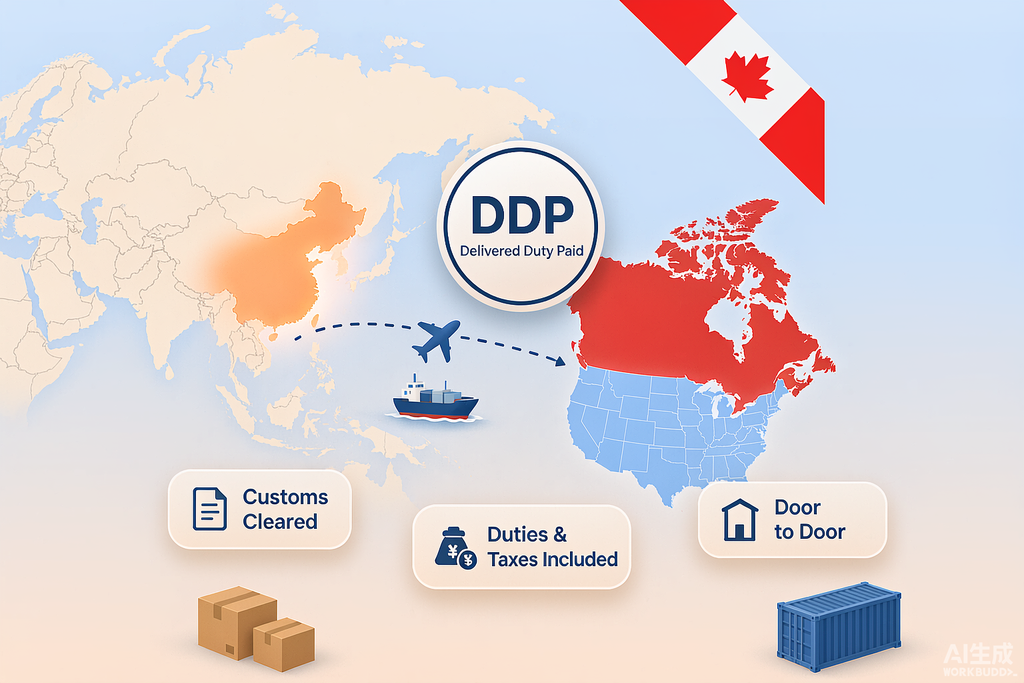
Under DDP (Delivered Duty Paid), Vantage Forwarding absorbs duty, VAT, and clearance complexity into a single upfront price. The same 120 kg LA shipment under DDP produces:
- One fixed price: goods value + all-in DDP logistics fee
- Zero additional charges at delivery
- No ISF filing, customs broker selection, duty payment, or drayage coordination to manage
DDP doesn’t eliminate duty—it makes it predictable, pre-paid, and operationally handled. For buyers in markets with volatile tariff policy, or first-time importers without established customs broker relationships, DDP is often cheaper on a fully-loaded basis than self-managing clearance.
Learn more in our DDP shipping guide.
5 Ways to Reduce Your Landed Cost from China
1. Verify your HS code classification. Ensuring the most accurate code is applied—not under-declaring, but confirming the correct classification when multiple codes could legitimately apply—can reduce duty materially. This is standard tariff engineering, not fraud.
2. Switch shipping modes for the right profile. Ocean freight is 3–6× cheaper per kg than express on heavy shipments. If you’re air-freighting 200+ kg of general merchandise for convenience, the freight saving from switching to ocean likely exceeds any supplier price negotiation.
3. Consolidate orders to spread fixed fees. Customs entry fees, ISF filing, and freight minimums are largely fixed per shipment. Consolidating three small orders into one LCL shipment reduces fixed overhead from ~$600 (3 × $200) to ~$200 (1 × $200).
4. Use DDP for high-uncertainty markets. If you’re spending time managing customs holds, unexpected duty bills, and broker coordination, that administrative cost belongs in your landed cost model. DDP is often cheaper on a fully-loaded basis than self-managing clearance in an unfamiliar market.
5. Rerun the model quarterly. US tariff policy, EU VAT rules, and destination duty rates have all changed materially in the last 18 months. A landed cost model accurate in early 2025 may be significantly off for Q3 2026 orders.
Get a DDP Quote from Vantage → Tell us your product, weight, and destination—we’ll send you a fixed landed cost quote within 24 hours.
FAQ: Landed Cost from China
What is a landed cost calculator?
A landed cost calculator estimates the total cost of importing goods from a supplier to your destination facility—including international freight, cargo insurance, import duty, VAT or GST, and customs clearance fees. It converts a factory (FOB) price into the real cost you’ll pay when goods arrive at your door.
How do I calculate the landed cost of an import from China?
The components are: goods value (FOB) + freight + cargo insurance (typically 0.3–0.6% of goods value) + import duty (goods value × applicable duty rate) + VAT/GST (applicable tax base × VAT rate, where the tax base in most markets includes goods value, freight, insurance, and duty combined) + customs clearance fees. Rates depend on destination country, product HS code, and current trade policy—the calculator on this page provides 2026 estimates by product category and destination.
Why is my landed cost so much higher than the factory price?
The uplift comes from three main sources: international freight (significant for heavy or bulky goods), import duty (which for US-bound China-origin apparel can exceed 27% under Section 301 tariffs), and VAT in markets like the EU and UK (19–20% applied to the full CIF value including duty). Together these commonly add 40–80% to the factory price.
What is the difference between landed cost and DDP price?
Landed cost is the total you calculate by adding all components separately—and it can change if duty rates shift or clearance fees exceed estimates. DDP (Delivered Duty Paid) price is a single fixed price from a freight forwarder that covers freight, duty, VAT, and clearance, with no additional charges on delivery.
Has the US de minimis exemption been eliminated for China imports?
The de minimis exemption for China-origin goods was suspended in May 2025. China-origin imports now face duty regardless of declared value. The actual rate depends on the product’s HTS code and applicable Section 301 tariff—there is no single flat rate across categories. Use the calculator as a starting estimate, then confirm the exact rate with a customs broker using your specific HTS code.
What is the EU €3 customs duty on low-value imports from July 2026?
From July 1, 2026, the EU applies a €3 customs duty per item by tariff heading on e-commerce parcels valued below €150 from non-EU sellers. The charge is applied per distinct item type according to its tariff classification within a consignment—not per parcel. A separate €2 handling fee per consignment is also under discussion for later in 2026. Both charges are separate from and in addition to VAT, which continues to apply from €0 via IOSS. The measure is temporary, intended to remain until the EU Customs Data Hub is operational in 2028.

 English
  Chinese
  Arabic
  French
  German
  Portuguese
  Spanish