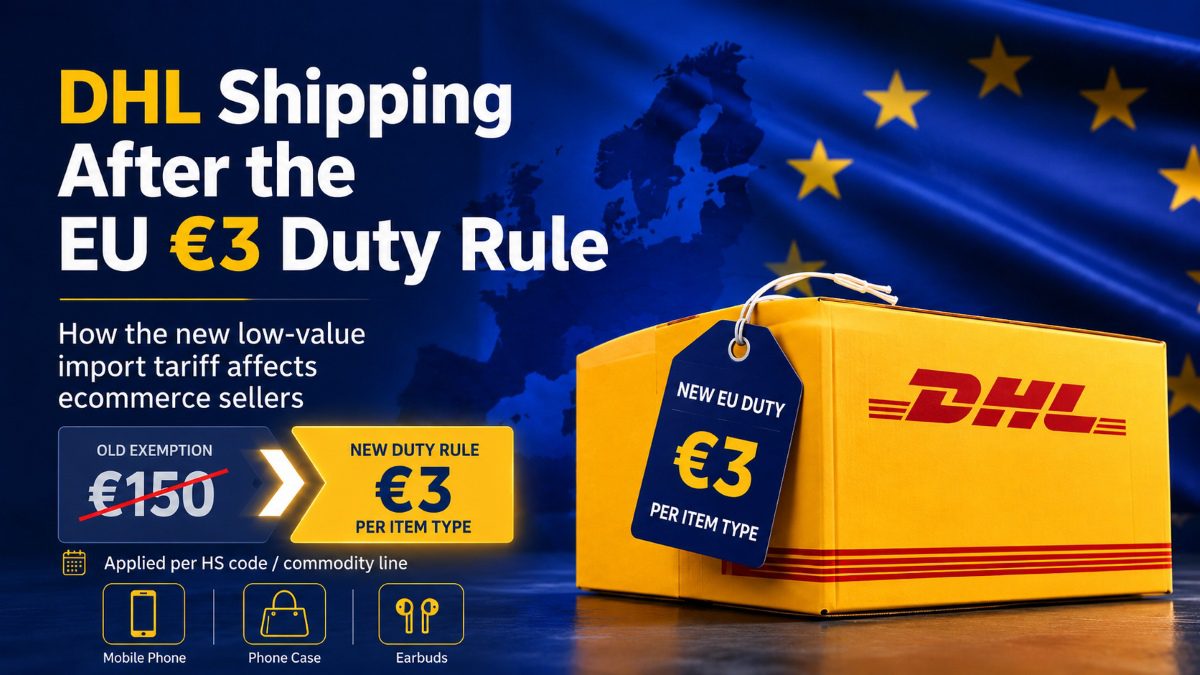
The landscape of cross-border e-commerce into the European Union has reached a critical turning point. Following the formal adoption of Council Regulation (EU) 2026/382, the EU has officially eliminated the long-standing customs duty exemption (de minimis) for goods valued under €150.
Taking effect on July 1, 2026, this transitional measure replaces the exemption with a flat €3 customs duty. However, a major misconception has spread among global merchants: this is not a flat parcel tax. Instead, the €3 duty is levied per item type (per HS code/commodity line), not per individual parcel.
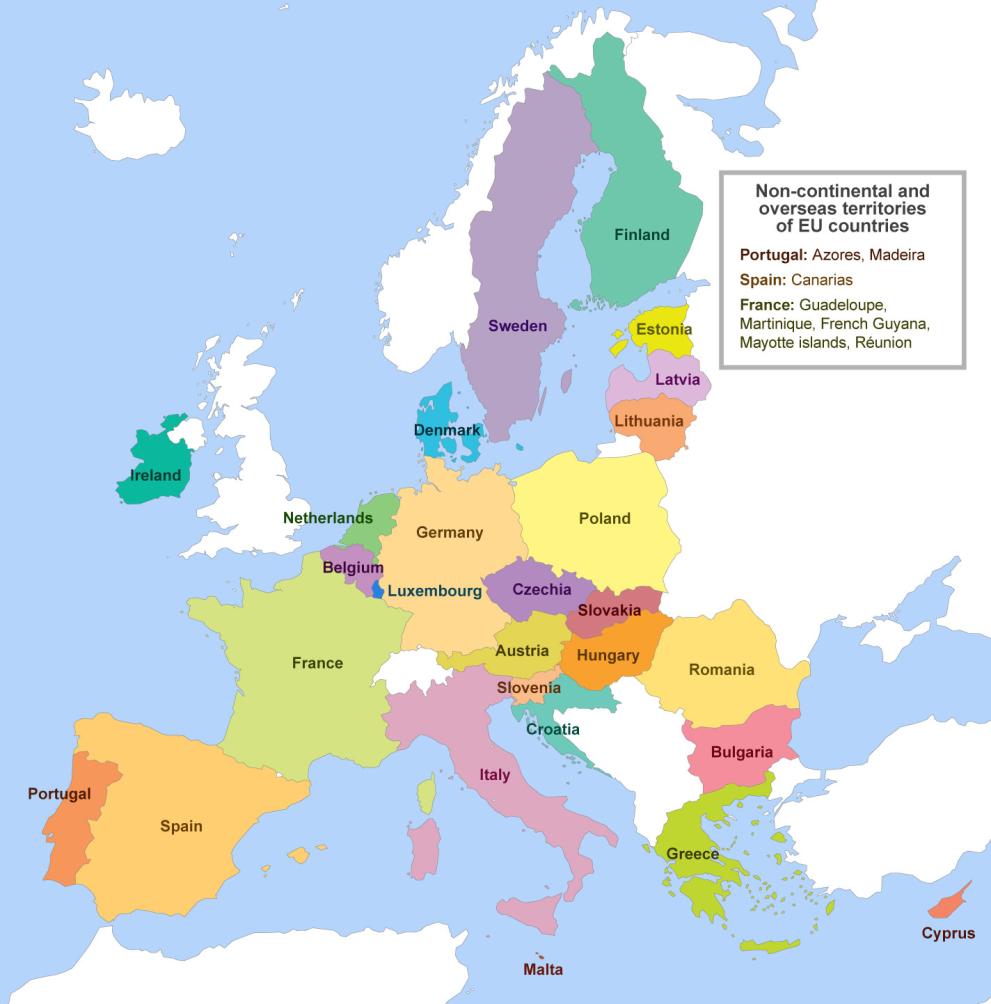
As major international express carriers alter their routing networks to comply with these stringent regulations, e-commerce brands utilizing DHL eCommerce or DHL Express must immediately audit their supply chains. This actionable guide breaks down how DHL processes this new customs framework and details strategic operational workarounds to protect your margins.
1. The Core Mechanism: Why “Per Item” Changes Everything
The transitional regime running from July 1, 2026, until July 2028 introduces a radically different cost compounding logic than previous VAT reforms.
Under the new law, customs authorities calculate the flat €3 duty based on the number of distinct tariff lines (Harmonized System codes) contained within a single shipment.
The Multi-Item Consignment Trap:
In principle. If an e-commerce seller ships a combined order containing a smartphone, a protective case, and wireless earbuds in one single parcel, it will not incur a one-time €3 charge. Because these products fall under three distinct commodity categories, EU customs will levy the €3 duty three times, resulting in a €9 customs duty bill for that single package.
For low-ticket, multi-item e-commerce carts, this compounding duty can completely wipe out net margins, making traditional direct-to-consumer (DTC) postal injection highly risky without strategic adaptation.
2. DHL’s Operational Workflow Under the New Duty Regime
DHL’s processing infrastructure requires total data synchronization to clear imports smoothly. Depending on the shipping terms selected at checkout, the operational and financial impact on your customer conversion varies wildly:
The IOSS (Import One-Stop Shop) Stream
For merchants utilizing the IOSS framework to collect VAT at the point of sale, the electronic data workflow must be flawless.
- Data Matching: When a parcel enters the DHL stream, the seller must transmit the exact 6-to-8-digit HS code for every individual line item via DHL’s Paperless Trade (PLT) platform.
- The Risk of Rejection: If DHL’s automated systems detect any mismatch between the item description, the declared commodity lines, and the pre-paid €3 duty distribution, the package will be pulled for formal assessment. Any invalid electronic data forces DHL to strip the parcel of its green-channel status, introducing critical delivery delays.
The Delivery Duty Unpaid (DAP/DDU) Risk
Shipping via traditional unpaid terms has effectively become obsolete for low-value goods. When a multi-item shipment arrives at the EU border without pre-cleared duties:
- DHL must halt the parcel in bond to assess the number of item types.
- DHL advances the compounded €3-per-item duty alongside import VAT to local customs on behalf of the recipient.
- Before final-mile delivery can occur, DHL must collect these accumulated fees from the consumer, alongside standard carrier disbursement and administration fees. This friction inevitably triggers high package abandonment rates at the doorstep.
3. Strategic Supply Chain Workarounds to Hedge Against the €3 Duty
If your brand relies on cross-border fulfillment with an Average Order Value (AOV) under €50, absorbing a recurring €3-per-item duty is unsustainable. Merchants must pivot away from individual direct-mail lines toward consolidated freight frameworks.
Solution A: Transition to EU-Based 3PL Warehousing
The most definitive method to legally bypass the repetitive €3-per-item duty is to transition from cross-border direct shipping to a localized fulfillment model within the EU (e.g., establishing inventory hubs in Germany, the Netherlands, or Poland).
- How it Optimizes Costs: Inventory is imported in bulk commercial quantities via air or ocean freight. Customs duties and import VAT are assessed once on the bulk commercial value of the entire shipment under standard tariff classifications, entirely eliminating the €3 flat-rate duty applied to direct consumer imports.
- The Final-Mile Edge: Once goods are stationed inside the European Single Market, final-mile fulfillment bypasses fiscal borders entirely. Sellers can utilize localized domestic networks like DHL Paket, ensuring reliable 48-hour delivery across member states with zero customs friction.
Solution B: Leverage Bulk China-EU DDP Special Lines
For brands requiring a lean, asset-light inventory strategy without committing to upfront domestic European warehousing, the China-EU DDP (Delivered Duty Paid) Special Line offers an optimized alternative.
Instead of introducing individual consumer packages into international express networks at the origin, shipments are aggregated into bulk freight consignments.
- The Customs Advantage: The consolidated cargo undergoes bulk commercial clearance at strategic European entry points (such as Liège or Amsterdam) under specialized DDP structures managed by experienced freight forwarders. The financial impact of the per-item duty is significantly diluted through bulk customs entry optimization compared to standalone express clearance.
- Final-Mile Injection: Following successful mass clearance, the shipment is broken down within the EU zone and immediately injected into localized distribution channels—including DHL Paket or local postal networks—for final-mile delivery to the end consumer.
💡 Integrated Supply Chain Management: For scaling brands managing omni-channel distribution—such as replenishing Amazon FBA centers alongside direct e-commerce fulfillment—unifying your bulk freight strategy is vital. To master bulk palletized entry, navigate complex import documentation, and optimize your pan-European distribution paths, explore our comprehensive strategic guide to China-EU DDP FBA Fulfillment.
Strategic Summary: Compliance Matrix Post-July 2026
| Logistics Metric | Traditional Direct DHL Express / Postal | Optimized China-EU DDP Line | EU Warehouse (3PL) + Local DHL Paket |
| €3 Duty Calculation | Per Item Type / HS Code (High compounding risk) | Optimized via bulk commercial entry | Zero (Bypassed through bulk import) |
| Customs Border Point | Applied to every consumer shipment | Handled at bulk consolidation point | Handled once at initial bulk import |
| Delivery Velocity | 5–10 Business Days | 7–12 Business Days | 1–3 Business Days |
| Risk of Gate Friction | High (Requires perfect item-level PLT data) | Medium (Managed by forwarder) | None (Intra-EU distribution) |
| Optimal Product Profile | Single-item orders / High-margin goods | Mid-volume scaling catalogs | Multi-item carts / High-volume SKUs |
Authoritative Reference Links
- European Council Official Statement: Council of the EU Adopts New Measures on Customs Exemptions (Placeholder for official link)
- EU Customs & Taxation Guidelines: Council Regulation (EU) 2026/382 Technical Overview (Placeholder for official link)
 English
  Chinese
  Arabic
  French
  German
  Portuguese
  Spanish