
Batteries have become an indispensable part of our daily lives, powering everything from smartphones and laptops to complex industrial applications. However, routing these power sources via DDP shipping for electronics involves severe transport hazards, where mechanical damage, thermal stress, or short circuits can cause over-heating and trigger catastrophic thermal runaway.
To mitigate these global supply chain vulnerabilities, the United Nations regulates the transport of dangerous goods through the UN Manual of Tests and Criteria Section 38.3, establishing rigid safety standards that must be verified through accredited laboratory testing before cargo dispatch.
The Legal Framework of Lithium Ion Battery Freight
For cross-border e-commerce brands and tech hardware importers, utilizing a certified cross-border freight forwarder is no longer just about optimizing transit costs. If your product catalog features modern consumer electronics, understanding the operational implementation of UN38.3 safety testing is an absolute requirement to keep your distribution pipeline alive.
Whether you are routing inventory via air express networks governed by IATA Dangerous Goods Regulations or utilizing transpacific ocean loops under the International Maritime Dangerous Goods (IMDG) Code, your cargo must possess verifiable safety validation logs before matching container consolidation manifests.
Under current international port enforcement policies, attempting to bypass these safety protocols by labeling lithium cells as standard dry freight is a major regulatory failure. The US customs seizure rate 2026 data confirms a sharp escalation in automated cargo holds and physical inspections targeting undeclared or under-documented hazardous electronics in pooled shipments.
To see how shared container non-compliance triggers these automated terminal holds, analyze our checklist on why DDP shipping from China fails under strict 19 CFR enforcement.”
2026 Emergency Regulatory Updates for Lithium Cargo
International air and maritime freight authorities have introduced critical statutory updates to eliminate the fire risks associated with battery transportation. It is no longer optional to overlook the specific thermodynamic condition of your electronics stock prior to airport dispatch.
Passenger Aircraft Prohibitions and Labeling Mandates
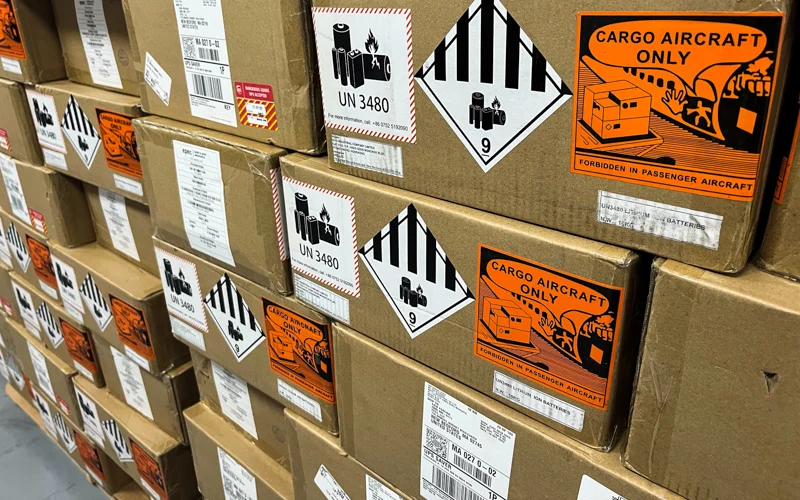
Recent aviation safety updates explicitly prohibit the transport of loose lithium-ion batteries as commercial cargo on passenger aircraft. All such consignments are restricted exclusively to dedicated freighter networks.
To satisfy this enforcement criterion, shipments must be prominently marked with the standardized Cargo Aircraft Only (CAO) handled label. Furthermore, updated hazard communication rules require the application of streamlined, highly visible fire risk warning labels that concisely state the structural fire hazards of the cells contained within the packaging.
Strict 30% State of Charge (SOC) Restrictions
For loose lithium-ion batteries transported via air freight, international mandates dictate that the battery State of Charge (SOC) must not exceed 30% at the time of air cargo acceptance. To legally clear airport terminal audits, the shipper and their cross-border freight forwarder must explicitly document the technical methodology utilized to achieve this metric, alongside the exact validation protocols used to inspect the cargo before loading.
- The Medical Device Exemption: Under specialized compliance exceptions, importers of specific medical device electronics that legally require a higher charge state for operational maintenance can apply for an official authorization from the relevant government competent authorities. Once formal approval is granted, these certified medical battery units are permitted to bypass the 30% threshold for air cargo routing.
What is UN38.3 Compliance and Why is it Mandatory?
Before any product containing lithium cells can be legally transported globally via Delivered Duty Paid (DDP) channels, the battery configuration must pass the UN38.3 test standard. This protocol ensures that the battery can withstand the extreme environmental pressures, temperature variances, and physical vibrations encountered during international transit.
The UN38.3 testing framework subjects power cells to eight distinct rigorous stress assessments:
- Altitude Simulation (Low-pressure environments)
- Thermal Testing (Extreme temperature cycles from -40°C to 75°C)
- Vibration (Simulating standard transport movement)
- Shock (Simulating rough handling and impact)
- External Short Circuit
- Impact and Crush (Physical structural integrity)
- Overcharge (For rechargeable battery systems)
- Forced Discharge
To meet the minimum requirements for compliant entry processing, the importer of record must provide a valid UN38.3 Test Summary issued by an accredited third-party testing laboratory. A generic safety sheet is insufficient; the documentation must explicitly tie the exact battery model identifier to the finished consumer product manifest.
Essential Documentation Matrix for High-Security Tech Shipments
To clear customs efficiently and protect your continuous customs bond from regulatory holds, your cross-border freight forwarder must assemble a comprehensive documentation portfolio before the cargo leaves air cargo facilities or ocean ports in South China.
| Document Type | Primary Compliance Function | Key Verification Elements |
| UN38.3 Test Summary | Certifies safety under transport stress | Laboratory credentials, signature, battery parameters |
| Material Safety Data Sheet (MSDS) | Provides emergency handling protocols | Chemical composition, fire-fighting steps, classification |
| SOC Verification Log | Confirms compliance with the 30% rule | Testing methodology, validation stamps, battery batch codes |
| Commercial Invoice | Establishes valuation under 19 CFR rules | Line-by-line HS code accuracy, accurate transaction value |
Data Source: Compiled from updated dangerous goods logistics frameworks published by the International Air Transport Association and international customs valuation agencies.
Operational Traps and Failure Points in Electronics Freight
Navigating dangerous goods compliance requires constant vigilance at the source warehouse. Many retail brands experience sudden freight disruptions because their logistics partners fail to inspect the physical implementation of mandated labeling, packaging, and charge capacity standards.
Our Real-World Experience with Hazardous Cargo Holds
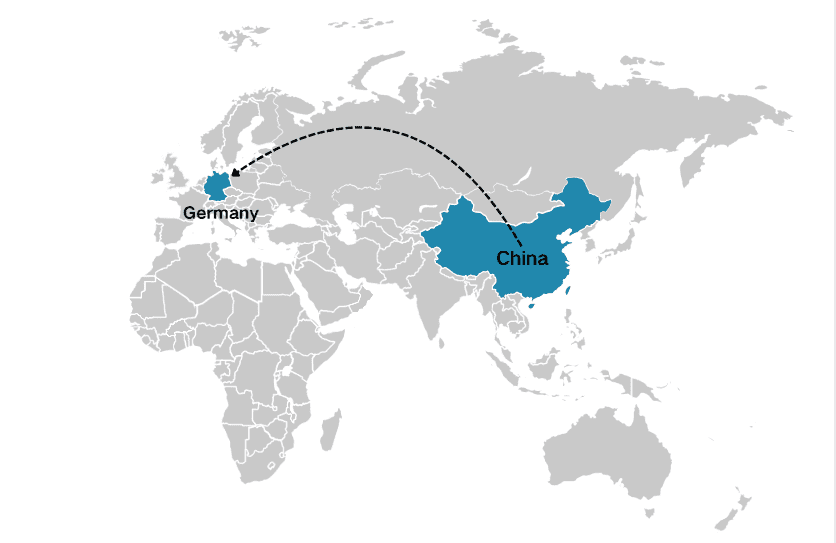
During our routine cargo audits at our Guangzhou Baiyun shipping hub, our compliance technicians intercepted a batch of 1,500 premium wireless audio headsets routed on a standard LCL DDP channel. While the merchant provided a legitimate Material Safety Data Sheet, random multimeter testing revealed that the factory had shipped the inventory at an 85% factory charge state, completely violating the 30% SOC mandate. German customs at the country of entry would have flagged this immediately under safety audit protocols, resulting in a container-wide hold and heavy fines for undeclared hazard risks. Our warehouse team quarantined the cargo, safely discharged the units to compliant storage thresholds, applied the Cargo Aircraft Only overlays, and updated the manifest data to prevent a major customs bond intervention at the port of arrival.
Beyond simple labeling omissions, the most catastrophic failure point remains the manipulation of customs valuation data. Attempting to artificially depress the invoice value of premium electronics to minimize duty exposure violates 19 CFR Part 152 parameters and triggers immediate, intensive examinations.
Strategic Best Practices for Compliance Management
To insulate your consumer electronics logistics pipelines from severe port delays and maintain stable transit times, your operational strategy should adhere to these core principles:
- Enforce SOC Rules at the Assembly Line: Inform your factory partner of the 30% air freight limitation during the pre-production phase. Instruct production managers to calibrate testing machinery to discharge cells to compliant holding metrics prior to final batch boxing.
- Verify Packaging Configurations: Ensure that batteries are either securely installed within the equipment or packaged separately in internal cells to prevent accidental activation during handling. The outer shipper box must be rigid, structurally sound, feature the updated fire risk warning markings, and never exceed mandated weight limitations for passenger or cargo-only transport.
- Utilize Asset-Backed Logistics Specialists: Avoid budget freight consolidators who offer suspiciously flat-rate shipping quotes for electronics. Compliant hazardous materials transport requires specialized handling, distinct customs bonds, and dedicated cargo spaces, which cannot be sustained on bargain-basement rates.
Summary: Securing Your Tech Infrastructure
In the highly competitive electronics sector, supply chain continuity is a primary driver of profitability. Protecting your brand from customs holds requires moving away from unverified logistics channels. By prioritizing absolute transparency, executing rigid paperwork checks, enforcing the latest State of Charge limits, and selecting a logistics partner with demonstrated experience in dangerous goods regulations, you can guarantee that your high-value tech inventory passes securely through global customs checkpoints without friction.
Frequently Asked Questions (FAQ)
Can I ship electronics with over 30% SOC if they go by sea freight?
Yes. The strict 30% State of Charge limit is an aviation safety mandate governed by IATA and CAO protocols. Ocean shipments managed under the International Maritime Dangerous Goods (IMDG) Code do not carry the same rigid 30% capacity ceiling, though they must still fulfill strict Class 9 packaging, labeling, and container segregation compliance rules.
How does a cross-border freight forwarder validate the 30% SOC requirement?
Professional logistics providers utilize specialized industrial battery analyzers or standardized batch-testing multimeters during warehouse intake. Shippers must record these testing methodologies within a formal verification log, documenting that the voltage thresholds of the audited batch match the 30% nominal capacity profile defined by the cell manufacturer.
What is the Cargo Aircraft Only (CAO) label requirement?
The CAO label is a mandatory, high-visibility orange warning tag that must be affixed to any shipping container or master carton containing lithium-ion battery freight prohibited from passenger flight. Its placement alerts airport ground crews to route the cargo exclusively onto dedicated freighter aircraft to prevent accidental placement on standard commercial passenger flights.
 English
  Chinese
  Arabic
  French
  German
  Portuguese
  Spanish