For cross-border e-commerce brands distributing inventory from Asian manufacturing centers to European consumers, maintaining structural logistics compliance has become highly complex. Selecting an incorrect customs clearance pathway can lead to heavy penalties, shipping delays, and damaged customer relationships.
To manage your European e-commerce VAT obligations effectively, you must understand the operational distinctions between IOSS vs DDP shipping. As regulatory bodies implement tighter fiscal controls, relying on outdated or opaque customs declarations is a direct threat to your bottom line.
The Evolution of European E-Commerce VAT Rules
The historical gray areas surrounding European e-commerce VAT have completely closed. Under the framework established by European tax authorities and reinforced by the latest EU 2026 customs reforms, every commercial item entering Europe is subject to import VAT, regardless of its transaction value. The previous low-value consignment relief threshold no longer exists.
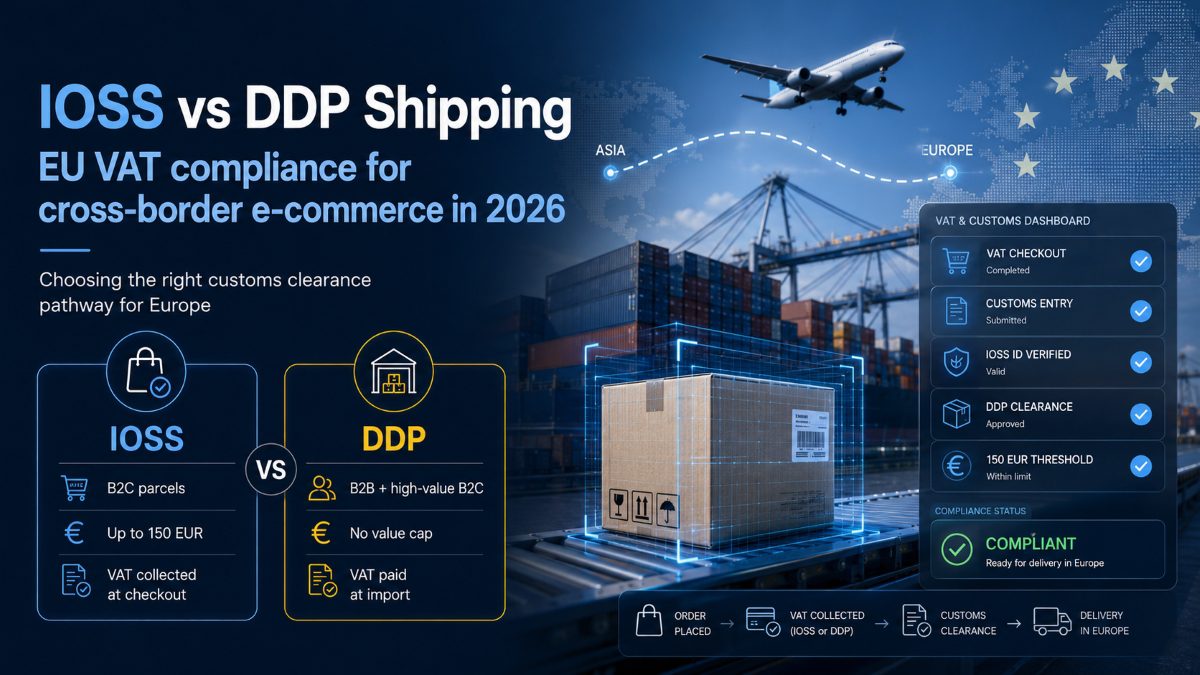
When coordinating cargo movements through a cross-border freight forwarder, retail brands generally choose between two compliant fiscal models: the Import One-Stop Shop (IOSS) or Delivered Duty Paid (DDP).
Misunderstanding how these two channels process customs valuation 2026 metrics often leads to systemic shipping failures, double taxation, or unexpected border detentions.
What is IOSS and How Does It Function?
The Import One-Stop Shop is a specialized electronic portal designed for business-to-consumer (B2C) online transactions. It allows cross-border e-commerce sellers to collect, declare, and remit European e-commerce VAT directly at the point of sale, rather than forcing the consumer to pay unexpected import fees at their doorstep.
- The Value Threshold: The standard IOSS framework specifically applies to consignments with an intrinsic value not exceeding 150 EUR.
- The Transaction Point: The online marketplace or independent brand platform charges the destination country’s specific VAT rate directly to the European shopper during the checkout process.
- Customs Processing: The cargo enters Europe under a simplified customs clearance route. Because the fiscal transaction data is tied electronically to a valid IOSS identification number, the shipment passes through customs ports quickly without requiring physical payment interaction at the border.
What is DDP Shipping and How Does It Function?
Delivered Duty Paid is a standard international commercial term (Incoterm) where the shipper assumes full legal and financial responsibility for transporting the cargo to its final destination. This includes paying all export duties, freight charges, import VAT, and any applicable customs clearance fees.
- Beyond the 150 EUR Limit: For any individual e-commerce package valued over 150 EUR, or for bulk business-to-business (B2B) stock replenishments heading to continental warehouses, the standard IOSS pathway is unavailable. Shippers must use a structured DDP lane.
- Fiscal Responsibility: Under a DDP framework, the merchant of record works with a cross-border freight forwarder who uses a specialized customs bond or fiscal representative in the country of entry. The forwarder pays the necessary import VAT and administrative charges at the port of entry on behalf of the seller.
- The Consumer Experience: The final European consumer experiences a frictionless delivery process, as all fiscal liabilities have been resolved before the parcel reaches regional distribution networks.
Core Technical Differences: IOSS vs DDP Shipping
To determine which logistical pathway aligns with your operational profile, you must evaluate how taxes, data, and liability flow through each unique compliance mechanism.
| Operational Metric | Import One-Stop Shop (IOSS) | Delivered Duty Paid (DDP) |
| Consignment Value Limit | Strictly capped at 150 EUR | Unlimited value allowed |
| VAT Collection Point | Collected from consumer at checkout | Paid by seller/forwarder at port of entry |
| Target Audience | Exclusively B2C e-commerce sales | Suited for both B2B and B2C channels |
| Customs Valuation Code | Electronic transaction matching | Line-by-line commercial invoice auditing |
| Primary Risk Area | IOSS number misuse or fraudulent leakage | Incorrect customs valuation 2026 assessments |
Data Source: Structured in accordance with updated guidelines issued by the European Commission Directorate-General for Taxation and Customs Union.
Operational Failure Points When Managing European Logistics
Relying on a freight partner that fails to audit your automated customs data streams introduces severe supply chain vulnerabilities. When transitioning inventory through international shipping pipelines, subtle clerical mismatches can cause severe delays.
Our Real-World Experience with European Clearance Mismatches
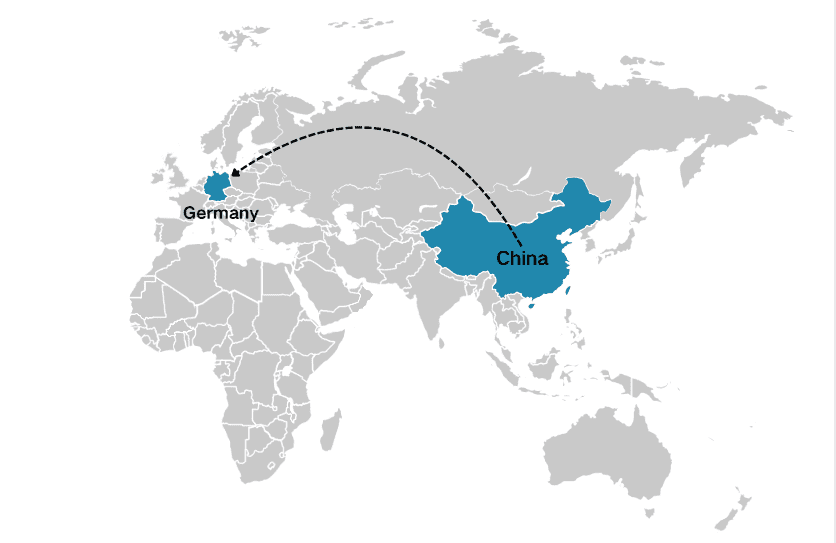
During our daily logistics consolidation operations at our Guangzhou Baiyun shipping hub, our compliance audit team intercepted an e-commerce batch destined for Germany. The merchant had processed the transaction via IOSS but failed to print the mandatory electronic IOSS reference marker on the physical shipping manifest. Consequently, German customs flagged the cargo for manual inspection. We intervened immediately, mapping the electronic transaction records to the specific package tracking identifiers to avoid double taxation and release the goods.
If your logistics provider does not cross-verify that the physical shipping document data aligns perfectly with European digital tax filings, your packages will either be rejected at the border or face punitive secondary customs bond audits.
Strategic Recommendations for Global Brands
To maintain seamless delivery timeframes and protect your profit margins across Europe, your logistics framework should follow a clear tier-based structure:
- For B2C Cargo Under 150 EUR: Utilize the IOSS framework. Ensure your independent store platform generates real-time VAT data matching the consumer’s country of residence. Confirm that your freight agent injects your corporate IOSS code into the electronic customs manifest before the cargo leaves air freight facilities in Shenzhen or Hong Kong.
- For High-Value B2C Cargo and B2B Warehouse Shipments: Route all items via an audited DDP channel. Ensure your commercial invoices reflect accurate customs valuation 2026 parameters. This guarantees compliance with 19 CFR concepts or equivalent European market valuations, keeping your inventory completely safe from seizure.
Need an audited, reliable route to mainland Europe? Explore our transparent, fully compliant DDP Ocean and Air Freight Services today.
Summary: Protecting Your European Footprint
Navigating European e-commerce VAT regulations requires total visibility over your documentation. Whether your brand uses IOSS vs DDP shipping, the core requirement remains the same: complete transparency, accurate transactional value reporting, and an experienced logistics partner capable of executing strict compliance audits before your cargo ever touches global transit networks.
Frequently Asked Questions (FAQ)
Can I combine IOSS and DDP shipping methods in a single container?
Yes, in a consolidated LCL (Less than Container Load) environment, a freight forwarder can manage a mixed container holding both IOSS-declared consumer parcels and bulk DDP commercial goods. However, the forwarder must separate the master bills of lading and submit distinct customs declarations for each individual consignment type at the European port of entry.
What happens if European customs rejects my IOSS number?
If an IOSS identification code is flagged as invalid or expired, customs authorities will treat the cargo as a standard non-DDP shipment. They will calculate the destination country’s VAT plus an administrative handling fee and collect it directly from the consumer upon delivery. This usually results in a high package rejection rate and negative customer reviews.
How do the EU 2026 customs reforms impact DDP shipping for global brands?
The updated regulations mandate advanced electronic filing and tighter verification of commercial invoice values. Customs authorities are heavily auditing bulk DDP shipments to identify and eliminate systemic undervaluation, making it vital to work with a forwarder that practices honest, bond-backed declarations.
 English
  Chinese
  Arabic
  French
  German
  Portuguese
  Spanish