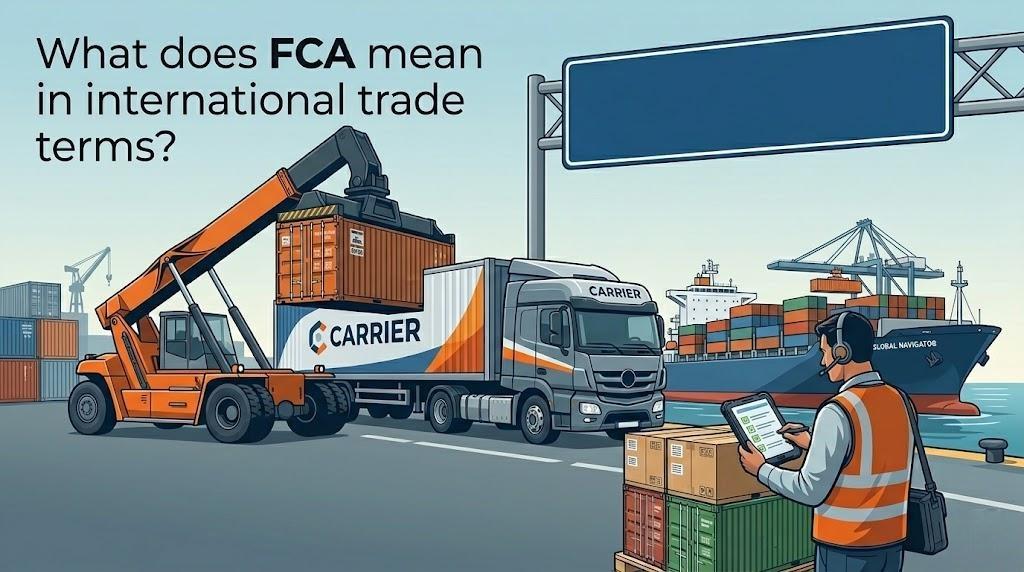
You picked FCA, thinking you’re off the hook. Think again.
If you’re involved in cross-border e-commerce—whether you’re shipping from China or selling to customers around the world—you’ve probably heard of international trade terms. FCA—which stands for ‘Free Carrier’—sounds rather appealing, doesn’t it? ‘All I, the seller, have to do is hand the goods over to the carrier designated by the buyer, and that’s the end of it for me. How simple is that, right?’
Wrong. Dead wrong.
I’m currently at Vantage Forwarding’s Guangzhou Baiyun consolidation centre, where goods come and go every day. I’ve seen more small sellers stumble because of a misunderstanding of FCA than any other trade term. Do you think your responsibility ends at the factory gate? The reality is that FCA has more teeth than a shark; if you’re not careful, it can take a hefty bite out of your profits.
Don’t give me that standard textbook explanation. Today, let’s talk about exactly how FCA affects your wallet and your peace of mind.
FCA: The ‘Free Carrier’ Trap That Still Costs You
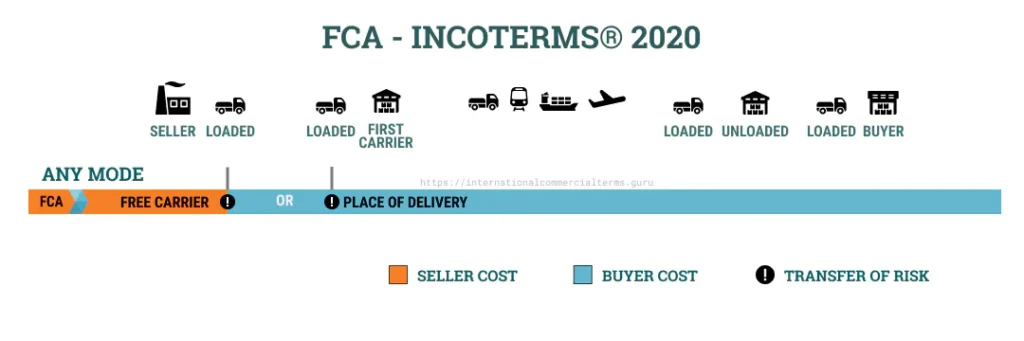
At its core, FCA means you, the seller, are responsible for getting the goods to a specific place – the ‘named place’ – and handing them over to a carrier nominated by your buyer. Once that hand-off happens, the risk of loss or damage shifts to the buyer. Sounds simple enough, right?
Here’s where it gets tricky. While the buyer picks and pays for the main transport, you’re still on the hook for everything leading up to that point. And ‘everything’ can be a lot more than you bargained for. We’re talking about local transport, loading, and most importantly, getting your goods cleared for export out of China. Miss any of those steps, and your shipment is stuck, your buyer is furious, and you’re paying for storage fees you never saw coming.
The ‘Named Place’ Nightmare: Where Does Your Responsibility REALLY End?
The ‘named place’ in FCA is critical. It’s the exact spot where your responsibility for the goods ends and the buyer’s begins. This isn’t just some random address; it has huge cost implications.
- Your Factory/Warehouse: If the named place is your factory, you’re responsible for loading the goods onto the buyer’s nominated truck or container. This might seem like a win, but if your loading dock isn’t efficient or the buyer’s carrier is late, you’re dealing with delays on your property.
- A Carrier’s Terminal (e.g., in Guangzhou): More often, the named place is a freight forwarder’s warehouse or a carrier’s terminal here in Guangzhou. This means you’re responsible for arranging and paying for the inland transport from your factory to that specific terminal. This isn’t free. You need a reliable local truck, and if there are traffic delays or issues getting into the terminal, that’s on your dime.
- The Port/Airport: Sometimes, the named place is the actual port or airport. This means you’re not just getting it to a warehouse; you’re getting it to the specific gate or dock for loading onto the vessel or aircraft. This involves more complex logistics, potentially higher local transport costs, and stricter delivery windows.
The closer the named place is to your factory, the less you pay for local transport. The further it is, the more you pay. But remember, the further it is, the more logistics you have to manage. Don’t just pick a place because it sounds cheap; pick one you can actually manage efficiently.
Export Customs: Your Last Hurdle Before You’re ‘Free’
This is where many sellers, especially new ones, get absolutely hammered. Under FCA, you, the seller, are responsible for export customs clearance. This isn’t just about filling out a form; it’s about making sure your goods have the right paperwork, the correct HS codes, and any necessary licenses or permits to leave China.
Think of the HS code as the Chinese Customs ID passport for your product that dictates your tax bill and what rules apply. Get it wrong, and your goods are stuck. According to the operations team at Vantage Forwarding’s Guangzhou Baiyun hub, 80% of shipment delays happen because of incorrect or incomplete export documentation. That’s not just a delay; that’s storage fees, potential fines, and a very unhappy buyer.
You need to:
- Accurately classify your goods: Get the HS code right. This impacts duties, taxes, and restrictions.
- Prepare all export documents: Commercial invoice, packing list, export declaration, certificates of origin, and any product-specific licenses.
- Pay any export duties or taxes: While rare for most goods leaving China, some products might incur export duties.
If you mess this up, your goods won’t even make it to the buyer’s carrier. They’ll be sitting in a warehouse, racking up charges, and you’ll be scrambling to fix it. This is your last major responsibility under FCA, and it’s a big one.
Why Your Buyer Loves FCA (and Why That’s Your Problem)
Buyers love FCA because it gives them control. They get to choose their own freight forwarder or carrier, negotiate their own rates for the main transport, and manage the import process in their own country. For big buyers with established logistics networks, this is fantastic. They can leverage their volume and relationships to get better rates or faster service.
But here’s why it can be *your* problem:
- Buyer’s incompetence is your headache: If your buyer is new to importing, uses a cheap, unreliable forwarder, or simply doesn’t understand their responsibilities, your goods can get stuck. The carrier might be late picking up, or they might give you incorrect instructions. While the risk is technically on the buyer, it’s still your product sitting there, and your reputation on the line.
- Lack of visibility: Once you hand over the goods to the buyer’s carrier, you often lose visibility. You can’t track it easily, and if there’s a problem during transit, you’re relying on your buyer to keep you informed.
- Blame game: If anything goes wrong after the hand-off – delays, damage, customs issues at destination – the buyer might still try to blame you, even if it’s not your contractual responsibility. It creates friction.
You need to be absolutely sure your buyer knows what they’re doing when they choose FCA. If they’re a first-timer, you might be better off suggesting a different Incoterm like DAP or DDP, where more of the logistics are handled by a professional forwarder like us, giving both of you more peace of mind.
Hidden Costs Under FCA: What You Still Pay For
Don’t be fooled into thinking ‘Free Carrier’ means ‘free for you’. You’re still on the hook for several costs:
- Inland Transport: Getting your goods from your factory to the named place (e.g., our warehouse in Guangzhou). This isn’t free.
- Loading Costs: If the named place is your factory, you pay to load the goods onto the buyer’s carrier.
- Export Packaging: Ensuring your goods are properly packed for international transit.
- Quality Checks: Any pre-shipment inspections you agreed to with the buyer.
- Export Customs Fees: All costs associated with getting your goods cleared to leave China. This includes documentation fees, customs broker fees (if you use one), and any actual export duties.
- Demurrage/Detention (if you’re slow): If you fail to deliver the goods to the named place on time, and the buyer’s carrier is waiting, you could be hit with fees for holding up their truck or container.
- Insurance (your part): While the buyer is responsible for insuring the main carriage, you might want to insure your goods for the leg from your factory to the named place.
These aren’t ‘hidden’ if you know what you’re doing, but for many, they’re unexpected line items that eat into profit margins.
FCA vs. FOB: The Confusion That Kills Deals
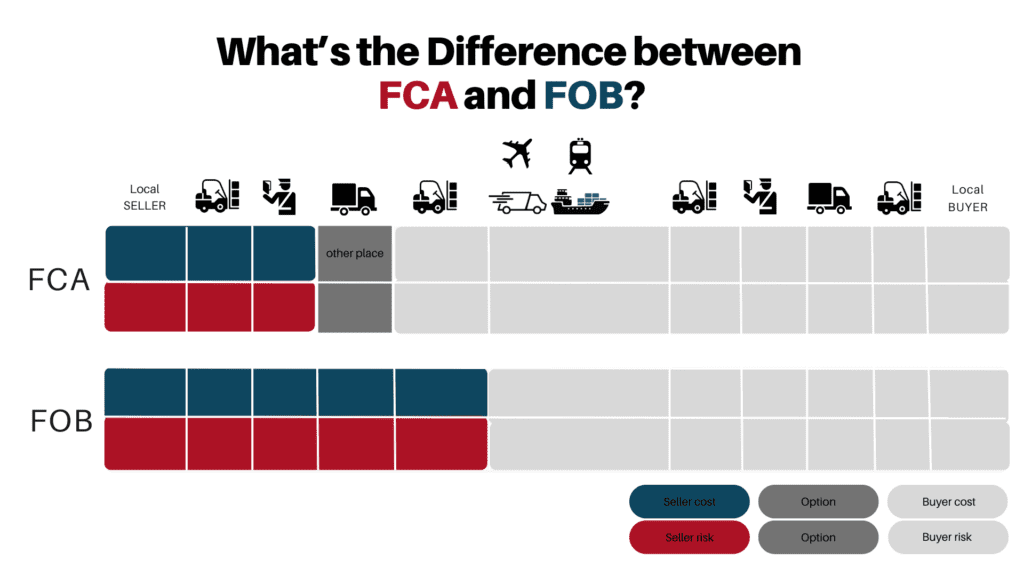
A lot of people mix up FCA and FOB (Free On Board). Don’t. They are different, and misunderstanding them can cost you big time.
- FOB is ONLY for sea and inland waterway transport. FCA is multimodal – meaning it can be used for air, road, rail, or sea.
- FOB: Your responsibility as the seller ends when the goods are loaded onto the vessel at the named port of shipment. You pay for getting them to the port and loading them.
- FCA: Your responsibility ends when the goods are delivered to the buyer’s nominated carrier at the named place. This could be a warehouse, a terminal, or even your own factory. You don’t necessarily pay for loading onto the main vessel/aircraft unless the named place is the port/airport terminal itself and you’re delivering directly to the carrier there.
The key difference is the point of risk transfer and the mode of transport. Using FOB for an air shipment is just plain wrong and can lead to massive confusion and disputes.
When FCA Is Your Friend (and When It’s Your Worst Enemy)
FCA isn’t inherently bad. It’s just misunderstood. It’s your friend when:
- Your buyer is an experienced importer: They have their own reliable forwarder and know how to manage international logistics.
- You want minimal responsibility after export: You’re happy to handle the local leg and export clearance, then wash your hands of it.
- You’re shipping by air or multiple modes: FCA is versatile for any transport method.
But it’s your worst enemy when:
- Your buyer is new to importing: They’ll likely make mistakes, leading to delays and headaches for everyone.
- You don’t have reliable local transport: If you can’t get your goods to the named place efficiently, you’re in trouble.
- You’re unfamiliar with export customs: This is a non-negotiable responsibility under FCA.
- You want full control and visibility: You won’t get it after hand-off with FCA.
Protecting Your Neck: Smart Moves for FCA Shipments
Even with FCA, you can take steps to protect yourself:
- Communicate, Communicate, Communicate: Get all the details from your buyer upfront. Who is their nominated carrier? What are the exact delivery instructions for the named place? What are the cut-off times?
- Get it in Writing: Don’t rely on verbal agreements. Ensure all Incoterms, named places, and responsibilities are clearly stated in your sales contract.
- Vet Your Buyer’s Carrier: If possible, do a quick check on the carrier your buyer nominated. Are they reputable? Do they have a presence in Guangzhou?
- Proof of Delivery: Always get a signed proof of delivery from the buyer’s carrier when you hand over the goods at the named place. This is your legal ‘out’ if something goes wrong later.
- Consider Your Own Insurance: Even if the buyer insures the main carriage, consider insuring your goods for the leg from your factory to the named place. It’s a small cost for big peace of mind.
The ‘What Ifs’: When FCA Goes Sideways
Let’s talk worst-case scenarios, because they happen:
- What if the buyer’s carrier never shows up? Your goods are sitting at the named place (or your factory), racking up storage fees. You need a plan B, and clear communication with the buyer on who pays for what.
- What if the goods are damaged *after* delivery to the carrier but *before* main carriage? This is a grey area. If you have proof of delivery in good condition, it’s the buyer’s carrier’s problem. But expect a fight.
- What if export customs rejects your paperwork? Your goods are stuck. You pay for storage, re-filing, and potential fines. This is 100% your responsibility under FCA.
These aren’t theoretical problems; they’re real issues we see daily at the Guangzhou Baiyun hub. Being prepared means knowing these risks and having a strategy.
Don’t Play Russian Roulette with Your Shipments
FCA can be a powerful tool for sellers who understand its nuances and have experienced buyers. But for everyone else, it’s a minefield of potential hidden costs and headaches. The idea that you’re ‘free’ once the goods leave your factory is a dangerous myth.
You’re still responsible for a significant chunk of the journey, especially the critical export clearance from China. Don’t guess these hidden costs. Don’t assume your buyer knows what they’re doing. Skip the math and run your exact specs through our Landed Cost Calculator to get a real, locked-in quote out of Guangzhou, covering *your* FCA responsibilities and beyond if you need it. We’ll make sure your goods actually get ‘free’ without costing you an arm and a leg.

 English
  Chinese
  Arabic
  French
  German
  Portuguese
  Spanish