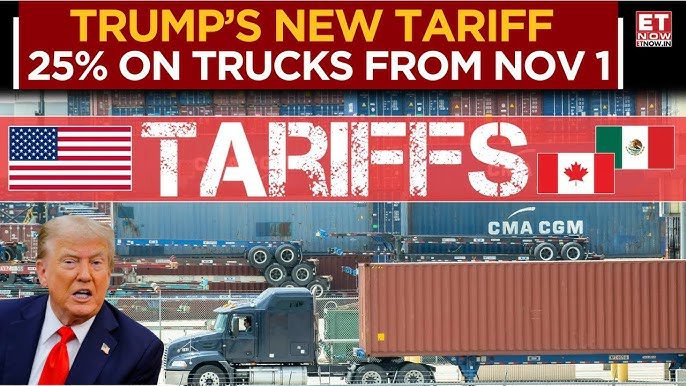
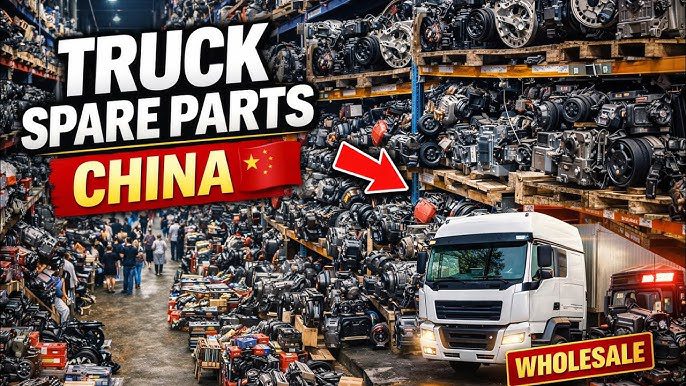
Starting November 2025, the United States officially implemented an additional 25% tariff on imported truck parts. This is no longer a policy warning; it is a cost that has already materialized on every single invoice.
According to the latest data jointly released by Decisiv and the Technology & Maintenance Council (TMC), the replacement costs for common truck wear-and-tear parts have risen across the board by 20% to 30%. Specifically:
- Fuel Injectors: Average replacement cost up by about 22%
- Turbochargers: Up by about 28%
- EGR System Components: Up by about 25%
- DPF Assemblies: Up by about 30%
- Gearbox Assemblies & Critical Components: Up by about 20%
For Chinese truck parts exporters who rely heavily on the U.S. market, this means their price advantage is being severely squeezed, and long-term customers are re-evaluating their orders.
Two Easily Overlooked Key Rules
In the enforcement of these tariffs, two specific details deserve particular attention:
1. USMCA Parts: Tariffs Apply Only to the Non-U.S. Portion
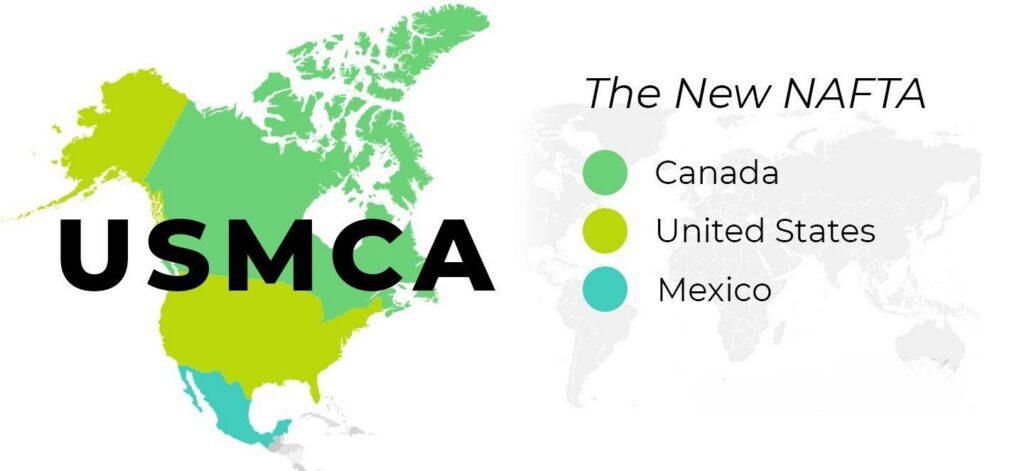
If a product complies with the United States-Mexico-Canada Agreement (USMCA) rules of origin, tariffs are levied only on the non-U.S./non-North American value component. This means that if your parts enter the North American supply chain and are certified under USMCA, the tax base will be significantly smaller than that of the entire finished product.
2. Knock-Down Kits: Fully Taxed with No Exceptions
This is currently the easiest trap to fall into. U.S. Customs defines “knock-down kits” as products exported in loose parts and assembled after arriving in the United States. Such products are treated as a whole for taxation purposes and do not enjoy any split-tax benefits. If you have been exporting in the form of loose kits, this rule will directly eat away your profit margins.
How Should Chinese Exporters Respond? Five Actionable Paths
1. Re-examine Product Forms to Avoid the “Knock-Down Kit” Classification
If products are shipped in a disassembled state but their functions and designs already constitute a complete assembly, it is recommended to evaluate the following two directions:
- Complete more pre-assembly processes in China so products can be declared as finished components rather than loose parts.
- Investigate whether the product qualifies for USMCA origin standards to pursue partial value exemptions.
For this step, it is highly recommended to hire an experienced trade lawyer to conduct a product classification review. The fee usually runs a few thousand dollars, but it could potentially save hundreds of thousands of dollars in tariffs.
2. Do the Math: Local U.S. Warehousing vs. Paying Tariffs on Every Shipment
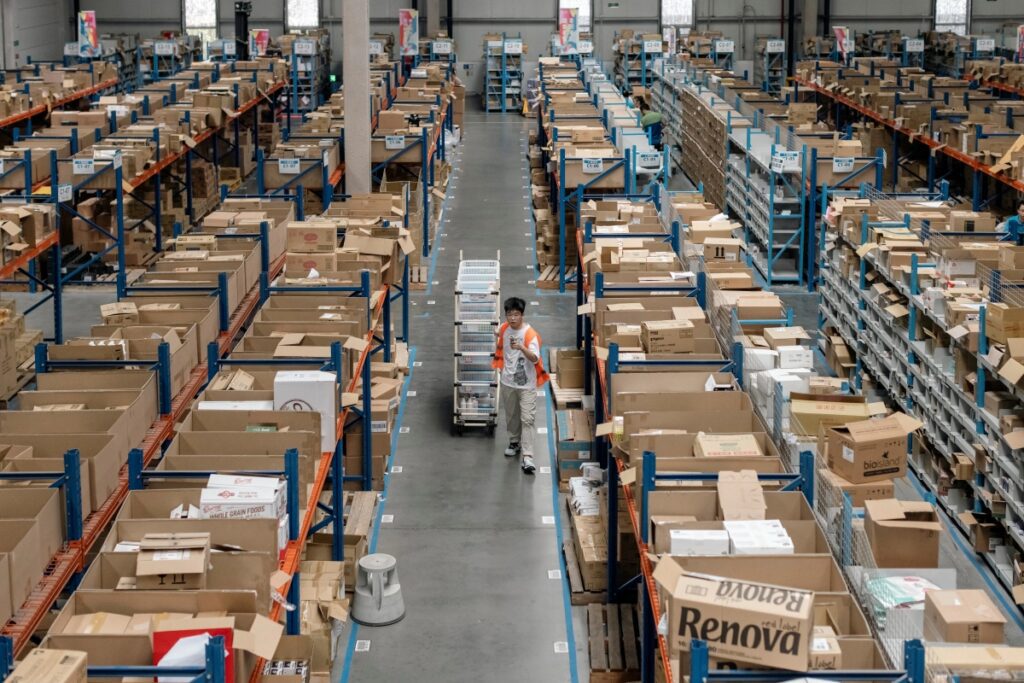
If your annual shipment volume is stable and reaches a certain scale, you can consider setting up a consignment warehouse or a forward-positioned warehouse in the United States. Goods can be imported and taxed at wholesale prices before entering the warehouse, and then fulfilled locally to customers. This slashes delivery times from weeks to days while hedging against the risk of further escalating tariff policies.
3. Recalculate Export Pricing Instead of a Simple Price Hike
Instead of bluntly telling customers, “Tariffs went up, so I have to raise prices,” it is better to provide a transparent cost breakdown sheet:
- Raw Materials + Processing Fees
- Ocean Freight + Insurance
- Tariffs (itemized by HS code and current tax rates)
- Reasonable Profit Margin
By anchoring your quotes in a realistic cost structure, customers will find the adjustments much easier to accept. Some companies are choosing to absorb 5% to 8% of the tariff increase themselves to retain major clients, while squeezing costs on the supply chain side to offset the impact.
4. Market Diversification: Don’t Put All Your Eggs in One Basket
With profit margins thinning in the U.S. market, forward-looking exporters are already developing alternative markets in parallel:
- Southeast Asia: Rapid growth in commercial vehicle ownership driving up demand for parts.
- Middle East: Large fleets are highly price-sensitive, giving Chinese parts a natural advantage.
- Latin America: Heavy-duty vehicle markets in places like Mexico and Brazil align closely with Chinese product offerings.
The goal is not to abandon the U.S., but to transform it into one profit-contributing unit rather than your sole lifeline for survival.
5. Compliance Is a Guardrail, Not a Shackle
Under intense tariff pressure, the easiest mistake to make is taking risks with product classification to save money. U.S. Customs is ramping up scrutiny on truck parts—especially those involving emission systems and core engine components. If misclassification is found, you face not only back-taxes but also hefty fines and damage to your credit record.
Spending money upfront on compliance buys you a secure passport for long-term global expansion.
Conclusion
A 25% tariff combined with a 20%–30% cost increase is undoubtedly a tough battle for Chinese truck parts exporters. However, looking back at the past two decades, the Chinese automotive components industry has repeatedly proven its resilience through EU anti-dumping duties, raw material price fluctuations, and exchange rate swings. Every wave of external pressure has ultimately forged the true competitiveness of a new batch of enterprises.
This time will be no different. Upgrading product forms, positioning supply chains forward, making pricing transparent, and diversifying market structures—these actions themselves represent a transformation from “selling parts” to “providing services.”
Tariffs are a high threshold, but those who cross it will often find a much more stable business on the other side.
*Data Source: Decisiv/TMC, U.S. Customs Tariff Enforcement Announcement effective November 2025.* This article does not constitute legal or tax advice. For specific tariff classification and response strategies, please consult a professional trade attorney.
 English
  Chinese
  Arabic
  French
  German
  Portuguese
  Spanish