Starting June 1, 2026, the General Administration of Customs of China (GAC) will implement Announcement No. 57, mandating enhanced random inspections for specific export categories. For international sellers and sourcing agents, this marks a shift toward stricter supervision at the border.
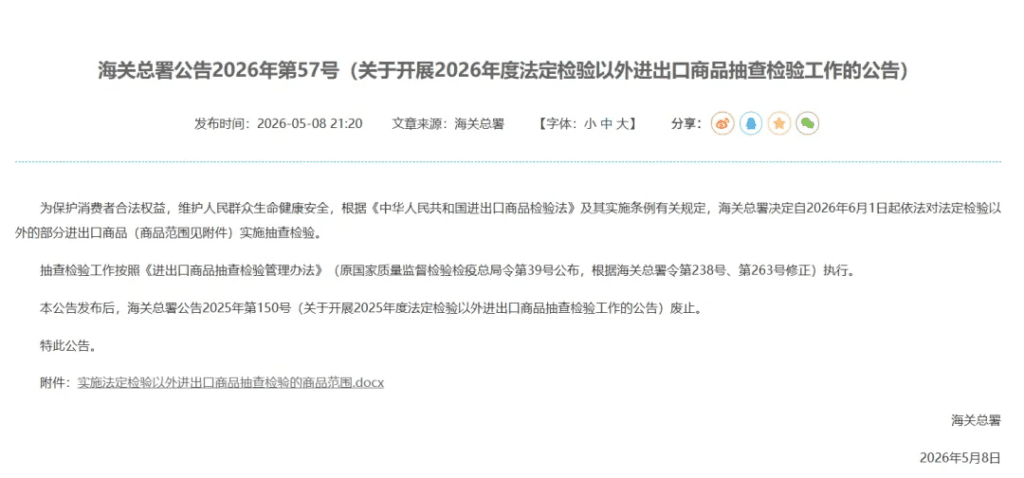
This guide breaks down the new “Catalog-Exempt” inspection framework and provides actionable steps to ensure your supply chain remains uninterrupted.
1. What are “Catalog-Exempt” Random Inspections?
To understand the impact of Announcement No. 57, exporters must distinguish between mandatory and discretionary inspections.
- Statutory Inspections (Inside the Catalog): High-risk goods (chemicals, heavy machinery) that must be inspected before every shipment.
- Random Inspections (Outside the Catalog): This is the focus of the new 2026 policy. These are goods that usually enjoy “Green Channel” fast-tracking but are now subject to planned, data-driven sampling.
The GAC uses these inspections to target goods involving human safety, public health, and environmental protection. If your product category is listed, expect a higher “Random Inspection Rate” at ports like Guangzhou, Shenzhen, and Ningbo.
2. High-Risk Export Categories: Are You on the List?
While the GAC monitors a wide range of goods, the 2026 update specifically highlights two major sectors for export:
Infant and Baby Products (0-14 Years)
This is the most sensitive category. Inspections will cover:
- Feeding Supplies: Bottles, pacifiers, and silicon utensils.
- Durables: Strollers, baby beds, and car seats.
- Education/Leisure: Children’s toys, school bags, and stationery.
Low-Voltage Electrical Appliances
Defined as devices operating under AC 1000V or DC 1500V, this covers the bulk of e-commerce electronics:
- Power Components: Plugs, sockets, circuit breakers, and relays.
- Consumer Tech: Chargers, household appliances, and office electrical equipment.
3. The Inspection Process: What is Being Verified?
When a container is flagged for a “Random Inspection,” the GAC doesn’t just count boxes. They perform a multi-dimensional audit:
- Identity Verification: Matching product names, HS codes, and specifications against the export declaration.
- Intellectual Property (IPR) Check: Verifying brand authorizations to prevent counterfeit “Replica” goods from exiting.
- Laboratory Sampling: This is the most critical phase. Samples are sent to GAC labs to test for chemical safety (lead, phthalates) and electrical stability.
- Valuation & Origin: Ensuring the Transaction Value is not under-declared and the Country of Origin is accurately marked.
The Real Cost of Non-Compliance
The GAC does not charge for the inspection itself. However, an inspection failure leads to:
- Detention Fees: Significant warehouse and terminal handling charges (THC) at the port.
- Missed Deadlines: Sampling can add 3 to 10 days to your lead time, potentially missing vessel departures or air freight slots.
- Export Bans: If goods fail safety tests, they are prohibited from export and may lead to a “Credit Rating” downgrade for your company.
4. Operational Roadmap: How to Prepare Before June 1st
To mitigate the risk of customs delays, Vantage Freight Services recommends the following compliance audit:
Step 1: Comprehensive SKU Audit
Don’t wait for a port hold. Audit your active SKUs now. Cross-reference your product certifications (e.g., CE, CPC, UL) with the GAC’s technical requirements. Ensure your physical labels (nameplates) match your digital documentation exactly.
Step 2: Consolidate Compliance Paperwork
Ensure every shipment is backed by:
- Up-to-date Test Reports from accredited 3rd-party labs.
- Authorized Brand Letters for any branded merchandise.
- Accurate HS Code Classifications to prevent “Misclassification” penalties.
Step 3: Buffer Your Logistics Timeline
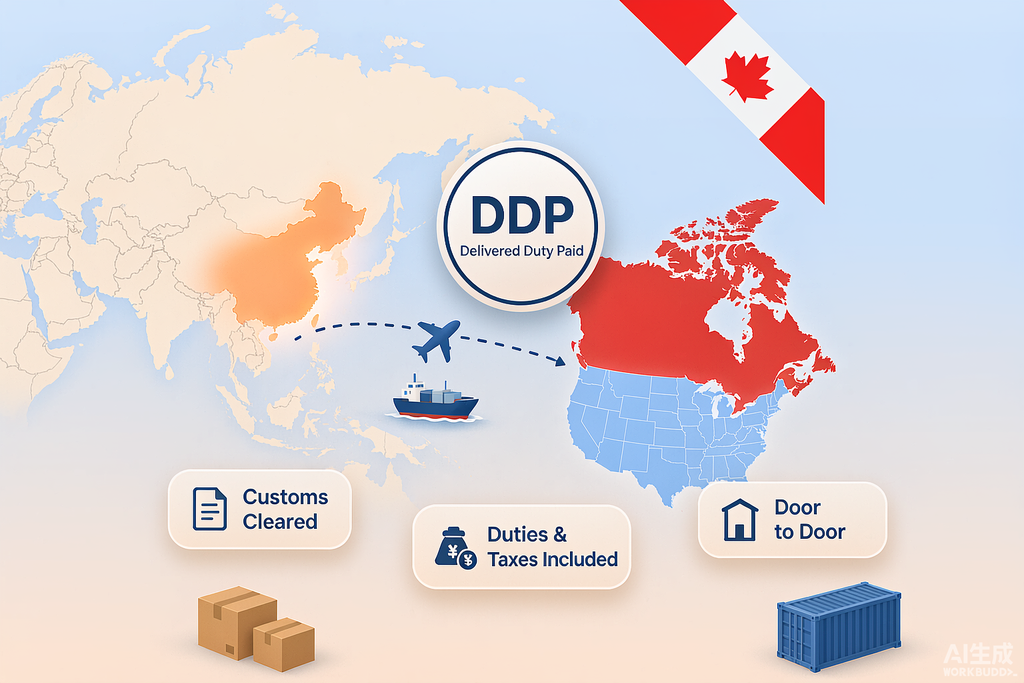
Incorporate a 3-5 day “Customs Buffer” into your delivery promises to overseas clients. For high-value or time-sensitive projects (like 2026 World Cup merchandise), prioritize DDP (Delivered Duty Paid) services where your freight forwarder manages the complexity of customs entry and clearance.
Summary: Proactive Compliance is Your Competitive Advantage
The 2026 China Customs update is not a barrier, but a filter. Professional exporters who prioritize Quality Assurance and Document Accuracy will find fewer disruptions, while those relying on “grey-market” practices will face increasing friction.
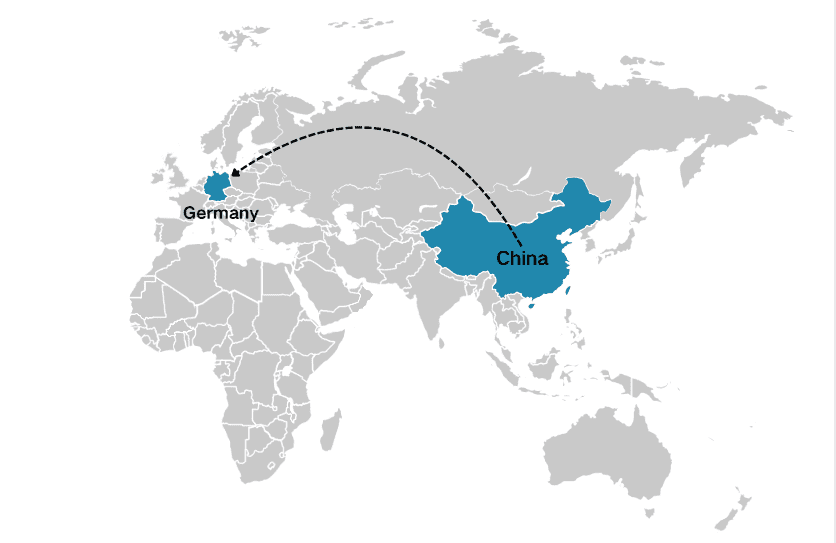
Need expert guidance on the 2026 GAC Announcement? Vantage Freight Services specializes in high-compliance shipping from China to North America and Europe. Contact us today for a risk assessment.

 English
  Chinese
  Arabic
  French
  German
  Portuguese
  Spanish